From the February 2026 issue of Apollo. Preview and subscribe here.
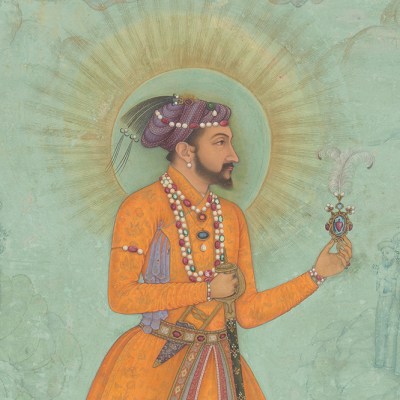
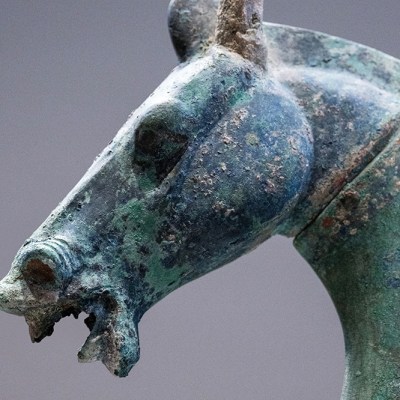
In March 2009, a group of 16 galleries – mostly located on New York’s Upper East Side – banded together to present an open-house-style exhibition of Asian art. This turned out to be the inaugural edition of Asia Week New York (AWNY), a city-wide event that takes place each spring and features special exhibitions hosted by the city’s leading dealers in Asian art. Distinguished by its ‘commitment to connoisseurship’, in the words of Margaret Gristina, chair of AWNY and a senior specialist in Chinese ceramics and works of art at Christie’s, the event increasingly features global dealers, as well as providing an opportunity for auction houses to promote their sales of Asian art. Some 25 museums and institutions are partnering with AWNY this year, too, including the Met, the Nelson-Atkins Museum of Art and the Art Institute of Chicago, in order to highlight their current exhibitions and the Asian artworks in their permanent collections. The main event lasts for nine days, but AWNY’s existence all year round is as a ‘cultural platform’ and an ‘anchor’ for research and scholarship around Asian art. Its mission, which Gristina says is to ‘affirm the importance of Asian art in the cultural landscape’, is very much an ongoing one.
Asia Week New York takes place at various venues and online from 19-27 March.
Apollo’s highlights
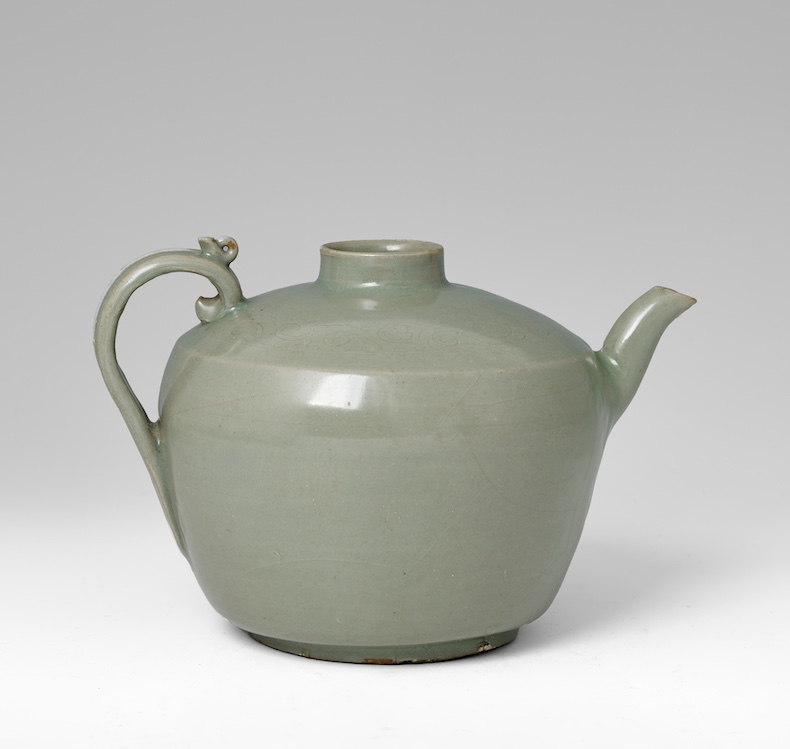
Ewer, Goryeo dynasty (918–1392), Korea, stoneware, celadon, ht 23.5cm. Zetterquist Galleries, New York
Eric Zetterquist is offering a group of Chinese, Vietnamese and Korean ceramics from the family collection of John and Betty Menke. Among them is this ewer, which dates from the Goryeo dynasty – the golden age of celadon ceramic production – which was probably used for water or wine. Its simple shape is ornamented by an incised floral scroll, showing the high level of skill required to produce such vessels.
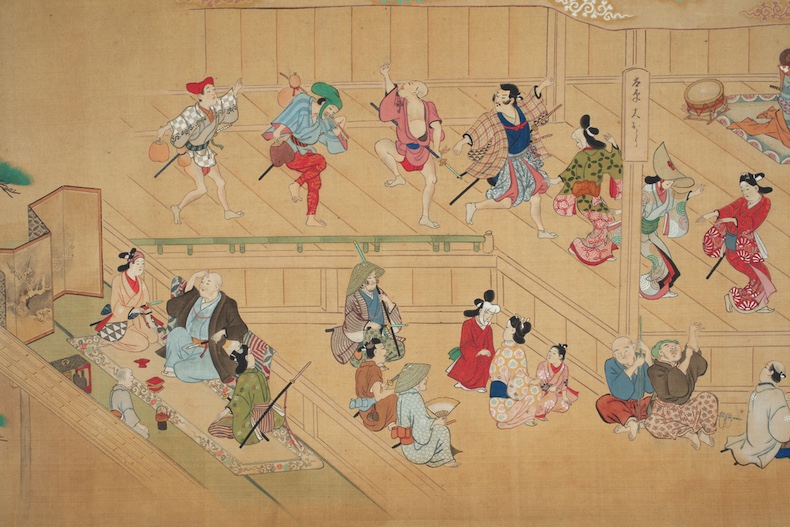
Handscroll, Edo period, c. Jōkyō era (1684–88), Hishikawa Moronobu (c. 1618–94). Sebastian Izzard, New York
Moronobu was one of the great pioneers of ukiyo-e – depictions of the hedonistic ‘floating world’ of Edo Japan that reached their apex with Hiroshige, Hokusai and others in the 19th century. This vast and rare painted scroll – one of only eight similar works definitively attributed to the artist – shows the pleasure quarters and theatres of the Yoshiwara district in rich detail.
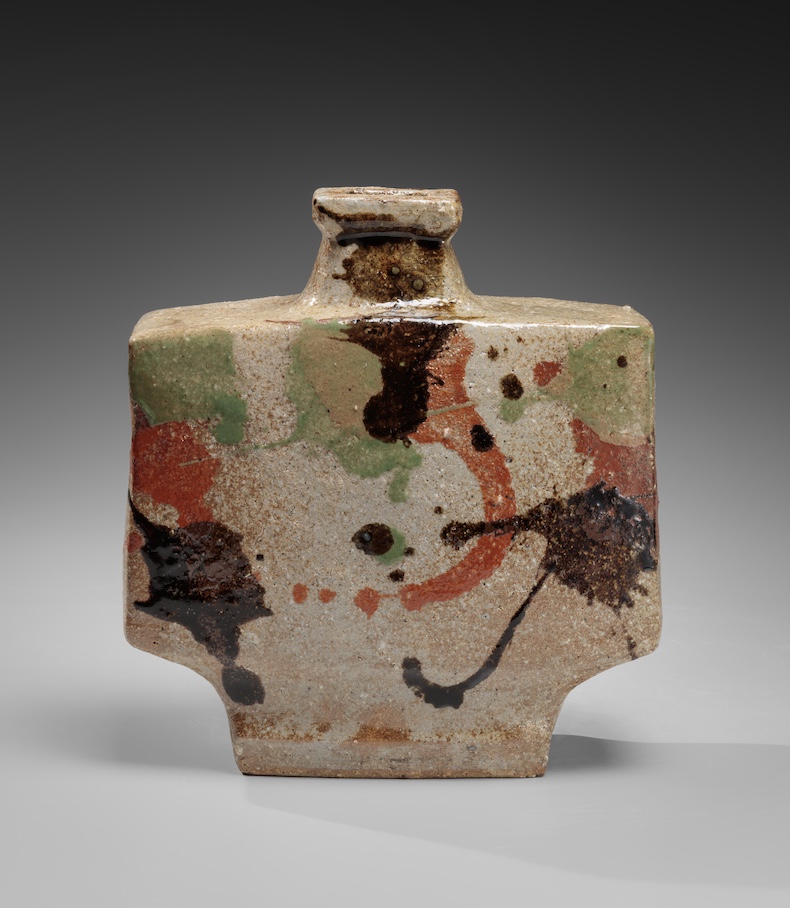
Tri-colour splash vessel, c. 1960, Kawai Kanjirō (1890–1966). Joan B. Mirviss, New York
Perhaps because he refused official honours and never travelled to the West, Kawai is relatively little known outside Japan. There, however, he is celebrated as a father of Mingei and one of the most skilled potters of the 20th century. This ‘splash’ vessel is one of a series of objects inspired by Abstract Expressionism that Kawai, a prolific maker, produced in the last few years of his life.
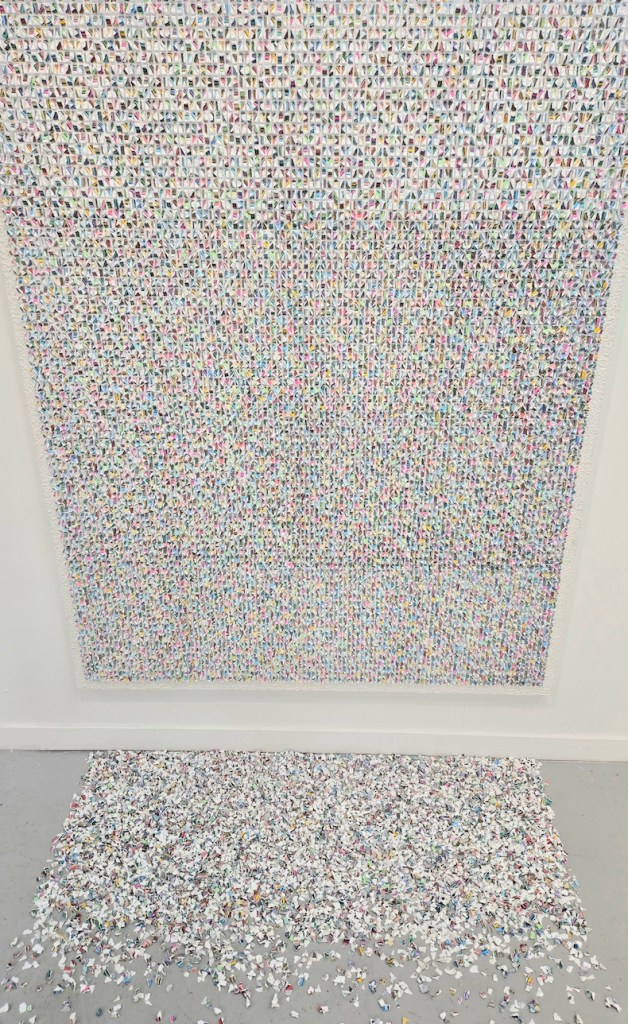
Crumbs of the soul, 2025, Jeoung Keun Chan (b. 1965), mixed media. Space 776, New York
Contemporary art has become an increasingly common fixture of AWNY in recent years. In this edition there are several first-time exhibitors, including Space 776, bringing work by four modern and contemporary Korean artists. Among them is Jeoung Keun Chan, showing this mixed-media work that is mounted on a wall but spills out on to the floor below.
International gallery highlights
Luigi Ghirri: Felicità
Until 9 May
Thomas Dane, London
The photographs Ghirri took all over Italy are immaculately composed and deceptively simple. His often banal-looking images of holiday-goers in Ravenna or traffic signs in Modena are infused with humour and political commentary – and inspired by conceptual art, Borges and a range of other influences. Ghirri died in 1992 at just 49 but he produced a vast body of work, much of which is rarely seen. For this exhibition, the artist Alessio Bolzoni and the film-maker Luca Guadagnino have selected photos from Ghirri’s archive, as well as work by artists such as Félix González-Torres that chime with Ghirri’s art.
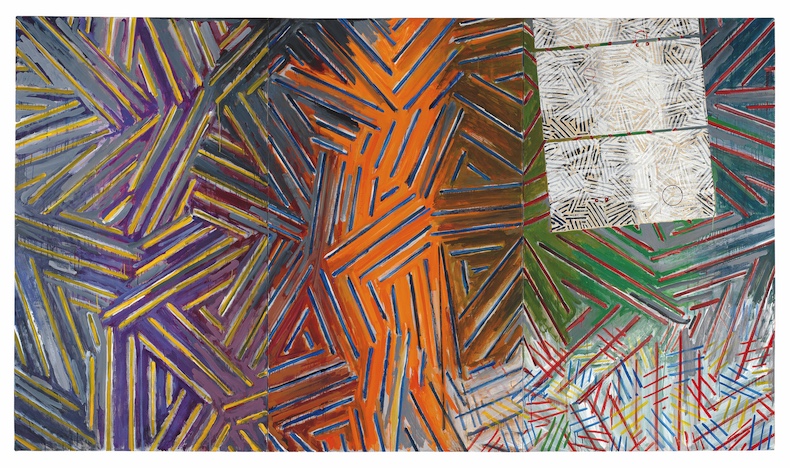
Jasper Johns: Between the Clock and the Bed
Until 14 March
Gagosian, New York
From 1973–83 Johns’s oeuvre became dominated by close-knit, geometric crosshatch paintings produced with materials that included collage, watercolours, acrylic and oil paints and even sand. Although these look entirely sui generis, his work is often indebted to others: the six works that give this show its title are abstracted riffs on Munch’s self-portrait of 1940–43, for example. This show presents key works from this period to mark the 50th anniversary of the series being first shown at the celebrated Castelli Gallery in New York.
Rodney Graham: Who does not love a tree?
18 February–11 April
Lisson Gallery, London
The career of the prolific Canadian artist, who died in 2022, was, in his own words, a process of constant reinvention and experimentation. This show takes a look at just one of Graham’s interests – the natural world – through two bodies of work: a series of photographs of upside-down trees, Oxfordshire Oaks (1990), and a seductive yet threatening two-screen video work, Edge of a Wood (1999), in which a helicopter circles a forest at night, illuminating the landscape with searchlights.
Alvaro Barrington: On the Road (TMS)
Until 21 March
Thaddaeus Ropac, Salzburg
Barrington has been a rising star for some time but his status was cemented in 2024 with the opening of his Tate Britain commission, ‘Grace’. A number of works from that show were expanded for the 2025 Notting Hill Carnival and have now been reimagined once again for this exhibition as colourful painted and stitched wall hangings on burlap – a key material in the artist’s practice and one that he says speaks to his Venezuelan, Grenadian and Haitian background.
Fair in focus
Modenantiquaria
7–15 February
ModenaFiere Exhibition Centre, Modena
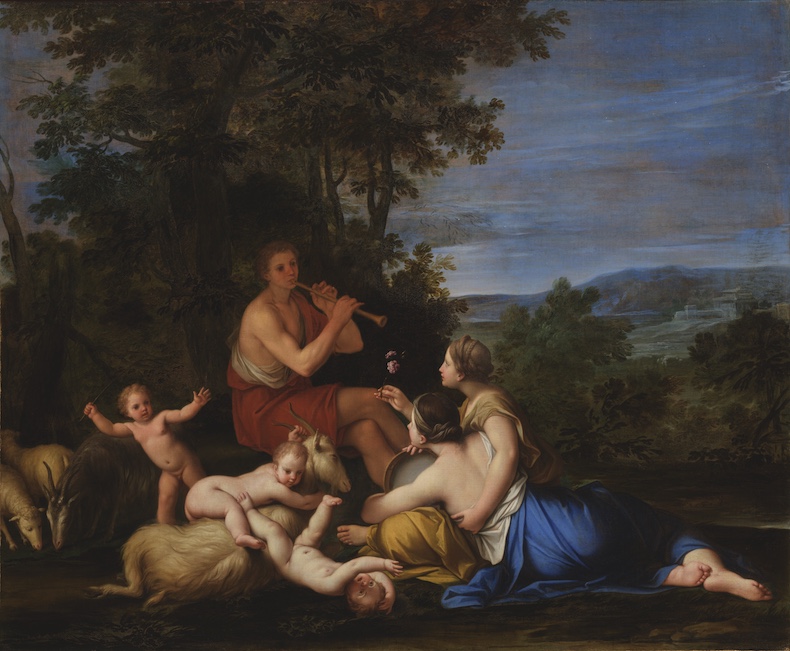
As one of the oldest and most prestigious antiques fairs in Italy, Modenantiquaria does not have to reinvent itself every year. For its 39th edition, however, the fair is relaunching under the new ownership of Confcommercio Modena. The fair is supported, as ever, by the Italian Association of Antique Dealers (AAI), and a large portion of the participating exhibitors are members of that group, including local dealers Cantore Galleria Antiquaria and those from further afield too, Maurizio Nobile Fine Art and Tornabuoni Arte among them. As ever, Modenantiquaria is engaged in the wider Modenese culture and economy: visitors to the fair will receive discounts on accommodation and local restaurants will apparently be offering dishes inspired by works of art seen there. The AAI is also collaborating with the fair on a special exhibition, ‘The Portrait between Sacred and Profane’, which includes paintings, sculptures and works on paper from a selection of international galleries.
From the February 2026 issue of Apollo. Preview and subscribe here.