Axel Rüger, The Frick Collection

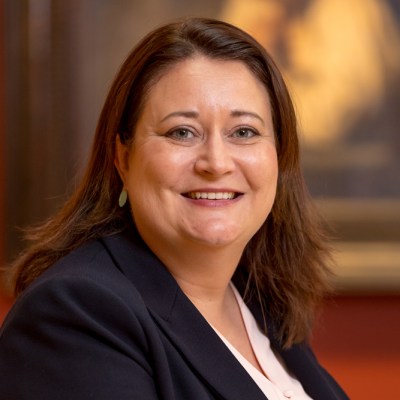
Axel Rüger, director of the Frick Collection, photographed in 2025 by Joseph Coscia Jr.
Axel Rüger, director of the Frick Collection, photographed in 2025 by Joseph Coscia Jr.

‘From the Director’s Office’ is supported by Bloomberg Connects.
In the second edition of ‘From the Director’s Office’ – a new series in which we talk to museum directors about their collections and what they are doing to draw in audiences – we speak to Axel Rüger, who became director of the Frick Collection in New York in 2025. He talks to Apollo about surprises in the collection, bringing together different strands of Frick history and the institution’s carefully considered acquisitions policy.
What would you say is special about the Frick Collection?
Aside from the fact that it is an incredibly high-quality collection – because Mr Frick was a very discerning collector and was keen to secure works of the highest quality, which is evident throughout the collection – what’s special about the Frick is this rather unique combination of the collection and the house, the totality of the experience. It’s one of the last surviving Gilded Age mansions.
But one also needs to emphasise that it’s an art museum in a historic house; it is not a historic house museum. When the house was converted into a proper museum in the 1930s, all traces of everyday life – the kitchens, the bathrooms, the everyday furniture – were removed from the house. But to experience the house in that private or human-scale environment is something special.
How much of the collection is on display?
About 85 per cent of the paintings collection is on display. Of course, there are always a few works that might be out on loan, or out for conservation. But the percentage as a whole is lower because we have the Scher medals collection, and a good number of the medals are not on view. Equally, the works on paper can only be on view for a very limited time. But in terms of sculpture and paintings, you can say that almost all of it is on view.

What’s the most surprising work in the Frick’s collection?
If you discount Whistler (it remains a question as to whether he is an American artist or not), there’s only one truly American painting in the collection: Gilbert Stuart’s portrait of George Washington – a very early version, where he wears a red coat rather than a black coat, which is unusual. The other surprising work, because Mr Frick’s taste was predominantly for portraiture and landscape painting, is the rather large Deposition by Gerard David. To this day, it’s a mystery why he bought that painting. It seems so squarely not his taste. Most of the religious works were subsequently collected by Helen Clay Frick, his daughter.
How do you choose which works you will acquire?
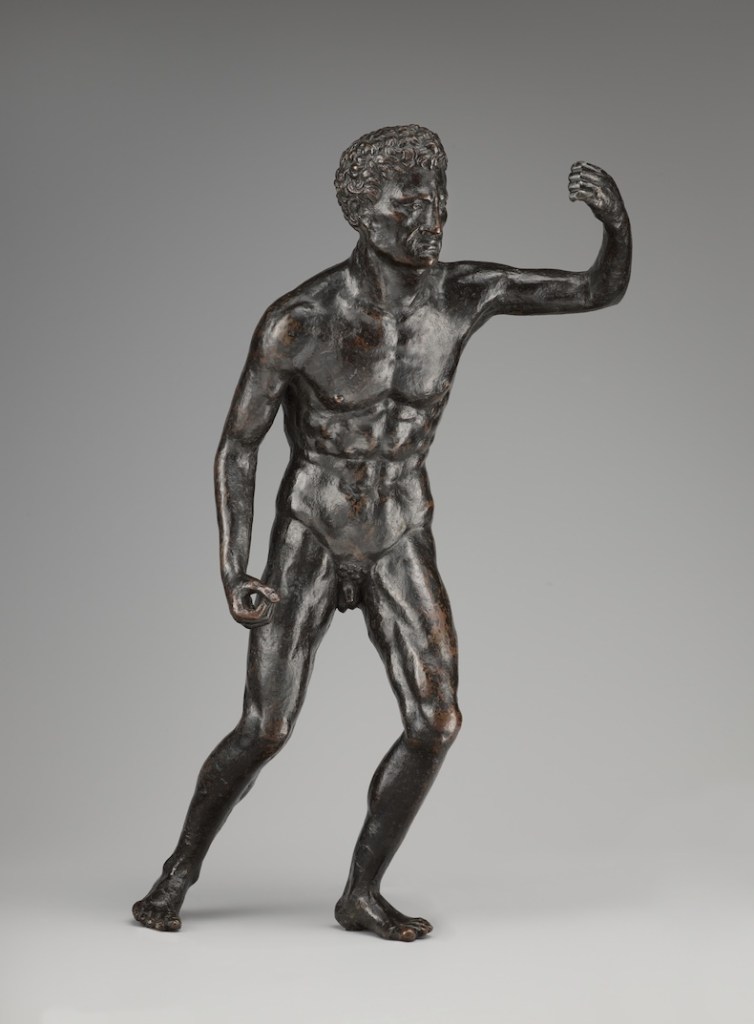
It is still a live conversation here in the building. By definition, acquisition is opportunistic. Many of the works have come into the collection through gifts – most recently a promised gift of a painting by a portrait by Thomas Gainsborough. We have deep holdings by Gainsborough, so that means collecting more in depth. Whereas we’ve also recently been given a beautiful small bronze by Riccio (1470–1532). While we already have work by Riccio, this work is of an incredible quality that has really elevated the level of the collection [of his work].
Quality is still the guiding principle. That means that we may not be able to acquire very much because if we have to collect at the top end of the market, it’s going to be challenging. But there is a conversation [to be had] here: do we continue to collect in depth – that is to say, in areas that we are already strong in – or do we try to broaden the collection? There are some notable absences. There is no Rubens and no Canaletto in the collection, to name two random examples. Do we want to consciously try to fill some of those gaps? It’s a conversation that we’re still having.
What is your favourite museum apart from the Frick?
One is the Chichu Art Museum in Naoshima, designed by Tadao Ando. If you gravitate towards a minimalist aesthetic, then this is your thing. And to construct this whole building around five works of art is extravagant and incredible and very poetic and beautiful.
But I would also say something more accessible such as the Louisiana [Museum of Modern Art] just outside of Copenhagen, because again, it is this beautiful combination of collection and building nestled into a landscape by the sea.
Which museums do you think are doing particularly interesting things with their permanent collection?
I’ve been thinking long and hard about this question; it’s something that exercises us every day. The Frick is rather specific in that sense, because we cannot present one coherent narrative. So how do we deal with a collection?
When it reopened [in 2013], the Rijksmuseum was very good in how it reintegrated the different disciplines of the collection after they had been very separate. It had been almost a taxonomic display of paintings here and decorative arts there. They brought them together to tell a more coherent story of the Netherlands, of the 17th century. At the time it was rather innovative. More recently, I think an interesting experiment is the V&A Storehouse – how indeed do you deal with a stored collection? Early on, it’s been very popular, so we’ll see.
How has your view of the Frick Collection changed since you became director?
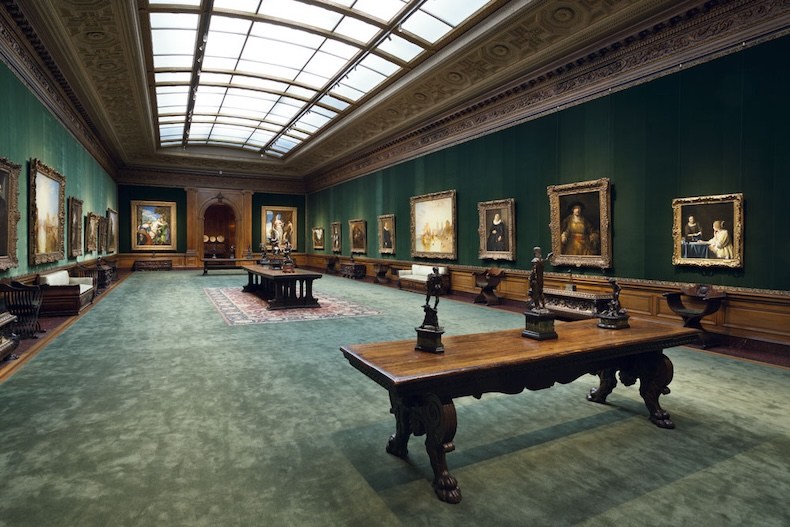
Like most people, I came to the Frick Collection to see these incredible masterpieces. Now I embrace this incredible combination between the house and the legacy of Mr Frick and his collecting. Some works, for example, have been in the same spot in the house since he put them up, whereas others have moved around. Some displays are sort of sacrosanct.
It reminded me a bit of when I started work at the National Gallery [in London]. There was this combination of Vermeers with the Saenredams – at some point Roger Fry had said that they were the perfect combination. Ever since then, that seems to have been a frozen thing that you had to respect.
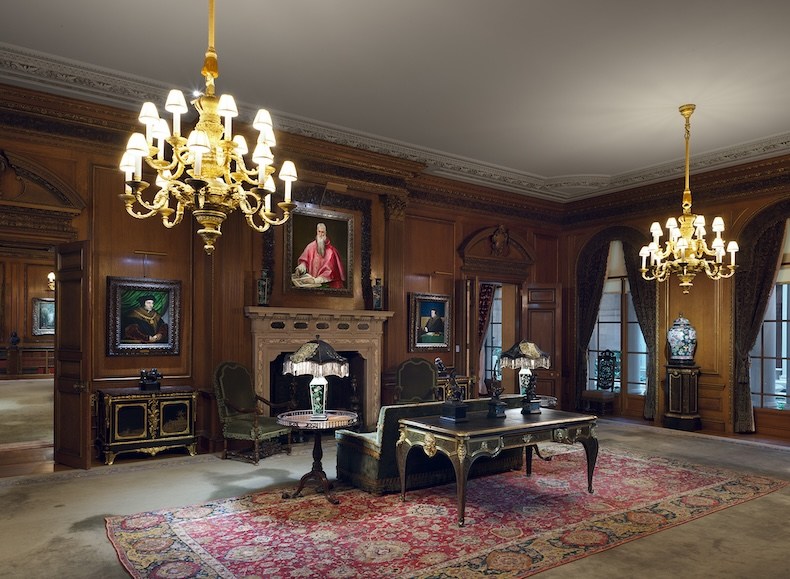
Now that the upstairs is available to the public, with its much smaller rooms, how that works has certainly changed my view of the interplay between the house and the spaces.
We want to preserve some sense of the private setting, and the idea that you are also visiting the Fricks. We have no labelling on display – just minimal mentions of artist names on the frames. You can go into the details through the Bloomberg Connects app, but that is not like most museums are now. Equally, we don’t have any barrier rails: everything is freestanding, which is also a different approach to many other museums. This continues to shape my view of the collection and how we deal with it, how we show it and how we share information about it.
What does bringing the house and the library together do for the institution?
I think it is a very important dimension. We are called the Frick Collection, but it is really the Frick Collection and the Frick Art Research Library, which was set up by Helen Clay Frick and has grown into one of the most significant art-historical research libraries.
Miss Frick’s shadow is long: she fell out with the trustees of the museum and removed direct access to the library from the museum. Now, through the redevelopment and Annabelle Selldorf’s design, the buildings are physically connected and you can easily walk through. We are working on reintegration, to make the library better-known to the public, to join our programming [together], so that our public programme has one holistic approach.
We must also maintain the quality and the standards of this very important library. In historical terms, the location of the Frick used to be the site of a prominent library, the Lenox Library, which later moved into the New York Public Library. So in that sense there is another nice connection. It is also important because the Frick is now even more emphatically a campus with a museum, the library and the Stephen A. Schwartzman Auditorium, a brand new custom-designed chamber music hall. Since the 1930s the Frick has been well known for its music programme, but that has now doubled in size and receives enormous traction. The interplay between the music programme, the collection and the house is very important. All of the activity, ranging from research to the everyday visitors and the different programmatic aspects, is what makes the new Frick the Frick.
Bloomberg Connects is a free app that helps museums, galleries, historic sites and cultural spaces around the world deepen engagement with their audiences. Click here to access the Frick’s guide.