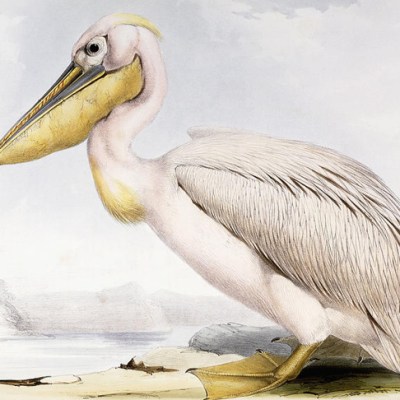

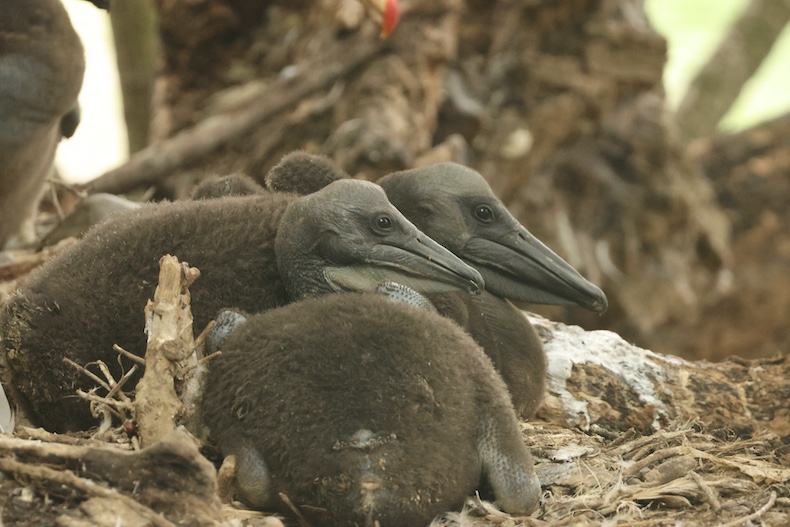
Westminster was rocked by the news of a new arrival this week, one that threatens to shake up the world as we know it. That’s right – four pelican chicks have been born in St James’s Park for the first time in history. The Royal Parks issued a press release, celebrating the ‘pitter patter’ of chicks’ feet and imploring the public not to disturb them or get too close. ‘I am truly thrilled to welcome the four young chicks to St James’s Park,’ the park manager, Mark Wasilewski, said in a statement. ‘It’s a real “beak-through” moment in over 360 years of the park hosting pelicans.’
The St James’s Park pelicans are arguably London’s best-loved public attraction, so much so that they have been memorialised over the years in countless photographs, drawings, paintings and even the illustrator Edward Bawden’s posters advertising St James’s Park underground station in the 1930s. They also hold a special place in Rakewell’s heart. Apollo’s office is within walking distance and your correspondent has spent many an entertaining lunchtime watching Isla, Tiffany, Gargi, Sun, Moon and Star frolic about, perch proudly on the rocks or guzzle down the trout or roach that the park keepers feed them every day at 2.30 in the afternoon.
The pelicans are there thanks to a gift in 1664 of two Dalmatian pelicans from the Russian Ambassador to Charles II, and since then there have been more than 40 pelicans who have made the park their home, of various different breeds, including the current flock of Great Whites. Until now, however, they have never successfully mated: pelicans generally reproduce only in larger colonies, with enough birdpower to protect the delicate eggs. The lifespan is around 20 years and Russian embassy has had a habit of donating pelicans when the population needs to be replenished, though this hasn’t always gone as smoothly as one might hope. In the 1960s, at the height of the Cold War, the US ambassador saw an opportunity to upstage the USSR by making his own donation of American pelicans to the park. When the birds were introduced, however, they seemed unhappy and failed to get on with their Russian peers – not because of the birds’ perspicacity regarding geopolitical tensions but because, it turned out, they were saltwater pelicans and therefore unused to life on a freshwater lake. They were eventually moved to a salt pool in London Zoo, the US embassy sourced some freshwater American white pelicans, and relations between the Russian and American birds thawed. If only Khrushchev and JFK had been able to sort out their differences so easily.
The new arrivals are currently cordoned off from visitors and being cared for by the Royal Parks charity, with help from Blackpool Zoo, ZSL and the Wildfowl and Wetlands Trust. They are expected to take to the water at three months old. As yet, they haven’t been named. May your correspondent suggest, given the artistic appeal of the animals and the fact that they were born within a stone’s throw of the National Gallery, the King’s Gallery and the Institute of Contemporary Art, some art-inspired names? Welcome to the world, Wingslow Homer, Pablo Pinkasso, Jackson Pollockan and Fly Weiwei.