As far back as the Middle Ages, east London has been a home for migrants and a hub of industry, where Huguenot weavers could flog their silks in Spitalfields and travellers from the furthest reaches of the British Empire could find work in its docks. For much of the East End’s past, daily life has been shaped by arduous work and poverty. In 1901 the social reformers Samuel and Henrietta Barnett set out to bring a new dimension to the area by founding Whitechapel Gallery – the East End’s first public art institution.
A hundred and twenty-five years later, the gallery’s surroundings have changed – you’ll now find it nestled between a KFC and a games arcade – but its main objective has stayed the same: to deliver programmes that enrich the lives of locals. To mark its anniversary the gallery is fixing its focus on the East End itself by organising the inaugural Backyard Biennial, an eight-week programme of free exhibitions, events, talks, workshops and tours staged by some 40 partners scattered across the borough of Tower Hamlets.
Not long after the team at Whitechapel Gallery came up with the idea of a biennial, more than two years ago, they asked local arts organisations whether they would like to take part. That led to the first of a series of ‘gatherings’ hosted by Whitechapel – a kind of town hall where anyone could share their thoughts on the plan. ‘What was so brilliant and overwhelmed us [was] the instantly enthusiastic response’, head of participation Richard Martin tells me. The pilot project soon grew to a roster of 40 participants, from arts organisations and charities to local education centres, artists’ studios and places of worship.
Tower Hamlets is the most densely populated area in the UK. Many of its residents are squeezed into high-rise buildings; their ‘backyards’ are the parks, the streets, the public venues around the corner. Broadening the scope of which institutions could participate was crucial, says Martin. ‘Biennials sometimes have very little connection to the communities of where they’re based. We started wondering, what if you flip this model and build a biennial that is entirely local? That opens lots of interesting possibilities for what a biennial can be, and who it can be for.’
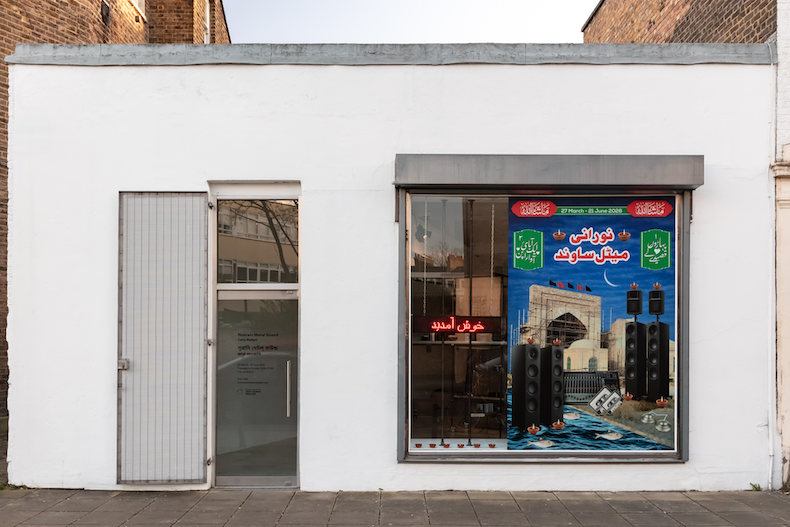
Whitechapel Gallery’s founding mission was to bring ‘the finest art of the world to the people of east London’. The Backyard Biennial, however, is about more than the ‘art for art’s sake’ philosophy that was so prevalent when the Whitechapel opened: it makes the case that the social role that art can play is just as important as its aesthetic appeal. And just as the anniversary prompted Whitechapel to reflect on its original mission, other organisations taking part have found themselves doing the same. Oitij-jo Collective, which presents work by the Bengali community that populates much of the East End, was established in 2013 after its founders recognised that the representation of British-Bengali artists was – in the words of co-director Maher Anjum – ‘next to nothing’. Much of the collective’s work has been about showing that ‘anyone can be creative’. Alongside a slew of events at Toynbee Studios, the Commercial Streets arts hub in which they are based, the collective is presenting ‘TUFAN’ at Whitechapel Gallery, an exhibition of works by seven Bengali artists. ‘Tufan’ means ‘storm’ in Bangla and the title nods to the clean slate left in the floodplains of Bangladesh after the monsoon; for Maher, the Backyard Biennial marks ‘a new start’.
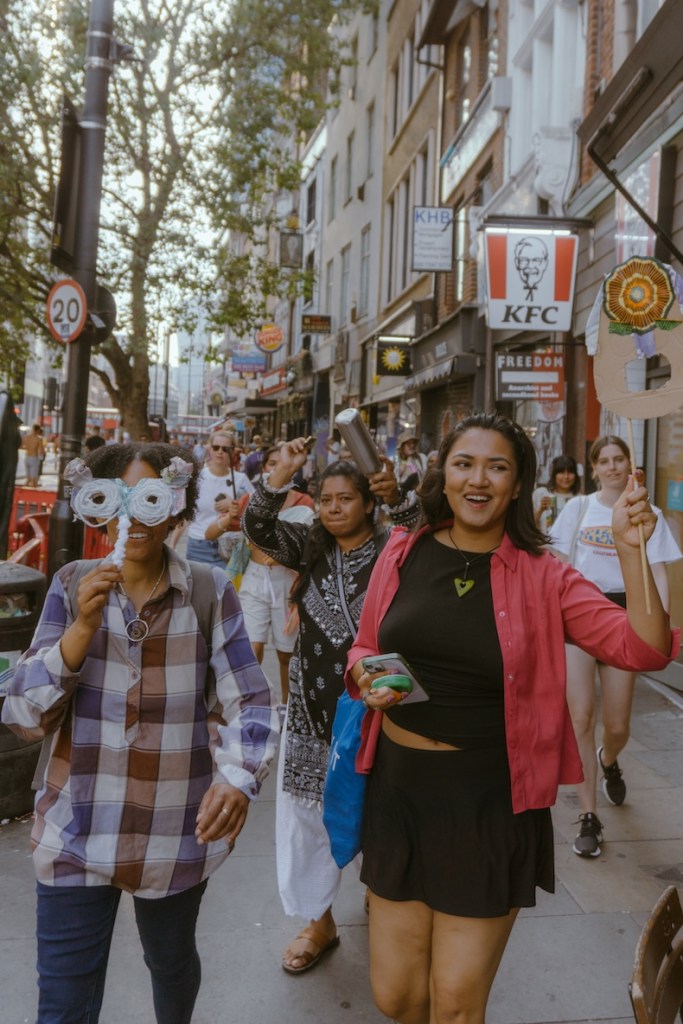
For non-profit arts organisation Bow Arts, the biennial builds on a long-term partnership with Whitechapel, which supports the organisation’s East London Art Prize, awarded every two years. Several artists nominated last year are taking part in the Backyard Biennial: Kuda Mushangi, for instance, will lead a walking tour through the East End, touching on the architectural history of many of its well-worn routes – Whitechapel High Street, Brick Lane, the former Huguenot enclave of Princelet Street. ‘Our exhibitions so often focus on the significance of where we are in East London,’ says director of arts and events Sophie Hill, making a traipse through the neighbourhood a happy fit for its biennial programming.
Between 2018 and 2022, Whitechapel Gallery put on several editions of Nocturnal Creatures, a free one-night festival that, alongside DJ sets and installations, allowed after-hours access to nearby venues. ‘It was a brilliant event,’ says Martin, ‘but we learned that if you create all this activity for just one evening, it’s very difficult for audiences to see everything.’ The Backyard Biennial carries on the ‘spirit’ of that celebration (a similar event will take place on 8 August), but its two-month run accounts for shifts in the community calendar, such as the summer school holidays. Tower Hamlets has one of the highest rates of child poverty in the country and making sure the festival caters to kids is at the forefront of many participants’ minds. Auto Italia, an artist-run organisation in Bethnal Green, hosts an artist in residence every year; this year it’s Rose Nordin. During the biennial, Nordin, in collaboration with charity Praxis, will work with young migrants to create a body of work – due to be shown in November – that is ‘rooted in cultural memory’, says Auto Italia director Maggie Matić. Seeing young people as ‘cultural contributors in their own right, rather than an audience to be spoken to’, is key for Auto Italia, as is the focus on migrant and diasporic communities. Taking part in the biennial was a ‘no-brainer’ for Matić: ‘There’s such a wealth of cultural organisations in East London, but with our limited capacities, it’s hard to find ways to link up [with other organisations], so it’s really exciting.’
Young people are also at the heart of Alvaro Barrington’s biennial plans. Housed in a former school in Whitechapel, his studio has an ‘amazing garden’; local flowers will be planted and picked for still-life drawing workshops for children. ‘When I was a kid I went to art classes, and that allowed me the journey to be here,’ Barrington says. He seems delighted to be hosting his own classes: ‘Wow, at least a handful of the kids who come are going to think about art as a possibility for their future.’
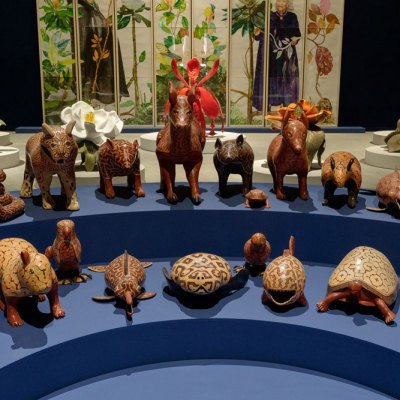
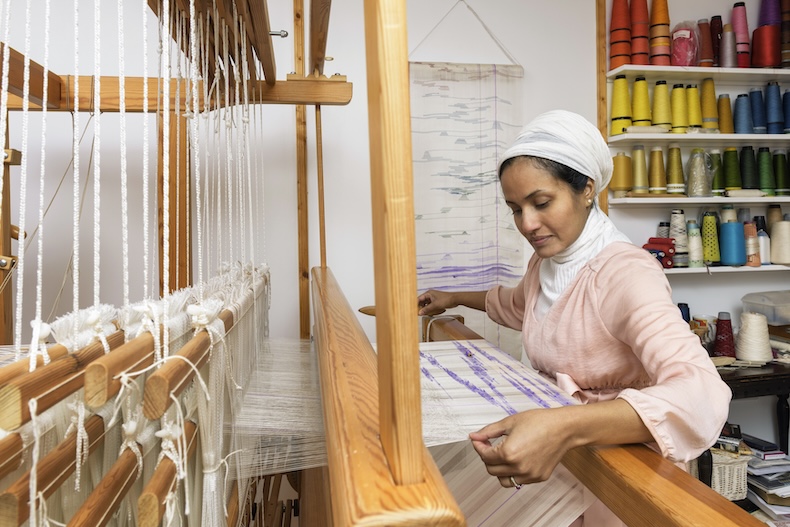
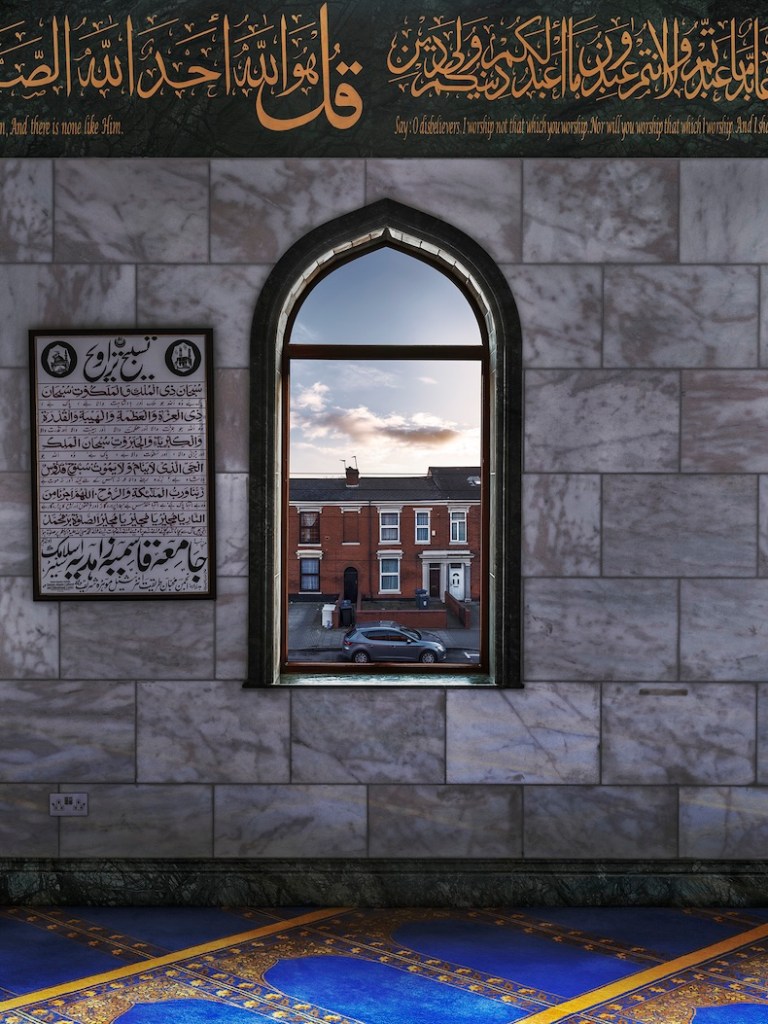
Back at Whitechapel Gallery, the programme is packed. The artist Fozia Ismail is presenting A Song for the Xeedho – The Knot Makers, an interactive installation that nods to the weaving traditions of nomadic women in Somalia and what happens when these cultures disappear. The gallery’s own exhibition, ‘East of the Aldgate Pump’, is named after the centuries-old stone structure that still stands down the road, traditionally used to mark where the City of London finished and the East End began. Split into three sections and comprising the work of 12 artists, the show covers all corners of the borough: Denzil Forrester’s paintings capture its reggae clubs; in photographer Marwan Bassiouni’s series New British Views, British landscapes are seen through the windows of places of Islamic worship. An installation by Laisul Hoque, winner of last year’s East London Art Prize, is made up of treats from a local Bengali sweet shop – visitors will even have the chance to snag one for themselves.
Plans are already in motion for the 2028 biennial, says Martin; the hope is for each edition to strengthen community ties and collaborations between the East End’s many art organisations, though the team may look further afield than Tower Hamlets. ‘We’re used to thinking about infrastructure in terms of schools and hospitals […] but cultural institutions are infrastructure too,’ he says. ‘The biennial as a whole is infrastructure, bringing people together, sharing audiences, resources and ideas.’
Backyard Biennial: East takes place in venues across east London from 15 July–6 September.