
From the December 2025 issue of Apollo. Preview and subscribe here.
‘I’m not bothered by the jokes about me being a dumb blonde,’ the country singer Dolly Parton once said, ‘because I know I’m not dumb. I also know I’m not blonde.’ A proud phoney, she knew that her particular brand of blondeness – luminous and fried almost into oblivion – could only ever be achieved by artificial means, and that pretending otherwise would have been foolish. Her trademark hue became a gleefully trampy calling card and it conferred certain benefits: sexual admiration; fame; a useful underestimation of her talents on the part of Neanderthal misogynists, the better to surprise them with her musical genius. Didn’t it follow that faking it was one of the things that made her smart in the first place?
Roughly two per cent of the world’s population is naturally blonde; 61 per cent of women globally are said to dye their hair at least once a year, and since blonde is also the best-selling shade, it must follow that there are a dizzying number of ersatz blondes on the planet. Blondeness, perhaps more than any other hair colour, has a meaning, or rather a myriad of meanings – it is an easy visual shorthand for ditziness, seductiveness, whorishness, starriness, whiteness, bimbodom and, finally and most powerfully, all-American Hollywood glamour. Its contractions are in some way a reflection of the dichotomies inherent in womanhood itself, as least as it’s perceived in the media and in culture. The blonde is at once luxe and cheap, alluring and sleazy, a foxlike manipulator and a dumb slut.
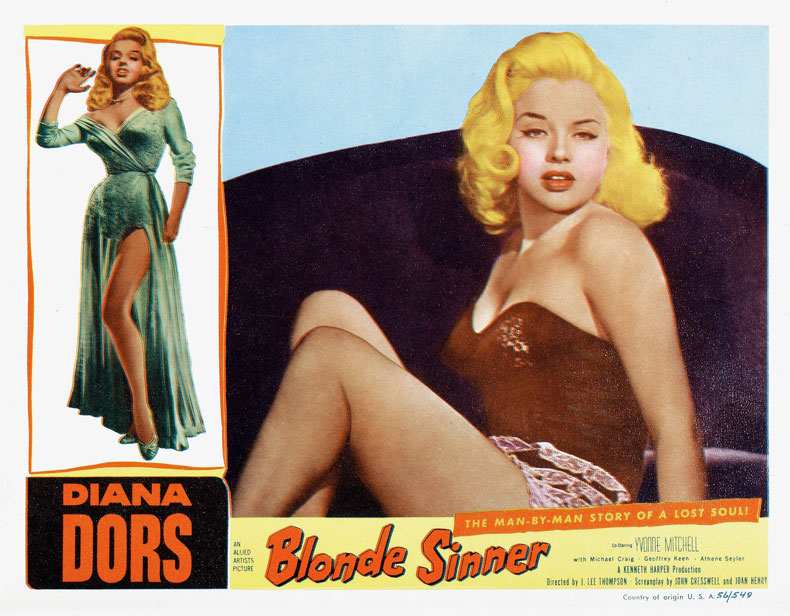
The academic and writer Lynda Nead’s fascinating new book, British Blonde: Women, Desire and the Image in Post-War Britain, is a study of the journey of blondeness on our side of the Atlantic after the Second World War, focusing on four women in particular: the actress and sex-symbol Diana Dors, known as ‘the British Marilyn’; Ruth Ellis, the last British woman to be hanged; the buxom Carry On comedienne Barbara Windsor; and the Pop artist and model Pauline Boty. The book begins with a text about Dors, who, as Nead demonstrates, exemplified the Hollywood dream mapped on to a fuliginous British reality. As a nickname, ‘the British Marilyn’ carried a sting in its tail, since it is no easier to imagine an actually British Marilyn Monroe than it is to imagine, say, a British Britney Spears. Already, Marilyn herself presented – like Parton – a proudly false image. She was a sexual phantom undoubtedly made in America, crafted with tools and with graft: bleach, a nose job, a chin implant, a canny and specific way of holding her face that helped transform Norma Jean into, as she put it, ‘Her’.
This made Dors a simulacrum of a simulacrum, a mirage of a mirage. She was born Diana Fluck – a surname that skirted dangerously close to nominative determinism for a hot pin-up in training – in 1931, and was precocious enough that she began to bleach her hair at 12. In an essay written for school, she announced her intention to become a star and to live in Los Angeles in a house with a pool. She was to achieve this escape through aesthetic refinement, bettering herself by transforming her physical appearance into one that befitted the environment she dreamed of inhabiting. ‘For a girl like me,’ she told the Daily Mirror in 1956, at the height of her relatively brief fame as an actress, ‘[Hollywood] is the only place to live.’ Blonde hair does not glow quite as radiantly under grey skies, after all, as it does in the Californian sun.
What does glow, in British Blonde, is Nead’s prose, which in places is as white-hot as a platinum wig under a spotlight. Non-fiction writing that displays as much style as it does observational acuity is almost as rare as true blondeness and Nead is a natural. (I thrilled at her description of Ruth Ellis in the dock, in her ‘eloquent’ skirt suit with her hair freshly dyed, as being both ‘the type of the age and its nemesis’.) Throughout the book, she presents blondeness as going hand in hand, for the women of the 1950s and ’60s, with sexual, class and career aspiration.
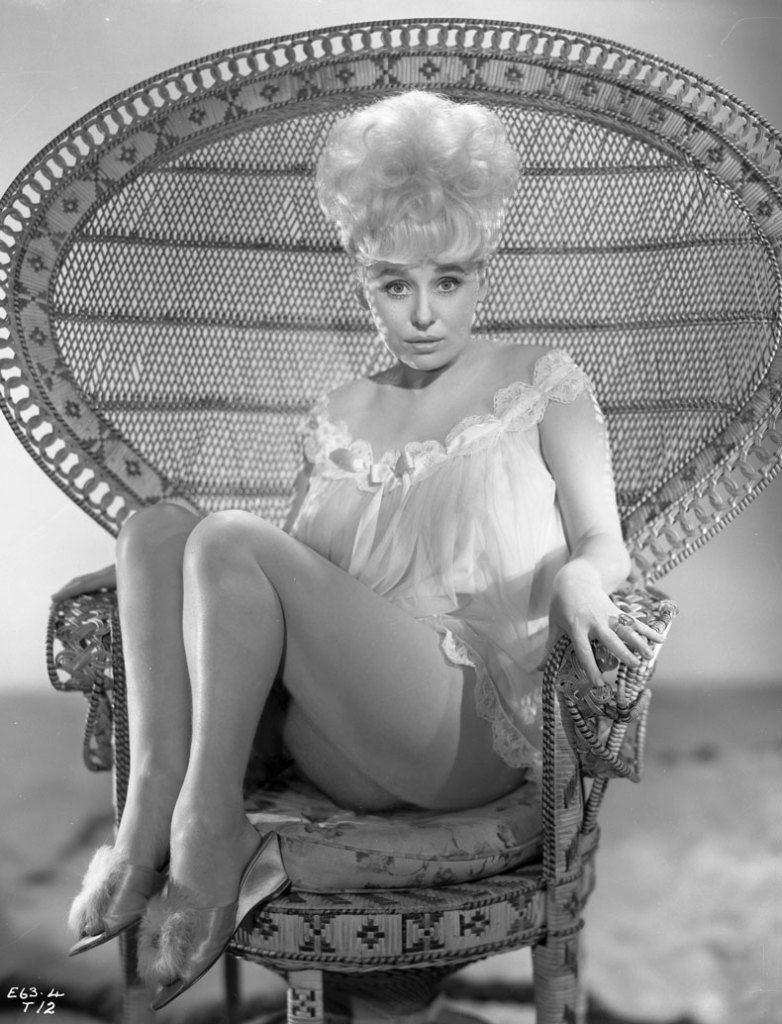
Monroe haunts all four studies like a ghost. Intermittently shimmering back into view – quite aside from her obvious status as a tonier prototype for Dors, she appears as a style inspiration for Ellis, who adopted a version of her cloud-like peroxide hairstyle in the hopes of transcending her working-class roots, and as a kind of transatlantic bimbo-in-arms for the bawdy, lovely Barbara Windsor, whom Nead presents circa Carry On as a sentient, inflated cartoon who is ‘at once all body, and entirely uncorporeal’.
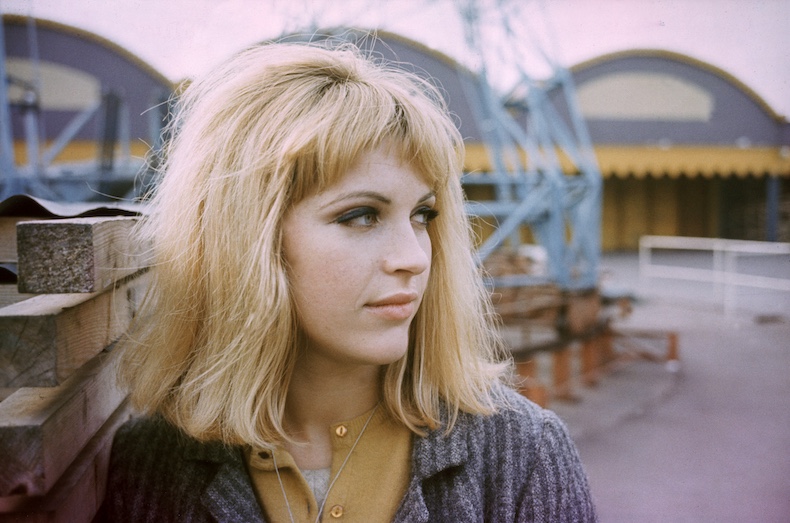
Perhaps most intriguing of all is the connection between Monroe and the artist Pauline Boty, who not only performed in costume as Marilyn while studying at the Wimbledon School of Art in the 1960s, but also used her as a painterly muse – most famously, for a work from 1963 whose title is a thesis in itself. In The Only Blonde in the World, Monroe seems to stride across the canvas just as she did across the global consciousness, with Boty recreating a press photograph from Some Like It Hot in feathery, spectral strokes. The real Monroe had died the previous year and yet, as Nead smartly demonstrates, echoes of her image – sometimes sleazy, sometimes gritty, sometimes presented as pastiche, but always indebted to the woman Norman Mailer once called ‘more than the silver witch of us all’ – could be found everywhere, even in working-class Britain, from the mid 1950s onwards.
Monroe remains the only blonde in the world, in a sense, being more or less unsurpassable in terms of her iconic status, and yet she has produced many descendants – golden heads gleaming in light and in darkness. Lest we forget, Nead reminds us near the end of the book: one of the nation’s most famous blondes of the 1960s, just as touched by the aesthetic influence of Hollywood as many other British women, was the Moors murderer Myra Hindley. Her dead-eyed, platinum-haired mugshot feels chillingly like an accidental homage to Andy Warhol’s White Marilyn (1962).
British Blonde: Women, Desire and the Image in Post-War Britain by Lynda Nead is published by the Paul Mellon Centre.
From the December 2025 issue of Apollo. Preview and subscribe here.