
The British Council’s chief executive, Scott McDonald, has gone public about the organisation’s dire financial situation. This is largely because of the punitive commercial rates of interest applied to the repayment of an emergency £250m loan from the government when Covid lockdowns disrupted its overseas activities, including the teaching of English and the organisation of travelling art exhibitions. Fundamental restructures, swingeing job cuts and sales of parts of the estate have already raised £50m, but with the remaining repayments due to start being paid by September 2026, McDonald has warned that every part of the organisation that can feasibly be sold off is being considered for sale. This includes parts of the British Council’s art collection.
Comprising nearly 9,000 works of modern and contemporary art by artists including Lucian Freud, David Hockney and Lubaina Himid, the collection was established in 1938 as a means of putting on international exhibitions where it was strategically important that Britain had cultural representation. At the World’s Fair in New York in 1939, for example, art played a role in building alliances between Britain and the United States at a time when the latter held an isolationist position and the former needed to win hearts and minds – and military assistance – on the brink of war.
The development of the collection was initially modest, with the acquisition of artists’ prints that could be bought cheaply and travel easily, but these were soon joined by painting and sculpture that demonstrated the artistic achievements of an emerging avant-garde. The British Council’s ambitious travelling exhibition programme has fostered the international reputations of British artists – most notably Henry Moore – while forging warm friendships in frosty conditions, including Cold War contexts. The work of its curators has launched and cemented artists’ careers, making sometimes challenging British art into a desirable cultural export. Its coverage is now vast, including installation and performance, video and VR.
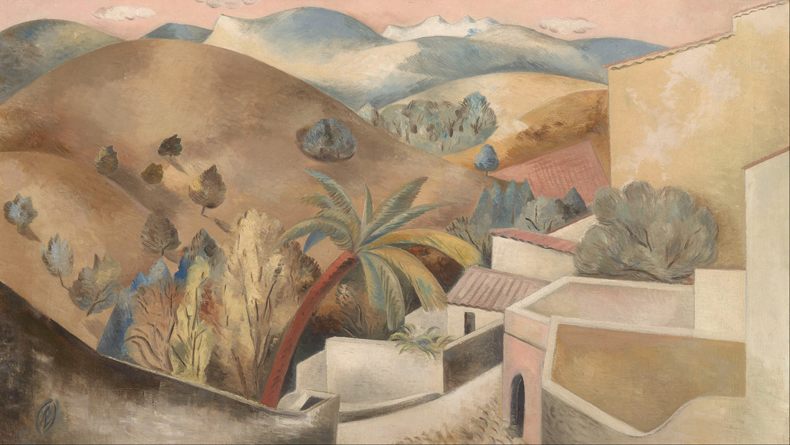
The British Council Collection is not widely understood. In recent days I have seen it discussed as if it were merely décor. If it is not commonly known about, this is because it is mostly displayed outside the UK and does not have a permanent exhibition space. As a museum without walls, its principal function is to serve the purposes of cultural diplomacy. It has travelled to meet these ends over some 90 years and in more than 100 countries. Unlike most works of art, those belonging to the British Council lead exceptionally busy exhibition lives, clocking up global tour dates from Afghanistan to Zambia.
As objects that are highly prized, and as fragile items transported with care across vast distances, sometimes at enormous risk, art in the British Council Collection embodies trust, investment and commitment. Many works in the British Council Collection were purchased under an agreement that they could not be sold; those outside this contract are now under review. McDonald has reckoned the value of the British Council Collection at £200m, precisely matching the remaining debt to the government. To prevent the organisation from going under, and to keep its assets in public ownership, he has offered them to the Government Art Collection in lieu of repayment. As a parallel national collection with a state purpose, its proposed new home would provide protection for the works and allow them to continue to operate as artistic ambassadors if, indeed, the British Council can survive.
The government launched a new Soft Power Council in January 2025, recognising the vital importance of international cultural dialogue and partnership, but the British Council’s calls for the government to write off the debt of the largest and longest standing operator in this domain have so far met with silence. Its art is now its bargaining chip.
Annebella Pollen is professor of visual and material culture at the University of Brighton. She is the author of Art without Frontiers: The Story of the British Council, Visual Arts and a Changing World (Art/Books).