From the March 2026 issue of Apollo.
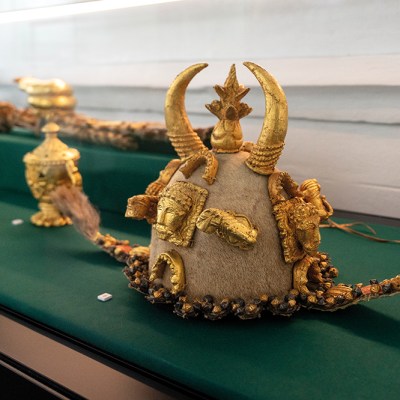
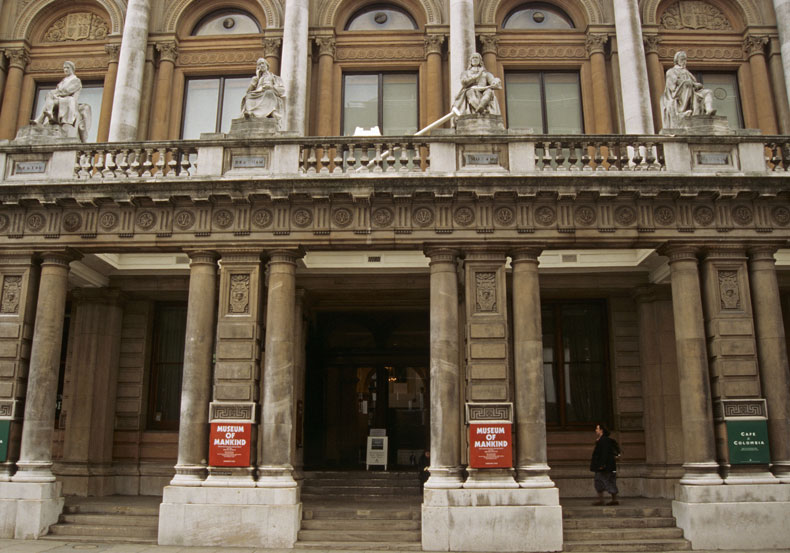
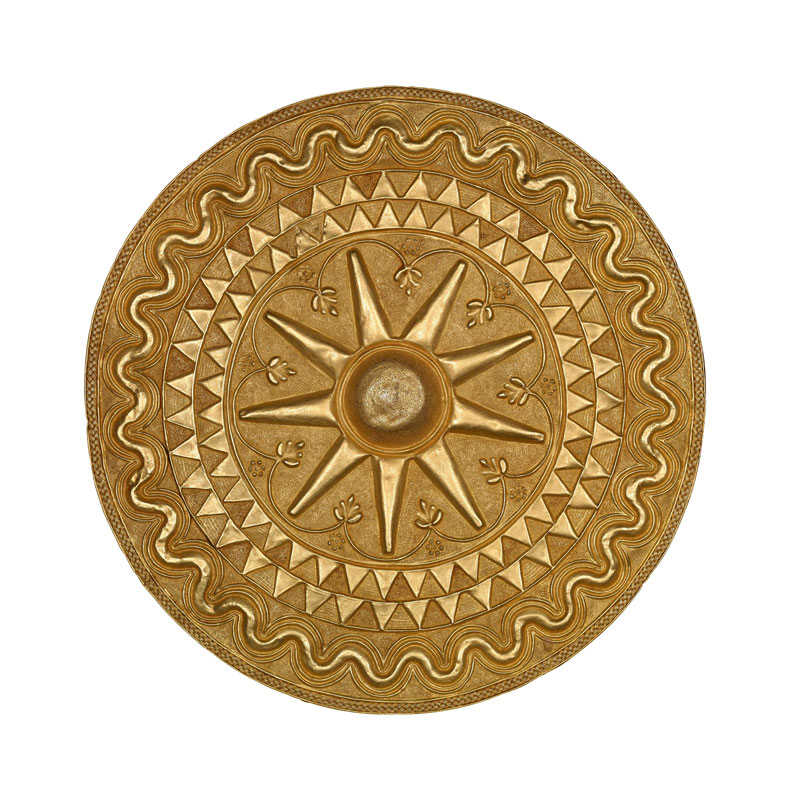
One October lunchtime in 1991, a warder in the Museum of Mankind – the Piccadilly home of the British Museum’s ethnographic collection for two decades until the late 1990s – was horrified to discover a wooden case prised open, apparently with a screwdriver that lay discarded nearby. Three objects had been taken, with a combined value of £95,000, or about £208,000 today: two pre-Columbian vases and the largest of the museum’s akrafokonmu, or soul discs, which come from the West African kingdom of Asante, in modern-day Ghana. The British Museum had been given this disc in 1925 by Sir Bignell Elliott, a timber merchant, when the acquisition of an ‘exceptionally large specimen’ – 21.5cm in diameter – merited a special mention in the Times. (The disc is also unusual in that, unlike much of the British Museum’s Asante gold, it was not looted by British soldiers in the 19th century.)
The Museum of Mankind was instantly closed and everyone was searched, but to no avail. The vases turned up weeks later in Brussels, where a suspicious dealer raised the alarm. But the British Museum would not recover the Asante disc for more than a decade, and then only by chance. In 2002 the Indianapolis Museum of Art made an exciting new acquisition, which just happened to be an Asante gold disc, the symbol of its annual ‘Africa Fest’. It printed T-shirts displaying the disc. But Doran Ross, a scholar at the Fowler Museum in California, noticed the similarity between the Indianapolis disc and the missing one from the British Museum. ‘It was very embarrassing how it just turned up,’ I was told by Nigel Barley, a British Museum curator. In March 2002, this awkward business was settled as quietly as possible. British Museum trustees, satisfied that their Indianapolis counterparts had purchased the disc in good faith, loaned it to them for ‘Africa Fest’. It has been back in the British Museum ever since.
I came across this story while researching a book on Britain’s relationship with Asante, and the plunder of that kingdom’s golden regalia. As I dug deeper, the story became even stranger: throughout the 1990s, as a British Museum curator ruefully told me, the stolen Asante disc had been ‘hiding in plain sight’. By 1994 it was in the possession of a German collector, Karl-Ferdinand Schaedler, who published photographs of it and loaned it to at least two museums, including the Museum für Völkerkunde in Vienna (now the Weltmuseum). Schaedler sold the disc at Sotheby’s in New York in 1999, when it featured prominently in the auction catalogue. That is where the Indianapolis Museum of Art bought it for $9,200.
It is difficult to say who comes out of this story the worst: Schaedler, Sotheby’s or the British Museum. Did Schaedler investigate the provenance of the disc he mysteriously acquired in the early 1990s? He died in 2024 and I was unable to ask him. (‘He was completely honest and would have been horrified if he’d known it was stolen,’ says a friend of his.) What diligence did Sotheby’s do? It would not answer my enquiries. As for the British Museum, although its curators reported the disc’s theft to the police, it had no idea it was being paraded around museums in Europe and the United States and had been sold at Sotheby’s until the attentive Ross tipped them off. In 2025 the British Museum disingenuously updated the disc’s website page, to include the Vienna and Indianapolis museum ‘loans’.
Maybe, to be charitable, we forget how unconnected we all were before the internet. Catalogues that today we scan with the click of a button were not so easy to access. My research uncovered more thefts from the British Museum in the 1980s and ’90s. The most eyebrow-raising of these involved a former employee, who stole hundreds of mostly 18th-century prints, apparently over several years. In April 1992, Nigel Peverett, an antiques dealer who had worked in the museum’s department of prints and drawings in the 1970s, was caught trying to leave the building with 35 prints worth an estimated £5,000. When the police searched his Kent cottage they discovered 169 more prints, worth some £27,000. Peverett then admitted to stealing a further 150 prints, which he had already sold to a friend, Anthony Guyan, who ran a stall on Portobello Road. ‘There was some concern,’ say the British Museum trustees’ minutes, ‘that many more than the 300 or so prints to the theft of which he had confessed had been stolen.’
By November 1992, the British Museum had recovered 55 stolen prints from Guyan and other dealers. But Guyan typically sold for cash, often to customers he did not know. He told me that he had been unaware of the dodgy provenance of Peverett’s prints.
‘I trusted him, I was very angry. When I found out, I gave everything I had back to the British Museum. It cost me a fortune.’ On the basis of Peverett’s figures – ‘not necessarily reliable’, as the trustees put it – 95 prints were still missing by late 1992, but the exact number will never be known. Many of the recovered prints were damaged, as Peverett had scraped off their museum registration with a razor blade or cut them down crudely in size. Another dealer in Kent, Richard Luck of Hastings, told me that Peverett would boast of ‘going into the British Museum with one bag and coming out with four. It was all before computers; he said the place was a shambles.’
The sense of betrayal British Museum trustees and employees felt over the Peverett affair reminds me of the sentiments they expressed in 2023, when news broke of the theft of hundreds of pieces of ancient jewellery and gemstones, apparently by a curator, and which led to the resignation of the director, Hartwig Fischer. On both occasions, they asked in dismay, how could somebody from within the museum do this?
In the past, curators at Western museums would argue that their institutions were more secure than those in the developing world, and this was a reason why they should not return treasures looted in colonial times. Today, that argument rings hollow. But for all the embarrassment these revelations cause, they are perhaps incidental to the debates about restitution. The Asante argue that the gold regalia should go back to Kumasi because British soldiers stole it. The same goes for Nigeria and the Benin Bronzes, just as the Greek government believes that the Parthenon Marbles should be returned to Athens because Lord Elgin had no right to take them. These arguments, whatever their respective merits, are moral ones and not based on standards of curatorship. In response, the British Museum’s current director, Nicholas Cullinan, is trying to develop his own philosophy, of a museum that loans contested objects around the world but does not concede on ownership. The British Museum chose not to comment on any of the details in this story. Nonetheless, it must surely be hoping there are no more embarrassing revelations in the archives.
From the March 2026 issue of Apollo.
This piece went to press on 17 February. On 2 March, the British Museum said:
‘These events occurred decades ago and the individual was caught and prosecuted at the time.
Thefts will unfortunately always be a risk for every museum and for this reason we take safeguarding the collection incredibly seriously. Alongside security measures, making the collection more widely known is another way we feel makes it safer and in 2023 we committed to have it fully digitised within five years.’