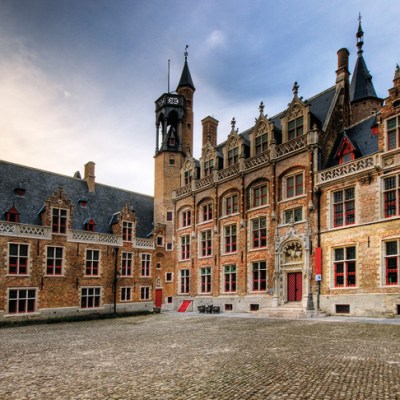
Some 10 million people visit Bruges a year, which for a place with a population of 120,000 (roughly the same as Gloucester or Basildon) is a lot. Tourists come for the art – the astounding Hans Memling triptych altarpiece at the St John’s Hospital Museum or the selection of Flemish Primitive paintings at the Groeninge Museum – as well as to see the picturesque canals down which Colin Farrell floats miserably in In Bruges (2008), or to take in the quaint stepped-gable houses over a glass of 6 per cent Brugse Zot and a piping-hot bowl of stoofvlees. Bruges has in the past been acutely aware of the problems of overtourism and has, since the ’90s, implemented various measures, including caps on hotel numbers and a ban on new Airbnb listings, to stem the tide.
Balancing the need of locals to not be overrun and the desire to attract visitors is Bruges’s central quandary and it’s one that plays out in the city’s newest art space, BRUSK, which opened in May. ‘The challenge lies in attracting younger audiences and inhabitants of the city,’ says Kristl Strubbe, head of Musea Brugge, when I ask her about the motivations behind this project. ‘Locals can feel a bit distant from their own heritage because it’s so full of tourists.’
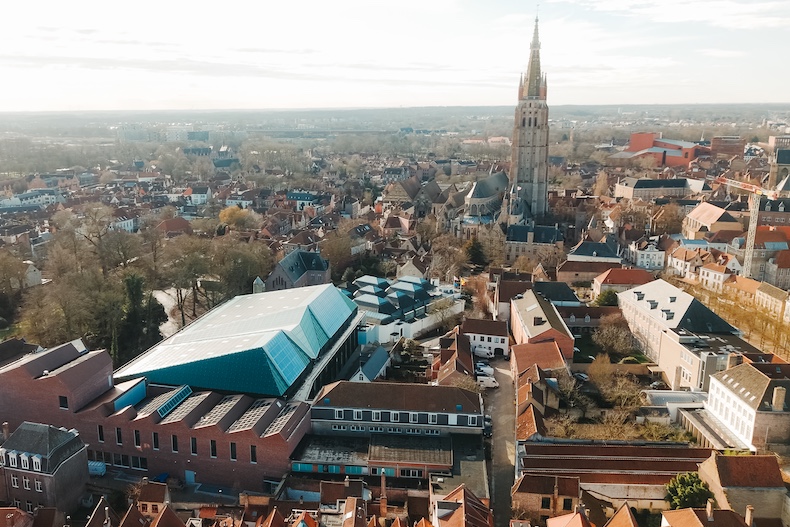
BRUSK is, in part, an attempt to change that. The latest addition to the Musea Brugge family, which includes the two aforementioned museums as well as the Belfry, the Gothic City Hall and the Gruuthusemuseum, BRUSK was first floated a decade or so ago, in response to the lack of temporary exhibition spaces in the city. Previously exhibitions had to be held in the Groeninge Museum – home mostly to Flemish Primitives, including Gerard David’s Judgement of Cambyses (1488), one of the most chilling paintings I’ve ever seen in person – but that meant that the collection had to be moved out to make room.
BRUSK sits between the Musea Brugge storage facility, the research centre and the Groeninge but, unlike the mostly medieval-style buildings of the other museums and churches, this is a big, open edifice made of glass, concrete and steel. It will, Strubbe hopes, be a more welcoming, family-friendly environment for locals to learn about their city: ‘Bruges is all about UNESCO heritage, but for this the city chose another kind of building.’ She tells me that the radically different architecture was ‘a conscious choice to attract different audiences’, who can enter the ground floor for free and admire the sprawling fresco commissioned from Laure Prouvost, have a coffee in the cafe and wander around the gardens behind the building. When thinking about models, Strubbe says that it was something like a mixture of three places: the Grand Palais, the Kunsthal Rotterdam (although that is a museum ‘you could pick up and put wherever, since its content is less linked to the city’) and Bozar (whose shows have a built-in ‘mark of quality’).
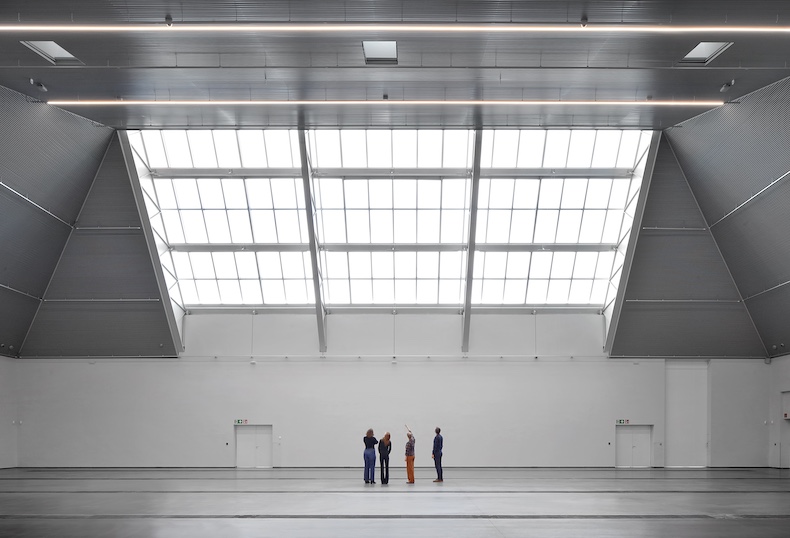
If BRUSK’s main draw is for the locals, then it is notable that the curators have enlisted some starry names from elsewhere to help organise the opening programme: the British historian Peter Frankopan and the Turkish-American artist Refik Anadol. Frankopan has co-curated ‘Bigger Picture: Connected Worlds of Bruges 900–1550’, while Anadol has been commissioned to produce one of his changeable ‘digital paintings’, which uses AI to translate data and archival images related to Bruges into a swirling mass of colours and shapes. The two exhibitions are different in just about every way, though they are united by their focus on the city of Bruges. And the sharp contrast between the Middle Ages and cutting-edge contemporary technology feels rather fitting for a city that looks medieval but has in fact been almost entirely rebuilt from the 19th century onwards.
If Anadol’s installation offers a perfectly pleasant if weightless artistic experience, ‘Connected Worlds’ is a much more ambitious piece of storytelling. Arranged in one huge room, the exhibition aims to take a genuinely global view of world history and to show how Bruges in the medieval period was a hub of trade, culture and ideas. Things start even before then: early pieces here include the rudder of a Roman ship, found in the late 19th century while archaeologists were digging during the expansion of the port of Bruges, which shows how the city (its name means ‘bridge’) was in command of the North Sea from much earlier than might have been imagined. If the rudder scores high on historical interest and low on aesthetic appeal, an object that gets full marks for both is a magnificent hairpin discovered just outside the city that dates to the late fifth or early sixth century. Found on the site of a former Roman military camp, the slender pin is decorated with a small red gemstone that comes from Sri Lanka or southern India.
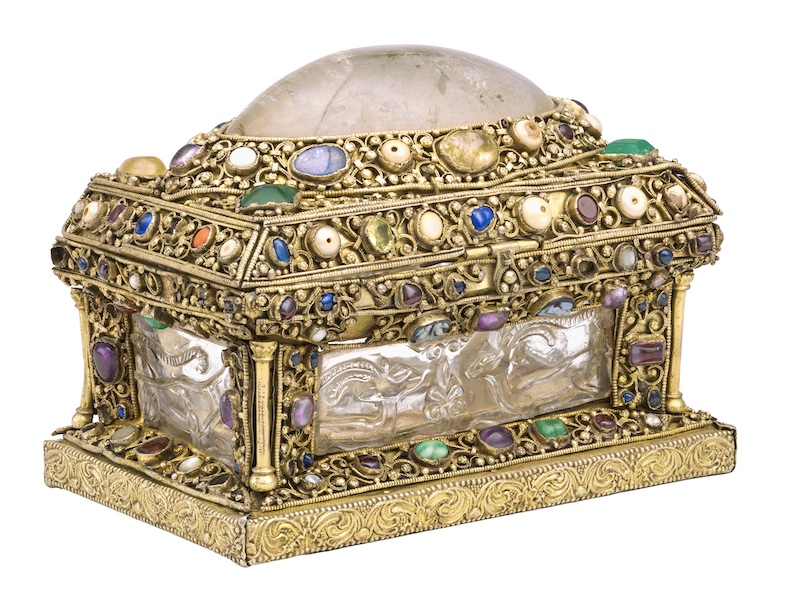
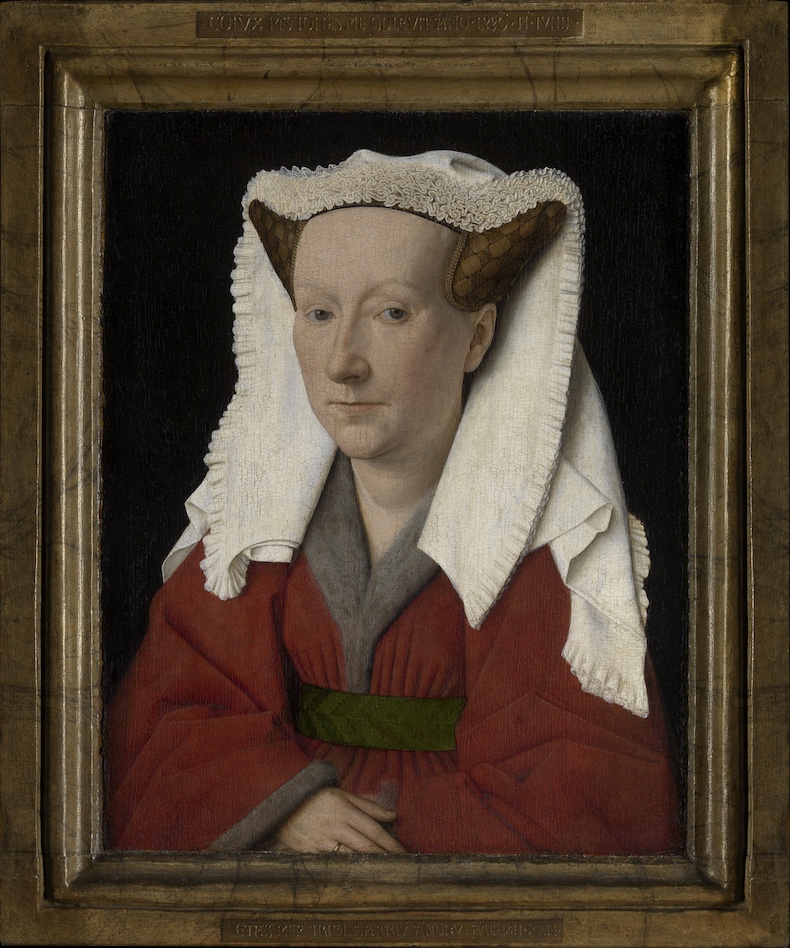
The curators also use paintings from Musea Brugge’s collection to illustrate their case. Jan van Eyck’s portrait of his wife from 1439 displays a knowledge of pigments and geometry that the artist picked up through contemporaneous Latin translations of Arabic texts. Jan Provoost’s Crucifixion of c. 1501–05 is used to show how artists travelled far and wide, including to Jerusalem, to give verisimilitude to their paintings. Flemish interest in Jerusalem can be seen not only in museum collections but in the city’s architecture too: the chapel at the 15th-century Adornesdomein, which lies just 15 minutes’ walk from BRUSK, was built as an homage to the Holy Sepulchre Church in Jerusalem, while the nearby Basilica of the Holy Blood contains a purported vial of Christ’s blood, brought back by Thierry of Alsace in 1150. Perhaps most impressive is the array of loans that have been secured: Bellini’s Sultan Mehmet II (1480) from the National Gallery in London, an ornate casket from Egypt that found its way to France and was redecorated with gemstones and turned into a reliquary in the 12th or 13th century from the Musée de Cluny in Paris, and the immensely fragile Panoplia dogmatica, written by the Byzantine monk Euthymius Zigabenus in the 12th century, from the Vatican Library.
By the mid 16th century Bruges’s might had begun to fade. The tidal inlet that had once connected the city to the North Sea had vanished, meaning that it no longer had an advantage when it came to sea trade, and Antwerp, which had lower taxes and offered greater financial incentives, gradually overtook Bruges as the most important city in Flanders. This exhibition not only tells a story of that golden age; it is also a reminder that although the city is no longer an international trading powerhouse, it is still very much a cultural one.
‘Bigger Picture: Connected Worlds of Bruges 900–1550’ is at BRUSK, Bruges, until 6 September.
‘Refik Anadol: Latent City’ is at BRUSK until 9 November.