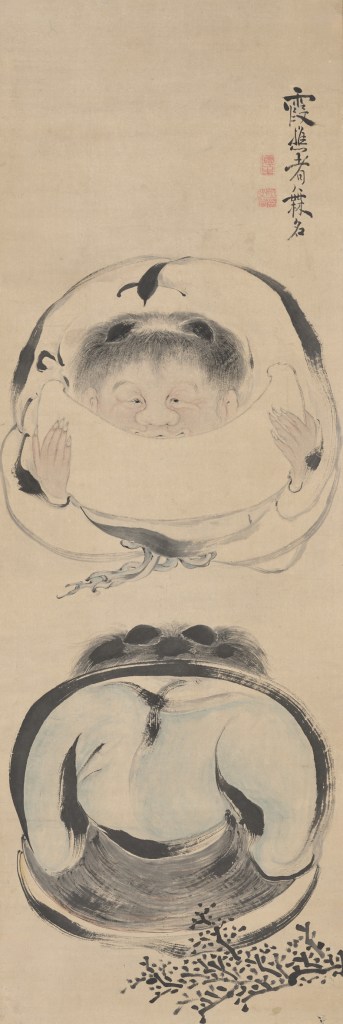
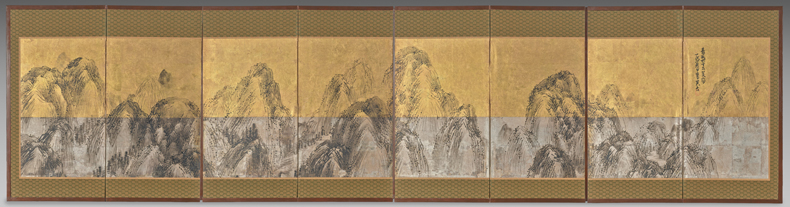
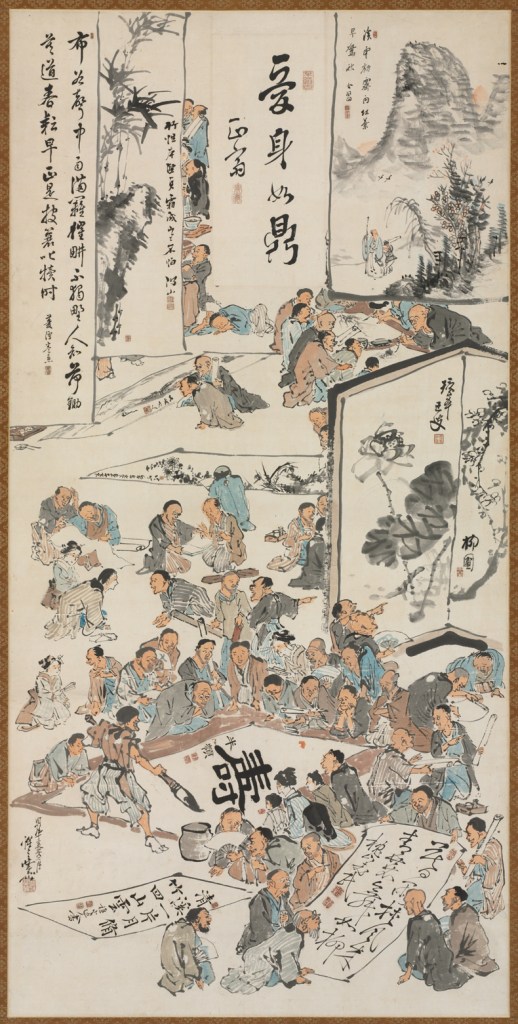
In the Northern Song dynasty (960–1127), scholars who held government positions and got together to share and discuss art and poetry were known as wenren. This tradition, in which scholars encouraged each other to make art as well as talk about it, eventually made its way to Korea – and to Japan, where it flourished during the Edo period (1615–1868) in particular. This free display at the Cleveland Museum of Art brings together works from its collection that are by or about bunjin – the Japanese term for wenren – from the 18th and 19th centuries (21 June–6 December). These amateur artists’ compositions range from graceful to comical to self-reflexive; highlights include Kawanabe Kyōsai’s hanging scroll Calligraphy and Painting Party (1880), a gathering of bunjin that was itself painted with the help of bunjin, and Ike Taiga’s Hanshan and Shide (c. 1745–76), in which the monk-poet Hanshan, presented here as an almost spherically rotund figure, reads poetry to his friend Shide.
Find out more from the Cleveland Museum of Art’s website.
Preview below | View Apollo’s Art Diary