From the May 2026 issue of Apollo.
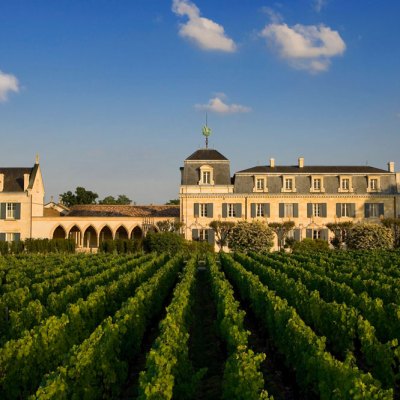
Château La Coste in Provence is many things at once: a vineyard, a sculpture park, an architectural marvel, a gastronomic destination and a place of natural beauty, set amid the gentle hills and wild forest of the Provençal countryside. La Coste’s aesthetic appeal is so strong that the wine production sometimes gets overshadowed. Yet for its proprietor, Paddy McKillen, ‘the vines come first.’
‘The art and architecture projects have grown organically in response to this landscape and the wine,’ McKillen says. Rosé has been blended in the area since antiquity, with the arrival of Greek settlements in the Marseille region and, today, the consumer market for rosé is estimated at 36 million people worldwide. Provence is well known for its rosé and, under French wine law, strict regulations govern what can be grown and how it can be farmed, with rules about everything from the distance between vine rows to the exact mix of blends. La Coste’s rosé blends Grenache, Cinsault, Syrah and Cabernet Sauvignon to achieve a pale colour and a particular flavour, with notes of citrus peel and white stone fruit and a saline finish that seems to gesture towards the coast.
Good rosé is a complicated wine to make. At La Coste, the winemakers use gentle methods of organic farming: the grapes are picked parcel by parcel, for example, and each harvest is fermented separately to maintain the distinctiveness of each parcel from each small section of mineral-imparting land. The grapes are cooled, pressed and transferred into stainless steel tanks. Natural yeasts add complexity in each vessel and final blending is not based on a set formula, but according to taste, allowing the winemakers to use their intuition and judgement. La Coste was awarded an ‘Organic Farming’ label in 2009 and the entire plot has been organic since 2013. McKillen regards organic farming as being in the ‘spirit of sharing’ that underpins the vineyard, and, through ‘helping artists or architects realise ambitious installations, it has been a labour of love’.
McKillen wanted to work on ‘an architecture project’, he says, ‘not a space project’. He asked his ‘architecture buddies’ – Frank Gehry, Renzo Piano and Richard Rogers among them – to think about what they could contribute to the estate. Gehry designed the angular Music Pavilion on the grounds, Piano an art gallery and Rogers the Richard Rogers Drawing Gallery, a cantilevered box that stretches out over a hillside. On the estate, architecture is mixed with sculpture – a way of exploring definitions and boundaries. What counts as architecture and what as sculpture, and how do both affect the viewer’s encounter with the landscape and the vines? Crucially, everywhere you look the vines are in frame.
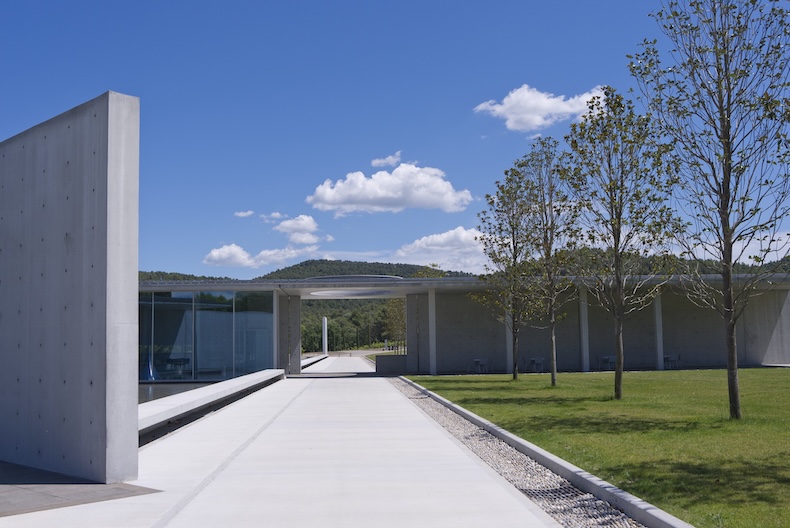
Visitors enter the domaine via Tadao Ando’s subtle, minimalist concrete gate. He designed the art centre in 2011, replacing rootstock with a series of concrete columns dug into the soil. His pillars recede on to a gentle slope of Cabernet Sauvignon vines, underscoring the technical element of viticulture. At the same time, the vines roll down into the art centre to remind visitors that they are also part of the art.
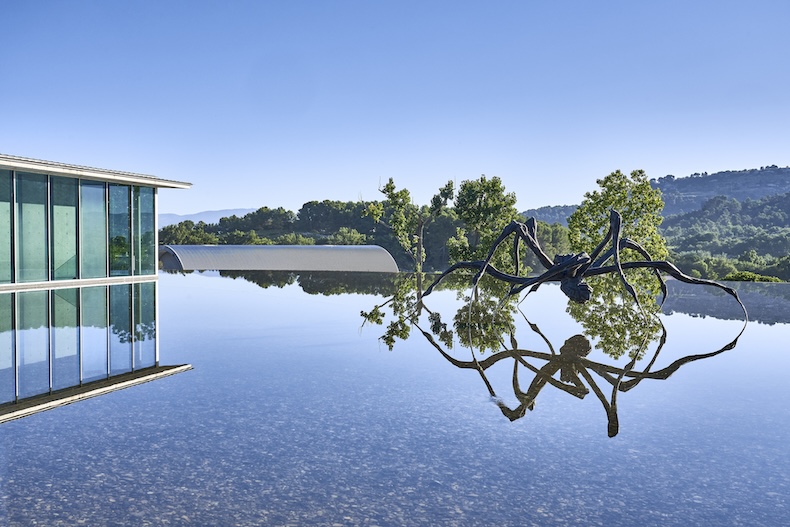
Gallo-Roman artefacts including an amphora and drinking cups have been found on the domaine over the years. The original pink-brick villa was built in 1682 and now has neighbours that include a silver-panelled shed based on mid-century architectural engineering principles, an 18th-century Vietnamese tea house shipped and erected and now used for ceremonies, and two Demountable Houses, assembled according to the instructions of Jean Prouvé. The latest pavilion to open – the last building designed by Oscar Niemeyer before his death in 2012 – was unveiled in 2022 and features a 380-square-metre gallery space encircled by a curved glass facade and reflective pool, offering views across the rows of Rolle vines that surround them.
The working buildings of the winery, designed by Jean Nouvel, are built from steel and concrete and are full of natural light. The cellar reaches 17 metres below the ground, where vats are accessed through suspended steel footbridges. The estate is currently expanding its cellars to include more space for wine tasting and educational programmes.
‘Artists and architects were invited like other friends – to share the beauty of the domaine,’ McKillen says. At La Coste, that beauty is both natural and constructed, but the terroir is the starting point for everything that happens there. ‘It all comes from this,’ McKillen says of the land where La Coste’s blueprint begins.
From the May 2026 issue of Apollo.