In the late 1930s, when Henri Langlois co-founded and ran the Cinémathèque in Paris, he embarked on one of the earliest efforts to present cinema as an art with a history. He did so in the way he projected films, screening them to create correspondences like a curator hangs paintings in a museum, while fearing that the celluloid film reels might disappear. He worried about fires, ageing and censorship, particularly with the Nazis in Germany seizing and banning art considered ‘degenerate’.
The same worries of physical destruction do not exist for digital films, nor is physical storage an issue, with the vast cloud space at our disposal. But one of the most intriguing projects of the digital age is Immemory (1998), a project on CD-ROM by Chris Marker (1921–2012). Now that the operating systems that could run it have been updated past the point of compatibility, Immemory has become a black box of obsolete technology and Langlois’s fears about the history of cinema have new ghosts.
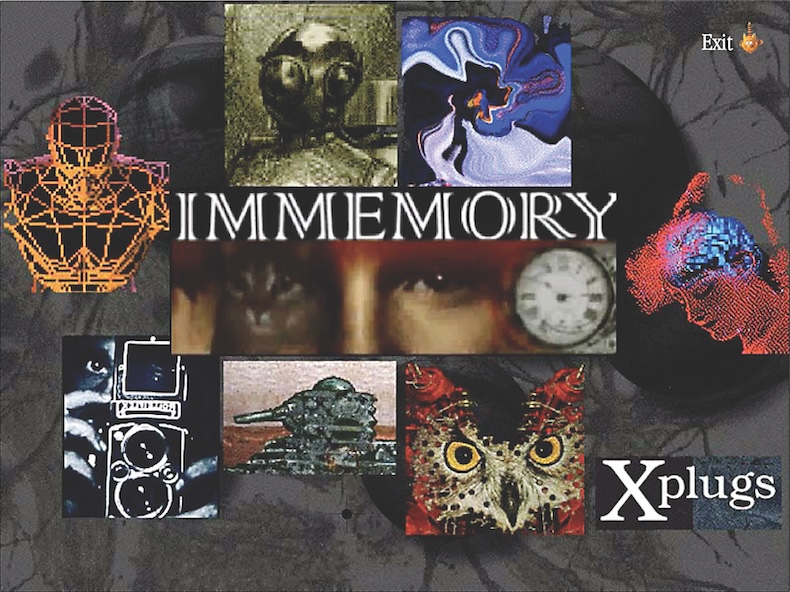
This makes the book version of Marker’s project a welcome arrival. The avant-garde press Exact Change (publishers of the English version of the CD-ROM) began working with the film-maker in 2008. It was, Marker said, ‘a brand new object, not the re-enactment of an old one […] to establish a link between Gutenberg and McLuhan, to satisfy the literates-only as well as the geeks who mourn the disappearance of the CD-ROM’.
The work Marker made in the 1990s took a distinct turn from the films for which he is best known: La Jetée (1962), a pioneering work of science fiction, and Sans soleil (1983), a personal and poetic essay film about memory and travel. By the ’90s, Marker had become increasingly interested in experimenting with other forms of technology. The CD-ROM of Immemory invited users into a vast and layered gallery of Marker’s own memories. It was divided into eight zones, each with a distinctive mood and containing images, blocks of text and bursts of sound: Cinema, War, Memory, Photography, Poetry, Travel, Museum and XPlugs, the latter being fusions of artworks with images from popular culture.
The book makes an admirable and intelligent attempt to recreate on the page the arboreal architecture by which the CD-ROM was organised and could be explored. The zones are now chapters. Each distinct screen is reproduced in the form of thumbnail photographs, followed by the text that had accompanied them. Where Marker had superimposed this text on the image, we see a photograph of this too.
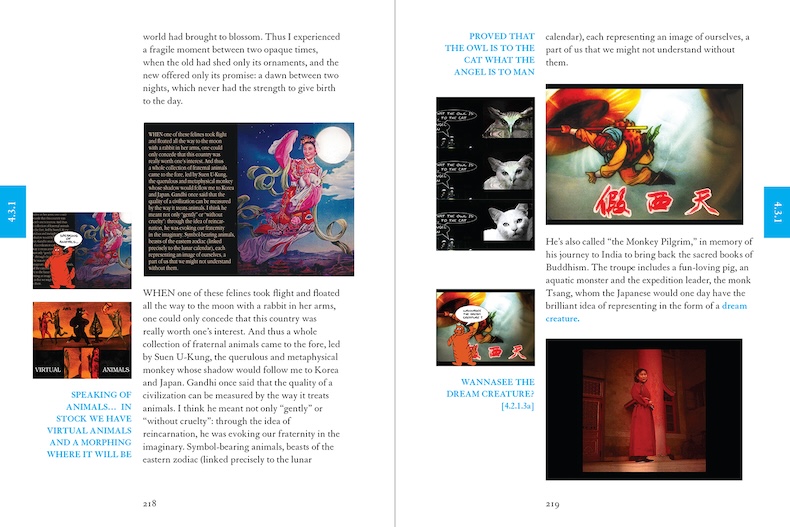
The suggested routes in the CD-ROM have been reproduced through a series of numbers highlighted in blue throughout the text to indicate other page destinations. In the middle of a paragraph and screens about the Korean War in the second zone, for example, we are referred to ‘(4.1.2a)’, which means jumping two zones ahead into Photography to a section where there is also material about Korea. Needless to say, the ‘user guide’ at the beginning of the book is essential reading.
The effort required to follow numbers and toggle between different parts of the book may seem like a minor quibble but the cumulative effect of reading is one of mild exasperation. Flicking back and forth between pages becomes tiresome in a way clicking on an icon is not. Reading Immemory the book is more like setting out for a hike, compass in one hand and map in the other.
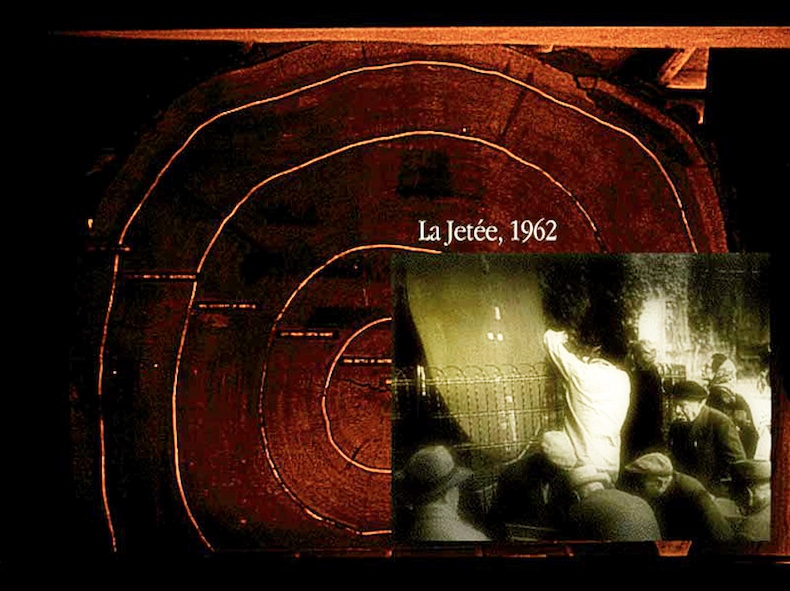
In 2005 I had the chance to explore the original Immemory when a tutor at university lent me her copy. I went home with the cumbersome case under my arm, slipped the CD into an external disk drive connected to my laptop, and off I went – inside Immemory. I regret not spending more time there; I had no idea this would be the only chance I would get. And it was like going somewhere, a virtual space where I entered different rooms and followed little signposts of encouragement on a whim, often coming across Marker’s cat avatar Guillaume-en-Égypte, who suggested I click here, or an intriguing object that lured me to click there. Exploring the virtual zones felt a bit like being in a Marker film, flitting around a subject after entering at an oblique point, an idea emerging only to blur out quickly. His films leave us with strong impressions; his memories provoke our own.
It is a cruel irony that a film-maker haunted by the possibility of forgetting tried to use technology to preserve his own reflections, only for that technology to become obsolete. Immemory in its Gutenberg Version is at least one way to avoid complete erasure. It offers instead a warning that what is described as abundant storage space is really a set of high-security vaults. We fill them with our memories and then we throw away the keys, or someone else does. The book is a welcome reminder of this fact.
Immemory: The Gutenberg Version (2025) by Chris Marker is published by Exact Change.