From the July/August 2026 issue of Apollo.
This time last year, hopping between exhibitions at London Gallery Weekend, I crossed paths with a curator from a large regional institution. She had been enticed to London by a grant offered by the Henry Moore Foundation and Tia Collection: £20,000 was available to support a public gallery project by an artist with a show at London Gallery Weekend. There was one major proviso: the artist’s exhibited medium had to be sculpture. ‘How am I meant to find a sculptor if every gallery is showing paintings?’ asked the curator, exasperated.
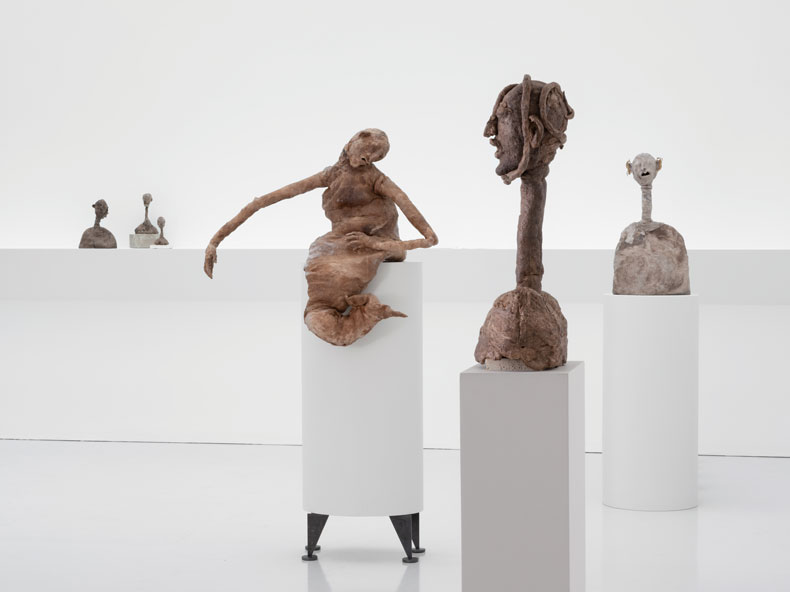
Not every gallery was showing paintings (the grant went to the Holburne Museum in Bath for an exhibition by Francis Upritchard, shown by Kate MacGarry gallery in Shoreditch). Nevertheless, the curator’s lament was justified: sculpture seems out of favour with commercial galleries and has done for a while. Among those gallerists I interviewed while researching my book How to Enter the Art World, the general intelligence was that sculpture is a hard sell in the current climate. The market was soft, dealers had overheads to clear. Nothing is a sure bet in the art world, but in difficult times, painting feels a safer option.
Wary dealers are just the cheese in the sandwich. This is a difficult time for sculpture, and it stretches all the way from art students up to collecting institutions.
Sculpture can be greedy for space and tricky to transport. This presents an issue for students – how can they work expansively when studio space at art schools is shrinking under the pressure of rising student numbers? It presents an issue for artists, who need a studio large enough to work at the required scale, and storage for their existing work. Traditional sculptural materials can be expensive, as are processes such as casting. The space and costs involved in making substantial sculptural works – particularly in the durable materials required in the public realm – is prohibitive for those who lack the means. This, in turn, dictates which artists are more likely be awarded public commissions. Artists are not commissioned to make substantial works if they have not yet been seen to make substantial works. This catch-22 is well-recognised: the Royal Society of Sculptors set up the biennial First Plinth award to support artists who wish to build a track record in public art.
For artists who receive commissions and institutional shows, the problem of storage expands commensurately. Imagine the sheer volume of sculptural work that goes into a solo exhibition at a mid-sized gallery. Sure, some might be on loan, but most artists want to make and show new work in an exhibition, so much will have come from their studio. As museum spaces have become larger, the sculpture and installations created to stand within them has also grown.
Then there are the biennials and triennials that fill up the art calendar: they thrive on spectacle, so many participating artists will want to go all-out. Now imagine having to store all these commissions, biennial installations and new works once the shows finish. What to do with a freestanding steel sculpture commissioned for a six-month exhibition once the show closes? And what about the transport costs?
Historically, for impecunious sculptors the answer was to make large works from inexpensive – often found – materials and then chuck everything in a skip at the end of the exhibition. A number of times I’ve tried to track down sculpture documented in photos from the 1970s or ’80s, only to be told that the work had been skipped, or abandoned on site, or carried off by a visitor after the show.
Occupying the chapel at Yorkshire Sculpture Park until 27 September, Nicola Turner’s Time’s Scythe (2026) is a writhing phantasmagoria made in situ out of horsehair, wool and antique sheep shears. After the exhibition, Turner will break it down into individual tendrils, separate out the sheep shears and store all the components for reuse in a future commission. There is thus no stable, single sculpture titled Time’s Scythe: Turner’s large works exist in an ongoing state of permutation and reuse.
Such mutability is challenging when works enter a collection. Once sold, the question of a sculpture’s storage passes from artist to collector. To museums that struggle with space, large, complicated and fragile sculptures start to become a problem.
Sculpture evolves materially in step with its time. As a result, collecting institutions often face the question of how to preserve novel substances and what happens when that’s no longer possible. How long until that latex starts to degrade? Or that stuffed nylon stocking? Or that sweat-soaked bed covered in vodka bottles, condoms and cigarette packets? Such questions give conservators sleepless nights. Suddenly the prospect of acquiring a performance work by Tino Sehgal, consisting of nothing more than a set of spoken instructions, becomes much more attractive.
Nevertheless, it is precisely sculpture’s capacity to engage materially with its moment that makes it so important. It is art apprehended with the body, whether as a small object that can be touched and held, or a larger presence with which we have to navigate space.
It can reflect our changing culture, the objects that surround us, how we arrange our lives, what we value. It can be about touch and feeling, emotional pressures, how it is to occupy three dimensions. A whole world of cultural and technical diversity is encompassed by this single term.
From the July/August 2026 issue of Apollo.