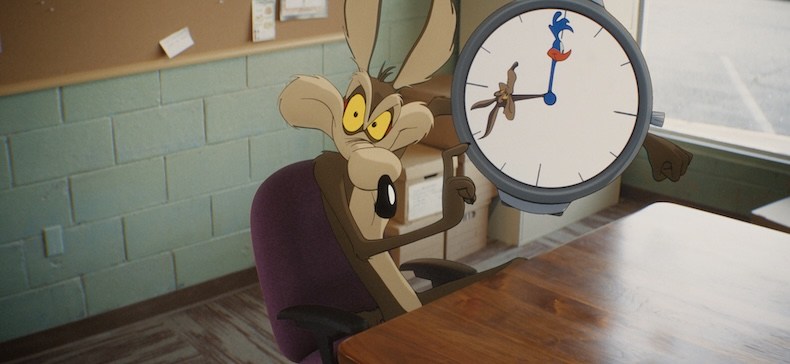
There is, I’d guess, a certain Cassandra-like satisfaction to be had from creating a satire on modern corporate capitalism and then having a modern capitalist corporation thoroughly screw you over: yep, nailed it. This is what happened to the makers of the new live-action/cartoon hybrid Coyote vs. Acme. The premise of the film, developed from an article by Ian Frazier in the New Yorker in 1990, is that, frustrated by decades of chasing the Road Runner across the New Mexico desert, Wile E. Coyote decides to sue the Acme Corporation, whose products – birdseed, ball bearings, glue, paint, anvils, giant magnets, rocket-powered roller skates, dynamite, siege catapults, cannon, earthquake pills, leg-muscle vitamins, et cetera – have consistently let him down, often with catastrophic medical consequences. He takes his case to a world-weary, down-at-heel lawyer in Albuquerque, Kevin Avery (Will Forte). Kevin at first sees him as a nuisance client and shrinks from confronting Acme, by now the largest corporation in the world; but as the case proceeds to trial and then to a congressional hearing, he comes by degrees to admire Coyote’s dedication to chasing the Road Runner – his purity of purpose offering a strong moral contrast to Acme’s fanatical attachment to profit. It’s a heart-warming underdog – to be zoologically precise, undercanid – story.
Unfortunately, after the film was completed in 2023, a recently installed regime at Warner Bros calculated that there was more money to be made writing it off against tax than releasing it – the creative team behind the film reportedly learned about the decision through media reports. But life didn’t stop imitating art there: a real-life underdog story took shape, with an online campaign to get the film released, boosted by praise from Phil Lord and Christopher Miller, makers of the Lego Movie franchise and the Spider-verse animated Spider-Man films, and Daniel Scheinert, co-director of Everything Everywhere All at Once (2022). Warner eventually agreed to sell its property to the independent distributor Ketchup Entertainment and it is now in cinemas: a proper Hollywood happy ending.
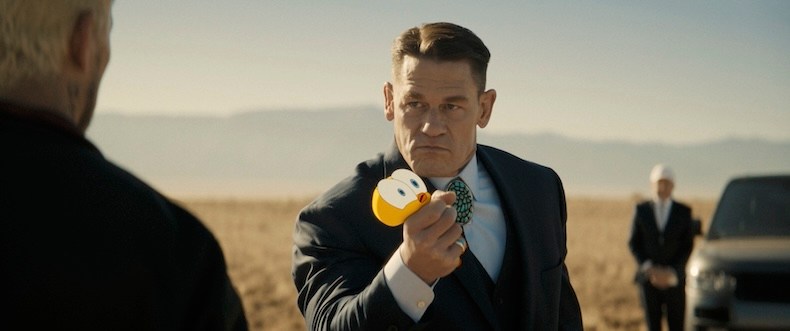
Against this background, the question of whether Coyote vs. Acme is actually any good almost feels secondary. In places it is very funny – I’d single out a brilliant slapstick chase through downtown Washington, D.C., in which Kevin’s body is treated with the same indifference to physical and biological possibility that the coyote has suffered for so many years, and a dialogue between crooked corporate lawyer Buddy (John Cena) and his covert operative Tweety Pie, in which Buddy struggles to establish precisely what Tweety tought he taw. Familiar characters are used in clever ways – aside from Tweety’s bizarre new career, there’s Elmer Fudd as chair of the congressional committee, creepily deferential to Acme’s canid-eat-canid world-view, and Foghorn Leghorn, blustering and domineering as Acme’s CEO. A sagging-eyed caricature of Peter Lorre, who used to crop up in the cartoons as a mad scientist or killer, has a cameo early on, establishing a subplot about dark secrets buried beneath Acme’s veneer of respectability; the conspiratorial theme is consolidated by Bugs Bunny’s emergence as a carrot-chomping Deep Throat.
One reservation I might register is that both script (by Samy Burch, otherwise known for the widely praised Todd Haynes film May December, 2023) and direction (by Dave Green, otherwise known for the widely panned franchise reboot Teenage Mutant Ninja Turtles: Out of the Shadows, 2016) are aimed a little too squarely at an adult audience, and a well-informed one at that. No doubt some viewers will catch the allusion in the name of Kevin’s law firm, Avery, Jones and Maltese, to Tex Avery and Chuck Jones, the two greatest Looney Tunes directors, and among the greatest directors of animation in history. But surely a vanishingly small number will recognise the name Maltese: Michael Maltese was a writer and storyboard artist whose collaborations with, especially, Jones produced many of the most densely gag-packed and surreal cartoons ever made, including the Wagnerian 1957 Bugs Bunny masterpiece What’s Opera, Doc? It’s nice to see him getting some respect but it is possible this is also symptomatic of film-makers more focused on entertaining one another than their audience.
The most interesting thing about Coyote vs. Acme is how it weaves together, perhaps not altogether wittingly, multiple film genres and strands in contemporary American pop culture. It is an amalgam of live action and cartoon, of course, but also a buddy movie, a courtroom drama, a conspiracy thriller (perhaps the dominant genre of the last 50 years) – and yet another example of Hollywood’s enthusiasm for exploiting existing IP. Throughout, it pokes, gently but definitely, at the current subservience of American culture to tech bros and corporate interests: court and Congress don’t seem to have any trouble accepting Acme’s defence against the accusation that it has been selling faulty and dangerous products – which is that the suffering of consumers is the price of progress.
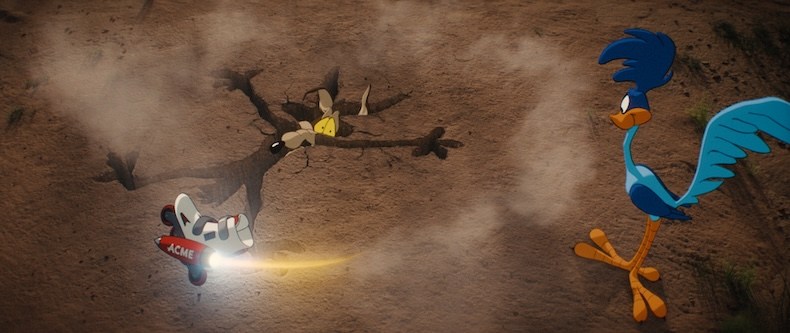
In particular, the film is an example of a genre that’s achieved a new prominence this summer: Hollywood getting Greek myth wrong. Christopher Nolan’s take on The Odyssey has been widely criticised for its sanitisation of Odysseus’s character. The man ‘of many wiles’, as the epithet is most often translated, is here filled with remorse for the slaughter in which he has taken part and, despite all temptations offered by nymphs and sorceresses, remains a faithful husband. Coyote (Wile E. – simple coincidence?) is similarly purged of vices, the underlying savagery of his quest to kill the Road Runner downplayed in favour of an enveloping pathos: it was apparently decided at an early stage in the film’s development that he had to be a lovable loser. The script plays up the symbiotic aspects of Coyote’s relationship with his prey, emphasising the ways in which they are bound together; so that at the very end, he returns to the desert to find Road Runner waiting for him much as Penelope awaited Odysseus. But Coyote vs. Acme refers more directly to another myth: Acme is running a secret project named Operation Sisyphus, while the poster shows Wile E. Coyote pushing a giant spherical bomb up a mountainside. The appropriateness of this to the Coyote of Looney Tunes is unquestionable; but in this film he’s held up as an example not of doomed futility, of a punishment to be endured, but of perseverance, gumption, the can-do attitude. As Camus would have written, if he’d given a second thought to the commercial possibilities, we must imagine Sisyphus getting the rock to the top of the slope and then exchanging hugs and high fives with the pal who never lost faith in him.
Coyote vs. Acme is in cinemas now.