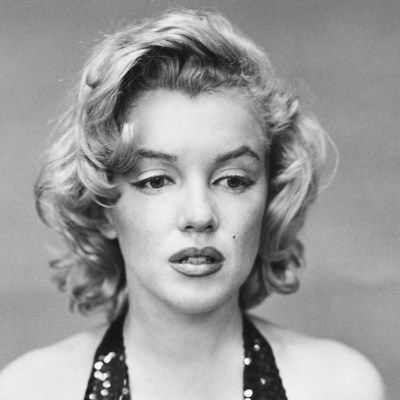
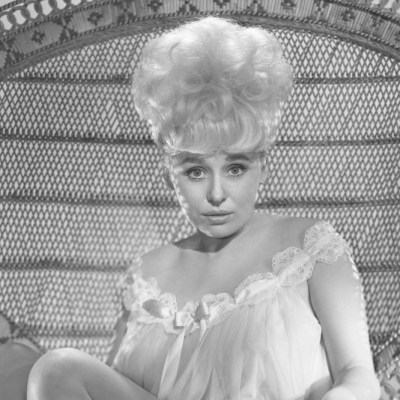
Discovered at 18 and dead by 20, the Playboy Playmate and actress Dorothy Stratten has inspired a Pulitzer Prize-winning essay, a book called The Killing of the Unicorn and not one but two motion pictures, one made for TV and one not. Her status as a muse has historically had far less to do with her role in Galaxina (1980) – in which she played a voluptuous android servant – or her turn in Skatetown U.S.A (1979) – in which she played a voluptuous woman seen ordering a pizza – or even with her crowning as 1980’s Playmate of the Year, than with the startling circumstances of her death: a gunshot to the face and the subsequent sexual violation of her body by her recently-ex-husband, Paul Snider, who then turned the weapon on himself. Snider, who immediately recognised the sweet, shy Stratten’s potential to ‘make [him] a lot of money’, seemed far less enamoured with his wife than he was with the idea of possessing her, seeing himself as a manager-pimp with a genius eye for talent rather than a common-or-garden domestic abuser. If as Oscar Wilde said, each man kills the thing he loves, it is telling that he tends only to do so when it no longer loves him. To Snider, Stratten was a ‘thing’ in the most literal sense, making it logical that when he destroyed her, he made sure to aim his weapon at the part of her which signified, for him, the sum total of her value. A woman’s face and body, and a girl’s unknowingness; a Dairy Queen employee with the scintillant glamour of a star. These antithetical qualities were what made Stratten, in the eyes of the industry, remarkable, and media that deals with her murder also tends to play up the most horribly contradictory facets of the case: titillation and terror, innocence and perversion, the snap of the lens and the crack of the gun comingling, in the end, in one deathly blast.
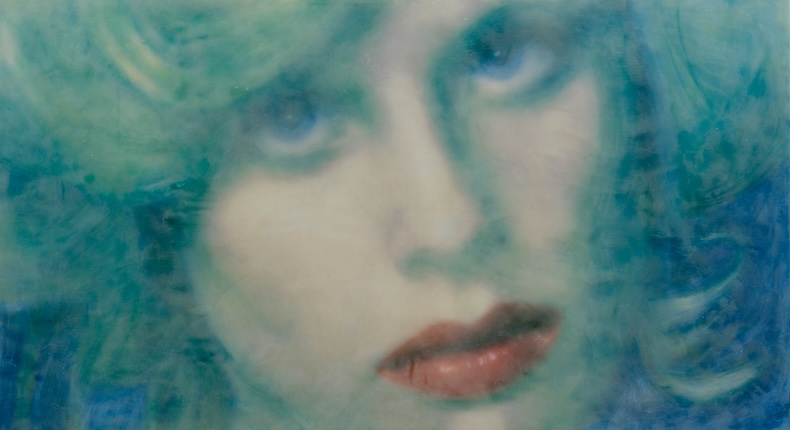
Stratten’s status as an object is emphasised by the final scenes of Bob Fosse’s biopic Star 80 (1983), where her murder takes place in a room whose posterior wall is entirely taken up by her portrait. The stark intersection of eroticism and violence was Fosse’s speciality: even his choreography, treating the pelvis as an angular locus of pleasure and pain, suggested the same dark confluence of forces, perhaps informed in equal parts by his childhood molestation and his adult womanising. One supposes he was able to identify with both the venal Snider and the brutalised Stratten, and this split identification makes Star 80 a lacerating, clear-eyed portrait of misogynistic cruelty. What it lacks is an interest in the woman at its centre, beyond her obvious status as a symbol – of death, of sex, of girlhood. Now Stratten is also the focus of a stellar, bittersweet exhibition at Bernheim Gallery in London by the artist Cristine Brache, whose paintings excise any direct reference to the killing in favour of establishing a mood that is tender, elegiac and markedly feminine. (Stratten has also, as it happens, inspired a volume of poetry by Brache, who was struck by the discovery that the actress and model wrote her own verse in private.) Spanning all three floors of the gallery, ‘Centerfolds’ incorporates numerous portraits of Stratten and also a series depicting mid-century Playboy Bunnies. Several pieces juxtapose familiar shots of the real Stratten with eerie recreations featuring Mariel Hemingway, who played her in Star 80. This uncanny doubling – two blondes, two actresses, one pose – serves to underscore both Stratten’s one-off status and also the staggering multiplicity of stories just like hers: those of girls who are subsumed by the Hollywood machine, or do not get to become fully grown women, or are victims of domestic abuse. Brache’s Playboy Bunnies, too, pictured in groups in their uniforms, suggest something between a cultish gaggle of sister-wives and the output of a human assembly line.
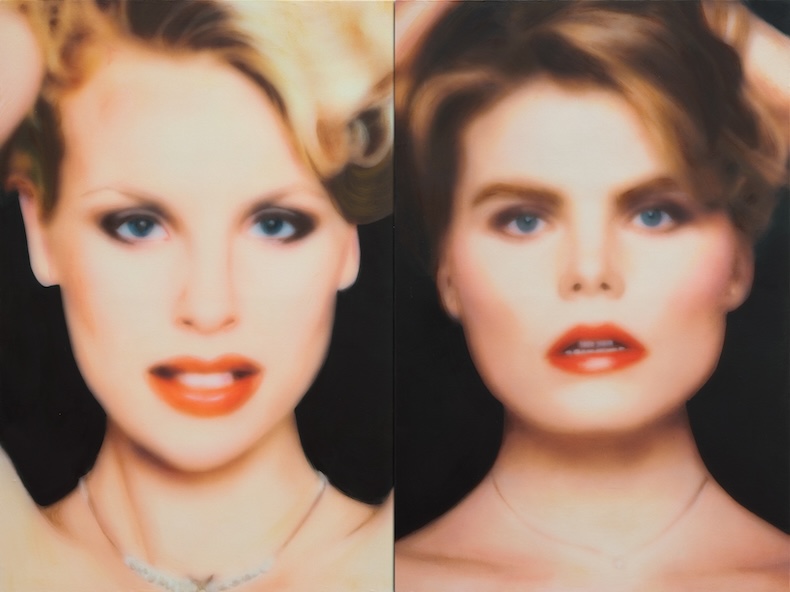
Hot girls are sometimes born, but they are more often made and, as with most popular products, we keep on manufacturing whatever sells best. The question being posed throughout ‘Centerfolds’ is: what does it mean when a woman is reduced to her image? For one thing, it allows us to view her with a dangerous detachment. Often, Brache applies a thin, bluish layer of wax over her paintings, and this distancing veil lends her subjects a spectral unreality. Details are blurred; what was once a near-photographic rendering of a face now resembles the memory of one. Working with Marissa Zappas, the artist-parfumier par excellence, Brache has also filled the space with a perfume inspired by her paintings, a choice that makes bodily and immersive what might otherwise have been a purely visual experience. A picture of a woman does not have a scent; a woman does. On ascending to the third and final floor of the gallery, where the air is thick with fragrance, I thought about those moments when the waft of a signature scent informs you that a loved one has only just vacated the room – when it hangs there, as distinctive as a portrait on a wall and, like this, you breathe them in. In the opening lines of Star 80, Hemingway-as-Stratten discusses her Playboy editorial: the pictures are not simply ‘great nude shots’, she insists, they’re ‘art, perfect art’. The same might be said of ‘Centerfolds’, which transmogrifies great nude shots into art, perfect art, and which lingers long after you have stepped out of the gallery – like perfume, like a ghost, like the image of a dead girl projected on a screen.
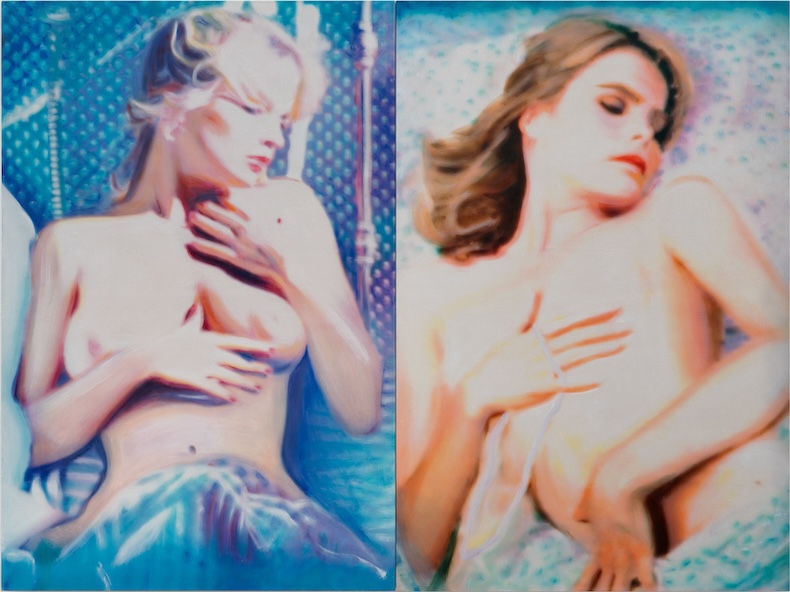
‘Centerfolds: Cristine Brache’ is at Bernheim Gallery, London, until 2 April.