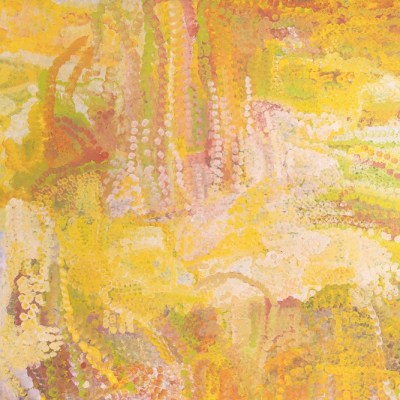
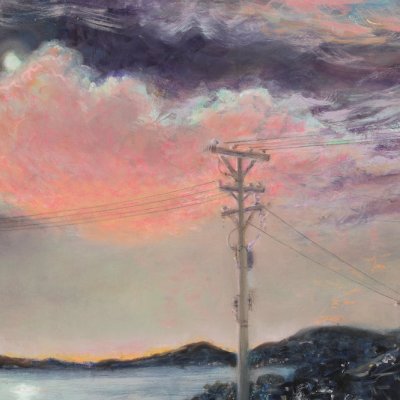
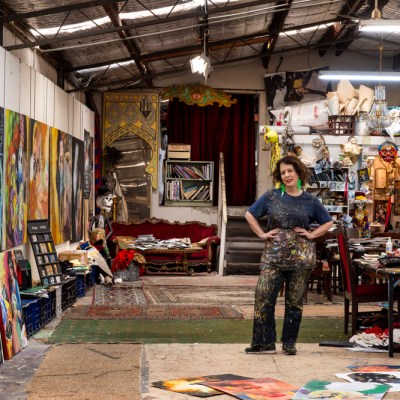
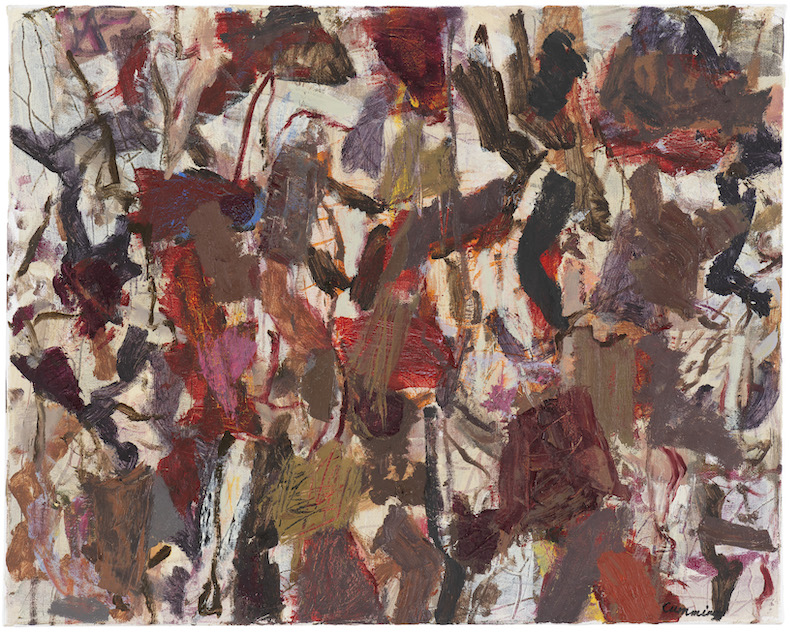
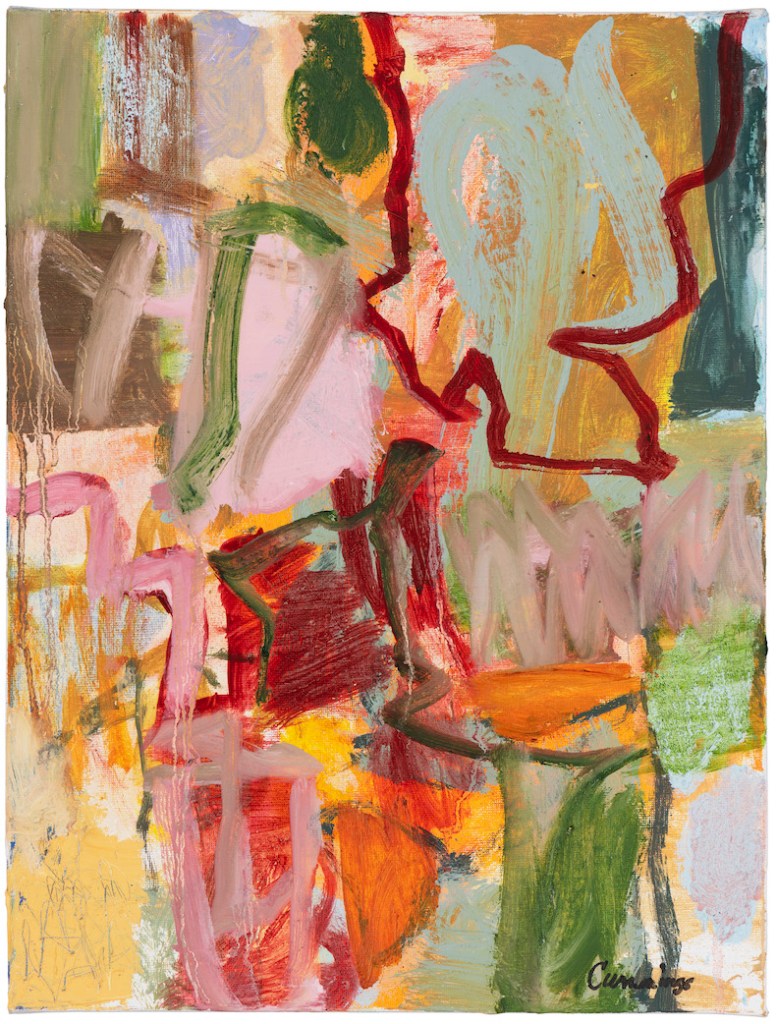
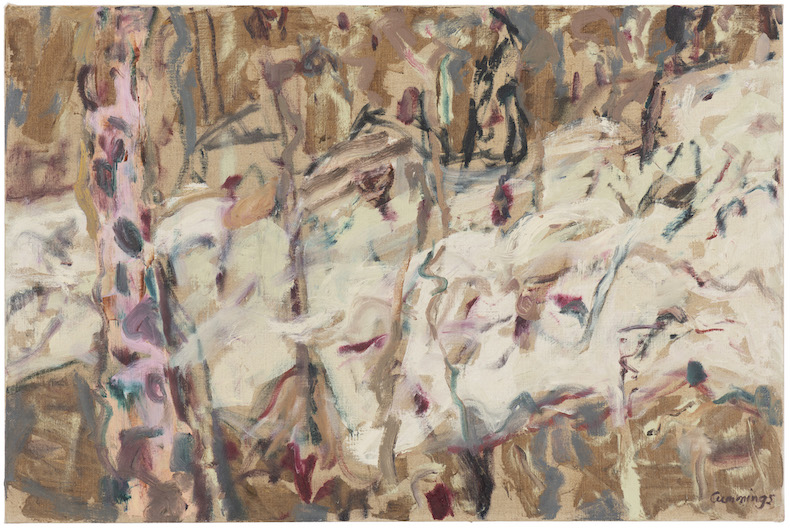
Over her six-decade career, the Australian artist Elisabeth Cummings has studied painting in Salzburg under Oskar Kokoschka, spent years living in Italy and worked out of a studio in Sydney, but it’s in her space out on a patch of Australian bushland that she most likes to paint. It’s no surprise, then, that this rugged landscape is the subject she returns to more than any other, creating abstract paintings that capture scenes from nature, from the flooding of a nearby gully to a forest floor covered with dried-up leaf litter. Still creating as much as ever in her nineties, Cummings is presenting a number of recent paintings, as well as ceramics, sculpture and works on paper, at King St Gallery on William, Sydney, until 11 April.
Where is your studio?
I have two – a small studio in Sydney and a larger studio in Wedderburn, about 70km outside of the city. I have had that space since 1976, when a very dear friend and fellow artist [Barbara Romalis] and her husband Nick gifted me 10 acres in what was then mostly bush. I built a mud brick studio and modest living quarters there, keeping the remaining land as native bush. I was joined by four other artists, who also built studios, and we eventually acquired an additional 10 acres of land. Other than the studios, the 20 acres has remained as it was back in 1976. This was always the intention – to have a quiet, isolated spot in the beautiful/ugly environment of the Australian landscape.
I spent 10 years living in Italy in the late 1950s, absorbing the amazing history and art offered up by Europe. When I returned to live in Sydney, I wanted very much to have a solitary place in the bush to spend time and paint.
How would you describe the atmosphere in your studio?
In the early morning the sunlight comes into the studio, giving it a bright and calm atmosphere. It is surrounded by eucalyptus trees and a small gorge that sometimes runs after the rain. This gives the studio a wonderful outlook and creates a serene ambience. My studio is a sanctuary for me, a personal hidden little treasure, where I have time to paint, read, contemplate and experiment. It’s far removed from the constant stream of noise one cannot avoid in the city.
Is there anything you don’t like about your studio?
No, there isn’t anything I don’t like, or wish was different about my studio. It is a house that at its heart is a studio. It was designed to provide both functions, although it’s a simple space. I do sometimes have issues with creatures paying me a visit and setting up home, but that’s part of the joy and angst of having a studio in the bush. Of course, in the heat of summer when it’s particularly dry, we have to worry about bushfires. In 1994, my studio was destroyed by a bushfire. I rebuilt it with the help of my son, who is an architect, and added a concrete bunker just outside, to put items away for safekeeping. We prepare as best we can.
What does your studio routine look like?
I can’t say I have a particular routine. I like to work in the morning mostly and then life’s routine intertwines with my painting. The day can sometimes be consumed with daily activities, so I need to be determined to focus on painting. I always have materials on hand – paints, brushes, paper, canvas and so on, but I don’t set a pre-determined routine. I may not paint or draw for days and then I’ll work for hours on end.
I travel regularly to remote areas of Australia, usually with a number of other artists. We may be on a residency or simply have an agreed-upon destination. After I’ve arrived, I do a lot of plein air work and then when I return to my Wedderburn studio I use these images as the basis for other artworks. Of course, the location of my studio in Wedderburn is a never-ending source of material for my studio practice. The changing seasons, rain, fire, the feel and beauty of this natural environment provides endless incentives for my work.
Do you work with anyone in your studio?
Not often, but I do collaborate with ceramicists and other artists on occasion. This happens mostly at their studios. I also do printmaking on a regular basis with Michael Kempson, at Cicada Press. I work in Michael’s printmaking studio with other artists and apprentice printmakers.
Over the years, I have had many approaches for a studio assistant, from aspiring artists to more recognised painters, friends, family and so on. It is very, very rare that I will accept an offer of a studio assistant. As I mentioned earlier, my studio is my sanctuary, and I prefer the quiet, contemplative solitude it affords me. Painting is a private occupation for me, and I find myself much more productive when I am working alone.
Do you have many visitors?
Sometimes I have many visitors, but rarely uninvited. I have been fortunate to meet wonderful people from all walks of life, and I maintain close connections to many of them. Fellow artists of course, students from my art-school teaching days, curators and directors from public institutions, architect, writers, musicians, overseas friends and colleagues. Too many to mention!
Who is the most interesting or unusual visitor you’ve had?
The most interesting visitors I’ve had to my studio – and continue to have – are the native animals that surround my area. Wallabies, white and occasionally black cockatoos, bush rats, kangaroos, snakes, at rare times koalas and a multitude of beautiful bird life. They are the unannounced visitors who regularly stop by to quietly engage me with their curiosity and silent vigils.
Do you listen to anything while you work?
Yes, I listen to music ranging from classical to Hendrix, podcasts, news and books. Mostly music though, and I often work just listening to the sounds of the bush.
What is the most unusual object in your studio?
I have an angophora tree situated in the middle of the studio. It supports the roof of the main studio space, and brings the bush into the studio.
What is your most well-thumbed book?
I always have several books on the go at any one time. I rarely re-read them. In fact, I am surrounded by new books I would like to read – if I had the time.
Multiplicity: Paintings, Ceramics, Sculpture and Works on Paper is at King Street Gallery on William, Sydney until 11 April.