‘Four things to see’ is sponsored by Bloomberg Connects, a free arts and culture platform that provides access to museums, galleries and cultural spaces around the world on demand. Explore now.
Each week we bring you four of the most interesting objects from the world’s museums, galleries and art institutions, hand-picked to mark significant moments in the calendar.
On 7 February 1741, 285 years ago this week, Henry Fuseli was born in Zurich. He would become best known for dramatic paintings of nightmares, apparitions and supernatural encounters, showing us how dreams express fears, desires and emotions that bypass rational thought. Fuseli understood that the dreaming mind operates by its own logic and that representing these nocturnal visions required an unconventional approach.
Dreams have fascinated artists across cultures and centuries; many have seen them as portals to hidden knowledge or creative revelation. Frequently interpreted as divine or subconscious messages, dreams provide artists with visual vocabularies for expressing truths or experiences that resist literal representation. This week we examine four works that engage with dreams and nightmares, each revealing how artists translate ephemeral nocturnal experiences into enduring visual forms.
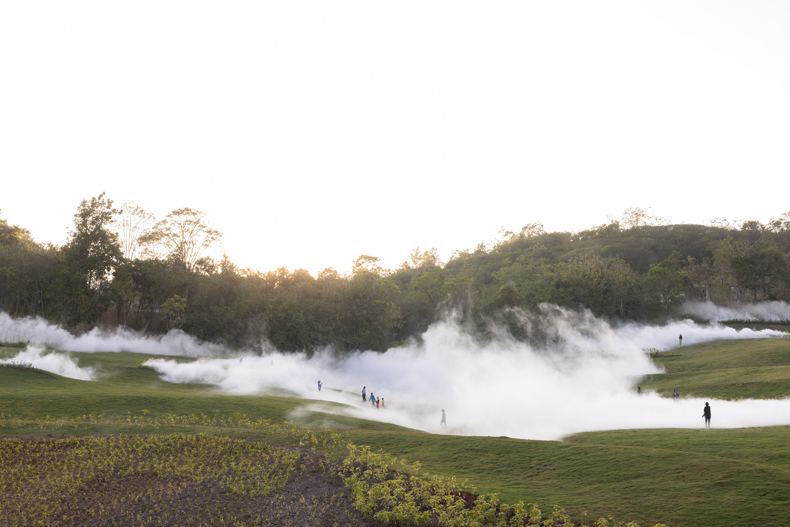
Khao Yai Fog Forest, Fog Landscape #48435 (2024), Fujiko Nakaya
Khao Yai Art Forest, Khao Yai National Park, Pong Ta Long, Thailand
Three times each day, hundreds of concealed nozzles spray dense mist across verdant hillsides, transforming the Thai landscape into something between dream and reality. Nakaya’s fog sculpture slides down grass slopes or scatters on the wind depending on weather conditions, creating an ever-changing immersive experience through which visitors can walk, emerging covered in fine water droplets. Nakaya treats fog as a transient medium for something profoundly dreamlike: a landscape that appears and evaporates, blurring boundaries between visible and invisible, present and absent, leaving only traces and memory like a dream dissolving upon waking. Click here to learn more.
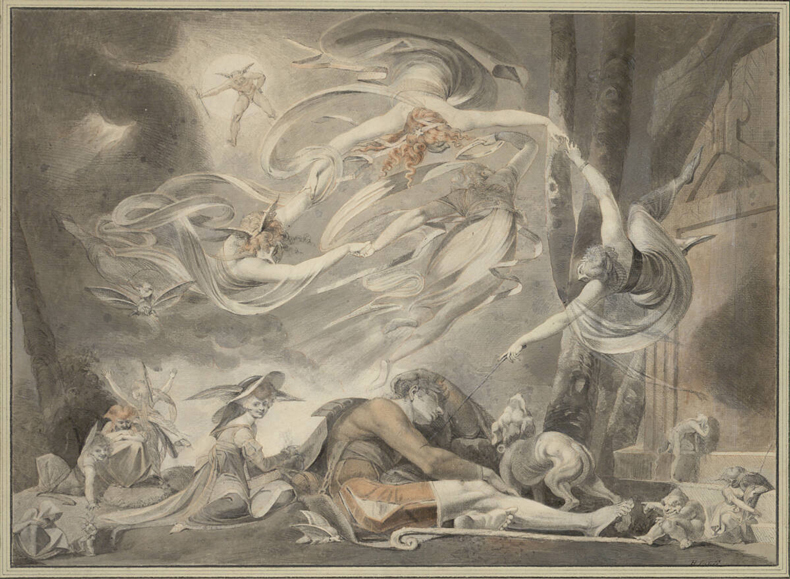
The Shepherd’s Dream (1786), Henry Fuseli
Albertina Museum, Vienna
A dozing shepherd lies beneath a gnarled tree while a swirling mass of fairies and sprites hover above him, wielding wands and books, touching him to deepen his sleep. Fuseli’s illustration of an episode from Milton’s Paradise Lost captures the poet’s comparison between Satan’s fallen angels and fairies bewitching a peasant. Hidden among the dancing figures lurks Queen Mab, bringer of nightmares, while a mandrake root transforms into a homunculus, revealing Fuseli’s interest in dreams as portals to transformation. Click here to find out more.
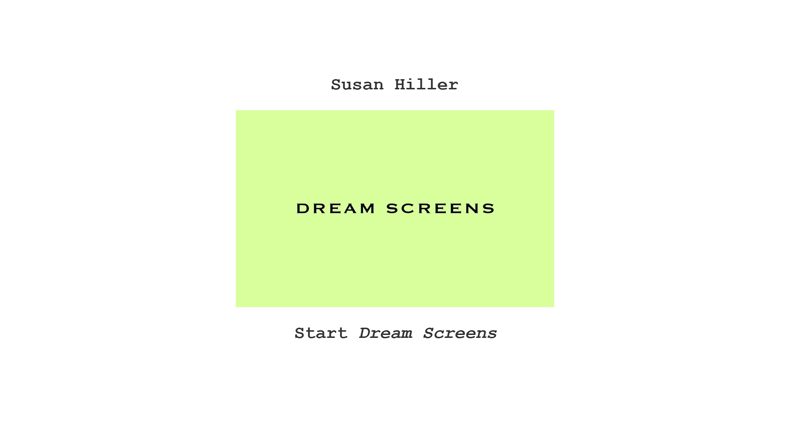
Dream Screens (1996), Susan Hiller
Dia Art Foundation, online
Click anywhere on Hiller’s web-based artwork and pastel colour fields shift and flicker while a woman’s voice describes fragmentary dreams: ‘I’m a fashion editor or a model or both’; ‘I have to save the USA by fighting off the forces of evil in the President’s nightmares’. The soundscape layers Morse code that spells ‘I am dreaming’, recordings of a pulsar 3,000 light-years away, and a human heartbeat – connecting subconscious communication, impossibly distant cosmic remnants and our own bodies’ rhythms. Launched in 1996 as part of Dia’s pioneering Artist Web Projects, this aimless navigation through virtual space mirrors how dreams themselves conflate times, places and realities. Click here to read more.
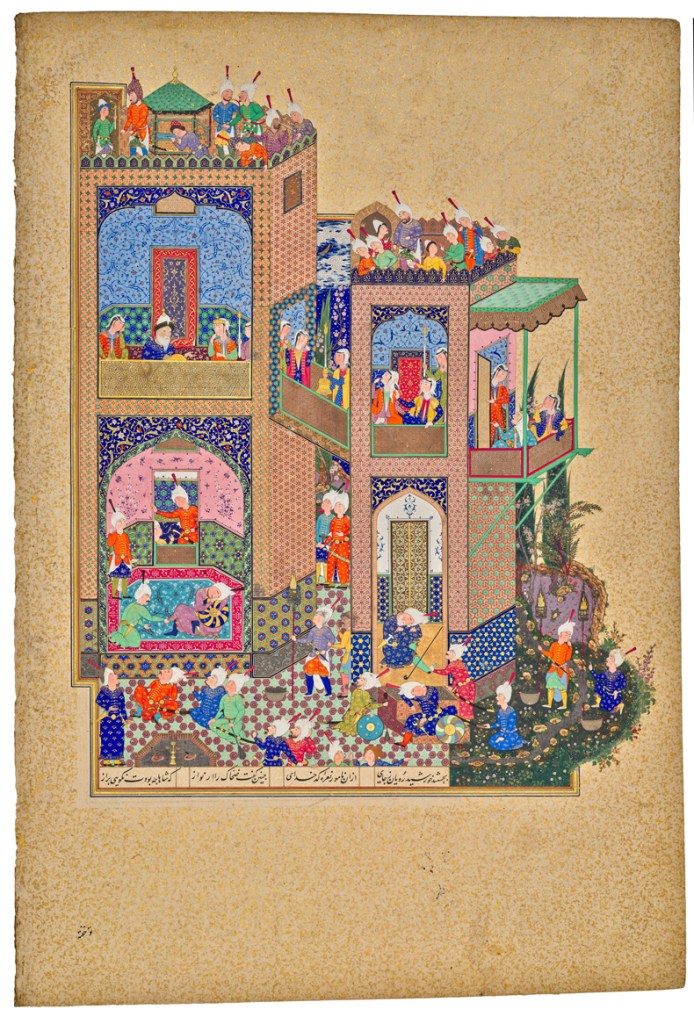
The Nightmare of Zahhak (1525–35), Mir Musavvir
Museum of Islamic Art, Doha
King Zahhak wakes from a prophetic dream, his perturbed face flanked by serpents that sprout from his shoulders – the manifestation of his demonic curse. Mir Musavvir’s Persian miniature transforms the bedroom into carefully staged chaos: panicked women look on helplessly, torch-bearing guards course through doorways and the palace architecture warps at impossible angles as if the building itself has been invaded by the king’s nightmare. This scene from the illustrated manuscript Shahnama of Shah Tahmasp reveals how Persian epic poetry treated dreams as divine warnings. Click here to discover more.

‘Four things to see’ is sponsored by Bloomberg Connects, a free arts and culture platform that provides access to museums, galleries and cultural spaces around the world on demand. Explore now.