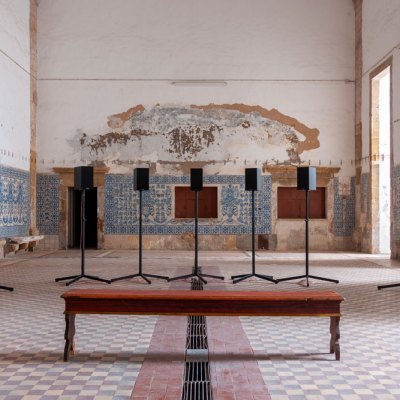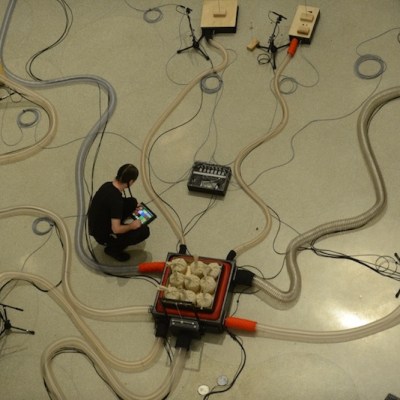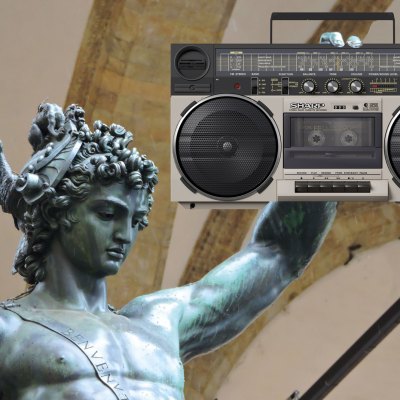

Every Radio Station (2017), Jeff Thompson. Installed at Wave Farm in Acra, New York

‘Four things to see’ is sponsored by Bloomberg Connects, a free arts and culture platform that provides access to museums, galleries and cultural spaces around the world on demand. Explore now.
Each week we bring you four of the most interesting objects from the world’s museums, galleries and art institutions, hand-picked to mark significant moments in the calendar.
Every year on 13 February, World Radio Day encourages us to celebrate a medium that has outlived every technological revolution that has come its way. Proclaimed by UNESCO in 2011 and adopted by the United Nations the following year, the day marks the anniversary of United Nations Radio’s first broadcast in 1946, recognising the enduring power of radio as a low-cost, resilient medium capable of reaching even the most remote and marginalised communities. In an era dominated by streaming platforms and on-demand audio, radio persists as a uniquely democratic form of communication, requiring nothing more than airwaves and a receiver to connect listeners across vast distances.
Since Guglielmo Marconi’s first transmissions in the 1890s, radio has evolved from scientific marvel to cultural necessity. Invisible signals carrying voices, music and information through the air have inspired artists to explore themes of transmission, reception and the mysterious power of unseen forces. From early batik murals celebrating radio’s golden age to contemporary works that turn frequencies into abstract art, artists have recognised radio as both subject and medium – a way to reach audiences beyond gallery walls and a metaphor for connection across distance. Radio exists simultaneously as nostalgic object and living technology, reminding us that the oldest electronic medium can still speak to our perpetually connected present. This week we examine four works that engage with radio’s cultural significance and artistic possibilities.
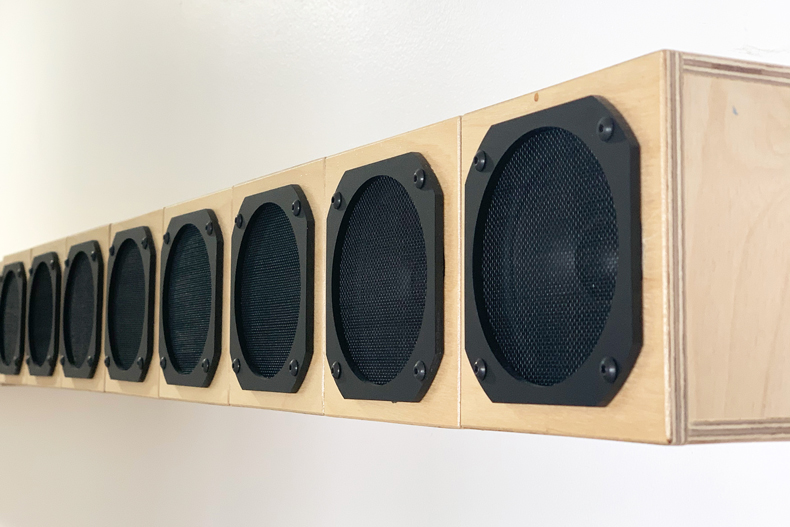
Every Radio Station (2017), Jeff Thompson
Wave Farm, Acra, New York
Wherever a radio listener might happen to be in the United States, there are some 95 frequencies, or stations, in the FM band that they could tune in to. Although most people would only listen to one station at any given time, the American artist Jeff Thompson wondered what it would be like to be exposed to all 95 frequencies at once. His installation Every Radio Station comprises 95 radios, each equipped with a speaker, to allow visitors to experience the whole spectrum simultaneously, or walk down it and listen sequentially to a wide range of stations that would vary completely if the artwork were moved to a different state. Find out more – and listen to a sample – here.

The World of Radio (1934), Arthur Gordon Smith
Cooper Hewitt, Smithsonian Design Museum, New York
Arthur Gordon Smith’s exuberant batik mural places radio star Jessica Dragonette at the centre of the universe, standing on a globe with musical notes radiating outward like electromagnetic waves. Around her swirl the triumphs of radio’s first decades: Marconi’s portrait, broadcasts to Admiral Byrd at the South Pole, transmissions from Arlington National Cemetery, zeppelins and skyscrapers connected by invisible signals crisscrossing the air. Created at a time when radio seemed capable of uniting the entire world, the mural captures the utopian optimism surrounding this technology. Click here to read more.
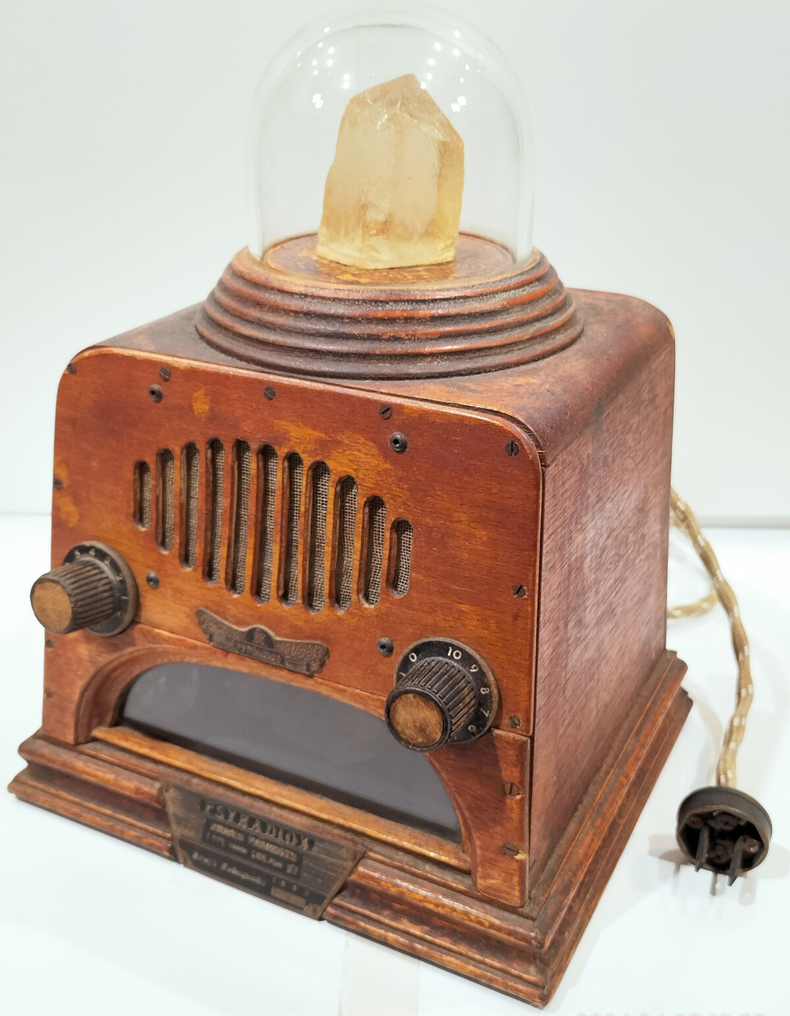
PSYRADIOX (1987), Kenji Kobayashi
Extinct Media Museum, Tokyo
Kenji Kobayashi’s sculptural radio glows and pulses with changing colours as it receives AM broadcasts, transforming electromagnetic waves into visible light through a transparent crystal dome. The piece operates on the same principle as vintage crystal radios – those mysterious devices popular in early 20th-century Japan that could receive broadcasts without any external power source, drawing energy solely from the radio waves themselves. Blending ostensibly retro aesthetics with scientific wonder, PSYRADIOX turns the normally hidden act of radio reception into a luminous spectacle. Click here to discover more.
Frequency (2008), Esther Hunziker
HEK (House of Electronic Arts), Basel
Esther Hunziker compresses found footage of a live concert until the band’s movements disintegrate into flickering fields of pure colour, while the soundtrack dissolves into overlapping radio frequencies – a chaotic wash of static and interference. The video converts technical failure into aesthetic strategy to create visuals more reminiscent of abstract painting than of documentary footage. Radio is both raw material and metaphor here: just as radio transmissions break down into noise and distortion, the concert footage fragments into something that escapes linear narrative entirely, transforming communication breakdown into unexpected beauty. Click here to learn more.

‘Four things to see’ is sponsored by Bloomberg Connects, a free arts and culture platform that provides access to museums, galleries and cultural spaces around the world on demand. Explore now.