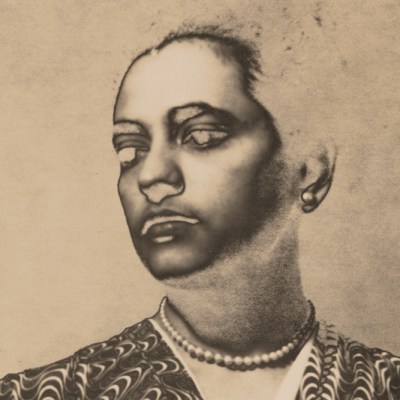
The Heritage of Motherhood (1904; detail), Gertrude Käsebier. Museum of Modern Art, New York

‘Four things to see’ is sponsored by Bloomberg Connects, a free arts and culture platform that provides access to museums, galleries and cultural spaces around the world on demand. Explore now.
Each week we bring you four of the most interesting objects from the world’s museums, galleries and art institutions, hand-picked to mark significant moments in the calendar.
On 10 October 1901, 125 years ago this week, Alberto Giacometti was born in Borgonovo, a mountain village in the Swiss canton of Graubünden. From 1926 he worked in a cramped studio on the rue Hippolyte-Maindron in Paris, and it was there that he produced the etiolated figures for which he is best known – solitary presences, pared down until little more than the fact of a person remains.
Solitude has taken many forms in art: the hermit in the wilderness, the artist or writer working long hours alone, the scholar who withdraws to the mountains. It has been sought as well as suffered, and artists have depicted both conditions. This week we examine four works that explore solitude.
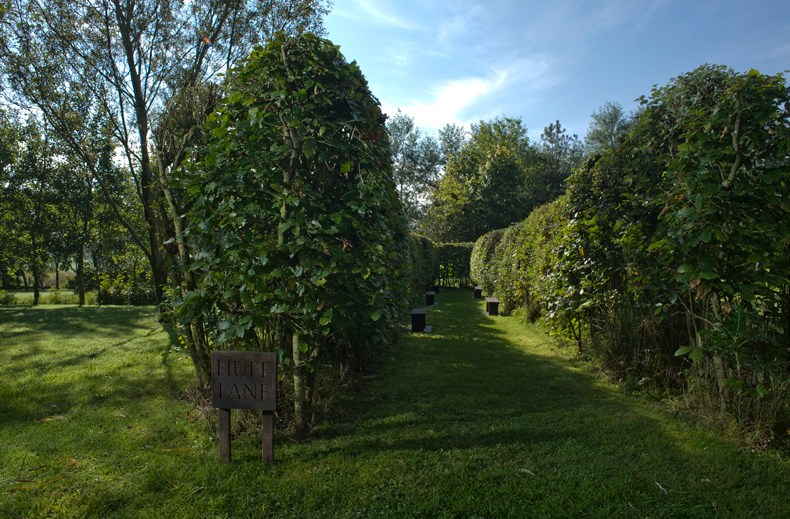
Huff Lane, The English Parkland (1999), Ian Hamilton Finlay and Sue Finlay
Little Sparta, Dunsyre, South Lanarkshire
Huff Lane is a short, straight avenue enclosed by hedges. It is a refuge built for anyone in a bad mood: the sulker walks in, reads the inscriptions carved into the benches along the way and emerges, in theory, restored. Solitude is treated here as something that can be designed for and prescribed. The avenue is part of Little Sparta, a garden that Ian Hamilton Finlay and his wife Sue began creating in 1966, when they moved to a cluster of farm buildings on exposed moorland south-west of Edinburgh. Over the next few decades they turned the garden into an ever-changing work of art in its own right, filling it with poems carved into wood and stone. It was also a bold experiment in living with art: the Finlays resided in Little Sparta until Ian Hamilton died in 2006. Click here to read more.
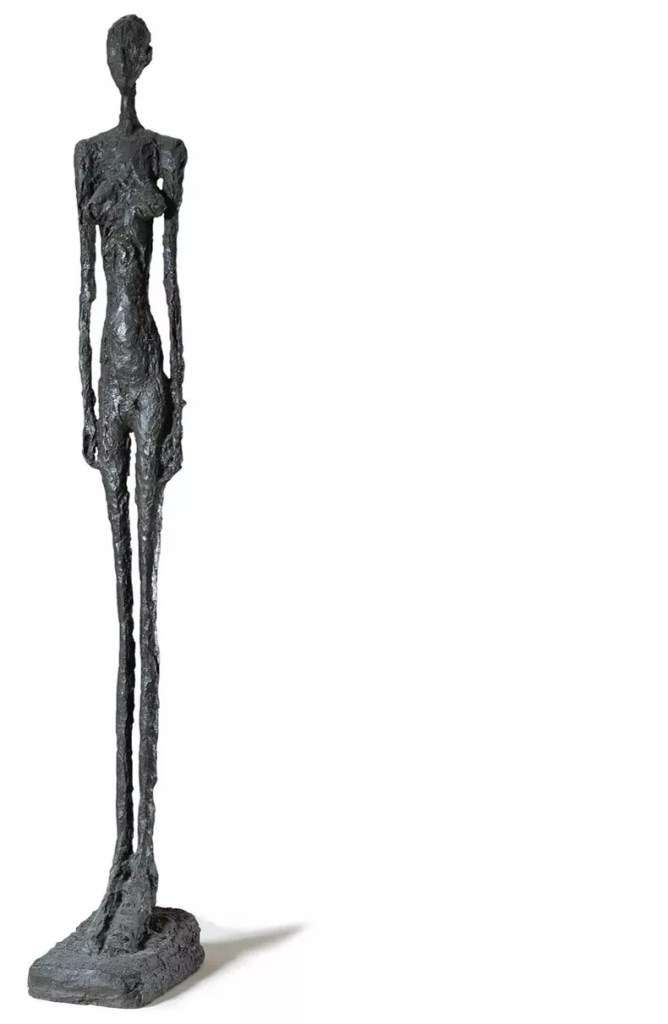
Grande donna (Standing Woman III) (c. 1960), Alberto Giacometti
National Gallery of Modern and Contemporary Art (GNAMC), Rome
A nude woman stands bolt upright, arms pressed to her sides, her bronze body stretched to more than two metres high and furrowed with the marks of the artist’s fingers and tools. In his essay ‘The Studio of Alberto Giacometti’ (1957), Jean Genet wrote of the solitude and dignity of these figures, which seem familiar yet appear to come from ‘the depths of time, the origin of everything’. The work was conceived in 1960 as one of a group of five monumental figures for the plaza of the Chase Manhattan Bank in New York, but the commission was abandoned. Figures intended to share a public space were instead cast separately and dispersed to museums around the world, each now standing alone. Click here to find out more.
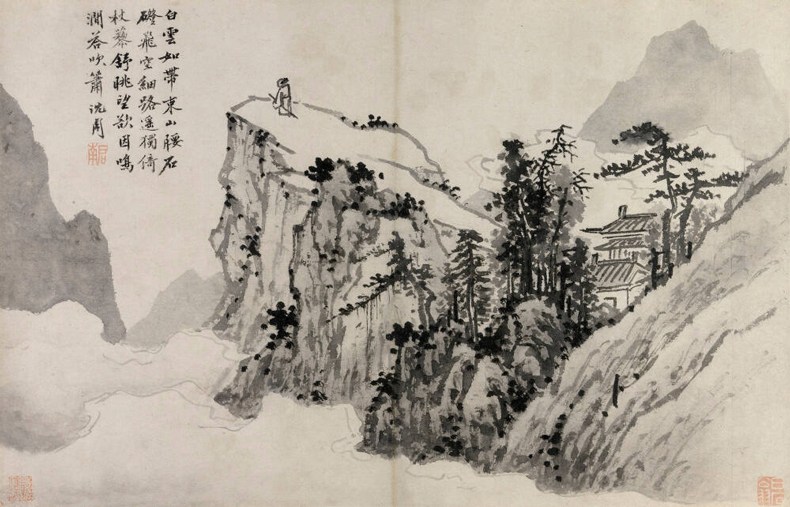
Poet on a Mountaintop (late 15th century), Shen Zhou
Nelson-Atkins Museum of Art, Kansas City
A poet stands at a cliff edge, staff in hand, looking out across a gulf filled with mist. Classical Chinese characters spell out a poem hovering in the air directly ahead of him. Shen Zhou was the leading painter of the Wu school in Suzhou during the Ming dynasty (1368–1644), a scholar-artist who declined an official career for a life of painting, poetry and study. For the literati of that milieu, solitude was not a misfortune but an accomplishment: withdrawal to the mountains, actual or imagined, was the mark of a cultivated mind. The painting is one of five leaves in an album, a format made to be held and turned by one person at a time, so the solitude the picture describes was also the condition in which it was meant to be seen. Click here to learn more.
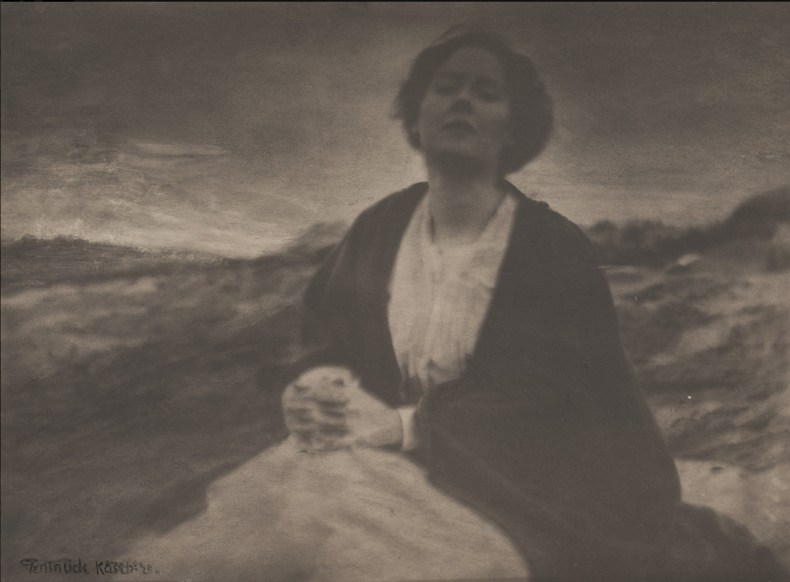
The Heritage of Motherhood (1904), Gertrude Käsebier
Museum of Modern Art, New York
In this portrait, a woman sits alone on rocky ground beneath a heavy sky, hands folded in her lap. The sitter was Agnes Lee, photographed after the death of her young daughter. Knowing that Käsebier had built her reputation on tender images of mothers and children makes this work seem all the more stark. The title suggests that pain and grief have always been fundamental elements of motherhood. Click here to discover more.

‘Four things to see’ is sponsored by Bloomberg Connects, a free arts and culture platform that provides access to museums, galleries and cultural spaces around the world on demand. Explore now.