From the January 2026 issue of Apollo. Preview and subscribe here.
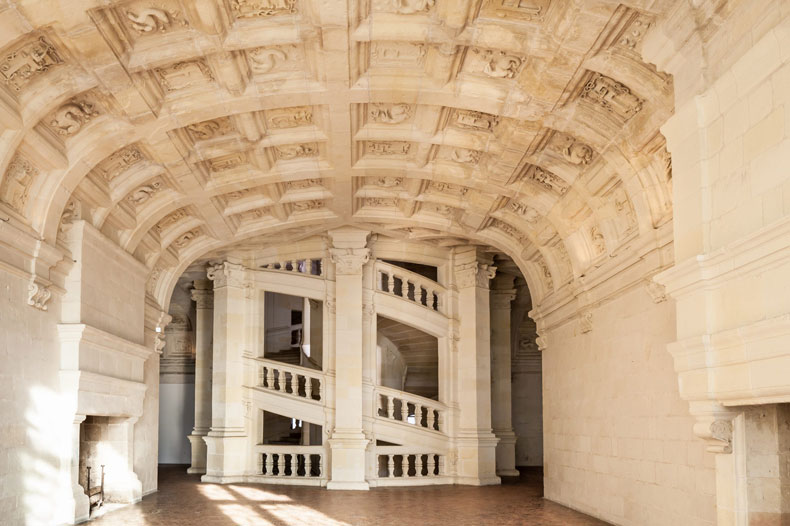
The Château de Chambord in the Loire Valley, commissioned by François I in the early 16th century, features a double-helix marble staircase attributed to Leonardo. Here, in November, a new candidate for UNESCO’s Intangible Cultural Heritage lists was announced by Francs de Pied, a global association of vignerons who cultivate ungrafted or ‘own-rooted vines’.
Between 1860 and 1890 the phylloxera louse wiped out most European vines; the remedy was to graft Vitis vinifera (the European grape species) on to North American rootstocks that were naturally tolerant of the pest. Today, roughly 97 per cent of the world’s vineyards rely on grafted plants: the grapes are vinifera, but the roots come from North American species. There are, however, vines that grow on their original root systems; some are centuries old.
The Château de Chambord is itself part of a UNESCO heritage site, the Loire Valley between Sully-sur-Loire and Chalonnes, which was so designated in 2000. Alongside such material heritage, UNESCO has a second register, established in 2008, of intangible heritage, or ‘practices, representations, knowledge, skills, and instruments that communities acknowledge’ as integral to cultural tradition. This catalogue currently includes 788 elements across five regions and 150 countries, ranging from bolero music in Cuba to askiya – the Uzbek ‘art of wit’ – to re-roofing ceremonies in Mali. Some wine-related practices are also represented: the Mediterranean diet, including its linked wine-drinking traditions, and wine-making techniques such as the Georgian Qvevri method, in which fermentation and maturation occur in egg-shaped clay vessels.
Loïc Pasquet, founder and president of Francs de Pied and owner of Liber Pater winery, says that the main objective of Francs de Pied ‘is to bring together all the producers who are cultivating ungrafted vines, with native grape varieties in their place of origin. We will protect and pass on a centuries-old know-how, while respecting biodiversity with the replanting of old grape varieties in a balanced ecosystem.’
A second objective is getting ‘the know-how and traditions linked to the cultivation of ungrafted vines’ on to UNESCO’s register. Within the wine sector the Francs de Pied movement and its philosophy is already provoking debates about the past and present of the wine business by challenging perceptions of rarity and risk and definitions of authenticity.
Ungrafted vines are rare. Phylloxera did not take hold in certain regions because of isolation, soil type and strict import laws. Within this context, the Francs de Pied producers bring together different inheritances: the Jurassic period, which gave rise to the ancient volcanic soils of Cappadocian vineyards, lineages represented by the wild vines found in Naxos, and pre-Columbian America, as seen in the microplots where Chile’s high-altitude vines grow. Their scarcity and the specialised wine-making methods required strengthen the argument for UNESCO intangible heritage status.
The stewardship of ancient grape varieties is central to this heritage. From Santorini’s Assyrtiko and Bordeaux’s rare Mancin, used in Liber Pater, to the País and Criolla vines of Chile and Argentina, grapes on their own roots are living archives of pre-phylloxera viticulture. The growers who are the guardians of these grapes believe that terroir-based techniques preserve ecological balance and their winemaking practices emphasise organic farming and biodiversity.
Dr José Vouillamoz, vine geneticist and co-director of the Franc de Pieds scientific committee, studies climate history alongside the evolution of Vitis vinifera varieties. His research has shown that, during the Roman and medieval periods, the progenitors of the Pinot Noir grape were cultivated as far north as Brittany, and he believes that these grapes hold clues to resilience in a changing climate.
Wine-making practices naturally cross borders and eras; they ferment regional identity over centuries. Francs de Pied ensures that wine-making is far more than heritage – it stays in motion, a living practice, perpetually adapting, just like an ageing bottle of fine wine.
From the January 2026 issue of Apollo. Preview and subscribe here.