From the June 2026 issue of Apollo.
It’s possible that the best way to save something is to forget about it. This is certainly true of money, but also of possessions. With enough time, the thing you would’ve got rid of when it seemed out of fashion or useless might become a totem of the past, rare and valuable. In the case of the American painter Frederic Church (1826–1900), this was true of his home and the things inside it: forgotten about, rescued and remaining as a grand, unexpected capsule of the 19th century.
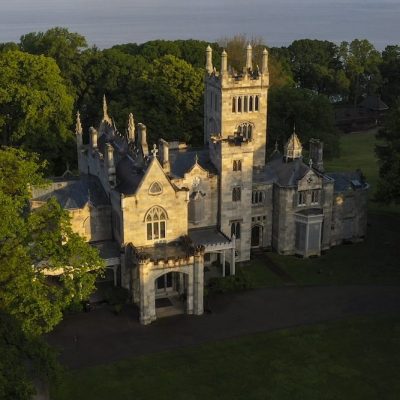
Olana is the name of the estate Church and his wife, Isabel, bought in 1860. It is 160km north of New York City, just east of the Hudson River. The Churches’ first purchase was of a 126-acre farm and a farmhouse they called Cosy Cottage. The mansion they later built was completed for the most part in 1872 and sits on the estate’s highest point. Church was one of the most successful painters of his time, though his reception and reputation have ebbed and flowed, and his artist’s income financed the expansion of his domestic project, the landscape paintings feeding into the landscape itself. (The estate would grow to 250 acres.)
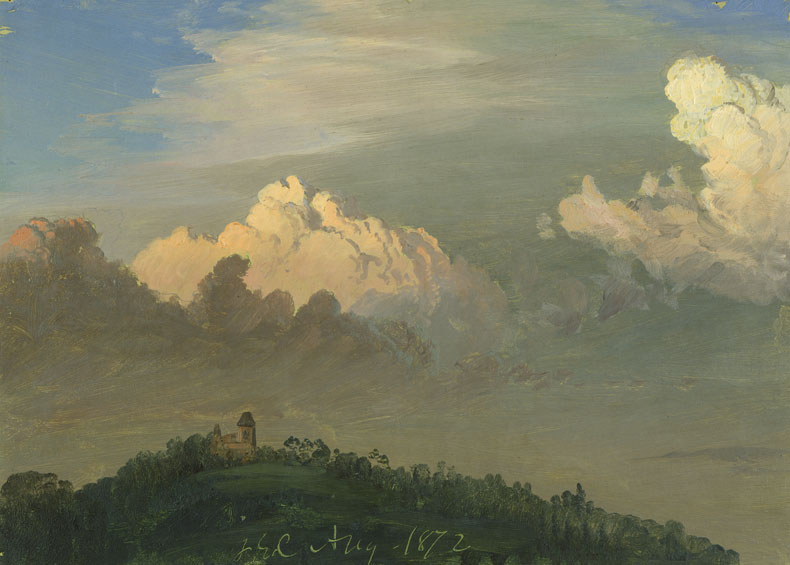
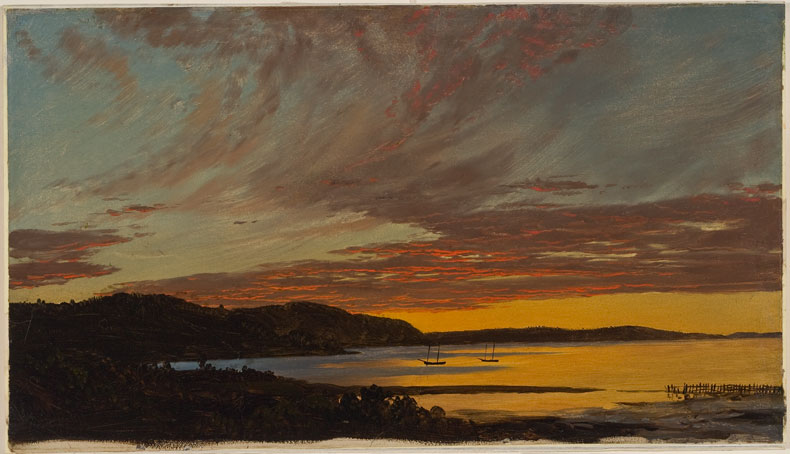
Church’s paintings – grand Romantic nature scenes in soft colours and brushstrokes – are typical of the Hudson River School (Church was a friend and student of Thomas Cole, whose house is just across the river). In keeping with that school’s philosophy of depicting the America around them, one of his celebrated paintings is Niagara (1857). Yet the majority of his admired works are inspired by the farther-flung places to which Church and his wife travelled: The Heart of the Andes (1859) and Cotopaxi (1862) are drawn from their time in Ecuador, Jerusalem from the Mount of Olives (1870) from time in the Middle East, and The Icebergs (1861) and Aurora Borealis (1865) from Church’s Arctic expedition. His legacy is as much how he rendered the world in oil on canvas as how he shaped it around him.
The mansion itself is clay-red, the same colour as the rocks in the quarry at the foot of its hill, where its bricks were forged. Inside and out it is sturdy Victorian, liberally embellished with arches echoing onion-dome peaks, elaborately patterned tilework and Arabic script (above the front door is the character for ‘Marhaba’, a term of welcoming). You can see, though barely perceivable from the ground, that on three of the four corners of the campanile-style bell tower sits a teapot. If you were to stand on Olana’s terrace or sit in its drawing room or wake up in any of its bedrooms, your view would be out over plains of farmland and mountain peaks capped with white and the Hudson River carving its way through all of it, the windows like frames around Church’s American sublime.
After Church died, his entire estate was inherited by his son and daughter-in-law, Louis and Sally Church. The couple remained childless and, when Sally died in 1964, the various next-of-kin were unable to keep up this eccentric estate and not very interested in trying. (One nephew is on the record as hoping to sell Olana to put his four children through college.) It’s a common American story. After the boom of the Gilded Age, not only were the gargantuan mansions – or ‘cottages’ as they were called – in summer towns such as Newport, Rhode Island, unsustainable in a post-war economy, but the social world they existed to serve was also gone. Their style, largely the invention of the architect Richard Morris Hunt (who had designed Cosy Cottage for Church), was seen as oppressively ornate and old-fashioned compared to the clean lines of mid-century modernism. Henry James called them ‘white elephants’, opulent and cumbersome. Since no individuals wanted to be responsible, a historic preservation trust had to be born.
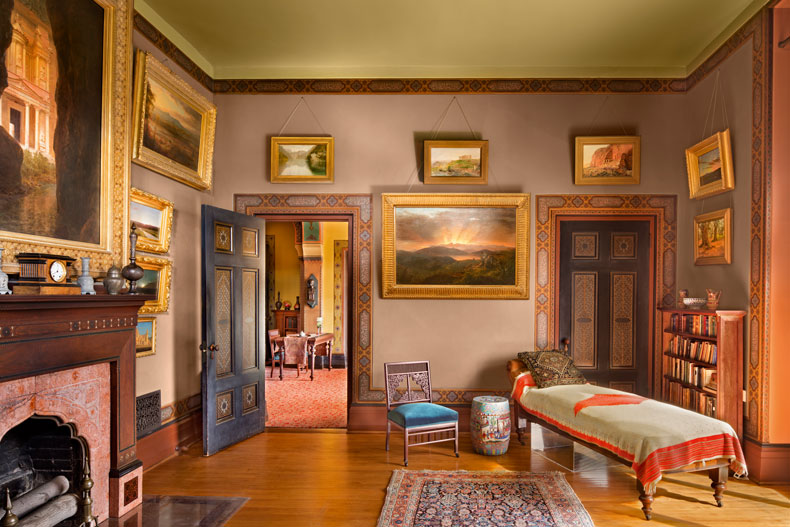
All it took was one art historian. When David Huntington was doing his PhD at Yale in the 1950s, he found his way to Olana, at the time inhabited by the widowed Sally Church and filled with Frederic’s original furnishings, objects and paintings. A brief inventory of what was tucked away in the attic includes 50 oil studies by Church, as well as paintings by other members of the Hudson River School; hundreds of drawings; a library of thousands of books; some 40 Old Master drawings bought by Church; and around 6,000 prints, some by pioneers of photography such as Eadweard Muybridge and William James Stillman. Frederic and Isabel filled their home with objects from their travels: everything from Mesoamerican objets d’art to tiles from Tehran, which still adorn a fireplace. The dining room has a more traditional Grand Tour atmosphere, a little Italianate cathedral of a room hung with Renaissance paintings.
After Sally Church’s death, Huntington took up the effort to rescue Olana from sale and almost certain demolition. In 1966, the Olana Preservation state trust was founded and state governor Nelson Rockefeller attended the ribbon cutting. On the occasion of the bicentenary of Church’s birth this year, Olana is celebrating its history but also embracing a new conception of itself.
I visited in early April on a temperate day with clear skies, the ideal conditions for doing so. From a newly built visitor centre, one of the landscape curators drove me and my group in an open-air vehicle – picture a souped-up golf cart – along the trails, all in the same configuration mapped by Church, where he and Isabel would ride the white donkeys they had imported from Syria.
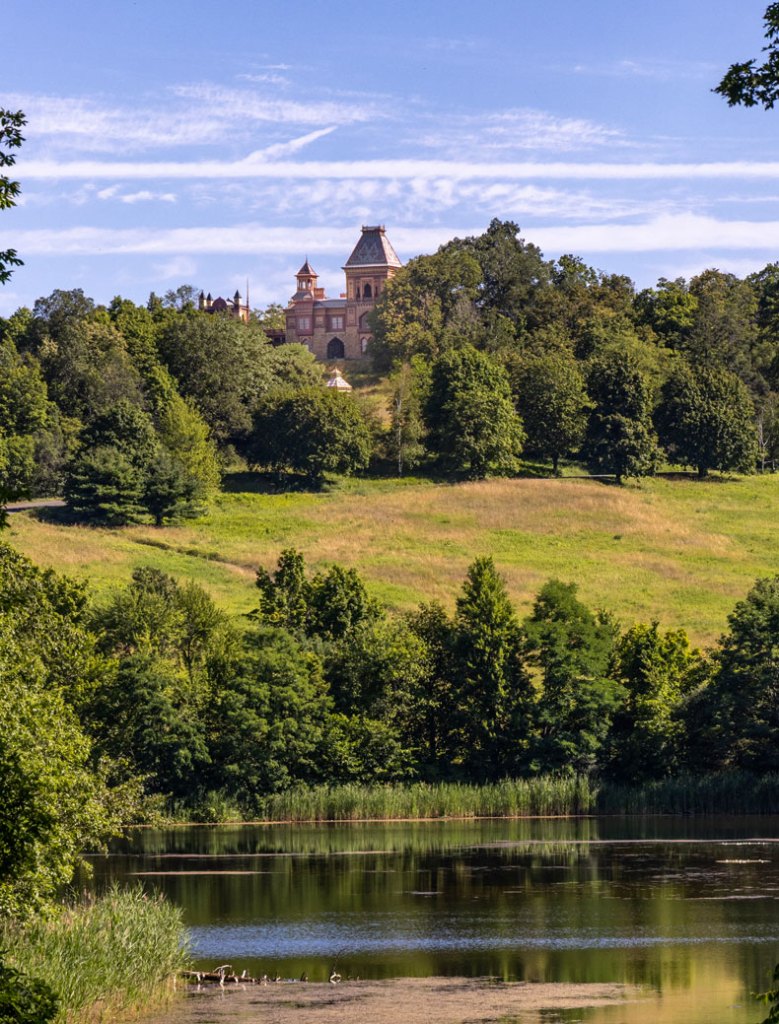
Along the way, the house comes in and out of view, then disappears entirely, until finally you crest the peak and see not the house first but the view from it, an effect intentionally designed by Church. On this trip I learn the word ‘viewshed’, which can be used to talk about the view as a crafted thing and also a protected one, as it is around Olana. In the 1970s, the development of a nuclear plant was blocked and another industrial building in this viewshed was required to paint itself in camouflage colours against the Hudson mountains.
There is an almost obsessive quality to the way in which every decision is measured against Church’s vision. In his studio, an easel is set up with cups holding what were his actual paintbrushes, as though he’s just stepped out of the room. A recent large grant has bolstered preservation efforts – not only in building a visitor centre, but also in taking care of items such as a 19th-century Japanese silk tapestry, now too delicate to hang above the foyer staircase. It has been taken down for restoration, though it’s uncertain if it will ever be in a condition to be displayed again. In the bedrooms, new wallpaper was designed using the original patterns for reference. Some of the clothes the Churches bought in the Middle East are today among the only extant designs from that time and place. On the grounds, trees are left where they fall as a nod to how Hudson River School painters would include downed trees in their works – something I only just learned on this new tour, though I’ve been to Olana countless times, as I have close friends who live a short drive away.
One evening some years ago on the Fourth of July, we drove our car up the hill to the mansion and, as the fireworks began, a thunderstorm broke out. We had a view of the horizon line and between earth and sky the lightning bolts danced with the dandelion shapes of the pyrotechnical display. I remembered it vividly halfway up the mountain this April; I’d almost forgotten what it had looked like.
From the June 2026 issue of Apollo.