From the January 2026 issue of Apollo. Preview and subscribe here.
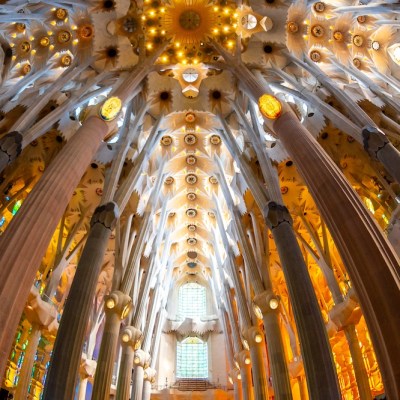
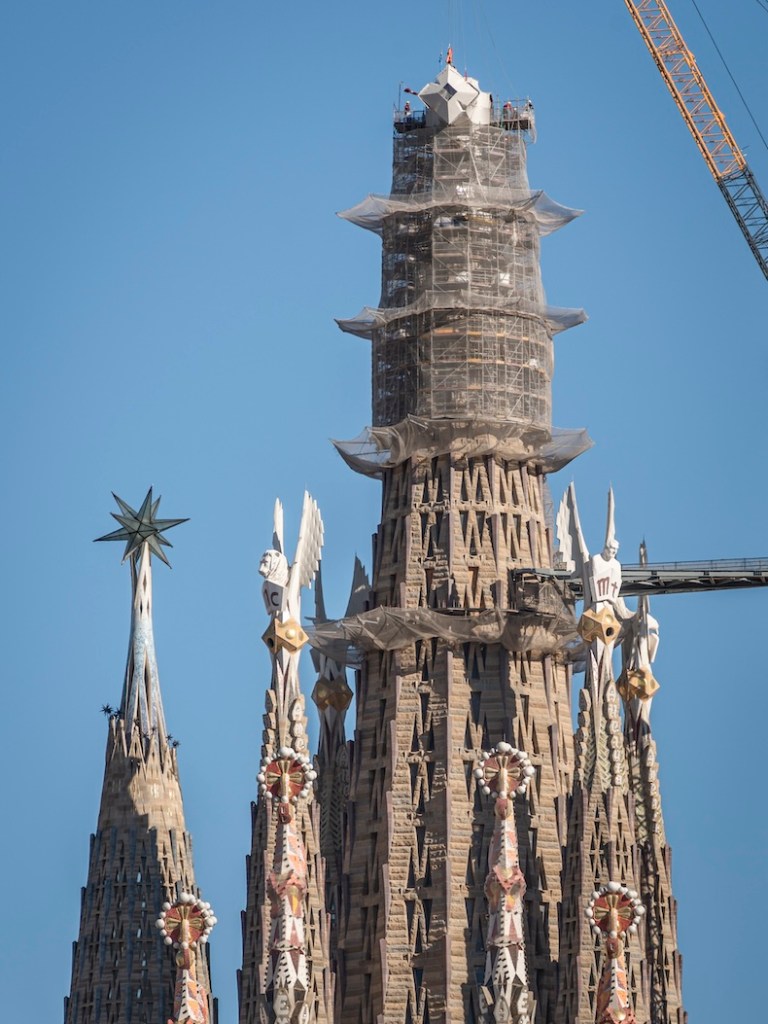
For Gaudí lovers, the past year has been special. In April 2025, in the final week of his life, Pope Francis bestowed on the architect the status of Venerable, putting him two steps away from sainthood. In November, Barcelona’s Sagrada Família overtook Ulm Minster in Germany as the world’s tallest church at 162.8m. This year, the centenary of his death, Gaudí’s greatest work will finally be finished, with the completion of the central Jesus tower – the last of the basilica’s 18 towers, only one of which was finished in Gaudí’s lifetime – and the Chapel of the Assumption.
Both Antoni Gaudí’s route into architecture and his now almost inevitable canonisation were improbable. Born in 1852 in the Baix Camp south of Tarragona, Gaudí was the son of a boilermaker specialising in copper alambiques, those sensuously shaped vessels used for distilling brandy. As a young boy Gaudí suffered from arthritis and was often unable to attend school in Reus. Instead his father would transport him by donkey out to his workshop in Riudoms, among the cacti, dried sunflower heads and detritus washed down the flash-flood basin of the Riera de Maspujols.
Gaudí’s gift was the capacity to observe almost instinctively – and, later, by mathematical calculation – the patterns in what he called the Great Book of Nature: the seductive spirals, tessellations and fractals. The arrangements of leaf patterns and the branching of trees were the staple food of this obsessive empirical child. When this gift came to be married to his Catholic faith and a belief that God’s presence was recorded in the translucence of a dragonfly wing, the unfurling grace of a fern or the individuality of a snowflake, Gaudí’s vision would expand.
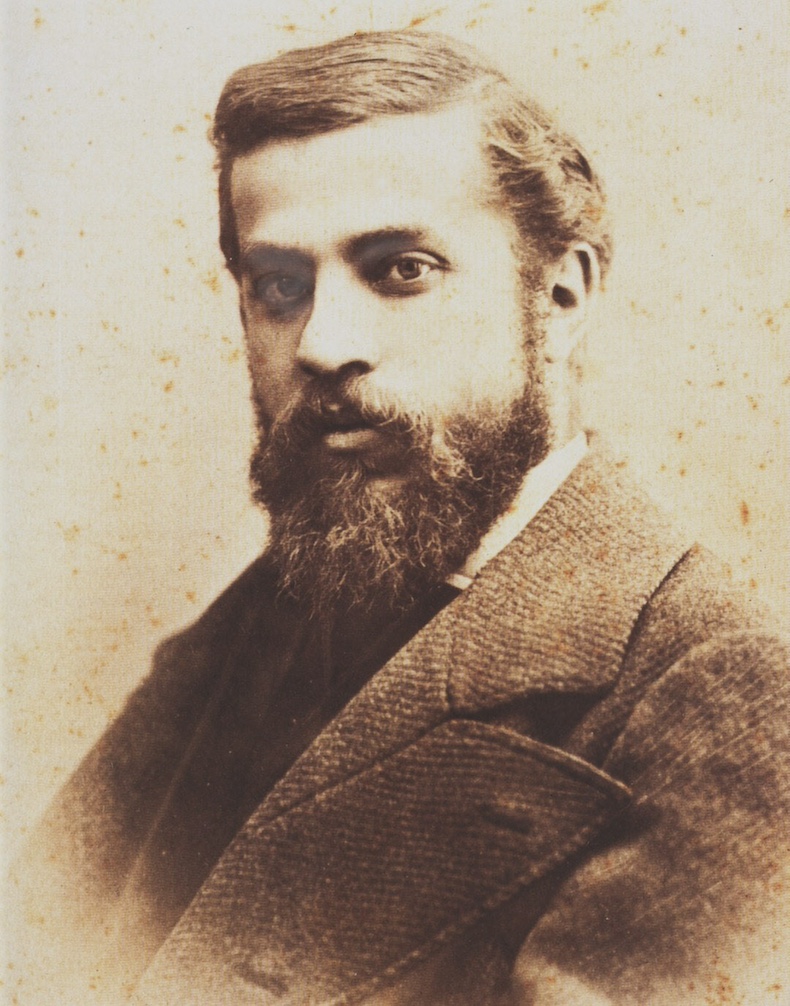
In adulthood he believed that God’s greatest invention was gravity itself. And it was gravity that formed the catenary arch, the most economical and powerful shape in architecture; achieved when the shape of a chain hanging between two points is flipped upside down, it would become Gaudí’s leitmotif. With it he would fine-tune his beloved Catalan Gothic, a style that was always ready to wear its engineering openly, with its bold flanks of masonry punctuated sparsely by fenestration; but which remained essentially crippled, supported as it was by the crutches of flying buttresses.
At the heart of Gaudí’s wish to serve his God through architecture sits the unfinished Sagrada Família: dismissed by its critics as kitsch, lauded to the heavens by its fans, the thorn in the side of city planners, the cash cow of Barcelona and so much more. Knowing that he himself would not see it finished, Gaudí’s response to being asked for a completion date was, famously: ‘my client is not in a hurry’. Chartres had taken hundreds of years; Barcelona’s cathedral down in the Gothic Quarter almost 700 years to complete. But still, the architectural purists’ first line of attack is always to debate how much of the present building is actually Gaudí.
Gaudí was not the Sagrada Família’s first architect. The diocesan architect Francisco de Paula del Villar, a devoted neo-Gothic practitioner, was present at the laying of the first stone in 1882. Villar’s client was the bookseller Josep Maria Bocabella i Verdaguer, whose private Spiritual Association of the Devotees of St Joseph closely followed Pope Pius IX’s Syllabus of Errors, which denounced, among other things, liberalism, Freemasonry, communism, modernism and rationalism. Within a year Villar had fallen foul of the irascible Bocabella over some structural issues. Bocabella needed a young architect who was more pliable, possibly cheaper, and the 31-year-old Gaudí fitted the bill.
Gaudí’s immediate problem in 1883 was that he was tied down by Villar’s neo-Gothic floorplan. His masterstroke was to accept this but push upwards, pushing in turn the limits of originality and ambition to create his extraordinary Bible in Stone. In his lifetime, before his death on 10 June 1926 – he was run over by a tram on his way to confession – Gaudí worked exclusively on the Nativity Facade, leaving future generations copious scaled models and drawings with which to continue his work. However, on 20 July 1936, a decade after his death and two days into the Spanish Civil War, FAI anarchists broke into the Sagrada Família. They smashed Gaudí’s tomb, filling it with sardine tins, burnt out the architect’s entire archive of drawings, plans and calculations, and destroyed his scaled plaster models. The catastrophe on a human scale was worse – 12 of the workers, teachers and accountants associated with the Sagrada Família were hunted down over the next few weeks and murdered.
Since then the project has seen many different architects, and recently an increasing reliance on CAD programmes, the expertise of Arup and 3D modelling software, off-site fabrication, micro-laser cutting, the tallest cranes in Europe and a steady income stream from five million visitors a year. Is this still Gaudí? Each generation brings a new vision. Josep Maria Subirachs’ Passion facade of the late 1980s is not to my taste – heavy-metal record-sleeve kitsch, as its detractors have put it. Etsuro Sotoo, the ‘Japanese Gaudí’, has created some magical bronze doors. Millions of man-hours have been used on painstaking reconstruction from Gaudí’s smashed-up model fragments. And his language of paraboloid, hyperboloid and catenary arches has an unfailing logic that is endlessly repeatable.
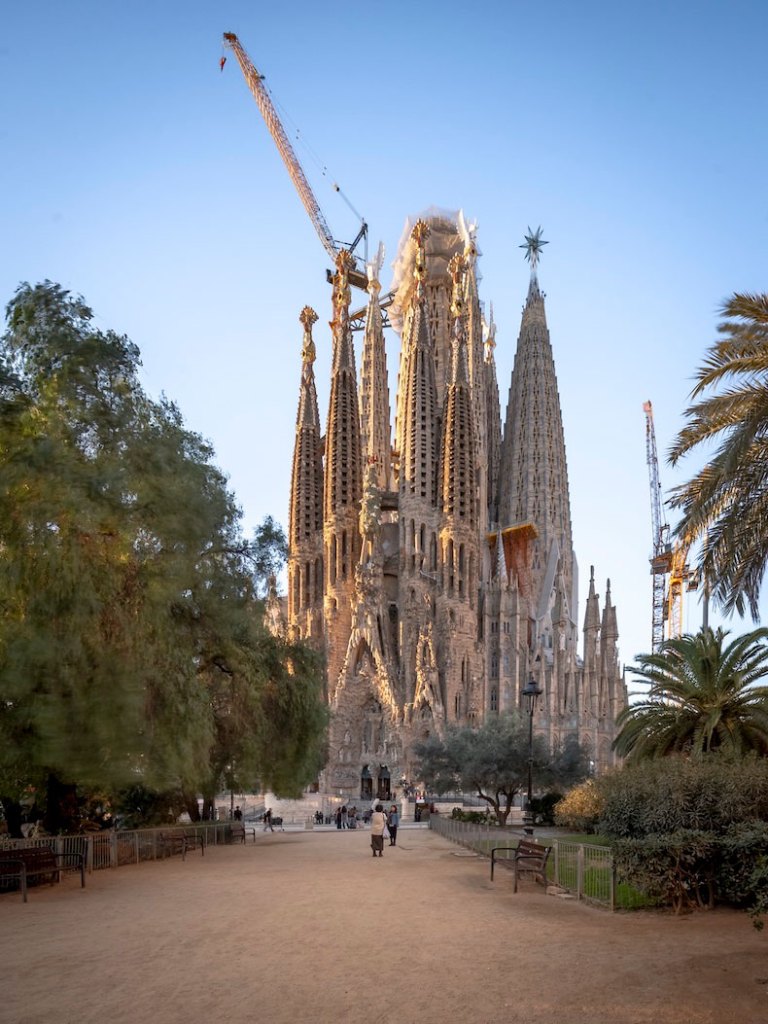
Consecrated in 1910 as a Basilica, the Sagrada Família is now of pilgrimage status. Gaudí’s mystical poem in stone has been rethought and recalibrated over the years. This echoes his working method: he was never afraid to rethink, tear down and start again. Generations of Sagrada Família architects have created a capacity for wonder and awe that is entirely unique.
From the January 2026 issue of Apollo. Preview and subscribe here.