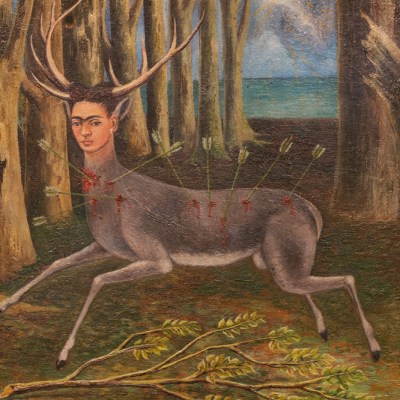
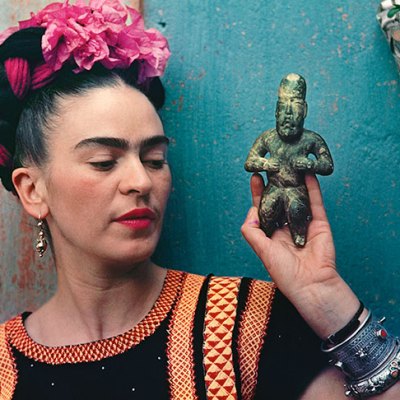
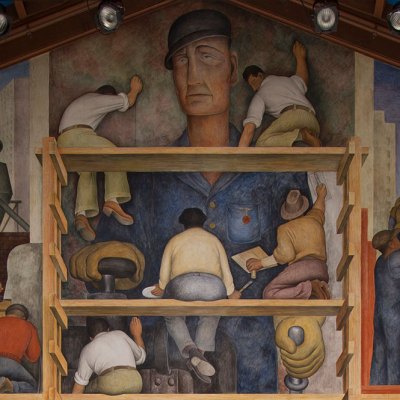
For the first time in 20 years, the Gelman Collection, perhaps the best private collection of modern Mexican art, is on view at the Museo de Arte Moderno (MAM) in Mexico City. The 68 objects that make up the temporary exhibition have been locked away since the death of Natasha Gelman in 1998. In the intervening decades the collection has become the stuff of legend here in Mexico, with whispers of the murder in 2013 of the notary who witnessed Natasha’s contested will; suits and countersuits over the means by which an elderly and diminished Mrs Gelman came to leave her Riveras, Kahlos, Tamayos and Izquierdos to a relatively unknown curator in New York named Robert Littman; and the disappearance of a large group of pre-Columbian treasures from the Gelman apartment in New York, whereabouts still unknown.
For a brief moment, the collection, built by Natasha and Jacques, her Russian-Jewish film-producer husband, has reappeared – amid new intrigue. The current exhibition, under the anodyne title ‘Relatos modernos’ (Modern Narratives), constitutes an olive branch to the Mexican public after a transfer of management that threatens to remove it from the country, seemingly in contravention of national patrimony laws.
This January, a carefully choreographed press campaign revealed years of secret transactions over the collection. The estate battle, it turns out, had been settled by 2023, when Littman sold the majority of the Gelman works for an undisclosed sum to the Zambrano family, owners of the cement multinational Cemex. The Zambranos then used the paintings as collateral to secure a $150m loan from one of the world’s largest banks, the Spanish giant Santander. While Mexican law prohibits the foreign sale of works by ‘national monument’ painters including Frida Kahlo, Diego Rivera, María Izquierdo, David Siqueiros and José Clemente Orozco – all artists represented in the Gelman collection – the deal gives Santander the right to ‘manage’ the collection for an undisclosed length of time.
It happens that Santander is about to open its own museum, Faro Santander, designed by David Chipperfield, in the city of Santander in northern Spain. The bank has been controlled by the Botín family for four generations. The Santander museum’s director has referred to a ‘permanent presence’ for the collection there and, although the bank issued a statement in March stating that the collection ‘will return to Mexico at the end of the temporary export period’ – which is two years, according to Mexican law, unless the National Institute of Fine Arts (INBAL) specifically permits otherwise – the Guardian reported in April that the end date for the first loan, according to documents seen by the paper, is not until 2030.
The MAM exhibition was announced just after the change of stewardship was revealed, but if it was an attempt to head off criticism it underestimated the depth of feeling here. Some 400 members of the artistic community have signed an open letter calling for action and the scandal has been discussed at the highest levels of national politics. Now, in this city in which everything has a fresh coat of lavender paint in preparation for the FIFA World Cup, the show, initially due to close in April, has been extended to July to coincide with the influx of visitors. The dust-up has been an inconvenience to Santander; the grand opening of Faro Santander has had to be pushed back from July to September. But the die seems cast. Mexican president Claudia Sheinbaum insists that nothing is amiss and that those voicing concerns are ‘against our government’. There is a weary sense that she is unwilling to cross the combined interests of the Zambranos and Santander.
On the day I visited the exhibition, I boarded the metro near Casa Azul, Kahlo and Rivera’s former home in Coyoacán, and a short walk from the neighbourhood of San Ángel, where the couple had their spindly red and blue studio, and rode north. The rainy season had arrived and, by the time I entered the galleries, the usual afternoon downpour was darkening the golden glow through Pedro Ramírez Vázquez’s yellow-capped fibreglass domes. Rain streamed down a window behind Frida’s Self Portrait with Monkeys (1943), the painting’s bird of paradise melding into the broad-leafed greenery of the MAM gardens, as spider monkeys, thought to represent the artist’s students, los Fridos, clambered over her painted body.
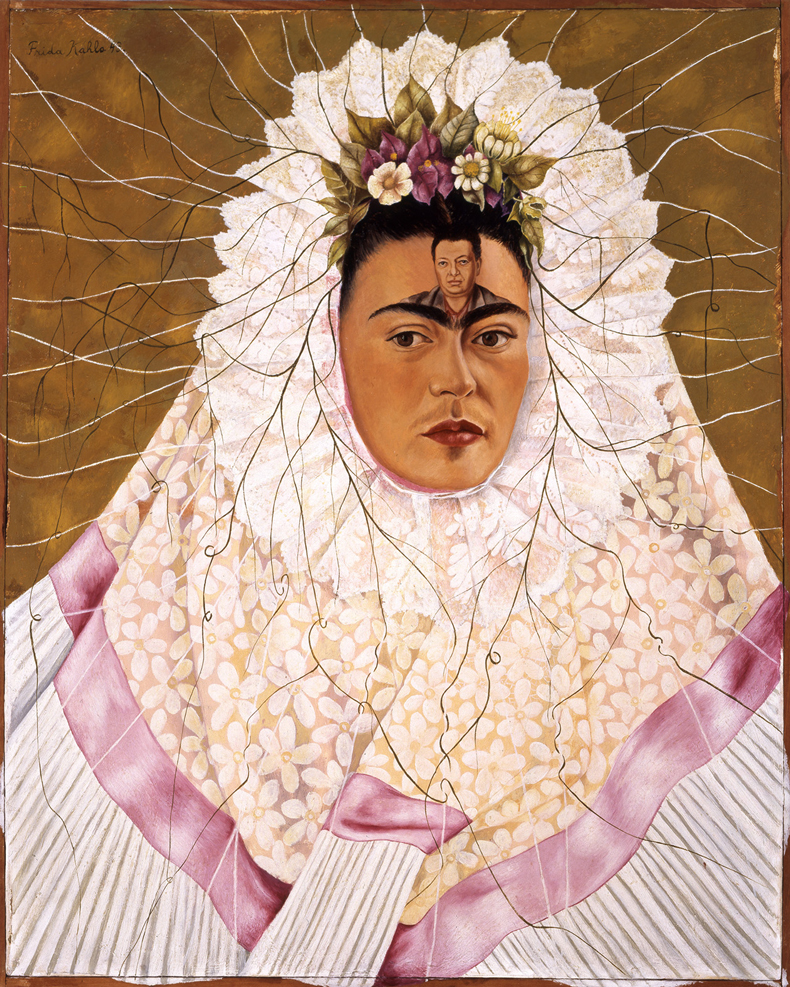
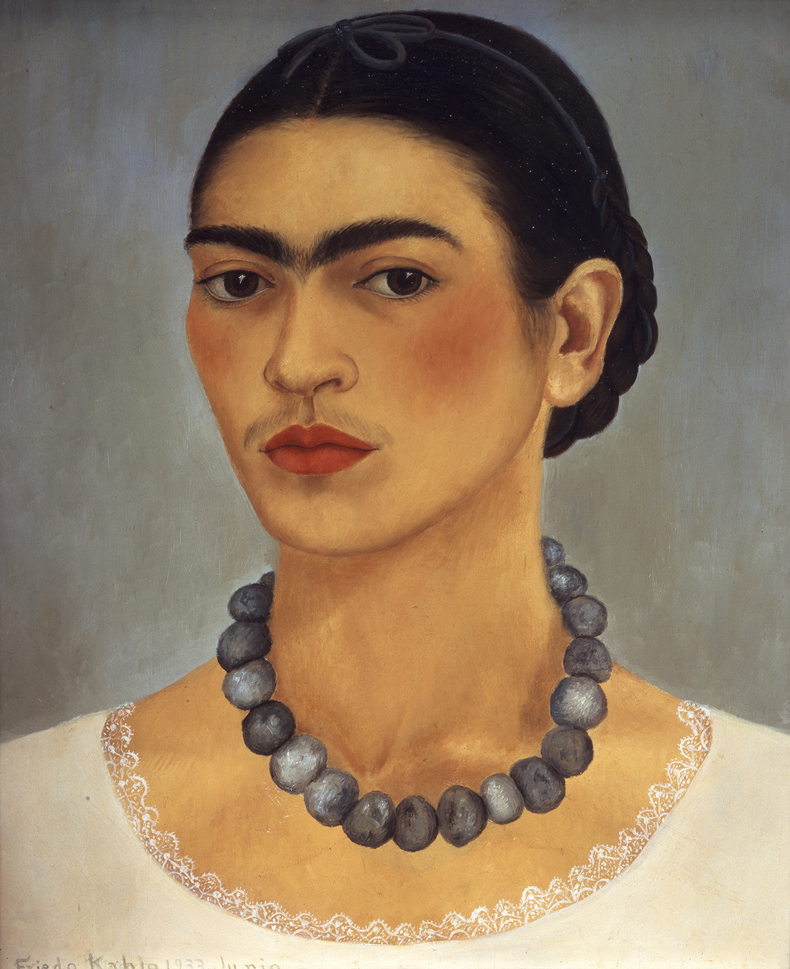
To see a Mexican masterwork in this way should be routine, but it is vanishingly rare. Of Kahlo’s 140-odd paintings, only a handful are in public institutions in Mexico. A few more are on intermittent view in private collections, including more than a dozen at the Museo Dolores Olmedo in Mexico City’s southern suburbs, which reopened in May after a six-year closure. The show at the MAM has ten and just as extraordinary as the self-portraits – which also include with Necklace (1933), in Red and Gold Dress and the magnificently spiky with braid (both 1941) – is a portrait of Rivera from 1937, in which the drift of his hooded eyes, each mole and hair, are obsessively marked out. Kahlo has painted him in more cursory fashion in the two double portraits here: Diego on My Mind (aka Self-Portrait as a Tehuana, 1943), in which he erupts from her forehead in a network of neural tendrils, and the cosmically weird The Love Embrace of the Universe, the Earth (México), Diego, Me, and Sr. Xólotl (1949), in which Rivera, complete with third eye, is held as a rigid nude foetus on the lap of first Frida, then the earth, then the universe. (In another surreal turn, Love Embrace is printed on the 500-peso banknote.)
Of the group of portraits of Natasha and Jacques that open the show, Kahlo’s painting of Natasha is the best. She is depicted like a Holbein grandee, with a fur collar against a rich emerald ground, and crowned not with jewels or a velvet hat but with her own golden curls. From a frame of painted faux-azulejos she looks out with a hard-edged, confrontational resolve.
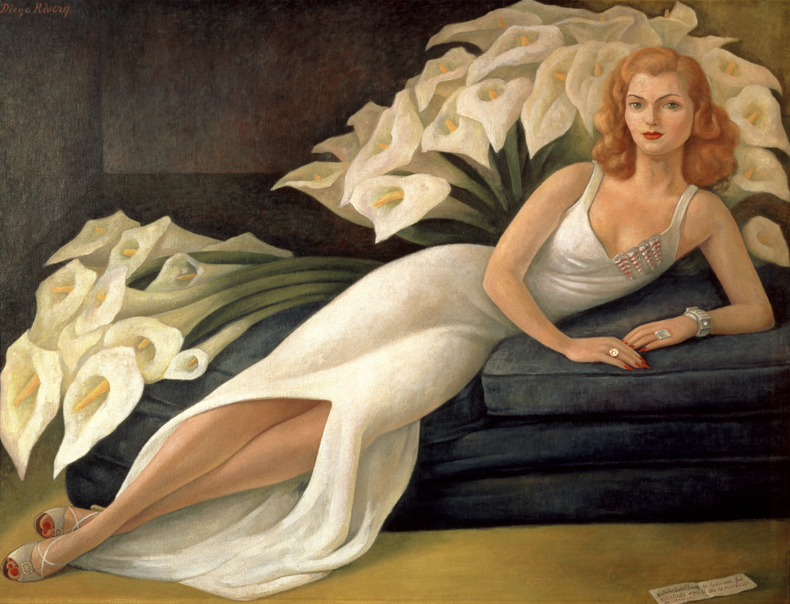
Rivera’s nearby portrait of Natasha is less powerful and more fun. He has made her into a human calla lily, draped over a stack of pillows in a white dress notched suggestively above the knee. Her lithe legs extend from the opening, mirroring the phallic yellow stamens of the lilies arching at her back. She plays along, from her coy smile to the point of her little silver-shoed feet, topped with diamond clips, hair falling over her bare shoulder. Jacques, painted by Ángel Zárraga, is also in on his own joke. On a film lot, with industrial lights and corrugated sets behind him, he sits at ease, cigar in hand, a green ascot set off against a relaxed brown suit. Disembodied arms operate the boom and lights, the real labour that remains invisible behind the public face of the producer.
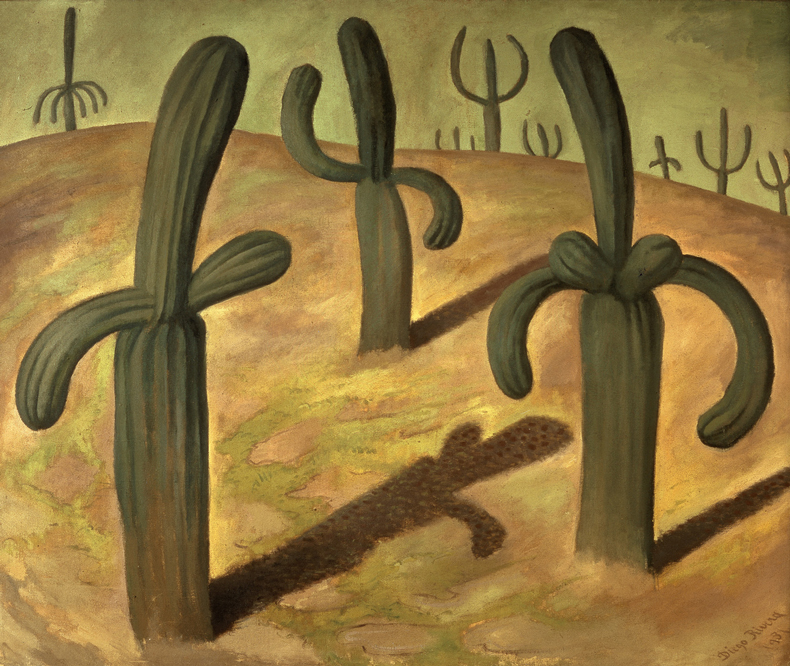
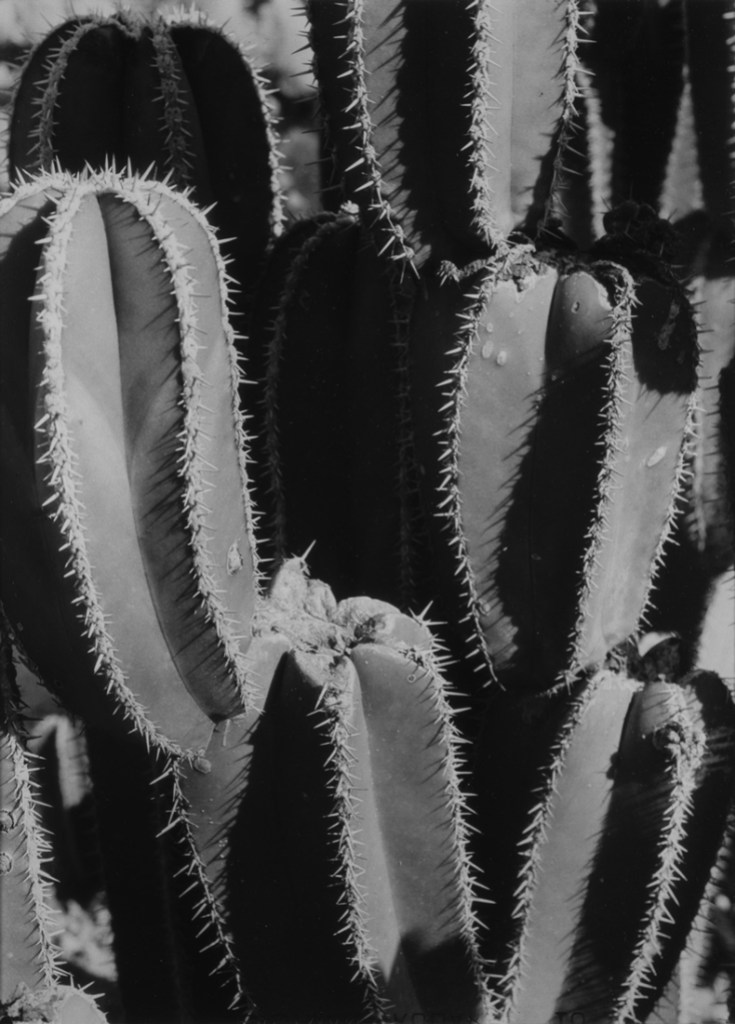
Jacques and Natasha’s presence, their exacting sensibility and cheerful humour suffuse the rest of the collection. If the curatorial groupings lack some imagination – ‘cacti’, ‘brides’, ‘dolls’, ‘abstraction’ – these works would be rewarding in almost any configuration. Mid-century Mexico is laid out in all its off-kilter excitement. Here is Graciela Iturbide’s photograph of Francisco Toledo tossing his little hairless dog into the air. Here is José Clemente Orozco’s gouache sketch of the Salon México from 1940, a crush of hats, shoes and bodies all scribbled down in haste, the women’s dancing clothes bringing colour to the smoke-filled room. Here is Cantinflas, Mexico’s Charlie Chaplin, with his unmistakable drooping smile, painted by Rufino Tamayo as a puppet gliding out of a blue twilight. Even an early cubist Rivera, Última Hora (1915), winks at the viewer, a bulbous pin-headed figure in bilious yellow-green trundling towards a foaming mug of beer. The painting might once have needled the analytical Bracques and Picassos it was hung with, companions that went to the Met with the rest of the Gelmans’ European paintings in the ’90s.
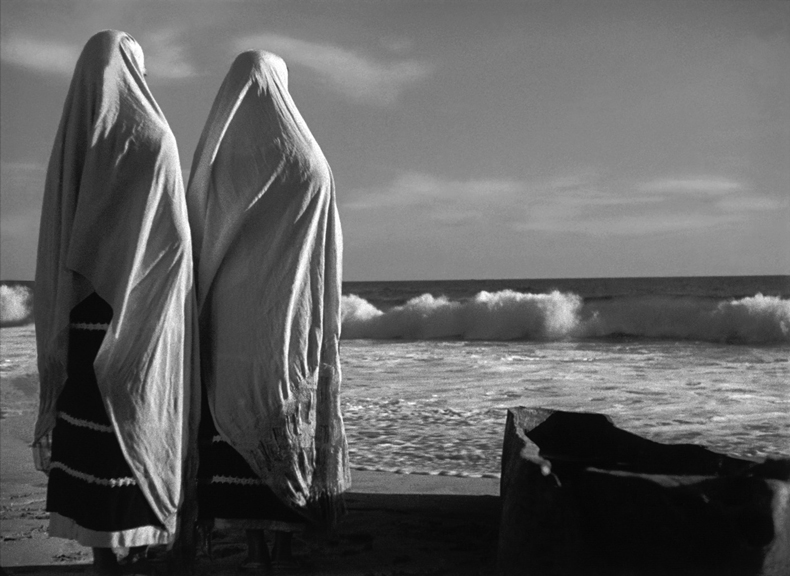
The works on paper are just as good as the paintings: a pair of dark, subtle Tamayo watercolours of white-draped women seen from behind in desolate, grey-washed landscapes; a playful photographic portrait of María Izquierdo by Lola Álvarez Bravo in which one of the painters’ own canvases becomes a trompe l’oeil studio backdrop of a curtained cottage window; and another close-cropped photograph, by Lola’s husband Manuel, of the shrivelled torsos of two embracing mummies.
Given the collection’s uncertain fate, however, it is Rivera’s Calla Lily Seller (1943) that feels most of the moment, an object lesson in the dangers of abundance. The flowers’ dozens of white spathes swell to the edges of the frame and reach up into the sky, patted gently into place by two Indigenous girls. But the basket is not full enough to entirely hide behind it a faceless man’s sun-faded hat or the embrace of his two grasping hands. His semi-appearance betrays the lush display’s double meaning: both flowers and girls are for sale. Great beauty, the painting warns, gives cover to those who would put it to venal ends. Of this, Mexicans need no reminder.
‘Modern Narratives: Emblematic Works from the Gelman Santander Collection’ is at the Museo de Arte Moderno, Mexico City, until 19 July.