From the May 2026 issue of Apollo.
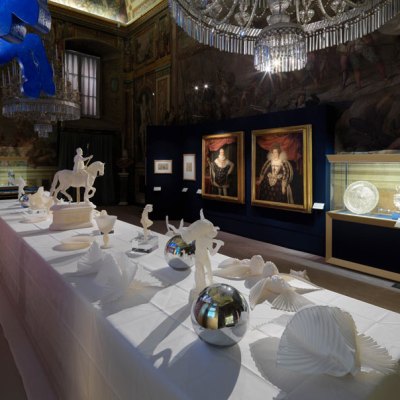
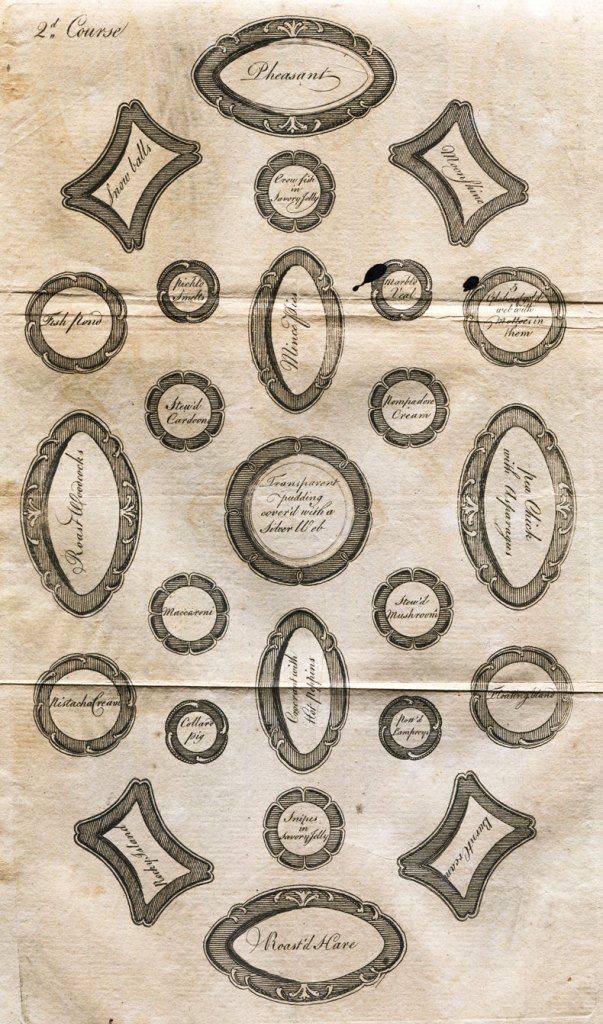
In 1769, the housekeeper-turned-entrepreneur and cookery writer Elizabeth Raffald published The Experienced English Housekeeper. In this hugely popular manual, which contained some 900 recipes, Raffald included illustrated table plans for a grand two-course dinner, each course composed of 25 dishes. As guest curator of ‘English Taste: the Art of Dining in the Eighteenth Century’ at the Museum of Fine Arts in Houston (2011–12), I created a display loosely based on the second course of this meal. We dressed the table with Huguenot silver from the museum’s collection and served deliciously realistic faux roast hare complete with head and ears, and other dishes from Raffald’s menu such as ‘Crow fish in Savory jelly’, ‘Stew’d Cardoons’, ‘Transparent pudding cover’d with a Silver Web’. The silver was gorgeous and my colleague Tony Barton’s fake food remarkable, but the missing element was the presence of any Georgian guests.
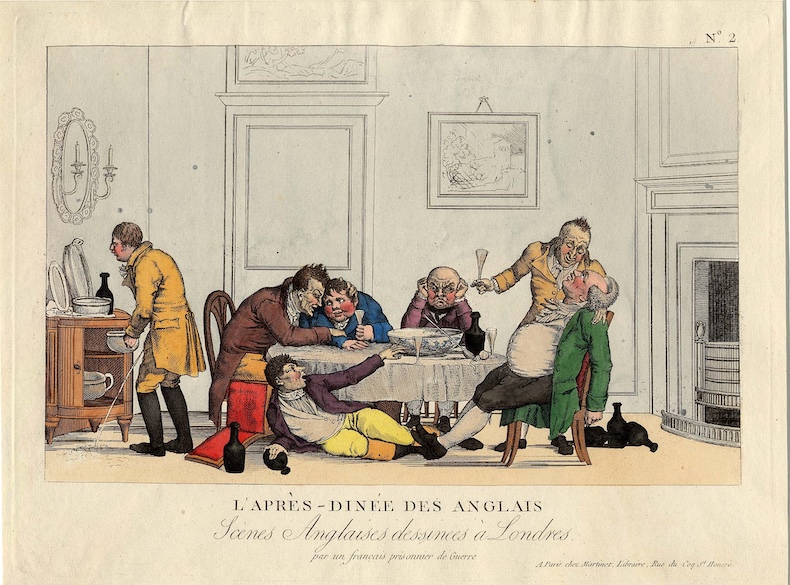
In her new book The Country House Dining Room: A History of Georgian Feasting – which among many wonderful illustrations reproduces Raffald’s table plans – Amy Boyington affords some great insights into both the elegance and the excess of entertaining in Georgian Britain. She contrasts breathtakingly graceful dining and sophisticated surroundings with episodes of drunkenness and boorish overindulgence. The ‘three bottle’ fights that Boyington relays, chamber pots concealed in the corner of the room, gout stools – these ingredients would have lent our display in Houston an extra flavour of authenticity.
Georgian largesse was frequently on an even larger scale than Raffald’s grand dinner. Venison, game and the other ingredients were often sent from a country estate to a noble family’s home in London, particularly at Christmas. In 1763, while he overwintered in town, James Lowther was sent a huge pie baked in the kitchen of his Westmorland mansion. It was stuffed with preserved game and wild birds – including 20 rabbits, two geese, 12 partridges and 46 yellowhammers – and weighed 140kg. Probably made for a masquerade or ball supper, this indecent edible monument to Georgian gluttony made its way over 450km to Lowther’s city dining room on a cart drawn by two horses.
This traffic of comestibles trundling up and down the Great North Road travelled in both directions. With their home farms, game parks and model dairies, the great country estates were self-sufficient in most ingredients. However, some stylish food items that contributed rarity and elegance to an entertainment had to be sourced from London. Like Lowther, many wealthy landowners owned town houses in the aristocratic neighbourhoods of the capital. Their staff could readily purchase goods impossible to source in the country and send them on as required. City fruiterers, orange merchants, vintners and high-class confectioners sold a remarkable range of extravagant merchandise, and would happily box up their wares and deliver them by carter to distant rural residences. In November 1794, the Piccadilly confectioners J. Grange & Co. sold the Duke of Norfolk two boxes of expensive sweetmeats, conveying them directly to Worksop Manor 170km away in Nottinghamshire. In its extensive catalogues, John Burgess & Son, an ‘Italian Warehouse’ at 171 Strand, boasted it could not only send goods to the country but also to planters and merchants in the West Indies. The company sold ‘Turkeys stuffed with Perigord Truffles’, ‘Morels’, ‘Macaroni (in Pipe and Ribbon)’ and ‘Vermicelli’. From October to May, there were ‘Wild Boars’ Heads of the true Epicurian flavour’ imported from Mannheim and reindeer tongues from the Baltic. In their list of sweetmeats they mention boxes of Neapolitan Diavoloni, the earliest chocolate sweets, which were coated with hundreds and thousands to protect fingers from melting chocolate. Indulgences of this kind were available in huge variety in numerous West End confectionery shops. These stylish outlets also functioned as refreshment rooms, where you could enjoy an ice cream while waiting for your sugar plums, candied pineapple and bonbons to be elegantly packed in sturdy wooden boxes for their long journey home.
Perhaps the most celebrated confectioner in London was the gifted Italian credenziere Domenico Negri, who started trading from the Pot and Pineapple in Berkeley Square in 1757. One of his most important customers was Alexander, the 4th Duke of Gordon. On 8 January 1766, Negri sold the duke what was called at the time ‘a furnished dessert’ for the princely sum of £25.7s.9d. The ‘furnishings’ consisted of a gilt-framed mirror-glass plateau dressed with an artificial parterre garden, ornamented with six Bow porcelain figures, two porcelain swans, two glass fountains and a large Chinese umbrella. Included in the price were four ‘deale boxes’ to transport everything – perhaps this modish dessert centrepiece was destined for Gordon Castle, the duke’s distant seat in Moray. Either way, given that in 1766 the average wage of a cook in Britain was £6 per annum, it’s a telling illustration of the extravagances of this so-called gilded age.
The Country House Dining Room: A History of Georgian Feasting by Amy Boyington is published this month by Yale University Press.
From the May 2026 issue of Apollo.