Gladys Hynes (1888–1958) was an erratic radical. The ‘grandchild of a Fenian’, she believed fully in Ireland’s struggle for independence, befriended its main players and declared her intention to join Sinn Féin. But in Gladys Hynes: Radical Lives by Sacha Llewellyn, Sean Mark and Jennifer FitzGerald, the artist can also seem curiously absent-minded about her cause. In October 1920, when the newly established Dáil sent an emissary to London in a bid to negotiate with the British government, Hynes’s address was offered up as a safe line of communication. When the envoy turned up at 43 Belsize Park Gardens, however, she was not home, and he, left in the lurch, was forced to make alternative plans. The opportunity to ‘assist in peace efforts’ simply ‘slipped through Hynes’s fingers’.
But it’s Hynes herself who proves slippery. She is blazingly righteous one minute and almost whimsical the next. A suffragist, she designed and carried the banner for the St Joan’s Social and Political Alliance at the Peacemakers’ Pilgrimage in 1926 (the same year her sister joined the Alliance’s executive committee), but probably did not become an official member until the 1940s, when she converted to Catholicism. She was also a pacifist who confessed to finding the League of Nations disarmament commission of 1928 ‘rather dull’ and who maintained, even late in life, that violence was necessary to secure Ireland’s freedom.
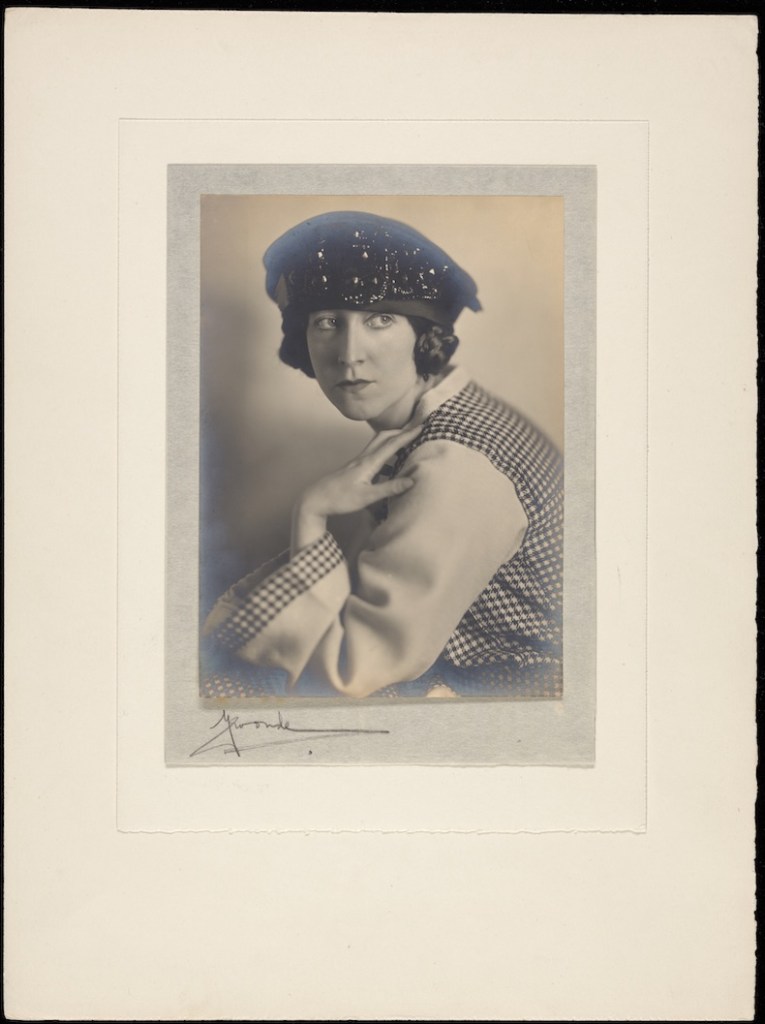
That Hynes’s radicalism seems so contradictory is unsurprising given how little we know about her interior life. Born in Indore, where her father was a Bank of Bombay agent, she went on to study at the London School of Art (under the tutelage of Frank Brangwyn) and the Forbes School of Painting in Newlyn. This protracted apprenticeship was followed by a brief stint at Roger Fry’s Omega workshops. Although ‘never formally part of the Bloomsbury group’, she became acquainted with the great and the good of English modernism, counting Ezra Pound among her closest confidants, and also mixed with London’s Irish radicals such as Eva Gore-Booth and Desmond FitzGerald. Compared to her contemporaries who fastidiously documented their lives and convictions (often with one eye on posterity), Hynes left no comprehensive paper trail. Her life threatens to read like one long vanishing act.
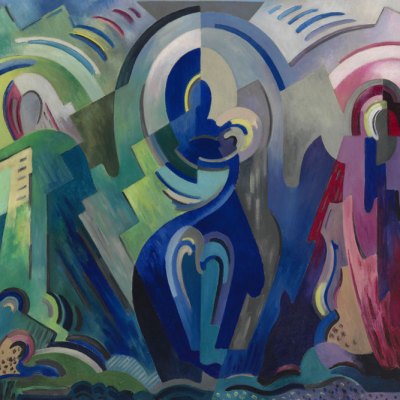
Although she worked across painting, sculpture and textiles and was industrious in her output, much of her work is lost to us: everything produced at the Omega was signed with only a Ω; sculptures have mysteriously disappeared; and in 1989 her acclaimed, lacquered-wood Madonna and Child was stolen from a Hampstead church. She has a freak habit of being omitted from the biographies of even her closest friends (including Nina Hamnett’s memoirs and Patricia Hutchins’s Faber biography of Pound) and the misfortune of being included in the novels of her rebuffed suitors. In Douglas Goldring’s Cuckoo (1926), Hynes is satirised as a callously chaste feminist. Colwyn Vulliamy, who also attended the Forbes School, reached a similar verdict when he declared her ‘invincibly virginal’ (he later married her sister Eileen). In his novel Family Matters (1933), he lampoons Hynes as a posturing revolutionary. Hynes’s indifference to their advances gives credence to the biography’s suggestion that she was likely queer, although the strongest evidence for this comes from her ‘many lesbian friends’ who, again, proved more forthcoming in their surviving writing than Hynes herself.
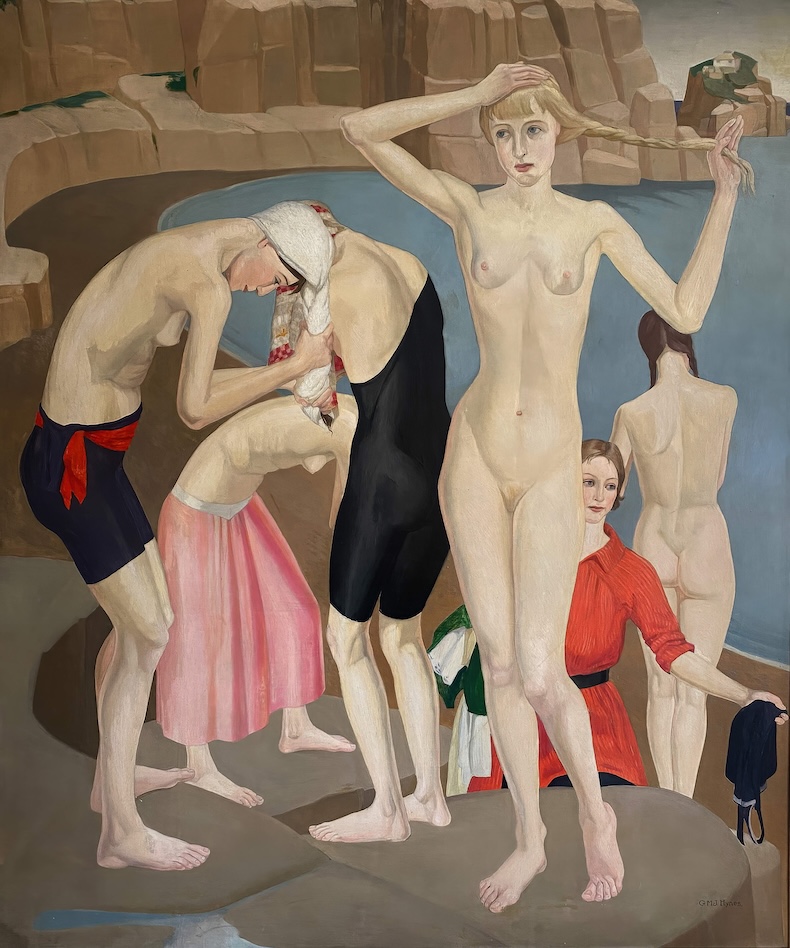
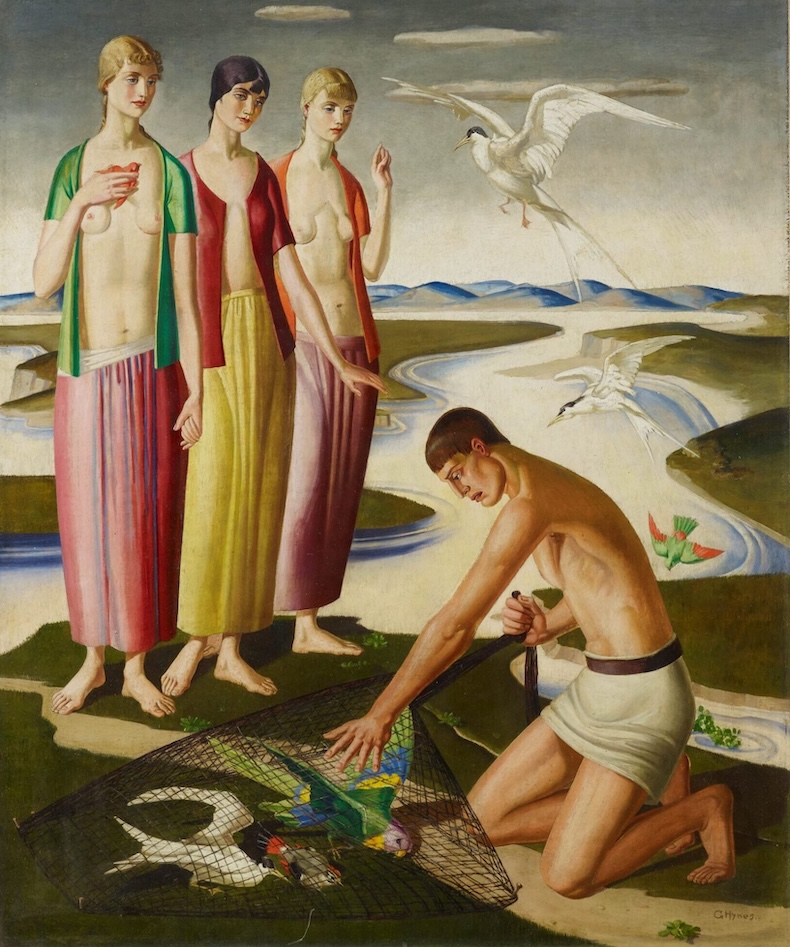
Llewellyn, who specialises in rehabilitating overlooked female artists, is undaunted by these gaps in Hynes’s life. In an accompanying exhibition at Charleston (until 11 October) she aims to reinstate her reputation: here, Hynes’s talent is obvious. In Morning (1916), swimmers towel off in Lamorna Cove. They are all angles, pale skin and glassily averted eyes; an androgynous woman holds a sopping blonde plait away from her body while she looks in the opposite direction. Hynes’s subjects are often evasive, rarely looking at each other or us. In Noah’s Ark (1919) it’s as if everyone is making a concerted effort to stare only at vacant space. As Hynes’s style became more aligned with Vorticism in the 1920s, her paintings became populated with slouched figures, exhausted by modernity: in Escalator (1922), men studiously hide their eyes under the brims of bowler hats and in The Night Journey (1922), they have them closed, heads lolling. There is feeling in these works, but it is hard to know what exactly it consists of.
The exhibition succeeds in establishing Hynes’s ability, but it falls foul of the biography’s caveat that her ‘value must not be reduced to the company she kept’. On display are many contemporaries, including Duncan Grant and Laura Knight. Some comparisons offer more plausible contexts than others: by the time you reach Stanley Spencer’s Sailor Figurehead with Union Jack (c. 1950), with a label that helpfully notes his visits to Northern Ireland where ‘questions of sovereignty and identity remained deeply contested’, the affinities seem to be dwindling to platitudes.
The highlight of the exhibition is Hynes’s illustrations for a deluxe edition of Pound’s Draft of the Cantos 17-27, commissioned in 1927. The red majuscules are medieval in their ornateness, but the illuminations range from mythical beasts to industrial chimneys billowing smoke. The biography offers an incisive account of the long-standing relationship and collaboration between the two artists. Drawing on their correspondence, it also suggests a grim camaraderie in prejudice and anti-Semitism (Hynes’s lurking but undeniable, Pound’s flagrant and vicious), tracing its effects in Surrealist wartime works like Crucifixion (1939) and Resurgimus (1941). It reveals too a chameleon-like quality to Hynes’s self-presentation. She is often self-abnegating, and in one instance even adopts Pound’s belligerent habit of capitalisation (history is ‘BUNK’). By the biography’s end, we glimpse an artist who has outlived her own revolutionary fervour. Alienated from her old rebellious energies, Hynes wonders aloud whether ‘people feel as intensely about these things now, as they did then?’ In 1953 she even paints a fairytale-like memorial picture for Queen Elizabeth’s coronation. At the time of her death five years later, however, she was working on a sculpture to commemorate Desmond and Mabel FitzGerald as a revolutionary couple. The biography and exhibition try to chart Hynes’s contradictory life, but she emerges from it all remote and rather baffling. For an artist who once confessed to a ‘mortal fear of condensing things into formulated ideas’, perhaps it’s an homage she would have liked.
‘Gladys Hynes: Radical Lives’ is at Charleston, Lewes, until 11 October.