
After the scandal caused by Matisse and his fellow Fauvists at the 1905 Salon d’Automne in Paris, at which Gertrude and Leo Stein purchased Woman with a Hat (1905), interest in the painter’s work was in the ascendant. However, any contemporary collector hoping to acquire the work he was showing at the following year’s Salon would have been sorely disappointed. On the eve of the exhibition’s opening, all five canvases, along with half a dozen others for good measure, had been scooped up by a single buyer: Gustave Fayet.
Fayet’s name might not be well known today, but at the time of this coup, he was a familiar presence in the Parisian art world. The scion of a wealthy family of landowners and winemakers, he was a regular client of the city’s major dealers – Vollard, Druet, Bernheim Jeune, Durand-Ruel – and widely regarded as one of the most important collectors of the day. With a seemingly insatiable appetite for Post-Impressionist art, he was an early champion of Van Gogh, Gauguin and Redon, and also acquired substantial collections of Cézanne, Bonnard, Vuillard, Degas, Toulouse-Lautrec and many others. His home in Paris became a de facto Gauguin museum, with some 200 works covering its walls, attracting the leading artists, writers and collectors of the day.
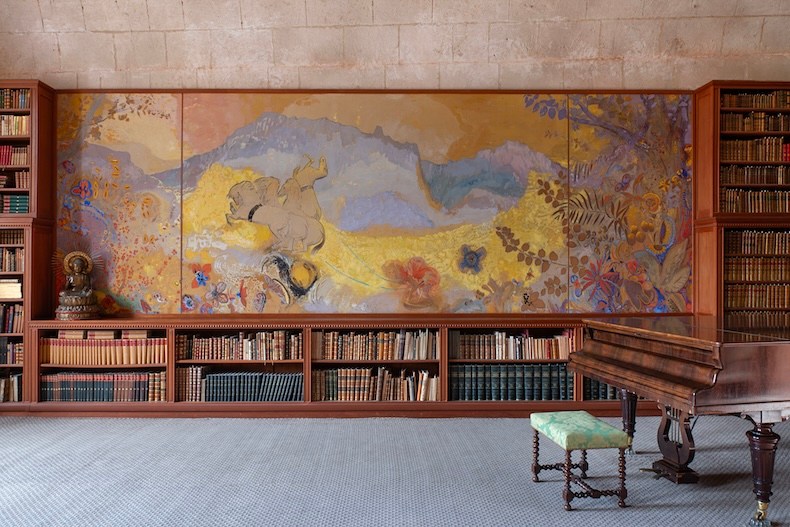
Fayet was also an accomplished artist in his own right, his acquisitive urges complemented by a restless creativity that embraced both the fine and applied arts. A gifted painter, he also produced book illustrations, ceramics, textiles, and avant-garde carpet designs. In 1908, he purchased the ancient Cistercian abbey of Fontfroide and set about transforming it into a ‘total work of art’, filling it with medieval sculptures, Japanese Buddhas, Moorish furniture, specially commissioned stained glass and monumental paintings by Redon. Split into two sections, this sprawling, hugely ambitious show at the Fondation Louis Vuitton in Paris seeks to reunite these two sides of his personality, placing the collector in dialogue with the creator. What emerges is a portrait of a mercurial figure whose impulses in both spheres could be as capricious as they were inspired.
As a collector, Fayet balanced his own passions with the speculative instincts of a businessman. Pragmatic and entrepreneurial, he often acquired paintings to use as bargaining chips. Between 1899 and 1908, he bought, sold and exchanged canvases at an extraordinary rate, shifting them around like chess pieces on a board. The Matisses he purchased with such apparent zeal in 1906 were resold within two years, while other works would come and go within a matter of months. ‘It’s not ownership that brings happiness,’ he noted, ‘it’s making the acquisition.’ All told, around 750 paintings would pass through his hands before his death in 1925. Of these, the current show brings together well over 200, along with a large selection of prints and drawings, pastels, ceramics, and other decorative pieces that filled his various homes.
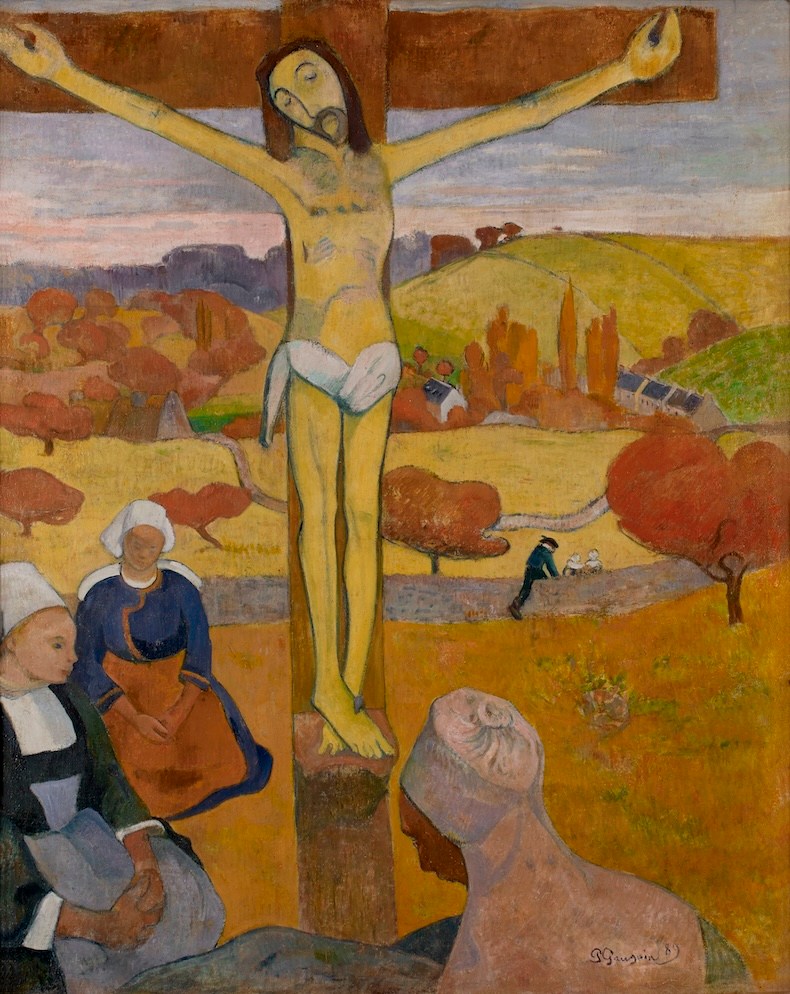
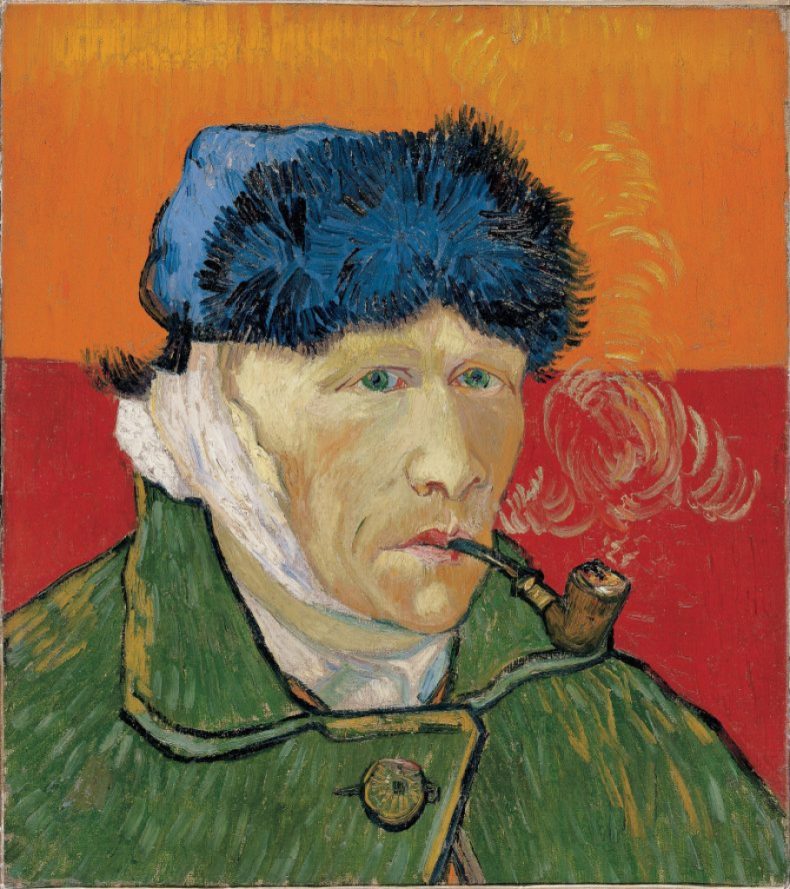
His lifelong favourites – Gauguin, Redon, and Van Gogh – each warrant several rooms apiece and the number of masterpieces they contain is a testament to Fayet’s exceptional taste. On public display for the first time this century, Van Gogh’s Self-Portrait with Bandaged Ear and Pipe (1889) stares out from behind its glass screen like a modernist Mona Lisa, the artist’s deadpan expression every bit as inscrutable. More tightly framed than the better-known version in the Courtauld, his face is fixed against a plain background of vivid red and orange, free of any incidental detail, charging it with a profoundly moving intensity. Elsewhere Gauguin’s radically stylised Yellow Christ (1889) battles for attention with around 80 of his other paintings, sculptures and wood carvings, while the Redon galleries segue from the surreal Symbolism his noirs into an explosion of colour with a group of vividly saturated floral studies.
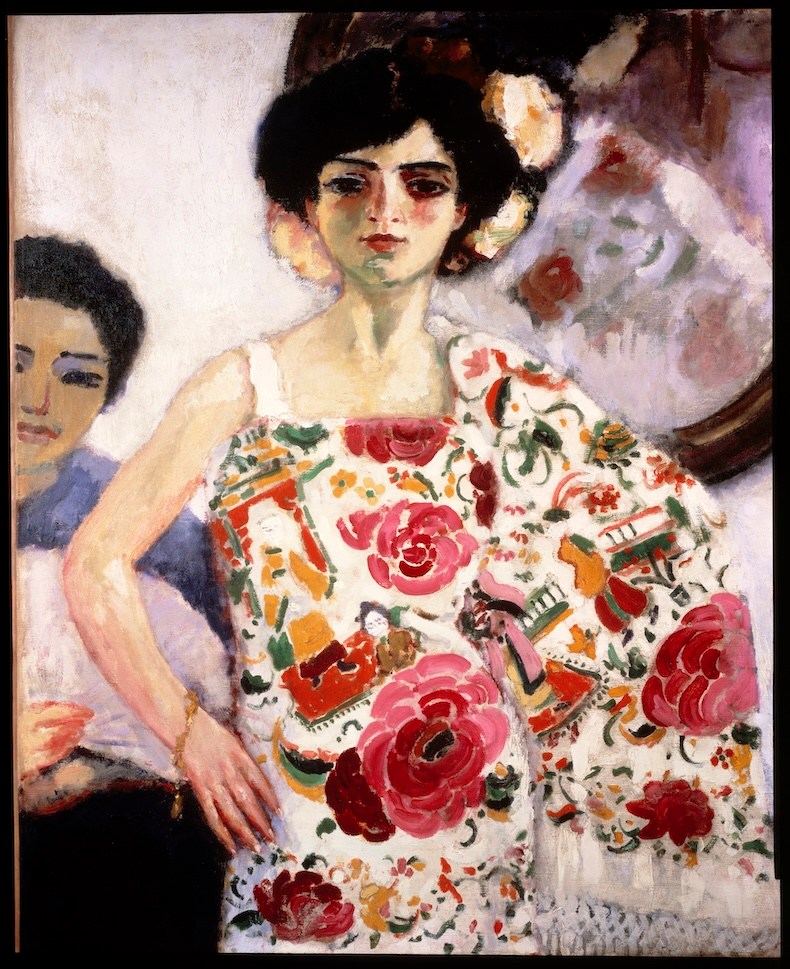
But there are many other highlights. As a collector, Fayet clearly had a penchant for certain subjects. Berthe Morisot’s La Lecture (1888) is one of several images of people reading, while Bonnard’s sombre, atmospheric View of Paris at Night (1900) occupies another sub-collection of Parisian cityscapes. Above all, however, he loved colour, and especially red. So many paintings draw the eye with vivid flashes of vermillion. It’s there in the floral patterning of Kees Van Dongen’s The Manila Shawl (1910–11), the flags and banners that burst triumphantly from the foreground of Albert Marquet’s July 14th in Le Havre (1906) and the dreamy, sunlit haze of Vuillard’s The Painter Ker-Xavier Roussel and his Daughter (1903).
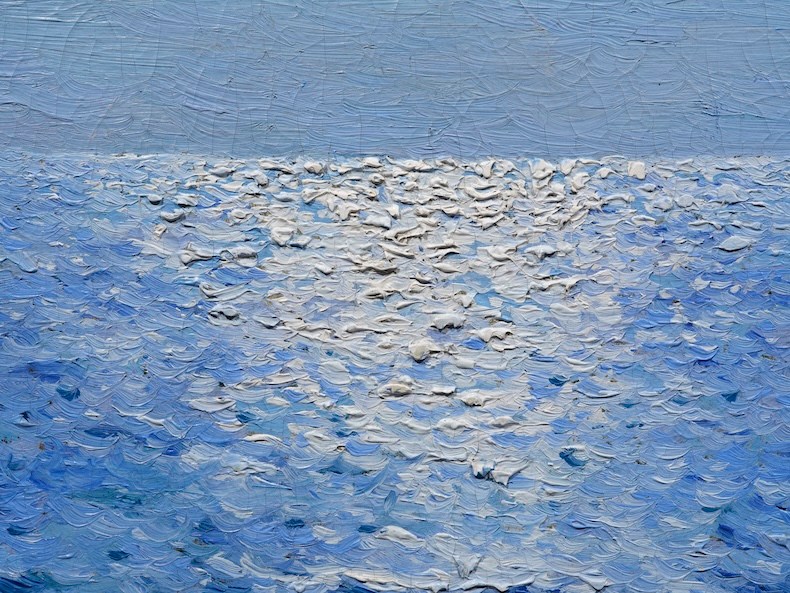
Fayet’s own work comes as a quiet revelation. As a painter, he was a talented disciple rather than an innovator, but works such as Blue Cypresses (1902), with its striking vertical composition reminiscent of Japanese prints, or the intense, shimmering luminescence of a seascape such as Marine (n.d.) show that he was closely attuned to the languages of modernity. But he was also adept at transforming nature in the most surprising ways. In a series of remarkable drawings from 1924, gnarled, centuries-old olive trees become bizarre ‘monsters’ that wouldn’t seem out of place in the more nightmarish visions of Goya. His final work, Fleurs (1925), conjures up an imaginary herbarium in which bizarre hybrid forms, somewhere between plants and aquatic creatures, float eerily in empty space.
During his lifetime, however, he garnered most acclaim for his carpets. Based on semi-abstract floral motifs, they made him a fashionable figure in Paris and beyond as art nouveau transitioned into art deco. In 1926, six months after his death, they would be the subject of a major exhibition at the Louvre, hung on the walls like paintings, alongside works by Redon. But this would be a last hurrah for Fayet, whose work and reputation all but disappeared in the decades that followed. A century on, this illuminating show is a welcome reminder of an unjustly forgotten figure. As a collector, Fayet knew the value of a good retrospective. He would surely approve.
Gustave Fayet: Collector–Designer. Icons of Modern Art is at the Fondation Louis Vuitton, Paris, until 8 March 2027.