From the November 2026 issue of Apollo.
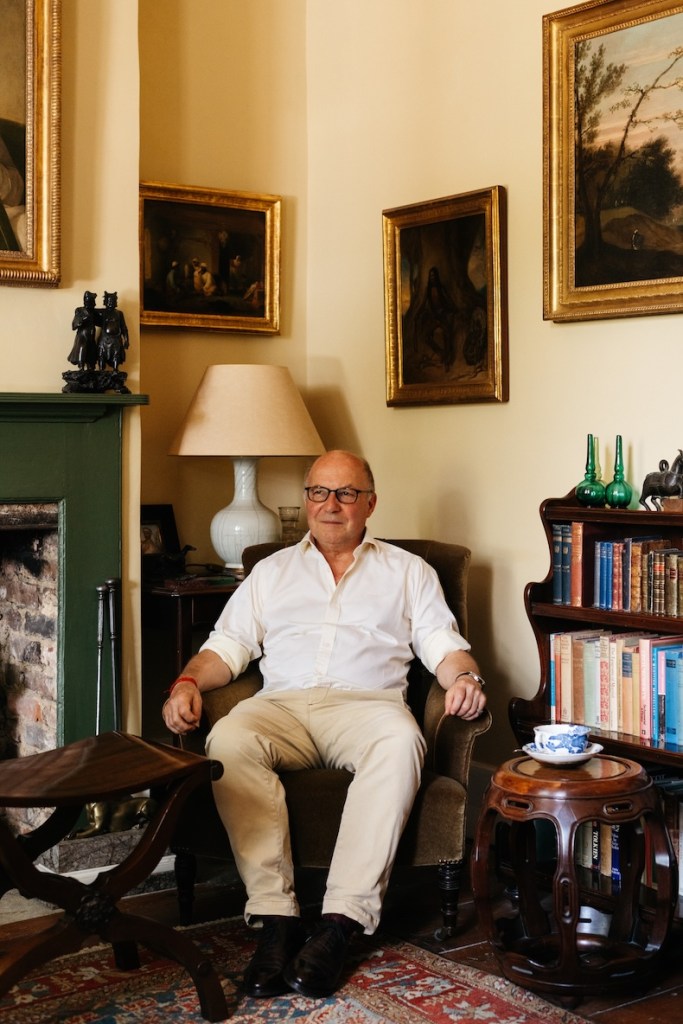
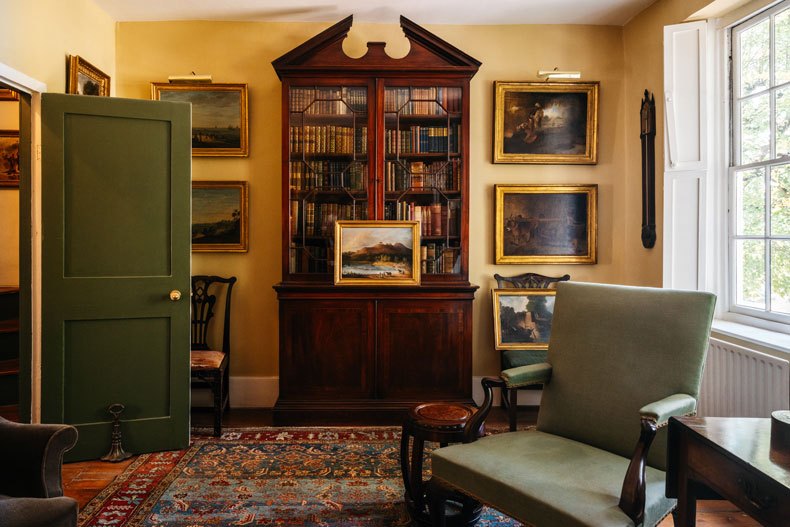
In September this year Tate Britain received a hugely generous gift of 50 pictures by artists who worked in India, largely during the 18th and 19th centuries. This remarkable collection has been built up over the past 45 years by the historian and scholar Charles Greig, and until recently hung in his beautiful late 17th-century house in west London. ‘I only ever saw myself as a steward of these paintings, and I passionately believe that a collection that involves so many years of study needs to be seen by the public,’ Greig explains. ‘Two years ago I was told by the Tate that more than anything they wanted to expand their ownership of Anglo-Indian paintings, and so it seemed highly appropriate that my collection should go there. I believe that a gift should be a gift, and I am giving it with no tax benefits to myself, which I think is unprecedented this century.’
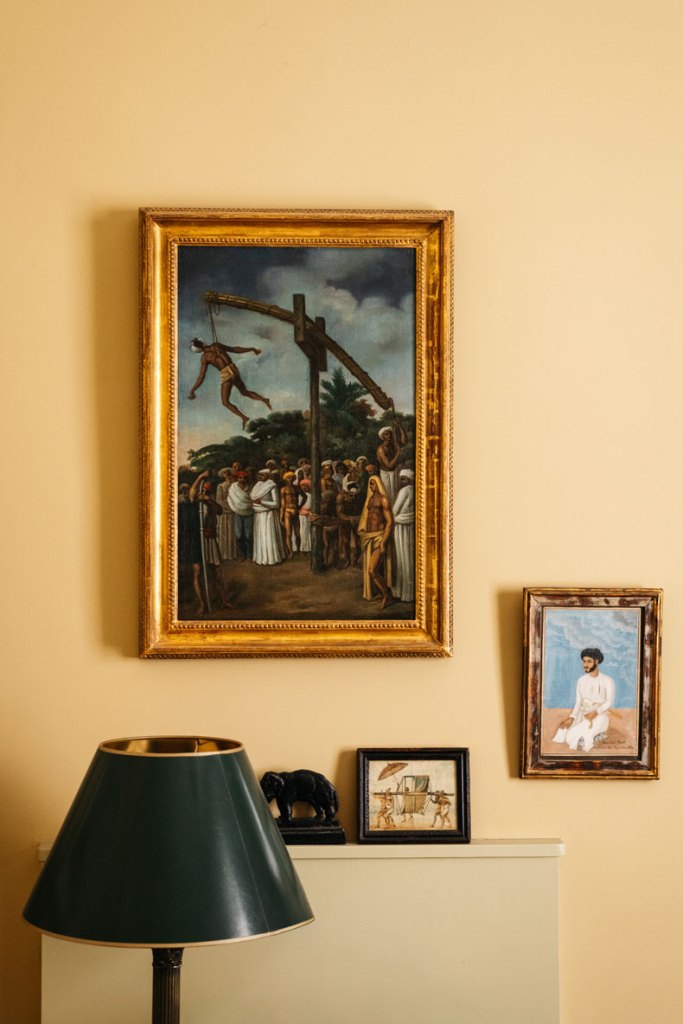
Greig’s passion for Anglo-Indian art was fired by seeing the huge collection held in the Victoria Memorial in Calcutta during his first visit to India, shortly after leaving university. He would later catalogue these paintings while acting as art-historical adviser to the Calcutta Tercentenary Trust, which oversaw their restoration and conservation. In the meantime, he had worked in the silver department of Christie’s, but left in 1984 in order to go into partnership with the art dealer Giles Eyre, from whom two years earlier he had bought his first painting, Arthur William Devis’s The Manufacture of Saltpetre at Patna (c. 1786). ‘What is interesting to me about this painting is that saltpetre was pivotal in bringing the British to Bengal,’ he says, but the British are entirely absent from this picture of two Indians producing the material in a thatched village hut. ‘I was more interested in how European artists saw and reacted to Indian people and Indian landscapes,’ he says. At the time such paintings were very unfashionable because collectors only wanted ‘grand imperial images’.
The earliest picture in the collection is of two hircurrahs, or messengers, exchanging a letter in a Calcutta street, painted in 1722 by Colonel Christopher Green, about whom almost nothing is known. ‘It’s very rare indeed,’ Greig says. ‘There are a few pictures in the Royal Collection, but as far as I know there are only two others – one in the India Office Library and one in a private collection.’ The latest of Greig’s paintings is of the Jama Masjid, the great mosque in Delhi, painted by Walter Crane during his tour of the Subcontinent in the winter of 1906–07 and reproduced in his book Indian Impressions (1907). Greig has assembled pictures both by those who are well known and by those whose names would be unfamiliar to anyone without a thorough knowledge of Anglo-Indian art. So alongside works by Johann Zoffany, George Chinnery, Thomas and William Daniell and William Hodges, who all went to India as established artists, are ones by people who were principally there for other reasons. The Jersey-born Philip Le Couteur (1777–1807), for example, was serving in the East India Company’s Madras Army, and the two paintings in Greig’s collection are of fishermen on a beach at Covelong (or Kovalam), a coastal village south of Chennai. Only two other paintings by him are known, both in the National Army Museum in London.
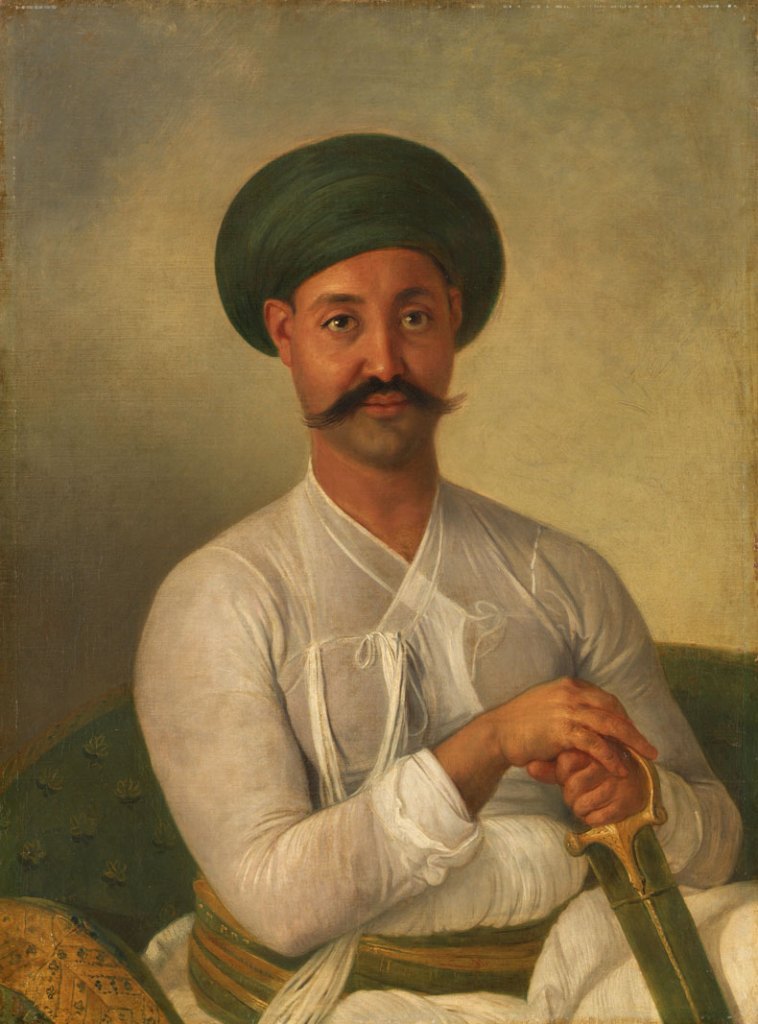
Another rarity is an exquisite portrait of a 23-year-old Muslim sepoy (c. 1886) by Rudolf Swoboda, whose paintings of Indians, commissioned by Queen Victoria, almost never come on to the market. The painting Greig most values, however, is Devis’s Rampersaud Seated beneath a Banyan Tree (c. 1792). He is particularly attracted to artists ‘who were trying to cross the cultural divide’, he says, and he marvels at Devis’s ability to ‘reveal the soul of an ascetic’ in this painting. Another favourite painting is a small but vividly realised depiction of Muslim merchants playing chess (1787), which turned up at auction attributed to the ‘circle of Devis’ but which Greig recognised as by Zoffany. His expertise similarly helped him acquire William Hodges’s superb picture of the holy mountain of Mandar Pravat in Bihar, painted for his patron the British administrator Augustus Clevland in 1782, which, although included in Isabel Stuebe’s definitive book on the artist of 1979 was sold by Christie’s as ‘Indian school, late 19th century’: ‘I knew immediately what it was. I bought it for nothing.’ As so often, and unlike many other European artists, Hodges includes Indian figures in this landscape, along with their horses, cattle and a capering dog. ‘Hodges was really trying to understand India,’ Greig says, ‘and to me he is the greatest of all the landscape painters who went there.’ The collection includes other works by him, notably the first ever European depiction of Lucknow (1782), which Greig’s fellow scholar Mildred Archer found in a junk shop in the mid 1970s. ‘It is a very interesting record of what Lucknow looked like in the great Nawabi period. Everything apart from the mosque was destroyed in the upheavals of 1857.’
Zoffany too worked in Lucknow, having followed his friend Warren Hastings, governor-general of Bengal, there from Calcutta in 1784. The very evening he arrived Hastings set him to work on a large portrait of Prince Jawan Bakht, heir apparent to the Mughal empire, who had fled to the city from Delhi in order to rally support against his enemies. ‘It is arguably the most important portrait of an Indian by a European artist that exists,’ Greig says. ‘There is nothing comparable to it.’ It is complemented in the collection by three much smaller portraits of Bakht by Indian artists.
Greig’s gift includes pictures by other Indian artists, notably Ghulam Ali Khan, a court painter to Mughal emperors who was subsequently employed by British officers of the East India Company such as James Skinner and William Fraser. A spectacular panorama of the Diwan-i-Am in Delhi’s Red Fort (c. 1806) is, Greig says, ‘probably the best I found of all the Company paintings’. It is both early and features in the foreground two figures, an elephant and a horse, that appear in the Fraser albums of Company paintings done at exactly the same time. Another and very different Indian artist, Sita Ram, was commissioned by Lord Hastings, governor-general of Bengal, to record in watercolours his epic journey from Calcutta to the Punjab in 1814–15. Ram’s painting of the nawab’s palace in his home city of Murshidabad is particularly prized, since it is the first picture in the first of the 10 albums delineating Hastings’s expedition, an album that was sold in 1974 and dispersed, unlike the six intact ones now in the British Library.
‘One of the reasons I was so keen to secure my collection for a public institution in this country was because in recent years these kinds of paintings have all been going abroad, mostly back to India in very large numbers,’ Greig says. ‘It seemed to me essential that one was saving something.’ The public will be able to benefit from his mission when these beautiful and historically significant pictures go on show at Tate Britain in 2028.
From the November 2026 issue of Apollo.