From the March 2026 issue of Apollo.
Adam Charlap Hyman is a 37-year-old artist and designer whose flat in Midtown Manhattan blends art and objects from wildly different periods. He has an Aubusson tapestry on his sitting room wall behind a 1970s modular seating unit by Klaus Uredat. Next to it are a plastic standing ‘eye’ lamp, a miniature wooden synagogue and a tiny oil painting of a saint, with a gilded frame.
In New Orleans, the 40-something African American artist Andrew LaMar Hopkins has filled his otherwise stripped-back home with 18th- and 19th-century Louisiana portraits, French porcelain, a photo of a muscular swimmer and his own paintings.
Both men are featured in a recent book, The New Antiquarians, which documents wealthy people in their 30s and 40s who are breaking the accepted market wisdom that young people will never again buy ‘brown’ furniture, silver, porcelain or paintings any older than, say, 125 years.
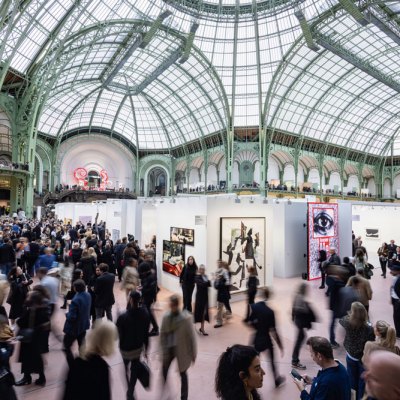
Its author, Michael Diaz-Griffith, is not the only one shaking up ideas of what younger people will collect. Last December Art Basel launched a new digital art section in its Miami fair. Zero 10 (a nod to Kazimir Malevich’s ‘0,10’ exhibition in St Petersburg in 1915) featured established galleries such as Pace alongside newcomers such as London’s Fellowship.
The tech bros the section was presumably designed to attract may not have got the art historical reference. But nor had they got the wider diagnosis that, commercially at least, digital art is dead (Christie’s closed its digital art department last September). More than half the work sold in the first few hours, including all 10 creepy robotic dogs with human heads (each an edition of two), priced at $100,000 by self-taught digital artist Beeple.

Meanwhile, the auction houses report other unusual buying trends: young collectors paying hundreds of thousands of dollars for ‘wet paint’ artists, dinosaur fossils, minerals, second-hand Hermès handbags and even trainers – not to wear, but to put on their walls.
The feeling that older people who run big businesses don’t understand what younger people want unnerves all kinds of markets: fashion, luxury goods and furniture among them. And it is equally apparent in the art world, where it affects not just what people are buying but also how museums that have depended on wealthy patrons continue to raise money.
‘There is a real generational shift in the nature of collecting and patronage under way, as the older guard who were part of that great contemporary and modern art boom become less active,’ says Noah Horowitz, chief executive of Art Basel. He was in Palo Alto in January for the launch of the Node Foundation, a new exhibition space that opened with a show of 10,000 CryptoPunks NFTs funded by 51-year-old venture capitalist Micky Malka.
Down the road, the Anderson Collection at Stanford University is more traditional. It has 121 major works by Pollock, Rothko, de Kooning, Guston and Diebenkorn, as well as contemporary art by the likes of Sean Scully and Vija Celmins, donated by the late Californian philanthropists Hunk and Moo Anderson in 2011 (they died in 2018 and 2019 respectively). ‘The Andersons represented that great generation of collectors that I grew up with through my career,’ Horowitz says. ‘But we want to find out how Art Basel can learn from and engage with the next generations who are making or inheriting tremendous wealth.’
The discussion about the interests of younger people has gained greater urgency as they age – the oldest millennials are now 45 while the first members of Gen Z are 29. Some of them are about to start inheriting what economists say is the largest amount of wealth ever passed down from one generation to the next. The phrase ‘great wealth transfer’ is now heard all over the art market.
The great wealth transfer started being mentioned in financial circles in the late 1990s. Initially it referred to money passing from people born between the 1920s and the mid 1940s (the ‘silent generation’) to the post-war baby boomers. But since the 2010s the concept has been heavily promoted by the financial consultants Cerulli Associates to describe the transfer of money from boomers to their children and grandchildren. This, they argue, is already under way: older boomers reach 80 this year and many wealthy people are not waiting until death is imminent to plan their legacies but are already giving assets to their heirs.

Of course, businesses, stocks and shares, property, art, luxury goods and cash have been passed down through families for centuries. But according to Eric Landolt, head of family advisory, art and collecting at UBS Global Wealth Management, this time it matters more: ‘This is the wealth created in the aftermath of World War II up until today. It is substantially higher than anything we have seen in previous generations, and will be the most sizeable ever passed on,’ he says.
How much money will be inherited and when is uncertain, depending on modelling and predicted timescales. At any rate, it is clear that very large sums will be involved. In 2023 the Federal Reserve reported that in the United States people born between 1946 and 1964 held $78.3tn in assets, more than half the nation’s $140tn private wealth. It is also very unevenly distributed: the top 10 per cent hold two-thirds of all of those assets – and half is in the hands of the top 1 per cent. Economists expect inheritance to accentuate these inequalities.
Art represents a relatively small amount of this accumulated wealth. But in art market terms, this could be very significant, particularly if heirs sell off collections they have inherited, to pay inheritance tax bills, or because they don’t want an art collection, or because they would rather buy work by different artists.
‘The great wealth transfer is the subject I’m most commonly asked about,’ says Anthea Peers, president of Europe, Middle East and Africa at Christie’s. She sees the predicted appearance of large collections of art on the secondary market as an opportunity – a point underlined when last year’s otherwise spongy auctions were saved by a few great single-owner collection sales.
These included works by Klimt, Van Gogh, Matisse, Gauguin, Magritte and Leonora Carrington collected by the cosmetics heir Leonard Lauder, the Chicago hoteliers Jay and Cindy Pritzker, and Pauline Karpidas, widow of a shipping magnate. Lauder died last year, as did Cindy Pritzker (having outlived her husband Jay by more than 25 years). Karpidas is in her 80s, but said she was downsizing and focusing on legacy. Together, single-owner collections made $1.26bn without fees at Sotheby’s, Christie’s and Phillips last year, according to analysts Art Tactic.
Peers says that helping older owners and heirs sell collections ‘is something we have of course started to think about’. She believes that even if large numbers of similar lots hit the block together there will be demand.
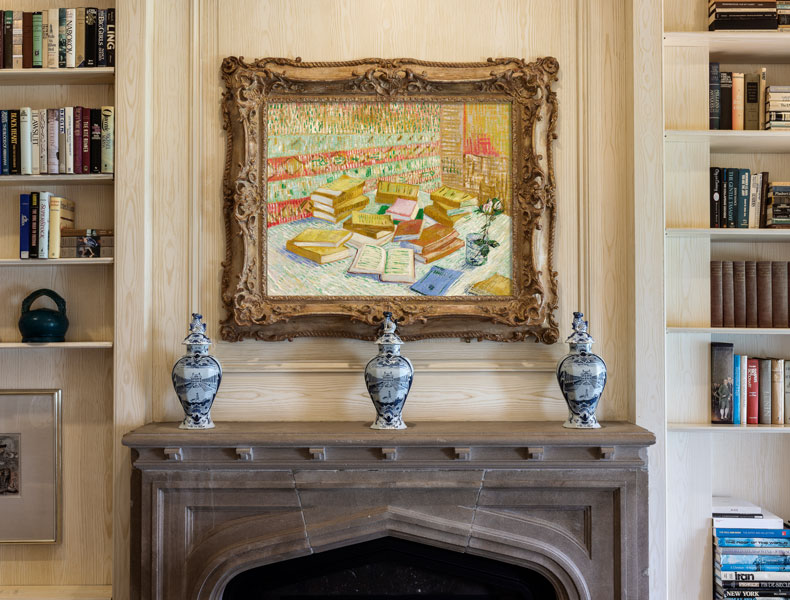
‘Sales of inherited collections have been an important part of the auction business for a long time, and will always have a premium in the market if handled with skill and care,’ Peers says. She acknowledges the business will have to work hard ‘to keep adapting the business to match [younger generations’] interests, understand their motivations and make sure the buyer pool continues to expand’.
Others think that this may not be easy. ‘Part of my practice here at Withers is helping people who have amassed great collections who are now in their 80s, 90s, even their 100s, says Mari-Claudia Jiménez, formerly chairman and president of the Americas at Sotheby’s and now global co-head of art law practice at Withers Art and Advisory. ‘These are the collections that will be a “market moment” when they come up for sale. And of course the whole market is rooting for them and wants them to do well, because a rising tide lifts all ships.’
But there is a risk of ‘a flood’ of great works. ‘Some of the people I worked with at Sotheby’s had 25 Magrittes, 30 Picassos – how do you maintain prices which are based on scarcity when there isn’t any scarcity?’ Ideally, works would be sold slowly, but the need to pay inheritance tax bills promptly makes that hard to plan for.
All of this is adding to uncertainty in the market. ‘I hear the great wealth transfer mentioned all the time,’ says Georgina Adam, author of NextGen Collectors and the Art Market, published this month. ‘I think the market is very unsure about what it means – will people use the money to buy art or something else entirely?’
‘What younger people are buying, how they buy, who influences them is all changing,’ Adam says. ‘For example, older collectors wore out shoe leather going to galleries because they couldn’t see art online or share opinions on WhatsApp groups. They were very influenced by curators at the major museums, by the galleries they bought from, by art critics – all of that has gone now.’
The new generation is also interested in the issues of their time. ‘I don’t think people of my generation thought of putting together collections of women artists, or artists of colour or LGBTQ+ artists, but identity, gender and race are huge issues now,’ Adam says.
Diaz-Griffith, a 39-year-old writer, designer and historian, has the advantage of talking about his own generation. He believes millennials and Gen Z will continue to buy art and more surprising things such as antiques, but in a different way from previous generations. ‘The advent of the internet means this is going to be one of the most consequential eras ever. Since mainstream media is no longer controlling what we are looking at, we are exposed to an infinite archive of images and plurality of taste – what younger people want is much less rooted in an easy-to-understand mass-culture logic,’ he says.
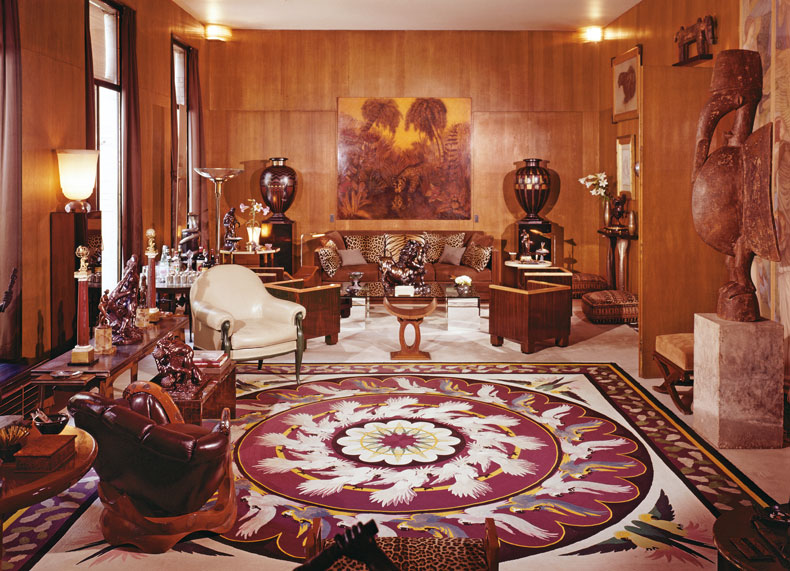
Younger people have ‘more of a magpie sensibility, where you pick things that express something about you, or fascinate you, where you create a selection of things that tell a story about you rather than demonstrating your prowess as a connoisseur collector,’ Diaz-Griffiths says. If this means collectors will no longer pursue a single artist’s work in depth it will be a profound change for the art market.
Some suggest that the current problems of the art market are being caused by younger collectors’ reluctance to buy art or, more likely, to pay the exorbitant prices that have become the norm for the biggest names.
Last summer, an article in the Times asked: ‘Have millennials killed the art market?’ In it, Marc Spiegler, former global director of Art Basel, argued that a ‘fundamental’ correction is under way. His remarks were prompted, in part, by a run of disappointing sales at auction. One star item, a once-fought-over bright-orange Easter egg by Jeff Koons, 1994–2008, sold for $2.3m. Not bad, unless you know that it made $6.2m in 2011.
But there are caveats to this explanation of market uncertainties. The great wealth transfer will be long and slow – economists are working on a 20- to 25-year time frame; in the meantime, large amounts of money (UBS estimates around $9tn) are going sideways to spouses, usually older women. And it has always been rare for young collectors to pay the multi-million-dollar prices that some artists now command. When the Swiss philanthropist Maja Hoffmann began buying art in her 20s in New York, a Basquiat or a Schnabel could be had for under $10,000.
The combination of wars, political turbulence across the Western world, Wall Street fears of an AI bubble and high interest rates are more likely to blame. But that is not cause for complacency. The great wealth transfer may not be today’s problem – but it is very likely tomorrow’s.
From the March 2026 issue of Apollo.