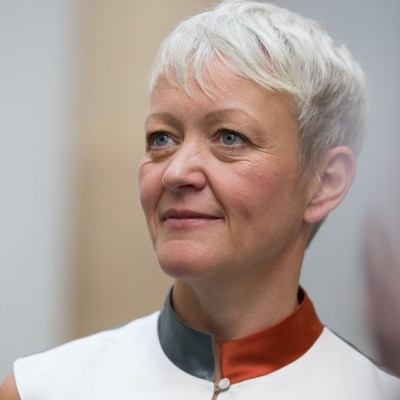
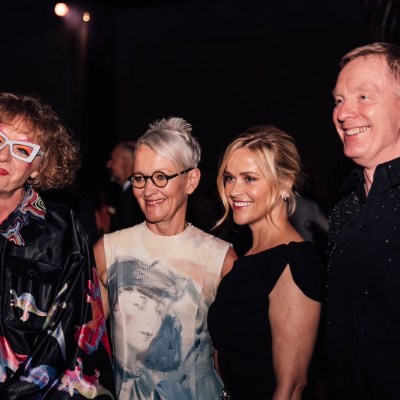
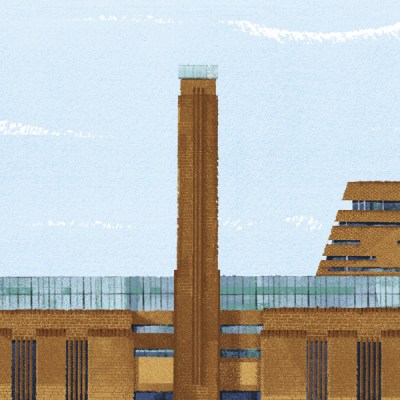
Jessica Morgan has been named director of the Tate museums. She replaces Maria Balshaw, who announced her departure in December after nine years leading the Tate’s museums in London, Liverpool and St Ives. Morgan has been director of the Dia Art Foundation in New York since 2015, during which time she oversaw the expansion of Dia Chelsea, which reopened in 2021, and grew the foundation’s endowment from $40m to $140m. The Dia Art Foundation’s total revenue in 2025 was $41.9m (£31.4m). The Tate’s 2024/25 revenue was £167m. A specialist in post-war and contemporary art, Morgan was a curator at the Tate between 2002–15 and became curator of international art at Tate Modern in 2010, where she curated exhibitions including ‘The World Goes Pop’ in 2015 and a survey on John Baldessari in 2009. Ronald Rudd, chairman of the Tate, said in a statement that Morgan’s ‘visionary revitalisation of Dia Art Foundation, as well as her prior experience at Tate […] make her the ideal person to lead Tate into a new era’. Morgan added that she ‘[looked] forward to this pivotal next stage at Tate, and […] continuing and advancing the incredible work of Tate’s committed and talented team in the years to come’. She will begin her new role on 1 January 2027.
The Glasgow School of Art says that it cannot afford to rebuild the Mackintosh Building. Designed by Charles Rennie Mackintosh in 1910 and described by Douglas Murphy in Apollo as ‘possibly the greatest work of architecture of its generation in the world’, the building was damaged by a fire in 2014 and destroyed by a second one in 2018. On 22 July the school’s board of governors said that the building would cost £265m to restore faithfully – more than five times the school’s annual income and four times an earlier estimate of £62m. The new plan involves taking down external scaffolding and stabilising the building. Lisa Rigg, a heritage-at-risk project officer at Historic England, called the lack of funding a ‘travesty of epic proportions’. The Royal Incorporation of Architects in Scotland and the Royal Institute of British Architects have both called for the UK and Scottish governments ‘to find the resources needed to ensure the faithful reinstatement of the Mackintosh Building’.
At the Louvre, the Galerie d’Apollon reopened to visitors on 22 July, nine months after the heist in which thieves stole crown jewels worth €88m. The gallery, however, is empty: the remaining crown jewels have been removed and will return in a new windowless vault, Louvre director Christophe Leribault told Le Parisien. The gallery – a gilded ceremonial hall decorated with paintings by Charles Le Brun – will remain empty for the foreseeable future, returning to its original function as a ‘total work of art, conceived by Louis XIV as a source of national pride’, culture minister Catherine Pégard said at the reopening.
Congress has grilled Anthea Hartig, the director of the Smithsonian Institution’s National Museum of American History, after a White House report accused the museum of ‘extreme political activism’. During the hearing, which was led by the Subcommittee on Delivering on Government Efficiency (DOGE), Hartig was questioned by participants including subcommittee chairman Tim Burchett, who said that the museum had become ‘infected by woke ideology’. Other Republicans on the panel questioned Hartig’s love of America and the museum’s alleged failure to celebrate American history. Hartig maintained that the report ‘does not accurately or fairly characterise the full range of work at the museum’, but added that there is ‘always room for improvement’. In her closing remarks she invited the committee to ‘walk the building’ with her. ‘I believe what you will find,’ she said, ‘is not an institution that has forgotten its country, but one that loves it enough to tell the full sweep of history, our triumphs and our struggles.’
Yuko Kikuchi, the former head of academic programmes at the Victoria and Albert Museum, resigned in January over ‘racist’ behaviour by staff, the Art Newspaper reports. Kikuchi took up her post in 2023. On 26 January she wrote to V&A director Tristam Hunt and the trustees of the museum’s research committee to say that resistance to her proposals, exclusion from meetings and other alleged behaviours ‘likely indicate a culture of systemic racism’. In an appendix, students from the history of design programme, run jointly by the V&A and the Royal College of Art (RCA), alleged racism by teaching staff and an ‘unsafe’ learning environment. In response, the V&A and the RCA issued a joint statement that said they ‘take any incidents of discrimination or reporting of unsafe learning environments extremely seriously’.
The European Union has officially withdrawn its €2m grant to the Venice Biennale. The decision comes one week after the European Commission voted to terminate its funding over the organisers’ decision to allow Russia to take part in this year’s edition. The Venice Biennale intends to appeal against the cut, reports ANSA.
The Buffalo AKG Art Museum has appointed Cathleen Chaffee and Jillian Jones as its new co-leaders, the Art Newspaper reports. Chaffee, who is currently chief curator, will become artistic director, while Jones will become executive director. The appointments split the role of Janne Sirén, who is leaving the museum after 13 years as director in which he oversaw a major expansion. They will begin their new roles on 1 November.
Kevin Tervala is new chief curator and head of exhibitions at the Minneapolis Institute of Art. Tervala is currently chief curator of the Baltimore Museum of Art (BMA), having previously led the arts of Africa, the Americas, Asia, and the Pacific Islands department. He will take up his new post on 8 September.