This review of John Berger: From Life appears in the November 2026 issue of Apollo.
When a TV series is a major hit – think Squid Game or The Traitors – modern broadcasters scramble to find its likeness wherever they can, before securing the all-important series two. In the early days of BBC2, however, executives felt the channel had a duty to be ecumenical as well as competitive. After the stand-out success of Kenneth Clark’s Civilisation in 1969, the broadcaster’s head of arts Stephen Hearst commissioned a ‘counterpoint’ series from a figure whom it would transform from respected broadsheet raconteur to household name: John Berger.
The result, the four-part Ways of Seeing (1972), had a deceptively modest aim: to use the oil painting tradition so venerated by Clark to ‘discover something about ourselves and the situation in which we are living’. In fact, it rocked visual culture studies to the point that traditional art history was forced to confront its very existence. Under a curly brown mop, his patterned shirt open at the neck, Berger seemed the antithesis of the stuffy, besuited Clark.
But as with so many events in his life, the iconoclastic myth obscures a more nuanced reality. As Tom Overton notes in this unorthodox new biography, Clark had been crucial to offering a British berth to the émigré Marxist art history that underpinned Berger’s outlook. After his first meetings about Civilisation, he had in fact suggested Berger as an alternative presenter before relenting and taking the helm himself.
Between his birth in London – 100 years ago this month – and his death near Paris in 2017, Berger lived through many of the biggest transformations of modern history. Quite often, rather than standing at their centre he was dealing with their aftermath on the periphery. His father, Stanley, followed service in the First World War with work as a War Graves organiser; his mother Miriam worked for Susan Lawrence, one of the first women MPs, before opening a tea room. Berger himself was called up to serve in the Second World War at the very end of the conflict, before devising a plan to be ‘psycho’d out’ of the military after VE Day. He was fond of saying that he honed his craft as a storyteller through writing letters home for illiterate comrades at his training barracks in Northern Ireland – but Overton reveals this to be a convenient fiction.
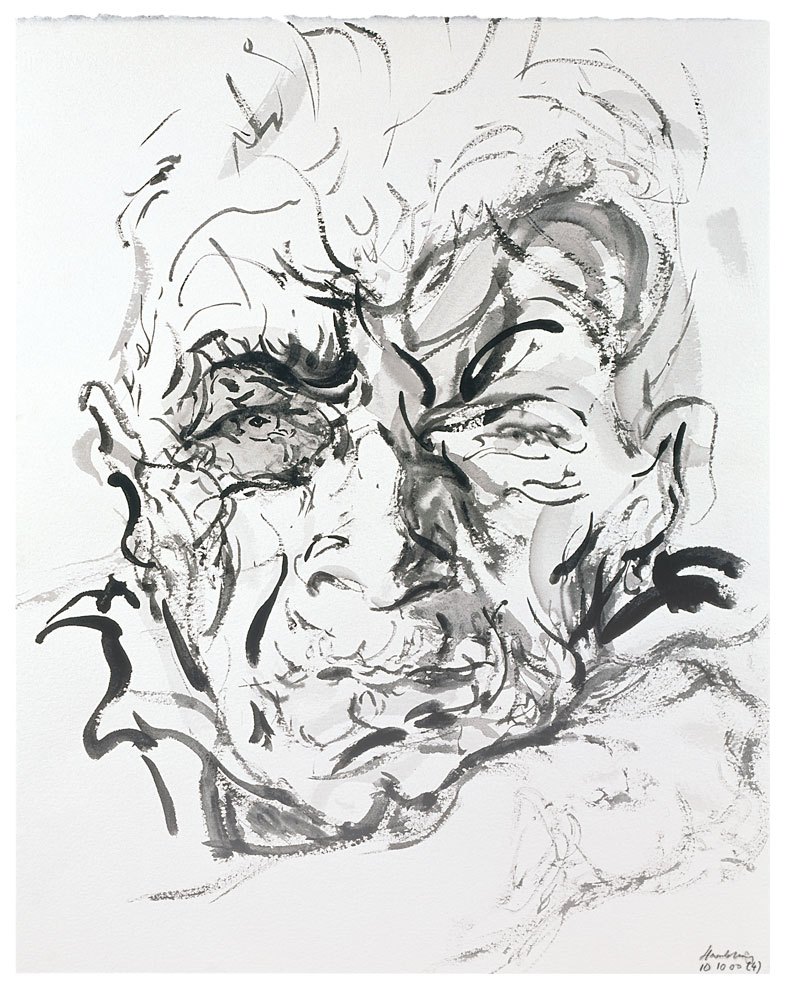
This is a book that begins with death rather than life, opening with a sketch of its protagonist, by his son Yves, in his coffin: ‘Eyes closed, head tipped back, as though looking for the right words.’ Its central thesis is to position Berger as the ‘secretary of Death’, an archivist in whom his biographer, tasked with cataloguing his papers at the British Library, finds an uneasy parallel. But Overton’s account of the lost world of post-war bohemian London is still tantalising. After art school, Berger’s talent as a painter was recognised – not least by Clark – but he simply could not make it work. Lacking a trust fund and wanting to forge his own path, art criticism was, bizarre as it may seem to modern-day practitioners, a pragmatic alternative.
Berger’s foundation was in a series of heroes who consistently sprang, like his father’s family, from the Habsburg Empire. Some, like the Marxist art historians Frederick Antal and Ernst Fischer, became mentors too. And yet Berger’s approach, accompanied by a sometimes grating earnestness, could also put dialectics into reverse. Again and again he was preoccupied with time – but his dislocated, non-linear sense of it also risked reinforcing the illusion of a single, unchanging truth; the antithesis of Marxism’s insistence on historical contingency.
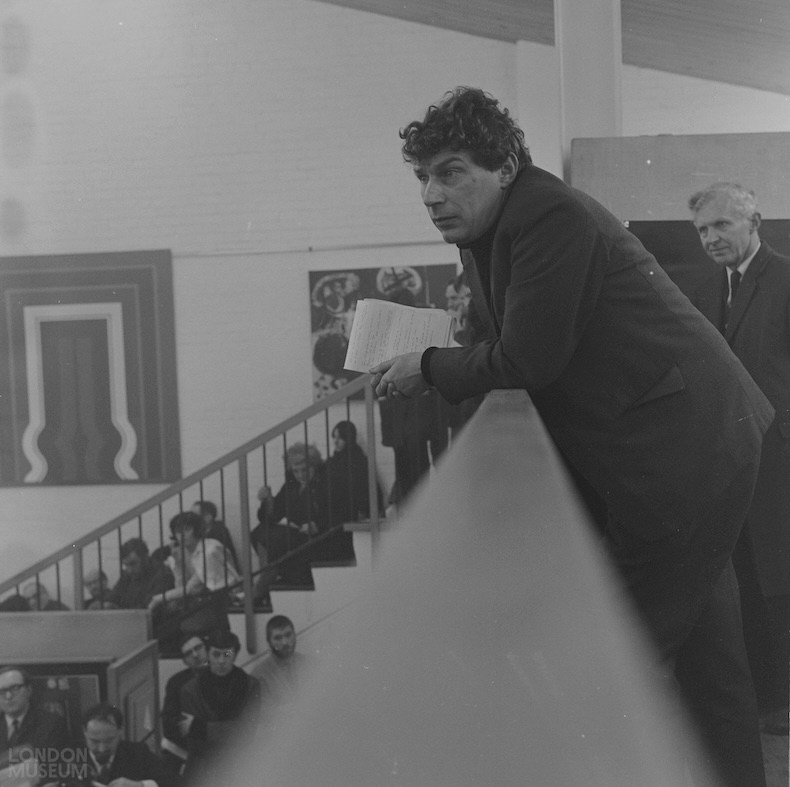
In his work and his life, Berger approached the world as a canvas just waiting to be explained and understood – purportedly by us all, but ultimately by him. He resented that the ‘unique egotism developed by capitalism’ had interrupted the interdependence of the living and the dead, and yet couldn’t escape it himself.
Ways of Seeing was swiftly followed by the mesmerising experimental novel G. When this won the Booker in 1972, Berger donated half his winnings to the British Black Panthers and used his speech at the ceremony to condemn the prize’s sponsor for profiting from slavery. His reputation solidified, his work thereafter often took a more meandering approach, preoccupied with the exile that had defined his personal outlook since his youth. As Marxist intransigence was cast as dated by a new postmodernist intellectual establishment, Berger maintained his success, but perhaps no longer offered something unique.
Overton refuses to ‘pretend we can just talk about the work’, laying bare the hurt Berger caused successive romantic partners. His third wife Anya Bostock saw Berger’s transition to the status of ‘storyteller’ in the 1970s as a get-out from his own responsibilities as a critic and polemicist. Throughout his working life, both publishers and fans wanted Berger to turn back to art. This is misconceived, says Overton. ‘Into Their Labours’, his 1970s–80s trilogy on peasant life, ‘reads best as an attempt to step into painted landscapes and to see them from the inside’. Until Berger, ‘no one had yet followed where Millet had gone’, Overton argues, seemingly forgetting that Pissarro had long before taken rural labour to new heights of political consciousness. Stepping into the canvas is an alluring prospect, but in doing so the means of production so crucial to Walter Benjamin – who is credited at the opening of Ways of Seeing – can end up mystified. Berger’s later work is less sharp in this regard.
Two thirds through, Overton begins addressing Berger in the second person, first convincingly and then, when it becomes a tic, less so. It’s one of many confirmations that there is more to this book than meets the eye. Overton chronicles an extraordinary existence while compelling us to understand that to do so is not enough: we must understand death too. Berger’s work was beset with compromise and contradiction, but even late in life, he refused to be co-opted by the establishment. His perceptive – and sometimes deceptive – clarity was a weapon; one he was prepared to use.
John Berger: From Life is published by Verso Books.
From the November 2026 issue of Apollo.