From the December 2026 issue of Apollo.
The story of how, in 1993, the art historian Katlijne Van der Stighelen went to see a Van Dyck in the stores of the Picture Gallery of the Kunsthistorisches Museum in Vienna and was instead struck by a monumental baroque painting of Bacchus in an unfamiliar style is an inspiring example of the rediscovery of a major artist – a major artist who is an Old Master and a woman to boot. In what amounts to a hero’s journey for art historians, Van der Stighelen then spent the best part of three decades looking for works signed by Michaelina Wautier (or a variant of that name) and others that could be confidently attributed to the same hand. In the past year, Wautier has been the subject of an exhibition at the Kunsthistorisches (KHM) and the Royal Academy of Arts in London. It would be a stretch to describe Michaelina Wautier as a household name, but she is now firmly on the art historical map.
Wautier’s The Triumph of Bacchus is not the only painting that has emerged from the Picture Gallery’s on-site storage to claim a permanent place on its walls or form the basis of a Kunsthistorisches exhibition. The centrepiece of ‘Bernini: Painter and Sculptor’, which opens this month (until 4 April), is a portrait of ‘exceptional quality’ that KHM curator Gudrun Swoboda came across in the course of her research. Of much slighter provenance than Wautier’s masterpiece – it can be traced back to only the late 19th century – this portrait of an old man has been attributed to an anonymous Italian artist since at least the late 1940s. Before supposedly abandoning the medium in the 1650s, Bernini painted between 150–200 works, 16 of which survive, none of them signed. Swoboda makes her attribution with stylistic reference to other paintings and even sculptures by Bernini and, by dating it to around 1670, contends that he continued to paint for much longer than previously thought.
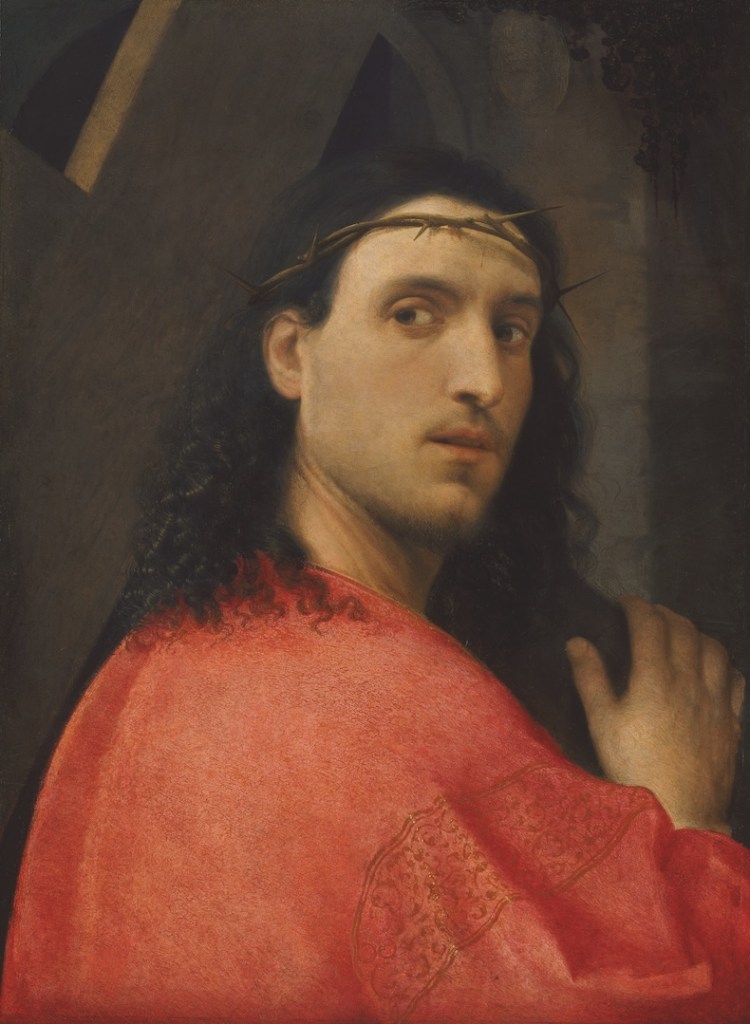
Recently, visitors to the Titian room in the Picture Gallery on the first floor of the Kunsthistorisches Museum have been able to see another intriguing find. To the right of the imposing Ecce Homo (1543) is a much smaller panel painting, Christ Carrying the Cross (c. 1515). As Christ looks pensively, warily over his shoulder, the spikiness of his crown of thorns forms a sharp contrast with the softness of his expression. Jennifer Sliwka, director of the Picture Gallery, was in the stores ‘looking for something else and I randomly pulled this out to get to the other paintings’. It was, she says, ‘literally arresting’. While the painting has been in the collection since 1785, it has never had a secure attribution, with some scholars arguing for Titian, others for Giorgione. For Sliwka, an Italian Renaissance specialist, ‘whoever painted it is phenomenal. It is amazing we don’t know the name.’ But since we don’t, hanging the work in a room full of Titian masterpieces is ‘provocative’, Sliwka says. ‘I like that provocation,’ she adds. ‘It reminds you that quality speaks for itself.’ Now that the painting, described simply as ‘Venetian’ in the museum’s online catalogue, has been in Room II for a while, Sliwka is leaning away from Titian, ‘so he’s going to move into the Giorgione room’.
What may or may not be a giant leap for art history is a small step in the wider context of what’s been happening in the Picture Gallery over the last year. Sliwka took up her post in November 2025 – before that she was keeper of Western Art at the Ashmolean Museum in Oxford – and she and her team of curators are now busy rehanging all the displays, aiming to finish in just two and a half years. While, as Sliwka says, it’s every curator and director’s dream to rehang the collections, ‘normally, one waits quite a period of time’. One of the remarkable facts about the Picture Gallery is that it has no special exhibition spaces. Each temporary exhibition is carved out of the permanent collection, with curators decanting and refilling the rooms as required. On her arrival, Sliwka learned that when the Wautier show closed to move to London in much smaller form in February, it would leave two empty rooms, which presented an opportunity. The Picture Gallery is split into two arranged either side of the museum’s central staircase, with the southern European paintings (‘mostly Italian, with a smattering of French and Flemish’) on one side and northern European (Dutch, Flemish, German) on the other. Sliwka asked the curator of Italian Renaissance (‘most of whose pictures were in storage’) to come up with her dream hang. When presented with a practical temporary solution, Sliwka could tell that her colleague’s heart wasn’t in it. ‘Let’s start again,’ she suggested, ‘and I will try and get permission to close down section by section every single room and rehang the collection to get it into the right order.’
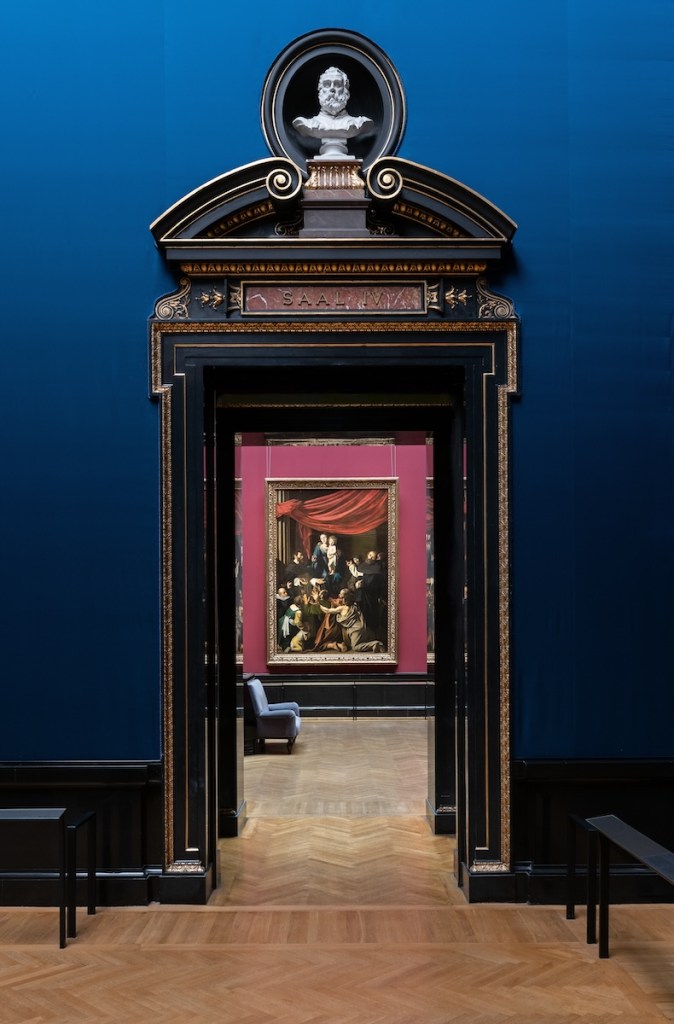
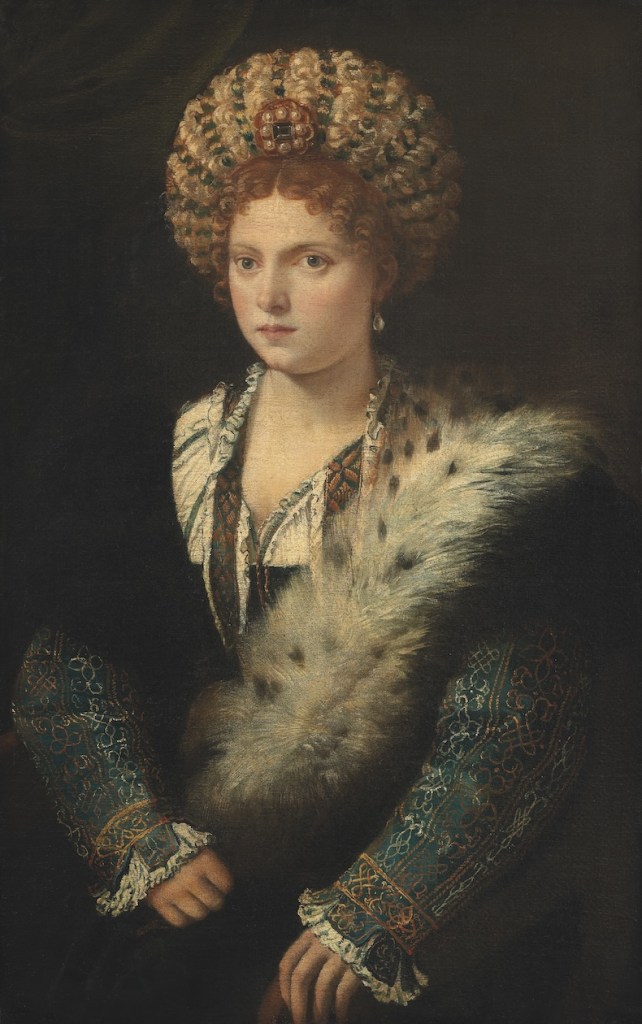
Once permission was granted, the museum put out a press release announcing this ambitious plan as a product of Sliwka’s first hundred days in her new job. When I visit in early August, nearly all of the southern European rooms have been rehung. Among these paintings are recent returnees from the Palazzo Cipolla in Rome, where some 50 works including Caravaggio’s Crowning of Thorns (c. 1603) were on loan from March to July. Sliwka points out that the new hangs are still ‘very traditional’ in the sense that the rooms are largely arranged by chronology and geography – ‘it enables you to say a lot’ – but there is a new emphasis on treating the hangs as a series of ‘visual essays’ by which she means making them ‘as beautiful, enjoyable and clear as possible’. The Titian room is a good example of what it means to balance historical accuracy with visual coherence. Previously, the paintings were hung ‘almost perfectly chronologically’, which meant that mythological subjects such as Danäe (after 1554), meant for private spaces, were set down near religious works such as The Deposition (after 1557). Now the two kinds of works are on separate walls and the placement of the idealised portrait of Isabella d’Este and a less flattering one of the polymath Jacopo Strada allows these two great collectors an excellent view of both types.
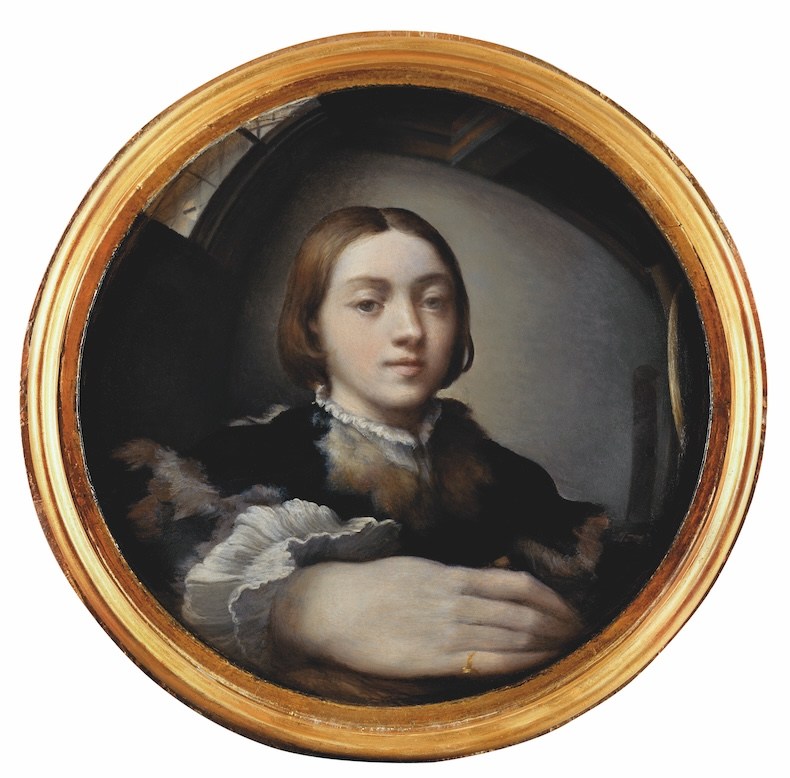
The new hangs are not just about the great spaces, some of which were designed by Gottfried Semper and Carl von Hasenauer for specific paintings (monumental works by Rubens, for instance). Around the central rooms in both loops of the Picture Gallery are enfilades of smaller spaces that are often remarkably quiet considering that they contain some of the museum’s best-known paintings. It is in these rooms that you can encounter Parmigianino’s Self-Portrait in a Convex Mirror (c. 1523/24) or the self-portrait of Sofonisba Anguissola – easy to miss because of its small size – or Arcimboldo’s mash-ups of man and organic matter. Sliwka and her team are working on ways to divert visitors into these spaces, reimagining them as playful but intellectually cogent diversions, counterpoints to the large-scale galleries they run alongside. Over among the Dutch pictures, for instance, Samuel van Hoogstraten’s droll Old Man at a Window (1653) is now at the centre of a side room devoted to views from windows and of windows. The prominent placement of the Hoogstraten could be regarded as a gentle curator’s joke; in 2022, Sliwka curated a show at Dulwich Picture Gallery called ‘Reframed: The Woman in the Window’.
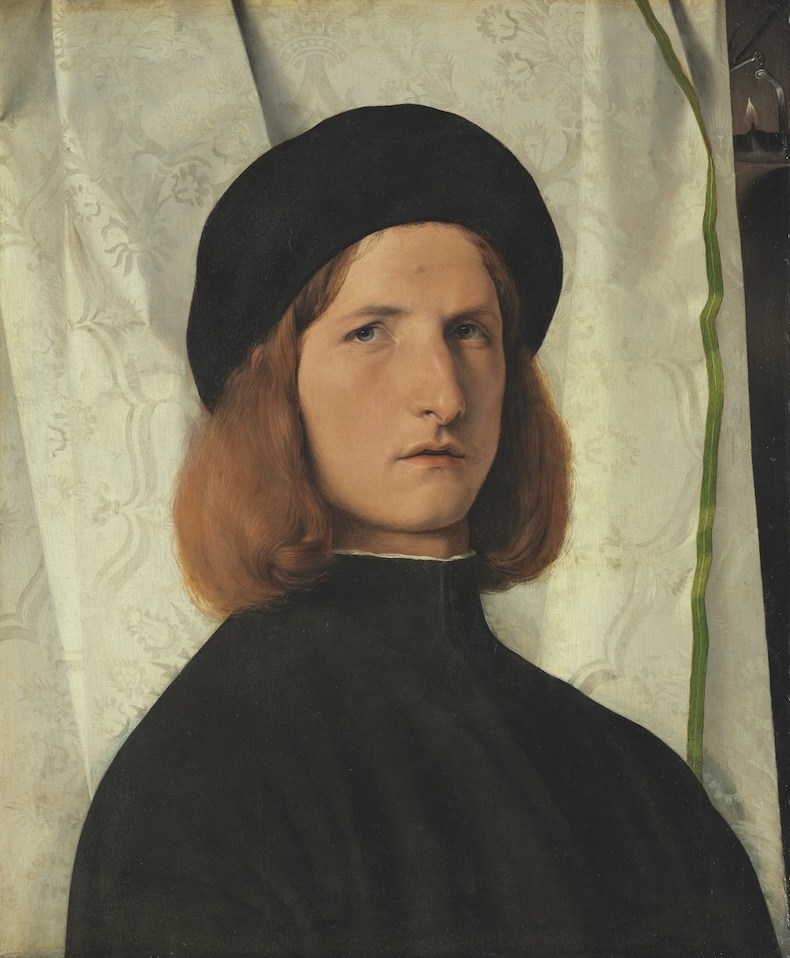
There is some literal reframing going on in the Picture Gallery. Sliwka mentions that Peter Schade, head of framing at the National Gallery (where she has also worked) is visiting for a few days as he’s making new frames for the two Van Eycks about to be loaned to the London show of his portraits (until 11 April). Sliwka has commissioned a few more new frames and makes a beeline for Lorenzo Lotto’s Portrait of a Young Man against a White Curtain (c. 1508) to show me how the startlingly modern figure is currently overshadowed (literally so at the top) by its elaborate gilt frame. Sliwka would prefer a more period-appropriate replacement.
The impetus for all these changes – some visible, others, like the forming of an in-house team of art handlers for the first time in the museum’s history, not – can be ascribed in part to the appointment of a new director-general of the KHM-Museumsverband, the group to which the Kunsthistorisches, Weltmuseum Wien and the Theatermuseum belong (other parts include the Imperial Treasury, the carriage museum in Schönbrunn and Ambras Castle in Innsbruck). Jonathan Fine is a lawyer-turned-African art specialist who was previously head of the Weltmuseum and before that head of collections at the Ethnologisches Museum in Berlin before it moved into the Humboldt Forum. Fine, who is American, says of the incredible progress being made by Sliwka, who holds American, Canadian and British passports, and her team at the Picture Gallery, ‘There’s a tremendous energy that has been incredibly positive.’ The same might be said of the organisation he runs – a museological empire left behind by the rulers of the Habsburg Empire. When I ask Fine why he left Berlin in 2021, as the Humbolt Forum was finally about to open, he cites ‘competing visions and substantial delays […] Here I thought the [Welt]museum has already been reinvented, reinstalled and it addressed a number of challenges facing ethnographic museums very well. So we can get on with the work.’
And how does Fine see the work of running the bigger organisation? For one thing he wants to encourage us to regard all the different collections in Vienna as one ‘extraordinary encyclopaedic collection that goes from ancient Mesopotamia and Egypt to global contemporary’. It’s a relatively new way of thinking about these museums; as Fine puts it, until recently, ‘No one was really thinking about the internal coherence between the museums. It’s something I’ve had my eye on from the very first day I was here.’ But although no one will need convincing that, as Fine puts it, ‘the collections are among the best of their kind in the world,’ I’m sceptical that ‘it’s possible to take in the best of what’s here in a day’.
If it is possible to get a feel for the collections in a day, it would be a day that passed in a blur. It’s perhaps easiest to grasp their quality in the most up-to-date displays: those of the Kunstkammer, for example, which were refreshed in 2013 after being closed for a decade. Thirteen years later, it is the Picture Gallery’s turn. (The astonishing armour galleries and the Treasury, on the other hand, feel like survivors from the 20th century, and not from the tail end of that century.) When I check back in with Sliwka at the beginning of November, the rehang of the northern European galleries is underway. Vermeer’s Art of Painting now has a wall to itself, the Rembrandts – previously and incredibly somewhat overlooked in a corner – occupy another wall and, in a touch that characterises the new spirit that animates the galleries, the quiet Rembrandt self-portrait from 1652 of the artist in a brown smock now faces the trompe l’oeil of his pupil Samuel van Hoogstraten. Sliwka is careful to emphasise that, although the rehang is moving fast, interpretation – deciding what stories the curators want to tell and how – is a process that cannot be rushed. But, just as the quality of the unattributed portrait hanging in a room of Titians speaks for itself, so do the walls of the Picture Gallery, both to their neighbours and to anyone who cares to look.
From the December 2026 issue of Apollo.