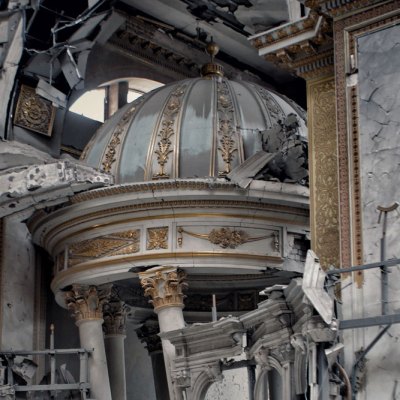
Russian air strikes on Kyiv have killed at least four people and set the Dormition Cathedral on fire, the BBC reports. The cathedral dates back to the 11th century and is part of a complex of monastic buildings known as the Kyiv-Pechersk Lavra. UNESCO designated the Kyiv-Pechersk Lavra as a World Heritage Site in 1990 and describes it as ‘one of the most important Christian pilgrimage centres in the world’. The UN agency said that there has been ‘significant damage to the exterior and interior’ of the building. Reuters reports that Russia has denied hitting the site and that it has blamed the damage on a US-made air defence missile. The Art Newspaper reports that Russian strikes have also damaged the Mystetskyi Arsenal, an 18th-century building that is now a contemporary art centre.
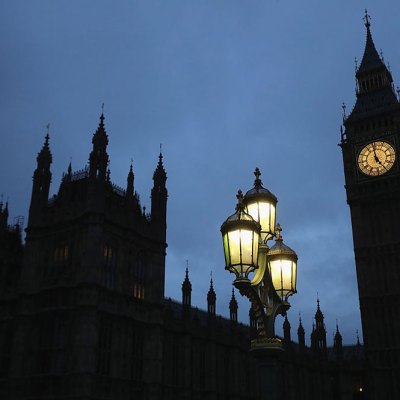
The National Audit Office (NAO) has said that the Palace of Westminster is in ‘urgent need of work’ and that the overall cost of the project will increase by £320m–£420m for every year MPs delay the decision to repair the building. In a report published on 15 June, the NAO cited ‘deteriorating mechanical and electrical systems, fire safety issues [and] the presence of asbestos’ as reasons for urgent renovation. MPs voted in 2018 to renovate the palace – a Grade 1 listed building within a World Heritage site – but the committee overseeing the project has set MPs a deadline of 2030 to decide on one of four options, of which it recommends two: the ‘full decant’, in which MPs relocate elsewhere, or a refurbishment in which MPs would remain in place for most of the works. The first option would cost £11bn–£16bn and would take up to 24 years; the second would take up to six decades and would cost £39bn. The NAO has warned that further inaction may render the Houses of Parliament ‘uninhabitable’.
The British Council is planning to cut staff numbers by 25 per cent and close offices in 11 countries, according to a National Audit Office (NAO) report. The cuts are part of the agency’s attempt to repay the £197m it owes the Foreign, Commonwealth and Development Office (FCDO). In 2020 the FCDO loaned the organisation £60m at a commercial rate of interest to tide it over during the pandemic; the British Council’s current debt stands at more than three times that sum and it has made no capital repayments since 2024. The agency cut the equivalent of 2,110 full-time staffers between 2021 and 2026 and last year sold its Madrid school for £49m, but has still made a net loss of £184m since the pandemic began. The new cuts – part of a turnaround plan that still requires ministerial approval – means the loss of 2,209 roles. In the British Council’s most recent accounts, the trustees stated that ‘a material uncertainty remains over the organisation’s ability to continue as a going concern in the longer term’.
Also this week, the NAO said that the Palace of Westminster is in ‘urgent need of work’ and that the overall cost of the project will increase by £320m–£420m for every year MPs delay the decision to repair the building. In a report published on 15 June, the NAO cited ‘deteriorating mechanical and electrical systems, fire safety issues [and] the presence of asbestos’ as reasons for urgent renovation. MPs voted in 2018 to renovate the building but the committee overseeing the project has set MPs a deadline of 2030 to decide on one of four options, of which it recommends two: the ‘full decant’, in which MPs relocate elsewhere, or a refurbishment in which MPs would remain in place. The first option would cost £11bn–£16bn and would take up to 24 years; the second would take up to six decades and would cost £39bn. The NAO has warned that further inaction may render the Houses of Parliament ‘uninhabitable’.
Christophe Leribault, the director of the Musée du Louvre, has told the French Senate that the museum is ‘running out of steam’. Leribault told a Senate committee that ‘building-related emergencies are piling up’ and that the Louvre is ‘facing a wall in terms of investment’. He also said that a planned €1bn renovation project is an ‘absolute necessity’. The Louvre has been hit by a series of crises since the heist of crown jewels worth €88m in October 2025, including two separate water leaks, a police investigation into an alleged €10m ticket fraud scheme and persistent strikes by staff over working conditions and building safety concerns.
The Russian artist Robert Kuzovkov, who pilloried Putin in his work, has been shot dead in Poland, reports the Financial Times. The 44-year-old painter, cartoonist and performance artist, who was also known by the pseudonym Semyon Skrepetsky, also made fun of Belarusian president Aleksander Lukashenko and Chechen leader Ramzan Kadyrov. Earlier this year Kuzovkov took part in a demonstration against the reopening of the Russian Pavilion at the Venice Biennale and last week he staged a protest outside the Russian embassy in Berlin. Kuzovkov was shot five times near his home, some 40km from the Belarusian border. Two individuals have been detained but have not been charged. Polish prime minister Donald Tusk said that if Russia turns out to have ordered the killing, it would constitute ‘an act of state terrorism’.
The New York Supreme Court has given the dealer David Nahmad 30 days to return a Nazi-looted painting by Amedeo Modigliani to the heirs of the Jewish dealer Oscar Stettiner, reports the Art Newspaper. The deadline comes after Judge Joel M. Cohen ruled in April that Stettiner ‘owned or at a minimum had a superior right of possession of the painting prior to its unlawful seizure’and ordered the painting’s return. The Nazis forced Stettiner to flee Paris in 1939 and sold Seated Man with a Cane (1918) to a man named Jean Van der Klip. After the war, a court ordered that the painting be returned to Stettiner but he died before it was recovered. In 1996 Nahmad bought it at Christie’s from Van der Klip’s heirs for $3.2m. In 2015 Stettiner’s grandson Philippe Maestracci filed a lawsuit in New York seeking the return of the work (now worth an estimated $30m); Nahmad disputes this claim, stating that the painting he owned was a different work. Nahmad’s lawyers told the Art Newspaper that they will be appealing Cohen’s decision.