From the January 2026 issue of Apollo. Preview and subscribe here.
Predictions of a Labour victory were greeted with cautious optimism by many in the art market in the run-up to the 2024 general election – if only because Labour weren’t their predecessors. The Conservatives presided over 14 years of austerity, Brexit and 12 culture secretaries, some of whom were in post for less than a year.
There was also a sense that Labour was saying the right things. ‘Getting a better deal for creative people with the European Union, getting education right and celebrating what the creative industries do for our economy is a priority,’ Thangam Debbonaire, then shadow secretary of state for culture, told the Art Business Conference the autumn before. ‘But I also want people to feel joy again in our country: the joy [that comes from the fact] that we are an amazing place for creative talent.’
Hope was muted by the awareness that the poor state of the public finances meant money was likely to be limited. But Debbonaire talked of encouraging sponsorship and philanthropy, while shadow chancellor Rachel Reeves’ ‘laser focus on delivering economic growth’ played well in the art market.
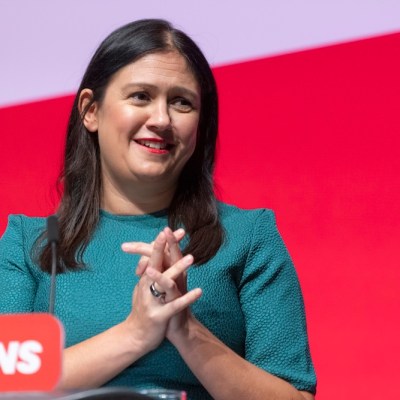
A year and a half since the election, the picture looks less rosy. Debbonaire is in the House of Lords, having lost her seat in Bristol to the Greens in an otherwise landslide Labour victory. The culture secretary Lisa Nandy is a high-profile politician but showed little interest in the arts before her appointment. (She told The Rest is Politics podcast in 2024 that she had hoped for a brief in international development.)
Critics in the wider art world had started taking aim before November’s budget. Sir Nicholas Hytner, a former artistic director of the National Theatre, told a conference that ‘more harm than good’ has been done to the arts since Labour came to power. Two budget statements and a few modest policy announcements in, there are growing questions over Labour’s support for culture.
The UK’s art market is the second largest in the world and turned over more than £8bn in 2024, according to research analyst Arts Economics. That was down from £9.7bn in 2022 but compares favourably with more vocal industries, including fishing (around £1bn) or steel (around £1.7bn). The art market is made up of around 7,800 mostly small businesses, supports 45,500 jobs directly and almost 38,000 more in specialist services such as restoration, exhibition design and art shipping.
But it is facing stiff competition from the United States and, since Brexit, countries including France, Italy and Belgium. Like New York, London is an entrepôt, or trading hub, with art flowing in and out through auction houses, art fairs and galleries. Paul Hewitt, director general of the Society of London Art Dealers, says many are struggling with the burden of government regulation and post-Brexit administration.
‘There’s a disconnect between the feelgood headlines from the November auctions in New York [which did better than expected] and what’s going on in the trenches,’ he says. ‘I regularly hear people saying this is the most difficult of the past 30 years. Galleries are hanging in, they are resilient, but the froth at the top of the market is not instantly transferring here.’
The art market’s last boom began in the late 1990s, after the ‘Big Bang’ of 1986 kickstarted the deregulation of the City of London and international capital flowed into the UK. Within a decade, the combination of Britain’s time zone, strong legal system, ‘light touch’ customs regulation, limited taxation of the wealthy and its position within the EU confirmed London as the dominant European hub for investment banking and hedge funds. Wealthy Russians, Indians and Chinese poured in and were soon buying property, art and other luxury goods.
But Brexit, the Russia-Ukraine war and the abolition of the ‘non-dom’ tax regime have given the impression that the UK is less friendly to global wealth these days. Hewitt says the ‘burden of regulation’ that has crept in is the art market’s single biggest problem. ‘If I had one wish for 2026, it would be that the government took off the metaphorical chocks to promote growth,’ he says. ‘There’s a gap in government rhetoric about red tape and economic growth, and what’s actually happening.’
He acknowledges that there have been a few small wins. Temporary admission, a sort of ‘guest visa’ for art allowing its import and export without paying VAT, has been extended to four years. This gives dealers more time to make sales in what can be a rarefied market. And while it doesn’t quite give the UK the competitive edge of the United States and Hong Kong, neither of which charge import duties on art, it helps level things up.
The burden of anti-money laundering compliance, which is more stringent in the UK than the United States or Hong Kong, has also been eased a little, Hewitt says, since the National Crime Agency has downgraded the perceived risk of money laundering on art from ‘high’ to ‘medium’. But so far efforts to raise the value threshold from €10,000 to £30,000 have fallen on deaf ears – and HMRC has announced that it is planning to raise its fees for administering the scheme.
Others say that the art trade should be lobbying for a more competitive tax regime, even if this flies in the face of Labour’s return to ‘tax and spend’ policies. ‘Before we harmonised our VAT regime with the EU in the 1990s, we had no import tax on most art,’ says Anthony Browne, president of the British Art Market Federation. It is now five per cent. Getting rid of that would be a Brexit bonus. ‘It might cost the Treasury £30m to £50m a year, but that would be more than paid for by making us more competitive again.’
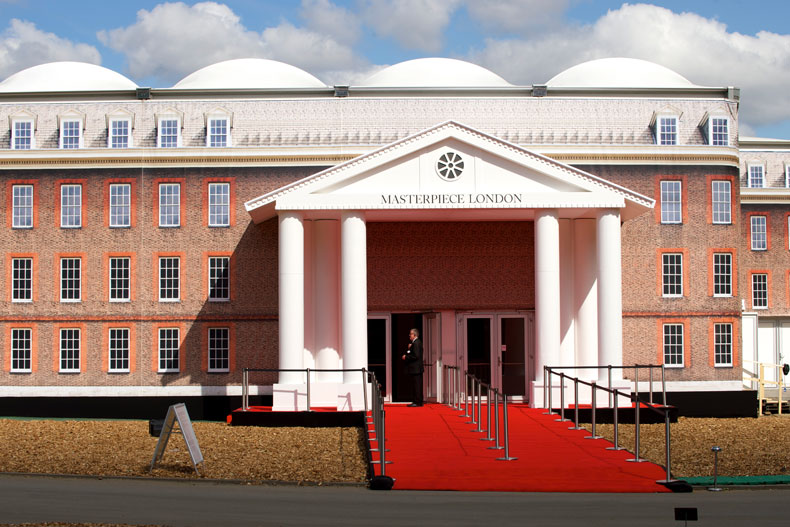
Meanwhile, the EU has introduced new rules on sales VAT allowing member states to set reduced rates on art to attract buyers. On contemporary art in the primary market France charges 5.5 per cent, Germany 7 per cent, while Italy cut its rate from 22 per cent – the highest in Europe – to just 5 per cent. The UK rate remains at 20 per cent, disadvantaging UK-based collectors. At the same time, France is capitalising on the fact that the UK got rid of tax-free shopping for tourists – the final nail, some say, in the coffin of the luxurious Swiss-owned Masterpiece art fair, which finally folded in 2023.
‘Successive governments have made business so much more complicated than it needs to be,’ Browne says. ‘Most red tape could be eliminated at the stroke of a pen, but it takes strength of will to do it.’
Then there are worries that Labour policies on the taxation of the ultra-wealthy will backfire – and that collectors are leaving for sunnier fiscal climes. Britain’s non-domicile tax rules date back to 1799, the days of empire, when colonial Britons were allowed to avoid tax on their offshore possessions. But Labour’s decision to charge 40 per cent inheritance tax on all non-dom assets appears to have been the final straw.
Accurate figures on just how many have in fact left are hard to find: HMRC said earlier this year that departures did not exceed forecasts that around a quarter of an estimated 74,000 non-doms would leave the UK, though others argue the true figure is higher. But departures matter because the art world is an interlinked system that relies on patronage. Museums need patrons to fund capital projects, exhibitions, even curatorial posts: the patrons are the same people who buy art from auction houses, galleries and fairs.
‘There’s no doubt that wealthy people are leaving – and many are supporters of the arts, patrons of museums and cultural philanthropists,’ says Tristram Hunt, director of the Victoria and Albert Museum and a former Labour MP. ‘It’s the inheritance component of the non-dom regime which has scared them off, not the prospect of higher [income] taxes or fees to be here.’ But so far the Treasury is reluctant to budge. ‘We want the UK to be a vibrant place that the successful want to be in, so it’s disappointing,’ Hunt says.
Arts organisations’ reliance on private funding has grown as public subsidies have shrunk. In the wake of November’s budget, the Campaign for the Arts (CFTA) said the government had avoided ‘big new cuts but did not unlock significant new potential for the UK’s arts and culture sector’. In other words, it has not reversed the cuts made since 2010.
That means arts organisations and museums have been hit by a triple whammy. Spending on the arts per head of population in England by the Department for Culture, Media and Sport has been cut by nearly a third since 2010, the CFTA says. Regional museums, many of which rely on funding from local authorities, have been hit even harder: the CFTA says local grants have been halved. Lottery funding, which paid for a wave of new museums and refurbishments after it was introduced by John Major’s government in 1994, has also declined as competitors such as Omaze have entered the market.
This is confirmed by Maurice Davies, former head of policy at the Museums Association and a museum consultant at Cultural Associates Oxford. Local authorities have faced more than a decade of cuts while demands for services such as social care have risen – and which successive governments have failed to address.
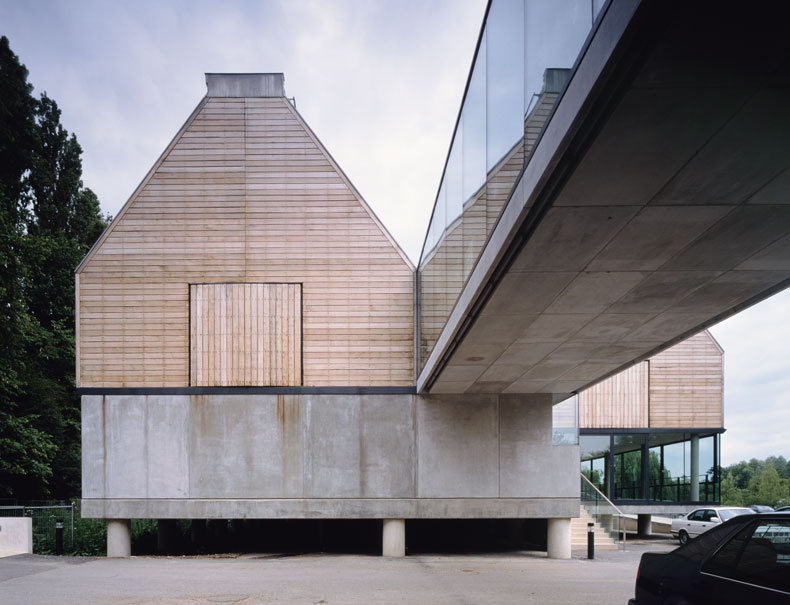
‘For the first time in my career there are multiple closures of formerly high-standard museums,’ Davies says. ‘In the past few months there’s been announcements of closures including the River and Rowing Museum in Henley and the Quaker Tapestry Museum in Kendal. Does the government care? Does it even know?’
The cynical might say that that it doesn’t care. With Reform on the rise in traditional Labour seats and fears about May’s local elections, the arts are low on the list. Others say that this is pessimistic and the government simply has too many more important issues, from health to huge backlogs in criminal courts, on its plate. They point to policies that show good intent. For example, in June, Nandy announced £380m to boost the creative industries – although most of that money is likely to go to mass-market art forms such as film, TV and video-game design. Despite fears that they would be scrapped, the government also kept tax reliefs introduced in 2017 on artistic production, including museum exhibitions, on which many cultural organisations now depend.
In November, the government announced that regional authorities will be allowed to introduce an ‘overnight accommodation levy’, or tourist tax, to invest in ‘transport, infrastructure and the visitor economy’. Alison Cole, director of the Cultural Policy Unit, a think tank that lobbied hard for the policy, says the new levy ‘could really make a strategic difference, like the Lottery did’. Although the details are still to be worked out at local level, the levy could raise £1.2bn a year in England, ‘which is significant when compared with Arts Council England, which gives out grants of about £450m a year,’ she says. But museums and galleries will have to lobby hard to make sure they get some money, rather than it going to routine but neglected tasks like filling potholes.
Nevertheless, it is clear that, as yet, there is no return to what many now think of as the golden era of New Labour after 1997. That saw projects such as the construction of Tate Modern in London, the Baltic in Gateshead and the Lowry in Salford; the introduction of free entry to national museums; and a booming art market.
Nor can Labour claim to match the commitment of some previous Conservative governments, not least the Major years of the 1990s. Major created the first culture ministry and introduced the National Lottery, which has since raised billions for heritage and the arts. Even Boris Johnson found £1.6bn to support arts organisations during the Covid pandemic. There are roughly three years left before the next general election, so the government still has time to do positive things for museums and the art market. But as yet, when it comes to arts and culture – to coin a phrase – Labour isn’t working.
From the January 2026 issue of Apollo. Preview and subscribe here.