From the June 2026 issue of Apollo.
Just prior to the opening of its controversial new David Geffen Galleries, the Los Angeles County Museum of Art (LACMA) mounted an exhibition by the artist Tavares Strachan in the building it unhelpfully calls the Broad Contemporary Art Museum. (BCAM now houses the museum’s modern and contemporary collection; and at least two other Broad Museums exist in this country, one just across town.) Strachan’s exhibition was deliberately timed. It featured one of the Bahamian artist’s best-known works, The Encyclopedia of Invisibility (2018), a 2,500-plus-page rewriting of the Encyclopaedia Britannica that includes none of the ‘official’ entries but instead more than 17,000 new ones written by the artist from non-white, non-Western perspectives.
LACMA is often described as an ‘encyclopaedic museum’, which means that as well as Western painting and sculpture, it collects ancient and contemporary art of the Middle East; Chinese and Korean art; pre-Columbian and Spanish Colonial art; African art; Greek, Roman and Etruscan art; costume and textiles; decorative arts and design; and more. It has a lot, and part of the purpose of the new Geffen Galleries, designed by the Swiss architect Peter Zumthor and opened to the public in April, is to show it off. When he announced plans for LACMA’s new building back in 2014, the museum’s director and CEO, Michael Govan, told the LA Times: ‘It’s a giant opportunity to reconsider what museums are and how they function.’
As Strachan’s exhibition acknowledges, however, the idea of the encyclopaedic museum has become problematic. No matter its diversity, there is no museum that can claim to contain all of human culture, or even a credible selection of its greatest hits. Our conception of universal discernment and aesthetic judgment is a Western construct, founded in Enlightenment idealism, sustained through years of colonial plunder and Eurocentric anthropology and only latterly redressed through inconsistent gestures towards inclusivity.
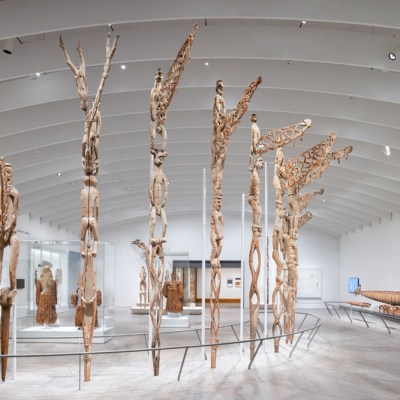
In LACMA’s previous incarnation, a gallery titled Art of the Pacific, holding historical and traditional islander art, was enlivened – somewhat incongruously – with plinths and wall treatments by Austrian artist Franz West. Otherwise, modern art (mainly North American) confidently took centre stage, with European painting and sculpture housed on the floor above, then Islamic Art, South and South East Asian art, American applied arts, Korean art and Art of the Ancient World pushed into unloved sections of the building that most visitors rarely had time to see when temporary exhibitions demanded our attention.
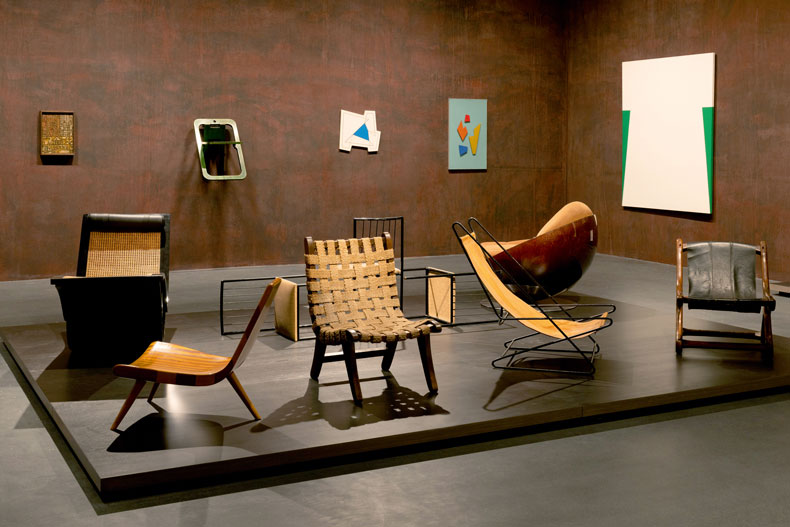
The model of the museum as an objective display case for global art and culture is a hubristic aspiration that is seemingly bound to fail. LACMA’s new galleries for its permanent collection, which fills the entirety of the 110,000 square-foot, single-storey building, is just about as satisfactory a solution to this problem as I can imagine. Ever since Govan unveiled the plans for the museum, critics have sniped at the building’s design, its budget overruns, its aesthetic compromises, its suitability for Los Angeles and, especially, its vaunted new approach to hanging its collection. At this point, they seem at best uncharitable and at worst totally misguided.
The Geffen’s best trick – one apparently formulated by Govan after discussions with 45 curators who contributed to the installation – is to structure the displays not around medium, period, nation or hemisphere, but around four bodies of water: the Pacific, Atlantic and Indian Oceans, and the Mediterranean Sea. The point of this is to emphasise migration and exchange, acknowledging the multicultural character of Los Angeles and also the reality of the world today. It is hard to identify where one section ends and another begins; they drift and mingle together. And, crucially, encyclopaedic completeness becomes less of an issue.
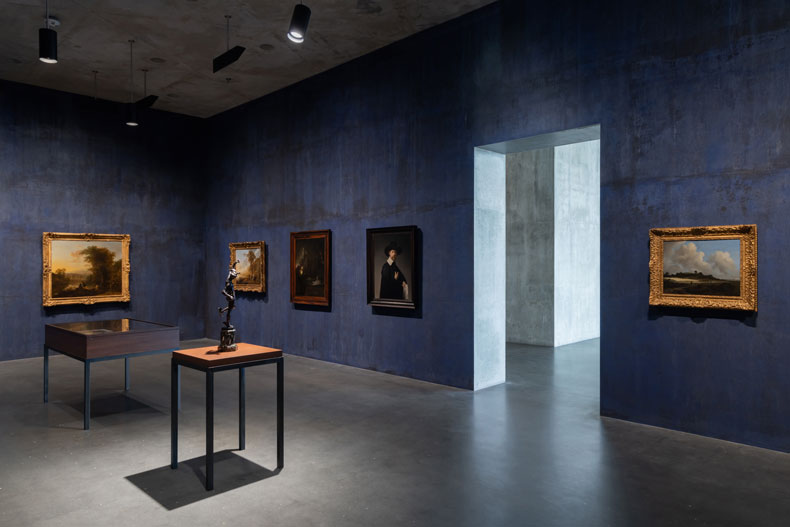
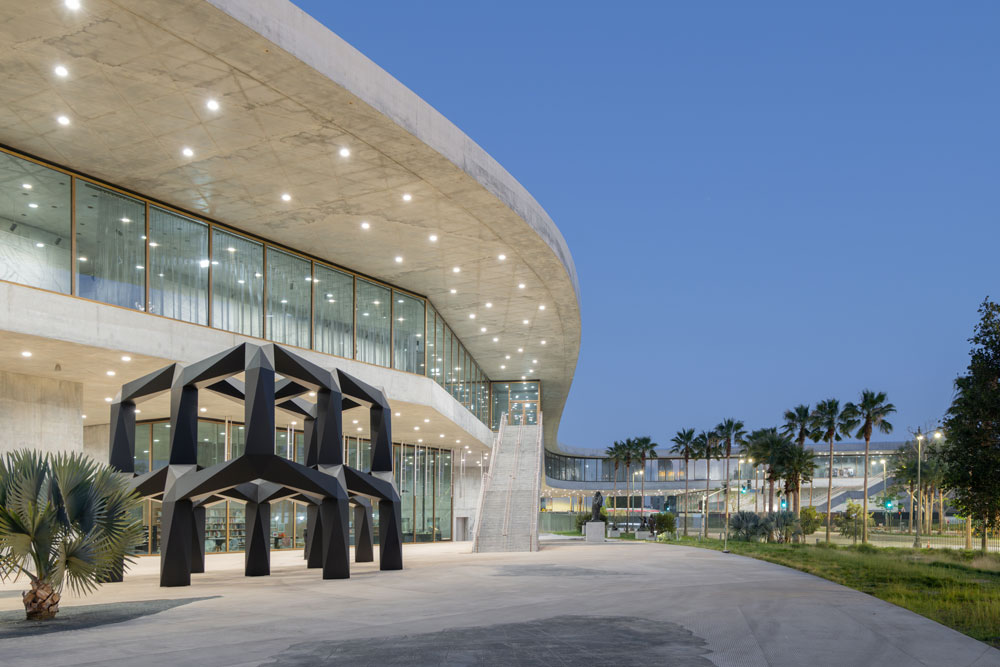
This aquatic theme is entirely appropriate for Zumthor’s building, which curves and spreads like a puddle over Wilshire Boulevard. (It has been described, somewhat derisorily, as a ‘blob’ and an ‘amoeba’, but to me its shape more precisely evokes the biomorphic forms of Jean Arp.) In a city that conforms, with few exceptions, to a gridded street plan, artificially slicing the population’s demographics into rectilinear sections, Zumthor has designed a building in which not only can you no longer tell which way is north or south, but you also don’t care. ‘One of the problems with the encyclopaedic museum is that it uses a Cartesian, God’s-eye-view time-space grid,’ Govan has said. ‘It’s the grid that allows colonialism to map and conquer the world.’
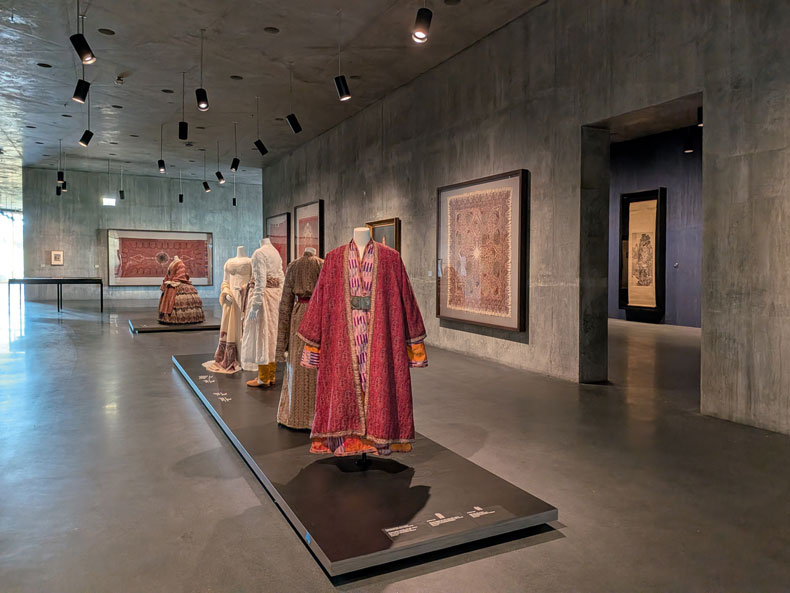
Early critics of the Geffen Galleries groused that the new building was marginally smaller than those it replaced. There is no doubt, now it’s done, that it will offer better access to the collection, even if it displays fewer objects. The installation brings together textiles with paintings, ceramics with sculpture, applied arts with photography. An Edo-period decorated Japanese chest finds a place near Rembrandts in a gallery about Dutch 17th-century prosperity; a cast resin cube by the artist Peter Alexander sits near a plastic bodice from the early 1980s by Issey Miyake. This anti-hierarchical conversation is meant to illustrate how forms and ideas travel across oceans. While looking at a 19th-century Blaan blouse from the Southern Philippines, Clarissa Esguerra, the museum’s curator of costume and textiles, reflected that textiles have historically played a central role in aesthetic migration because they could be transported more easily than, say, paintings and sculptures.
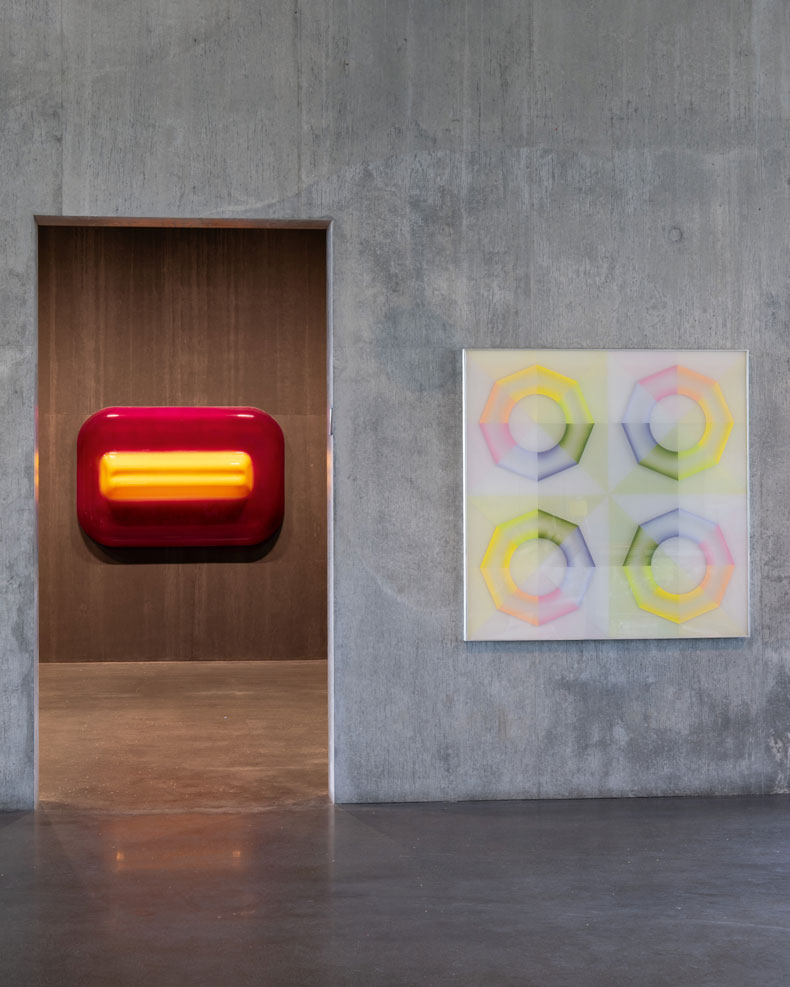
The building, in simple terms, consists of two thick layers of poured concrete – a roof and a floor – sandwiching glass windows. This entire construction, which has neither a front nor a back, is lifted nine metres off the ground by seven concrete pedestals, enabling it to bridge Wilshire Boulevard. Visitors arrive by lift or by climbing a long staircase; among the first objects they encounter are two maps. These are navigational stick charts made by the contemporary artist Gail Mabo, a Torres Strait Islander, who fashioned them from bamboo, twine and shell, following drawings made by her father. Along with the Blaan blouse, they are part of a display titled ‘Navigating Pacific Asia’ and are shown beside a 20th-century anthropomorphic ‘Slit Drum’ from the island of Ambrym in Vanuatu; a banana-fibre ‘Wrap Cloth’ made in the early 20th century by an indigenous Blaan artist; a striking carved wood Uli figure from Papua New Guinea; and a photograph from 2022 by Netherlands-based Jennifer Tee of a collage made from tulip petals, referring to traditional Indonesian ‘ship cloths’. (Tee’s father migrated from Indonesia to the Netherlands in the 1950s.)
These objects are more compelling to look at than to read about. The raw concrete walls of Zumthor’s galleries grant such objects an undeniable visual drama, and pieces are installed on elegant dark wooden tables and in cases instead of white plinths. (No ugly stanchions anywhere!) A museum, however, has a responsibility to educate its patrons as well as entertain them – although I concede that lengthy tombstones beside each work, providing historical, material and contextual information, would dampen the excitement. What little textual information is given is well-written and accessible; panels introducing each gallery are appended by QR codes that lead to annotated web pages, though these are sometimes disappointingly identical to the texts on the wall. These pages could easily be – and hopefully soon will be – more richly furnished. In the meantime, it is refreshing to encounter a museum that encourages you to look rather than to read.
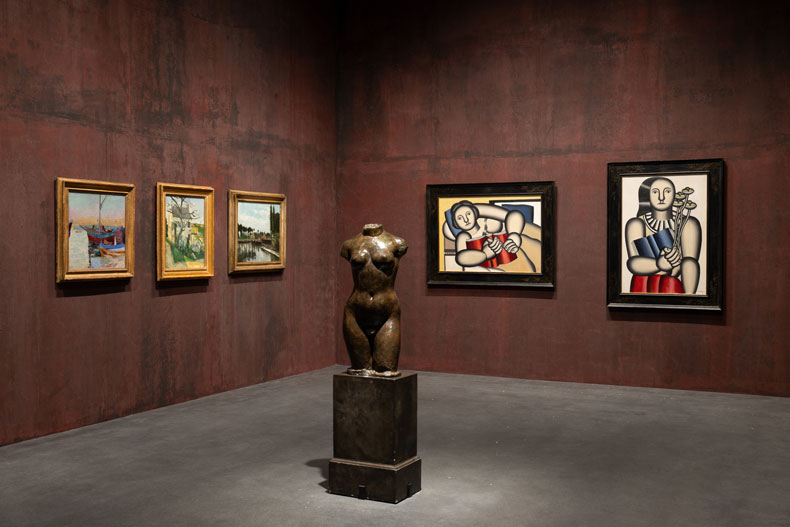
There are weaknesses, of course. As with Mabo’s stick charts and Tee’s photograph emulating Indonesian cloth patterns, among the contemporary artworks here there are too many instances of pieces chosen just because they resemble (or reproduce) traditional artefacts. This is not a criticism of the works themselves, merely my sense that contemporary art here is being co-opted by curators to tell particular stories. This is especially true with photography, of which there is a lot. (Contemporary paintings and sculptures from LACMA’s collection are, by and large, sequestered in BCAM.) Andreas Gursky’s giant Oceans series, from 2010, in which satellite imagery is digitally altered to resemble God’s-eye photos of the Earth, is here reduced to set-dressing for the meta-theme of the galleries.
Another problem, which will doubtlessly recede as curators get over their excitement at their new home, is at the tendency of displays to play to the building. Though not overbearing, Zumthor’s edifice is such a major presence that certain artworks seem chosen to draw even more attention to it, as if that were necessary. A triptych of photographs by L.A.-based Uta Barth shows light filtering through sheer curtains, as if complementing the light-filtering chrome-plated curtains that hang against the surrounding floor-to-ceiling windows. (The Geffen’s curtains – specially designed by Japanese textile designer Reiko Sudō – are honoured with their own wall label.)
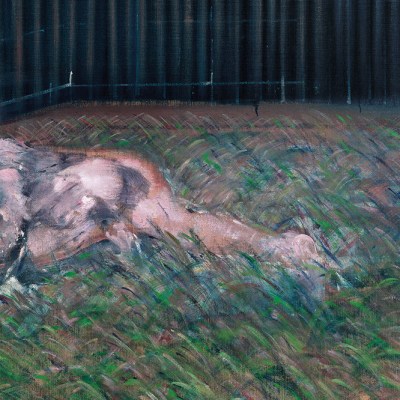
Despite the curtains, there are a few moments where reflections are annoying, most glaringly so in the case of Francis Bacon’s yellow triptych Three Studies of Lucian Freud (1969), a recent gift to the museum from the late donor Elaine Wynn. It is baffling to me that this masterpiece is framed behind wobbly Plexiglass and hung on a wall facing Wilshire Boulevard, where it loses something of its power, instead of in one of the artificially lit enclosed galleries.
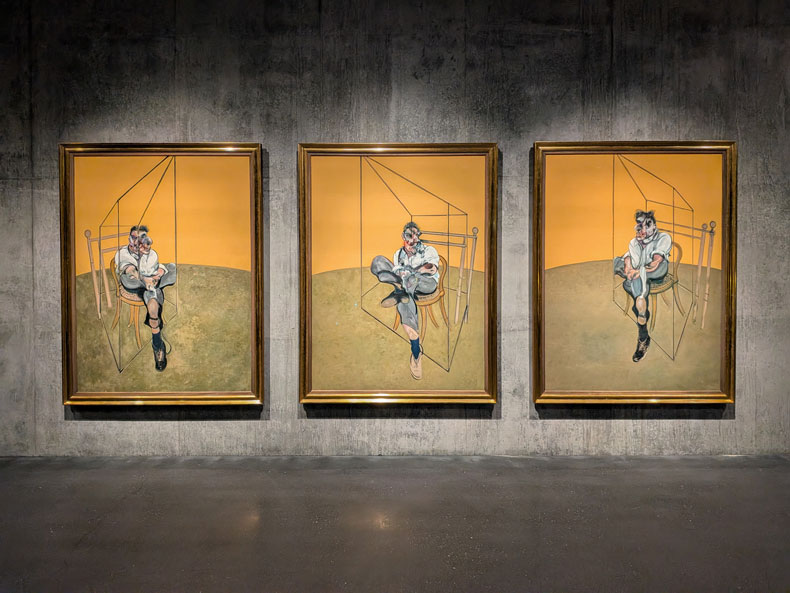
However, more often than not in the Geffen Galleries, light (or sometimes the lack of it) only adds to the drama and the atmosphere. A 2,000-year-old Persian rhyton (drinking horn) is first encountered as a near-silhouette, as are three busts from 16th- and 17th-century Italy. In my experience, lighting in museums is so often frustrating – think of the drab grey light in Tate Modern. But museums are no longer primarily educational institutions and, to survive, they now must entertain as well. For the $30 full-price entry fee, visitors will expect (and should get) at least a bit of a thrill from this new cultural experience.
The global museum, in the third decade of this century, is still figuring out what it should be. In Los Angeles, it will soon have to compete with George Lucas’s headline-grabbing new museum, as well as existing theme parks, sports stadiums and the beach. To stay relevant, art museums must meet people where they are, and then carry them a bit further. The Geffen Galleries achieve this with a sense of gravitas and permanence that is all too rare in this fast-changing, still-young city.
From the June 2026 issue of Apollo.