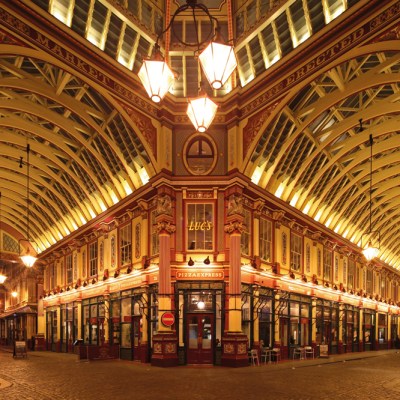
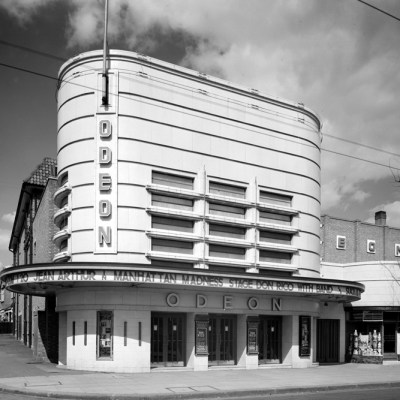
I have been following the plans to redevelop Liverpool Street station over the last few years with a depressing sense of inevitability about the outcome. There have now been two gigantic schemes, both of them totally insensitive to the existing station, the second of which has just been given planning permission by the City of London’s planning committee in spite of the opposition of every major heritage group, led by the Victorian Society and including SAVE and the Twentieth Century Society – all of them implacably hostile to what has been proposed. The current scheme has been given the green light in spite of the existence of a much better alternative drawn up by the architect John McAslan and engineer Chris Wise, who were jointly responsible for the development of King’s Cross. They argue that their scheme could be built at around half the cost (some £600m as opposed to the current £1.2bn forecast cost), in around half the time (five years compared with 10 years).
In any discussion of the planned alterations to Liverpool Street station, it is worth remembering that we have been here before. In 1975, British Rail announced that it was going to demolish both Liverpool Street and Broad Street stations. The conservation movement, led by John Betjeman, then mounted a vigorous campaign to save Liverpool Street station. Simon Jenkins, a great railway enthusiast, joined the board of British Rail in 1979, and managed to persuade them not to demolish the station, but redevelop it, which they did with tact and sensitivity, adding a replica of the existing Victorian railway shed to create a passenger concourse, and creating rather charming, neo-Victorian towers to flank the entrances to the station. The completed scheme, a model of 1980s redevelopment, was opened by Queen Elizabeth II in 1991 and serves the public well.
Now, it appears that Network Rail does not have the money to invest in better lifts and disabled access without building a monster glass tower right on top of the station – the idea being that this 19-storey block will house commercial office space to bring in revenue – and demolishing the relatively recent and historically interesting modern improvements.
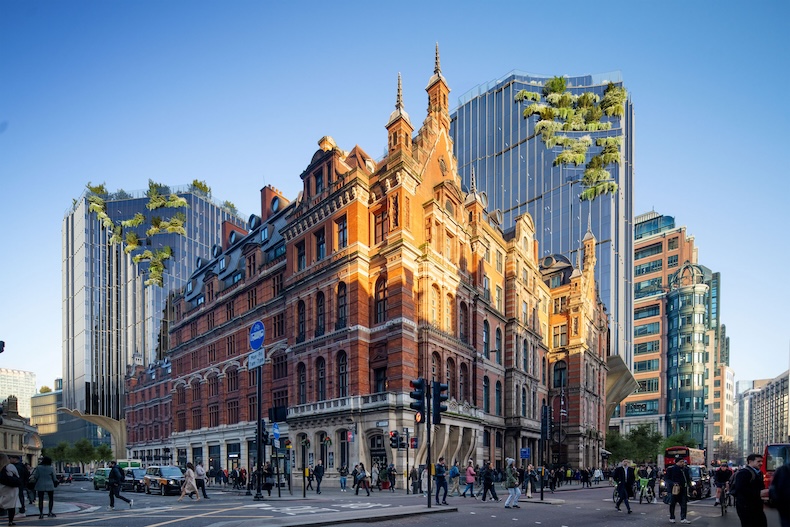
The first scheme was drawn up by Herzog & de Meuron, who should have known better than to suggest a tower block that was going to be cantilevered over the existing Great Eastern Hotel (now the Andaz) – an idea which, as architects of international importance with strong ecological credentials, they should never have designed. They must have come to the realisation that it was damaging for their reputation and gracefully withdrew, to be replaced by a younger architectural firm called Acme, which was presumably hungry for the work.
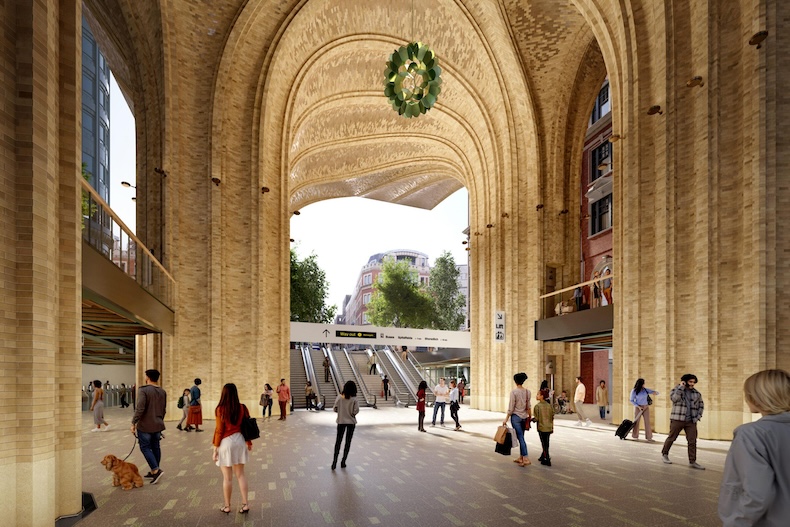
Acme has proposed a vast tower block which it plans to mount on what looks like an entirely bogus entrance to a cathedral. The glass blocks are topped by little grass tufts like hairy eyebrows. There is something nauseatingly slick about the whole proposal, as if all the objections to the previous scheme have been fed into a computer which has spewed out an AI-generated new building.
Why can’t the existing railway station – which is much loved and has a beautiful cast-iron roof, currently not very visible behind the 1980s shopping arcade – be given a gentle and historically sensitive upgrade without the addition of an architecturally redundant tower block? I use the station often and while it is certainly crowded at peak hours, it is not unbearably so. It ought to be possible, as John McAslan has demonstrated, to move the ticket barriers forward to release more space for circulation; clear out some of the existing clutter; build commercial space on top of the train sheds; add new lifts and escalators; and so renovate the station without crushing its spirit.