London’s end-of-term June auctions are usually held during either deluges or heatwaves. This year, it was most certainly the latter and the sales had a heat that has been missing from recent years, too. This was largely thanks to Wednesday night’s evening sale at Sotheby’s of 25 works from the Lewis Collection, formed over more than half a century by the 89-year-old billionaire currency trader Joe Lewis and his daughter Vivienne. The sale followed that of four School of London works sold by the Lewises at Sotheby’s in March, which made £35.8m. That result prompted the sale of this tranche, which is more European in its scope and includes starry names of modern and post-war art –Modigliani, Picasso, Degas, Magritte, Matisse and so on.
Anyone familiar with auction house press releases will know that every collector humbly proclaims that they are merely ‘stewards’ or ‘custodians’ of their collections (language that rarely appears in legal disputes). True to form, in Sotheby’s post-sale release, Vivienne Lewis says she and her father ‘were only ever custodians of these works’ and now they are ‘sending them out into the world, into new homes’.
Providing those new homes will pay enough for them, that is. On Wednesday night, they did – though it took two hours of the auctioneer Oliver Barker teasing out bids in the knowledge that, at the Lewises’ request, none of the works were guaranteed. Nevertheless, the auction totalled £296.3m (with fees), making it the most valuable single-owner collection ever sold in London, almost tripling the previous record set at Sotheby’s in September last year for the Pauline Karpidas sale. Only one of the 25 Lewis lots went unsold, The Theatre Box (1880), a pastel by Edgar Degas estimated at £3m–£4m. ‘This was a real auction with no safety net; the Lewises trusted the process to let the works find their own level,’ Barker says. ‘There wasn’t a taker in the room, but it did sell immediately afterwards.’ Combined with Sotheby’s mixed-vendor evening sale that followed, the night totalled £393.4m, the highest ever achieved in a single night in Europe.
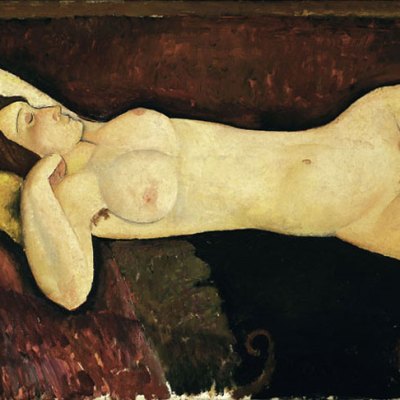
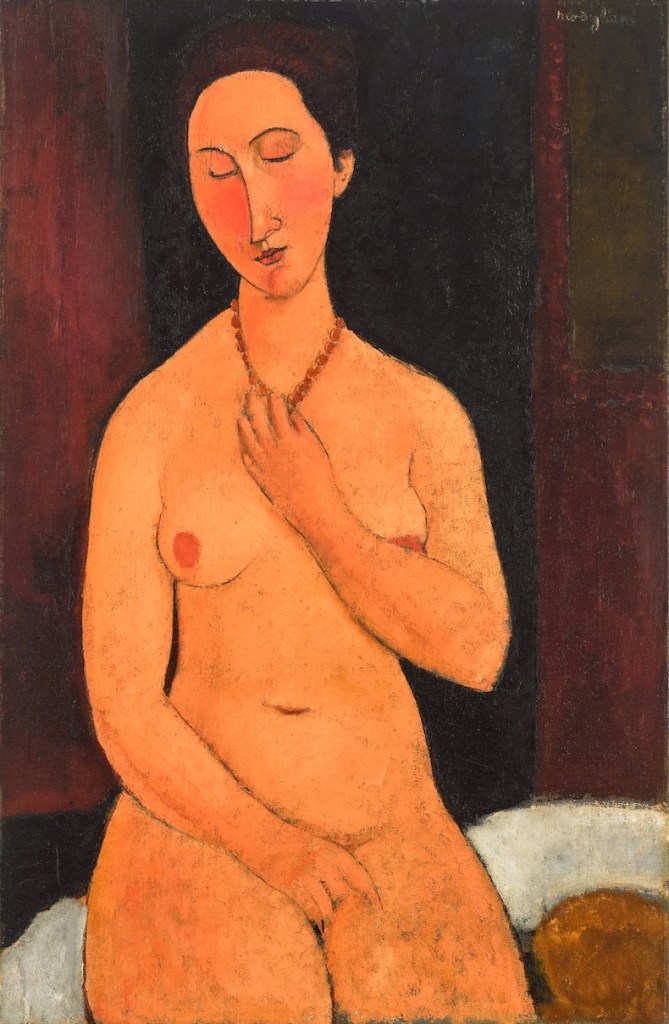
Top of the Lewis collection was Amedeo Modigliani’s Seated Nude with Necklace (1917–18), which sold on a single bid for £48.2m, pushed over its estimate of £45m by the auctioneer’s fees, the highest price for a work by Modigliani sold in Europe. The work, which was deemed so scandalous that it caused an exhibition in Paris to shut down when it was first shown in 1917, was on the market for the first time in 30 years, having been bought by Joe Lewis at Christie’s New York in 1995.
In at number two was Gustav Klimt’s ethereal, almost monochromatic portrait of Gertrud Loew from 1902, depicting the 19-year-old daughter of one of Klimt’s most important patrons, the doctor Anton Loew. It sold for £36.2m, above its estimate of £20m–£30m, to an Asian buyer (Asian bidding accounted for around a third of the sale’s total). Lewis bought the Klimt at Sotheby’s in 2015 for £24.7m, when it was sold as part of a restitution settlement between the descendants of the artist and of the sitter.
The same evening, the mixed-vendor modern and contemporary art evening sale at Sotheby’s realised £97.1m from 40 lots, against pre-sale expectations of £77.4m–£109.7m. That was up 55 per cent from the equivalent evening sale at Sotheby’s in 2025, which made a limp £62.5m from 48 lots.
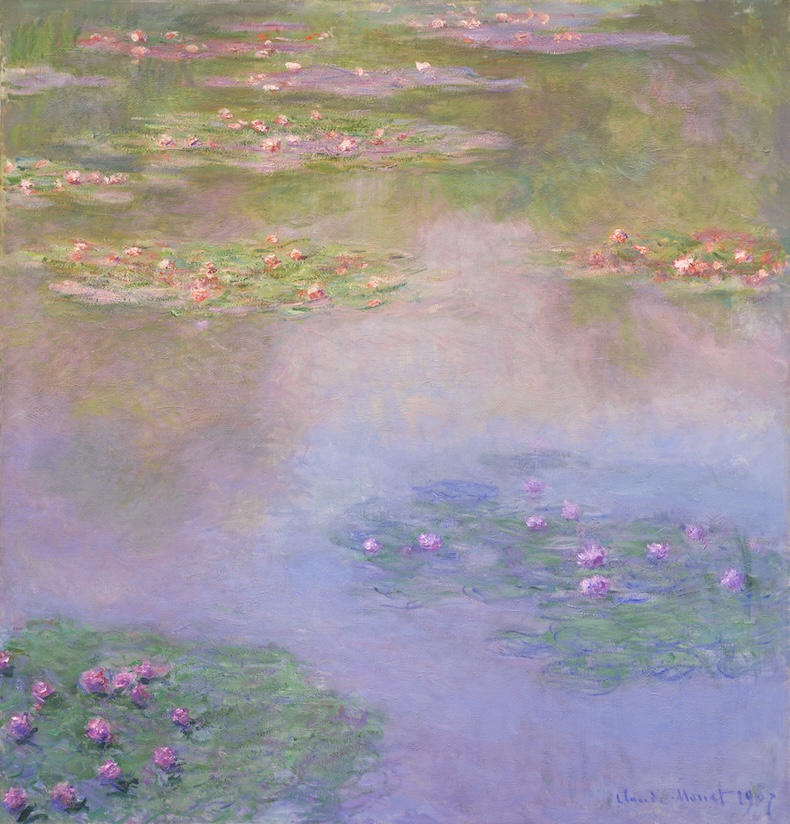
The stars were two Monet paintings, produced 37 years apart (reminiscent of the pair in the Paris sales in April). These paintings – an early portrait of the artist’s first wife Camille on the beach at Trouville (est. £7m–£10m) from 1870 and Nymphéas (1907; estimate £30–£40m) depicting his water lily pond at Giverny – came from the same collection. The latter had been bought by the vendor for $56.4m (around £43m) from the sale of the collection of Anne Bass at Christie’s New York in 2022 – Bass had owned it for almost 40 years. It hammered for £40.8m, within estimate, making it the most valuable Impressionist work sold at auction in Europe in over a decade, according to Sotheby’s. Camille Sitting on the Beach at Trouville was also bought from an estate sale at Christie’s, that of Peggy and David Rockefeller in New York in 2018, when it sold for $12.1m. This time, it failed to sell.
Peter Doig’s oppressive Cabin Essence (1993–94), an early work from his Concrete Cabin series (nine paintings of Le Corbusier’s partially abandoned modernist housing complex Unité d’Habitation at Briey-en-Forêt), estimated at £10m–£15m, was withdrawn shortly before the sale. Altogether, Sotheby’s sales this week totalled £420.5m – with the Lewis collection contributing £306.6m – taking into account additional works sold in the day sale on Thursday.
Christie’s did away with its June evening auctions of modern and contemporary art in 2017, to concentrate on the March and October marquee seasons. ‘That gave us this opportunity within the June season to run special projects,’ says Katharine Arnold, Christie’s vice chairman and head of post-war and contemporary art, Europe, including ‘offering single-owner collections such as that of the Zabludowicz family’.
Anita and Poju Zabludowicz, who started collecting art in 1994 and have amassed a collection of around 5,000 works, are among the best-known and most active collectors of contemporary art in the UK. They opened a project space in north London in 2007, but it closed in 2023. As has been much reported, the collection has also faced controversy in the past decade, namely criticism of the family’s business and political connections to pro-Israel organisations, leading some artists to disavow work held in the collection. The family has rejected these claims and maintains that the collection is independent and non-political.
This week a substantial part of the Zabludowicz collection is being sold at Christie’s: 44 works are in an online sale (until 30 June), while a live sale of 53 lots took place on Thursday afternoon. Theories abound as to why the Zabludowicz collection has chosen to sell these works now when the auction market for younger contemporary artists is floundering. A spokesperson merely says: ‘As an active collection, this sale represents a moment of renewal – ensuring the collection remains responsive, continues to support artists in meaningful ways and creates space for new acquisitions and future initiatives.’
Christie’s muted live sale made a total of £15.4m, with 89 per cent of the works sold – though some of them, offered without reserve, scraped away at the fraction of their estimates. Pixelator (Infinite Mask) (2008) by the American artist Aaron Curry, for instance, sold for just £381 against an estimate of £10,000 to £15,000, while family ties, a sculptural piece by the Israeli-American artist Haim Steinbach from 2007, with the same estimate, went for £1,270.
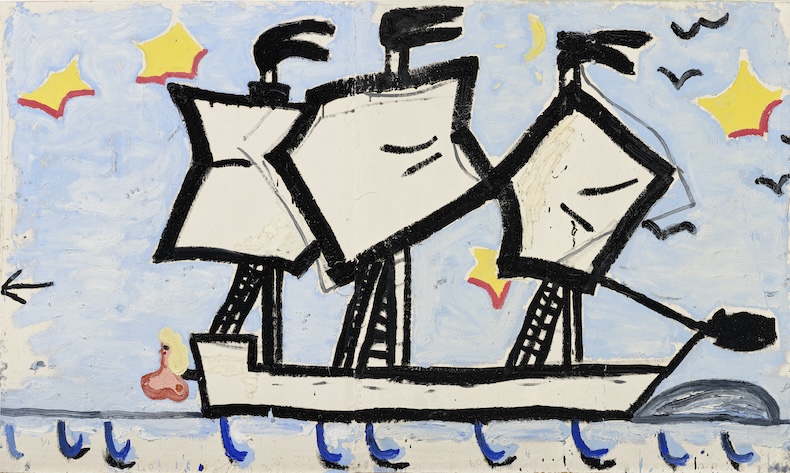
On a more positive note, records were set for three artists. One of these was 91-year-old Rose Wylie’s huge painting Sailing Boat (2015). Off the back of her recent retrospective at the Royal Academy in London, it sold for £292,100, within the £150,000–£350,000 estimate.
The top lot was a late work by Philip Guston, Mirror Head (1977), a three-metre wide depiction of the back of his wife’s head (tempting to imagine her reaction). The painting sold for £3.9m, at the bottom end of the £3.5m–£5.5m estimate.
The central auction theme of this steamy week in London has been that of two long-established but very different British collections being sold – sorry, set free – as the next generation of ‘custodians’ takes over. What the results show is that, for now at least, bankable 20th-century stars are winning out over contemporary names in a recuperating market.