From the February 2026 issue of Apollo. Preview and subscribe here.
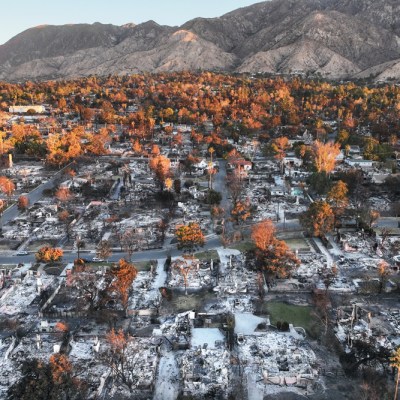
In the aftermath of the fires that devastated parts of Los Angeles in early January 2025, the city’s art world battled with the question of whether the Frieze fair should go ahead the following month. There was, it seemed, no right answer.
But go ahead it did, as Los Angeles showed its resilience. The fires prompted a ‘serious reassessment of our responsibilities’ says Christine Messineo, Frieze’s director of Americas. ‘Artists, arts workers and members of our wider community lost homes, studios and art, while many collectors and galleries were dealing with evacuation, smoke damage and the emotional and practical reality of assessing loss. The sense of shock was widespread and it fundamentally shifted the mood of the city.’
One year on, as they approach Frieze Los Angeles at the end of February, galleries are taking stock after a difficult year.
‘LA feels like it’s done 15 rounds in a title fight and that impacts the city’s confidence,’ says the dealer Stefan Simchowitz. On 7 January 2025, Simchowitz watched the Eaton Canyon fire start while sitting on his bed in the main house at his Hill House Residency campus. ‘Within six minutes, the fire had just exploded, and 20 minutes out, we were evacuated.’ Remarkably, Hill House was unscathed.
‘The city is resilient and has a lot of opportunity, but the market here is small,’ Simchowitz says, pointing to the decline of the film industry in Los Angeles since the pandemic and the departure of some collectors to states with lower or no income tax as factors. ‘The fires added insult to injury.’
There was once a rush of galleries opening in the city. The international megaliths started to descend in 2016, when Hauser & Wirth took over a former factory. Frieze’s launch of an LA fair in February 2019 brought more international interest, followed by a post-pandemic boom when the likes of Marian Goodman Gallery, Lisson Gallery, Perrotin, David Zwirner and Sean Kelly opened outposts. These joined a gaggle of younger homegrown galleries – Commonwealth and Council (founded in 2010), Various Small Fires (2012) and Château Shatto (2014) to name a few.
But a bearish global market, rising costs and individual challenges have prompted a retreat in the past two years. Last July, Blum (formerly Blum & Poe) shut its Los Angeles and Tokyo operations. A week later the collector and dealer Adam Lindemann closed his galleries Venus Over Manhattan and Venus Over Los Angeles. Then Tanya Bonakdar Gallery shut its LA location after seven years and Sean Kelly Gallery ceased public exhibitions in its West Coast space, which opened only in 2022. At least 10 others have shut in the city since 2023, including Praz-Delavallade, L.A. Louver and Nino Mier, whose rapid expansion ended abruptly with the closure of all his Los Angeles spaces in 2024.
Periodic boom and bust cycles are not new in Los Angeles, says Chris Sharp, who founded his eponymous gallery in the city in 2021 and launched Post-Fair, a satellite fair in Santa Monica, last February.
The latest round of openings and closings was ‘a foregone conclusion’, he says. The small collector pool contributes to this trend, Sharp thinks, but so does the gold rush mentality that is ‘intrinsic to the lore of California […] If you are not willing to participate in that lore – which is to say, tell its story rather than just show up and try to extract – chances of real survival are slim here.’ With the broader art market floundering, it is hard to know if the fires created any new problems or merely ‘exacerbated the general problem of a weak market’, Sharp says.
The scale and geography of Los Angeles make running offshoot galleries here particularly complex, Messineo thinks: ‘Outposts only work if they can be consistently programmed and genuinely serve artists and collectors locally, not just seasonally. In a tougher cycle, many galleries are choosing to focus their resources on fewer, stronger footprints.’
While New York’s denser market can feel ‘more immediate and transactional’, she says, Los Angeles is more dispersed, more private. ‘Collectors here will absolutely buy decisively, but the pathway is often through studio visits, institutional engagement and long-term conversations and connection with the artists rather than the gallery-neighbourhood walk model you find in New York.’
In this vast city, built for cars not feet, galleries tend to congregate in pockets. It’s safety in numbers, says Megan Mulrooney, a former director at Nino Mier who founded her own space in 2024. ‘The proximity to other galleries has created a growing sense of community and encourages those who do see shows in Los Angeles to be able to see multiple exhibitions in a single outing,’ she says, adding that whereas Culver City used to be a mini-gallery hub – ‘think Blum & Poe, Roberts Projects and Anat Ebgi’ – the majority of galleries have now relocated to Hollywood and West Hollywood. ‘Even Hauser & Wirth opened a WeHo outpost,’ Mulrooney says. Melrose Hill, where David Zwirner opened a 30,000-sq-ft space in 2024, is also a burgeoning hub, says Sharp, who recently moved his gallery to the area. The city’s art scene has become ‘more concentrated, more localised’, but also more commercially driven and risk-averse.
Los Angeles-born Sebastian Gladstone bucked the contraction trend last year by expanding to a new 3,200-sq-ft gallery in Hollywood, near the longtime LA galleries Jeffrey Deitch and Regen Projects. The fires were devastating to the city, Gladstone says, but he wanted to recommit: ‘Many people after the fires spoke about leaving Los Angeles, or how the city wasn’t a good place to be any more. For me, Los Angeles will always be my home and it was a big impetus in my expansion here.’ The other closures left a void between large galleries and project spaces, Sharp says, ‘and a real need for galleries operating in the middle ground, not just in relation to scale, but also price and individual attention to relationships. I just felt it was a moment when moving against the grain could work and even though it was scary it has paid off significantly.’
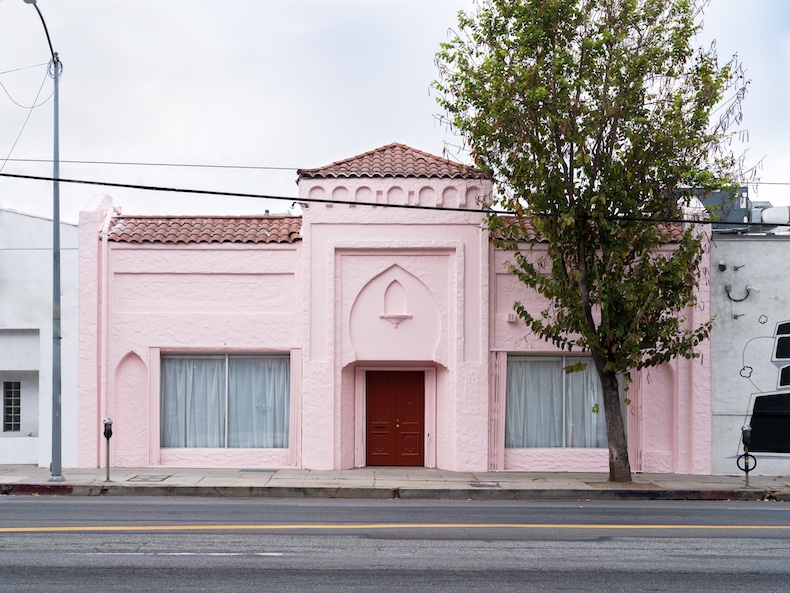
Tabitha Steinberg, who co-founded Ehrlich Steinberg gallery in Melrose Hill in 2023, says that the city’s art market has gone from ‘famously provincial to markedly more globalised within the last 10 years, for better or worse’. Of the big galleries opening West Coast outposts, she says: ‘I guess it was a potentially untapped wealth pool. Whether this has unfolded as those galleries anticipated is debatable.’ Recent closures are simply a result of ‘market saturation’.
Young galleries such as Gladstone’s and Ehrlich Steinberg are crucial, says Davida Nemeroff, who founded Night Gallery in 2010 when she was only 29. ‘It’s often younger people opening galleries to reflect their community, what they want to see.’ Those that have closed recently, she observes, have largely been the outposts of larger international galleries, who found ‘the city is smaller than its shadow […] I think they had the expectation that it would be easy, but nothing in the art world is easy. And while it brought a lot of positive attention to the city, ultimately, I found it to be a distraction from our own community.’
The number of emerging galleries that open up in unconventional spaces – ‘apartments, inexpensive storefronts, garages’ – is what makes it so dynamic, says Jeffrey Deitch, the veteran curator and dealer who first moved to Los Angeles to become director of the Museum of Contemporary Art and opened his Los Angeles gallery in 2018. He recalls being offered another space in the city 20 years ago: ‘I asked my old friend Irving Blum, the dean of Los Angeles art dealers, if I should open a gallery. He said, “It’s a great idea – if you are willing to be in Los Angeles half the time.” At that time, I couldn’t.’ Blum was right, Deitch says: ‘You have to have a network of personal relationships [in LA]. Now I am in Los Angeles half the time or more […] A gallerist who is not willing to put the time in, it’s not going to work.’
One long-time LA gallerist is Susanne Vielmetter, who launched her gallery in 2000 and has witnessed the city’s art scene change almost beyond recognition, through many cycles of expansion and contraction. ‘This has been the hardest year I’ve ever had, and it has taken an enormous hit on the gallery, all galleries in LA are going through it right now,’ Vielmetter says. ‘It’s not a direct result of the fire. It’s a result of the softening and slowing down of the art market.’ Vielmetter lost her Altadena home in the fires, as did her daughter and two gallery employees, while several of the gallery’s artists were displaced. In the midst of such loss, she says, ‘our most immediate fear was that Frieze Los Angeles would be cancelled and people wouldn’t visit.’
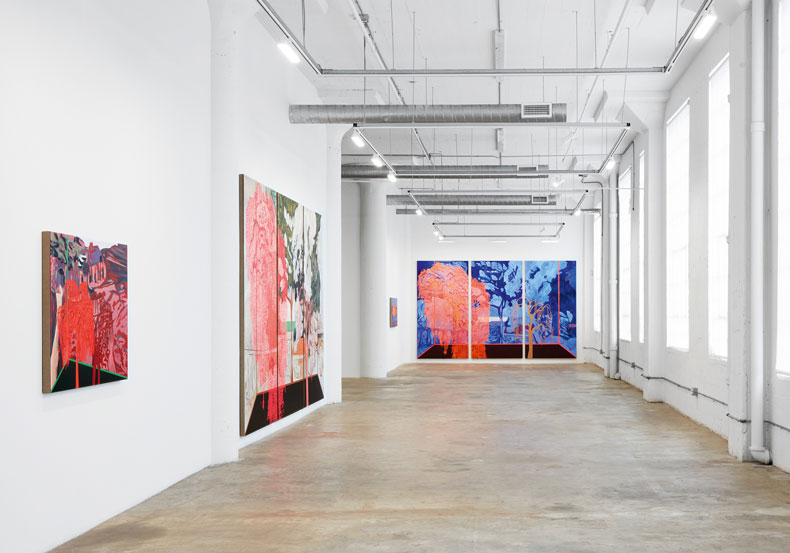
Mulrooney recalls how, for several days last January, ‘most people wondered if the whole city would burn down, which added to the psychological distress’ and a ‘growing sense of doom and calamity’. But despite having to evacuate her family, Mulrooney’s gallery opened three shows on 18 January 2025. Not a single person came – but, she says: ‘We made the decision to open that day to provide a safe and positive space.’
The city’s art community came together instantly after the fires, Deitch says, testament to the ‘tight community we have in Los Angeles. But it’s tough, people are still rebuilding.’
The people of Los Angeles are resilient, Deitch says, giving the example of Kelly Akashi, who lost her home and studio in the fires, weeks before her first show at Lisson Gallery was due to open (the show did go on, one month later). ‘Somehow, she put together an amazing exhibition.’
Some artists have unexpectedly taken inspiration from the fires and their aftermath, Nemeroff says. She points to Mira Dancy, who had to leave her Altadena home for a year and has produced a new body of work recording the aftermath and recovery, which will be shown at Night Gallery during Frieze Los Angeles. ‘It was a catalyst, a breakthrough for her.’
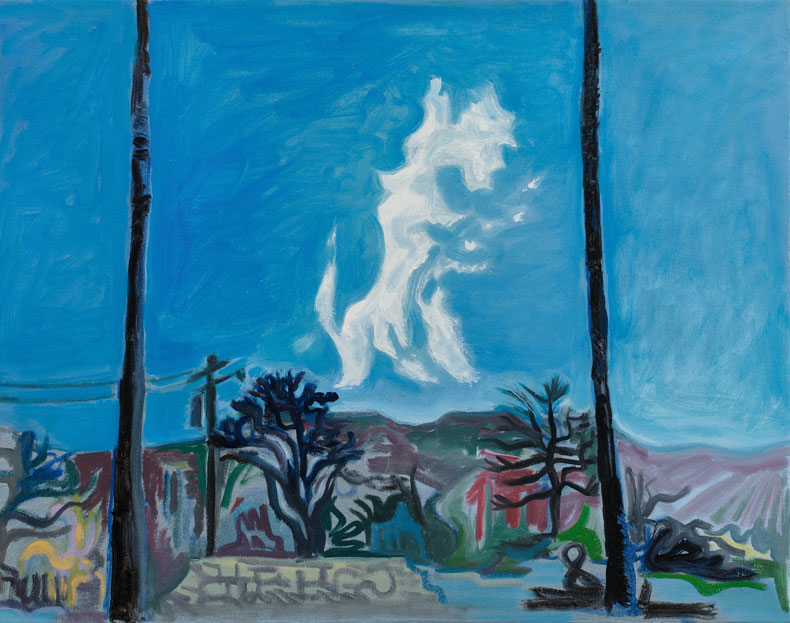
But the fires also destroyed an enormous amount of art, says Anat Ebgi, who first opened the Company gallery in LA in 2008 before rebranding under her own name in 2012, expanding into Praz-Delavallade’s former space on Wilshire Boulevard last year. ‘Entire collections were damaged or destroyed, including pieces that were meant for museums or future gifts to public collections,’ Ebgi says. ‘Beyond the material loss, there’s a sense of cultural grief for the loss of legacy and art history. It pushed a lot of serious thinking about preservation, storage and resilience going forward.’
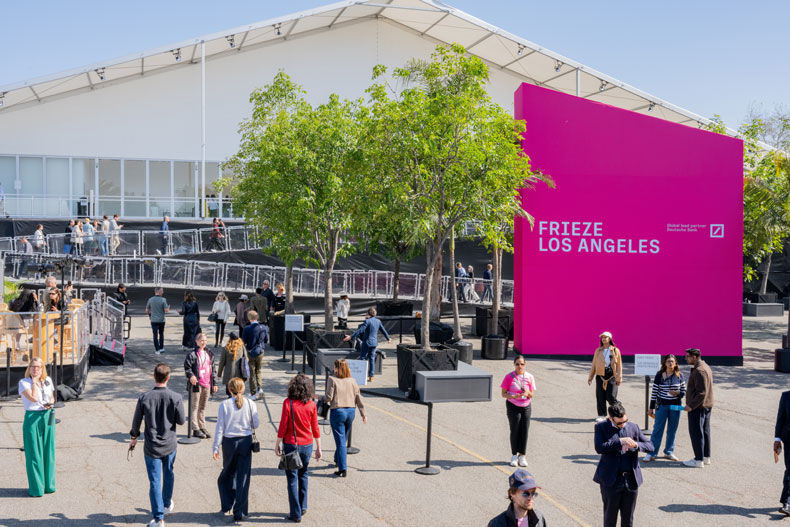
The galleries owned by Ebgi, Vielmetter, Nemeroff and Gladstone are among more than 95 exhibitors taking part in this year’s Frieze Los Angeles from 26 February–1 March, the seventh edition overall and the fourth at Santa Monica airport. Despite the wildfires that preceded last year’s event, exhibitor numbers are down only slightly from 2025, when around 100 galleries took part.
Felix Art Fair returns too, from 25 February–1 March, set up around the rooms of the Hollywood Roosevelt hotel, as does Chris Sharp’s Post-Fair (26–28 February), started last year in an art deco post office in Santa Monica with galleries – including Ehrlich Steinberg – showing solo presentations in an open format setting. ‘We have 30 galleries this year, so a modest expansion, with more galleries from New York, Asia and Europe,’ Sharp says. He started the accessibly priced event (there is a flat participation fee of $6,500) in response to the sharply rising costs of most art fairs, describing it as ‘a temporary solution to an increasingly systemic problem’.
While Post-Fair may not be a long-term venture, Sharp says, ‘it demonstrates that if you are unhappy with the status quo, you can take measures to change it, rather than just submit.’
The city may have taken some blows but, Sharp says, the important thing is ‘to keep going, despite everything’.
*This piece has been updated to reflect the fact that Mira Dancey was displaced for a year, but that her home was not entirely destroyed.
From the February 2026 issue of Apollo. Preview and subscribe here.