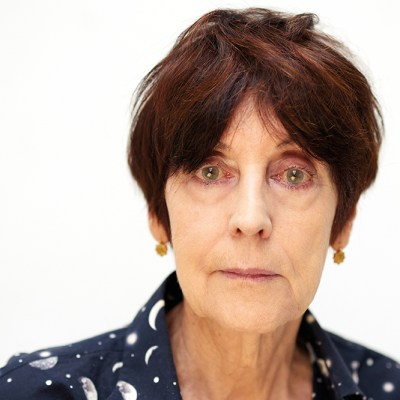
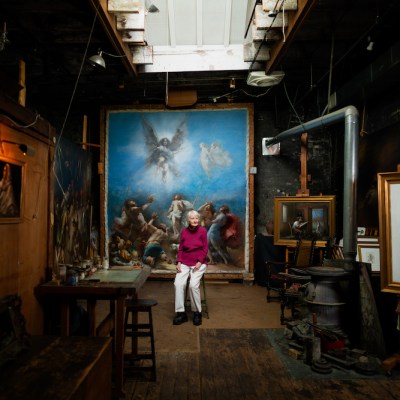
She left us with elegance, preparing her grand exit for years, it seems to me. When I learned of Marian Goodman’s departure last week at the age of 97, I was sitting in the lobby of an old refurbished hotel in Palo Alto and although my breath stopped short, as it does in such moments, I also felt a sense of tenderness at the thought that she was somewhere nearby, in California.
I cannot remember when and where we first met, but it might have been through Dan Graham in the mid 1980s. Whenever I went to New York, I would stop by the Midtown gallery to see her exhibitions and, whenever possible, see her and have a light lunch together. I was younger, and at first always in a state of reverent awe, wanting to make a good impression on her – she was already known as one of the best gallerists in the world. She knew I loved crabcakes – a memory from my childhood with my mother – so she took me to a restaurant across the street from the gallery on 57th Street to have them. I felt at ease, and esteemed by her, and that was wonderful.
We shared certain passions for Arte Povera – Giuseppe Penone, Giulio Paolini, Giovanni Anselmo, Mario and Marisa Merz, and more. We shared our love for the conceptual artist Lawrence Weiner and the feeling that art was of the utmost importance to life.
I met many older, eminent artists through her, such as Lothar Baumgarten, and over the years we acquired many important works for the Castello di Rivoli museum, where I was the chief curator and later director, thanks to her way of reserving special things for museums she loved.
She respected curators and museum directors because she knew that we were involved in art because of our deep belief in the importance of knowledge, and that we loved and respected the artists first and foremost. She educated and formed collectors, all the while keeping money and culture in a healthy dialectical relationship, and she did that with style and excellence.
She had trained as an anthropologist, so the conversations were real and never chit-chat – they were about the meaning of artworks, their position in art history, and their role in shaping consciousness and the world. She listened a great deal and seemed intrigued by this younger woman. She understood the distinct role of the gallery in the ecosystem of art and supported the production of artworks by the artists she represented, whether or not they exhibited a physical artwork that could be sold.
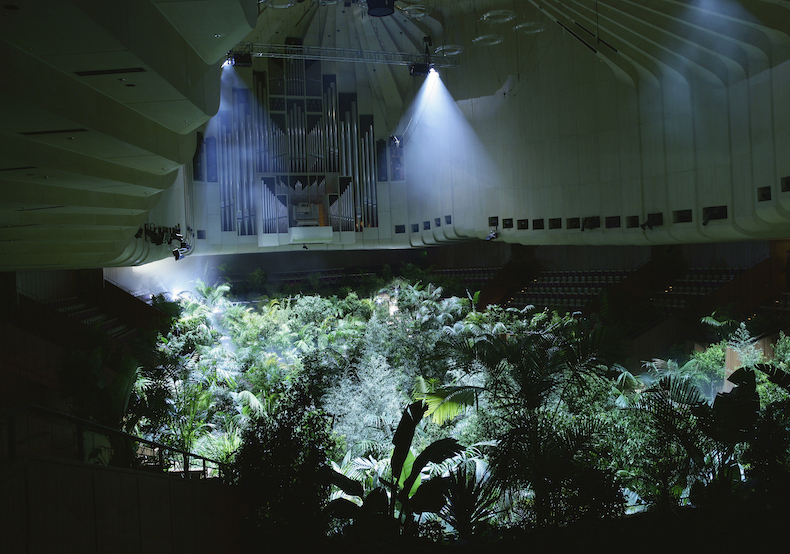
For example, without Marian there would have been no Forest of Lines by Pierre Huyghe in the Sydney Opera House in 2008. Who else would have produced such an incredible feat, installing 2,000 live trees into that building for only 24 hours? It was important to Pierre and to me, so she did it.
We went on parallel journeys. While I was working on William Kentridge’s first survey show outside South Africa, in 1996–97, which opened at the Palais des Beaux-Arts in Brussels in 1998 before touring Europe, she saw his History of the Main Complaint in Catherine David’s Documenta 10 and enlisted him in the gallery.
Later, when I curated Documenta 13 in 2012, she helped me with Julie Mehretu, whose work she had seen in ‘Greater New York’ while I was senior curator at MoMA PS1 in 2001, and with Tacita Dean, and more. There she saw Adrián Villar Rojas and brought him on board at her gallery.
In the 2000s, we spoke together of Bactrian princesses, the destruction of the Bamiyan Buddhas, of my children, her son. The last time I saw her I went over to her apartment on Central Park West and we sat in her kitchen. Time slowed down; it felt safe, and an hour or so seemed like an entire day. She was soaking her tired feet in saltwater, and we sat close together and talked.
There is a certain pain and solitude attached to being close to art, and to working for and with artists. It is, perhaps, something of the late 20th century. It took an ability to listen, to speak firmly and steadily, measuring words, yet always softly, so that your interlocutor leaned forward and paid attention. It was not cacophony, it was not the energy of memes; it was a form of breathing together that we cherished.
Carolyn Christov-Bakargiev was director of the Castello di Rivoli Museo d’Arte Contemporanea in Turin from 2016–23.