Wanda and Marion Wulz – whose intertwined lives are explored in a new exhibition at the Estorick Collection in London – were in their twenties when they inherited a flourishing photography studio from their father, Carlo, in 1928. It was quite a gift, furnishing them not just with financial security and meaningful work, but personal autonomy when that was in desperately short supply.
Italy under Mussolini was no piece of cake for women. In Il Duce’s eyes, housewifery and rearing children were their patriotic duty, which makes the body of avant-garde photographs the Wulz sisters created and the important role their studio-salon played in the cultural fabric of interwar Trieste doubly intriguing.
As is clear from the exhibition, it wasn’t just any studio, either. There were hundreds of photographers operating in Trieste at the time (before it was annexed to Italy in 1919 the city had been the great Adriatic port of the Austro-Hungarian empire, meaning prosperous, cosmopolitan customers were in unusually plentiful supply) and of these, the Atelier Wulz was easily the foremost.

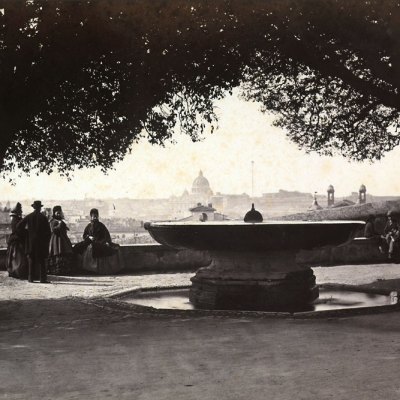
Indeed, although the show focuses on the sisters (quite apart from anything else they were jaw-droppingly beautiful), it also traces the story of the family, whose skill with a camera went way back. Founded in 1868 by Carlo’s father, Giuseppe, the Atelier Wulz had since 1891 occupied the penthouse of a palazzo on the Corso – the city’s main thoroughfare. Giuseppe, a self-made man, spared no expense on this studio, which had its own darkroom, waiting room, a vestibule with a smart chequerboard tiled floor and sweeping staircase and an ingenious system for controlling the direction and intensity of the light inside via curtains strung on a web of steel wires across the ceiling.
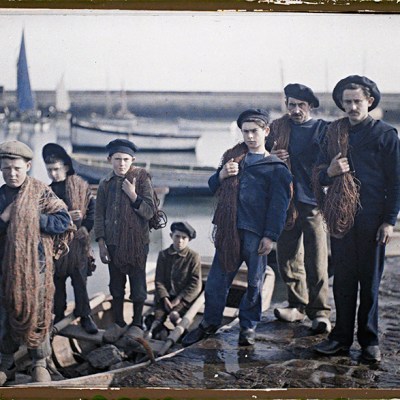
On the floor below lived the entire Wulz family. The exhibition includes a photograph of their rather narrow, rather stiffly furnished living room, but I don’t imagine the Wulzes spent much time inside it. Landscape and topographical views were Giuseppe’s principal subject. Carlo preferred portraits of the local bourgeoisie and his daughters, both as themselves and increasingly costumed and in character. About a quarter of the 125 or so pictures here at the Estorick, which are displayed over two intimate, interconnecting rooms, were taken by him.
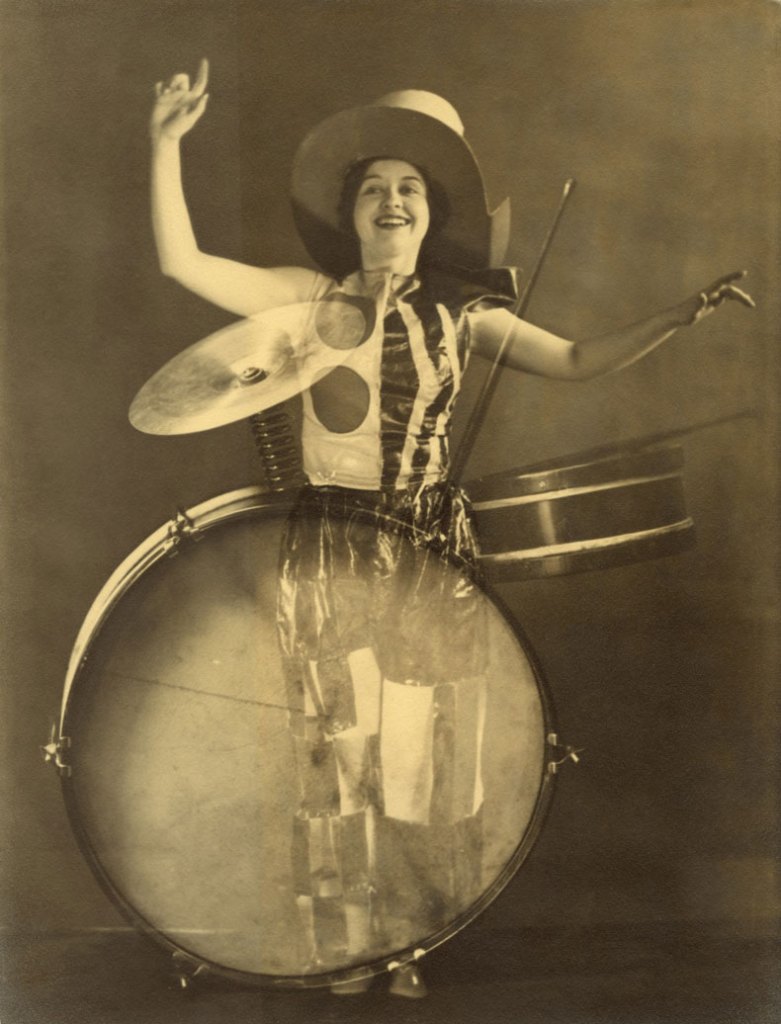
As the director of the Estorick, Roberta Cremoncini, writes in the show’s catalogue, however, what the sisters made of this studio they had inherited was entirely their own. Sitting so often for their father had equipped them with an ease around cameras and a rich understanding of image, appearance and – crucially – how these might be altered. When creating their own pictures they often enhanced the negative to flatter – adding and removing shadow, refining shapes and outlines, making skin seem smooth as marble.
The photographs chosen for display have been judiciously selected from the around 5,000 that were donated by Marion in 1981 (when the studio closed) to the Museo Nazionale della Fotografia in Florence (in 1986 these were acquired by the Fondazione Alinari archive, also in Florence, where they reside today).
In shawls, hats, wigs, fans, kimonos; in biker goggles, flapper hats and bandeaux; as Cleopatra, and in modern clothing designed by their friend Anita Pittoni, who moved into the apartment soon after Carlo died and stayed for several years – on every wall these women glow. Pittoni appears too. Indeed, the trio appear to have worked together, blending photography, dress, dance and shadow play; using close-ups, unconventional cropping and camera angles to make the familiar strange and spotlight subtle shifts in expression and gesture.
Other women artists, poets, writers and actors came to sit for the Wulz sisters too, including the Argentine painter Leonor Fini, the Italian actor Paola Borboni, the writer Pia Rimini, the Olympic fencing champion Irene Camber, the Bulgarian dancer Olga Reich and women at a school of acrobatics in gymnastic and athletic poses, reflecting the trend for gymnastics, dance and the healthy ‘free’ body of the 1930s.
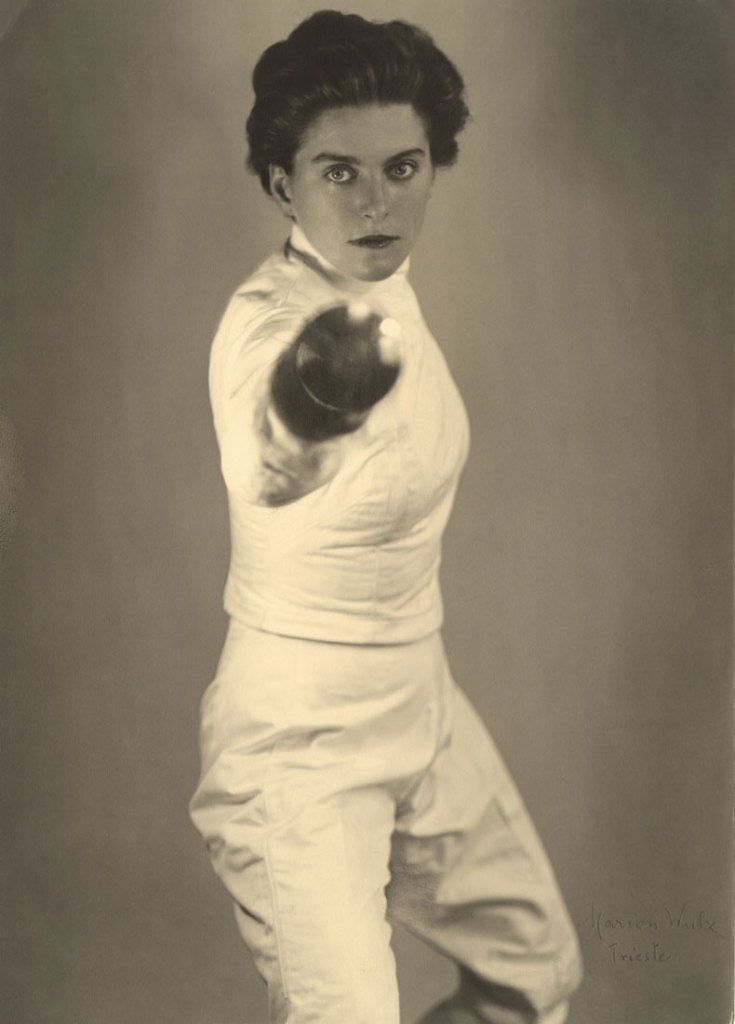
Throughout the ’30s the Atelier functioned as a sort of open house or informal salon. The sisters held musical evenings and put on plays – some of their hand-drawn playbills are displayed in a vitrine, with business cards and other scraps of studio ephemera, including documentation that relates to Wanda’s inclusion in the National Exhibition of Futurist Photography in Trieste in 1932 (she was the only woman invited to participate). Of the six photographs she showed – Futurist Breakfast, Portrait, Jazz-band, Exercise, Wunder-Bar and Me + Cat – it is the latter everyone remembers: a self-portrait overlaid with a portrait of her cat. The negatives for both are in the exhibition.
The exhibition teems with the faces of the many ordinary women who also climbed the stairs to enter the Atelier Wulz. This was a place they could be and behave as they wished and where, in the gentle hands of the Wulz sisters, they could become heavenly versions of themselves – radiant, graceful and charming – for a few hours.
After all this, the exhibition’s coda – a small display of pictures that Marion took of a shattered glass carpeting the street after a bombing raid in 1944; of tanks and soldiers in May and June 1945, when Trieste was occupied by the Yugoslav Liberation Army; and of the tangible atmosphere of expectation as the city was liberated by Anglo-American troops a month later – feel like a jolt.
What happened next? Of this the exhibition is curiously silent. We know the Wulz studio continued until 1981 but there is no work from that period on display, nor explanation of why. It seems a fair guess that the Atelier never recovered. Perhaps because the Wulz ‘look’ – lightsome, effervescent – seemed out of step with the times. Wanda’s one-time alliance with the Futurists, who had so vocally glorified war, probably didn’t help. She died in 1984, and Marion in 1993. There were years after that when no one spoke the name Wulz, when no one thought to pull their negatives out of the storage racks, or brush off the dust that settled thickly over the sisters’ reputation. The Estorick exhibition, then, which is the first to present their work in Britain, will replenish our appreciation for their particular achievement.
‘Wanda and Marion Wulz: Avant-garde Photography in 20th-Century Italy’ is at the Estorick Collection, London, until 20 December.