This review of Museums in the Wake of Empire: Global Collections in Post-War Britain by Claire Wintle appears in the September 2026 issue of Apollo.
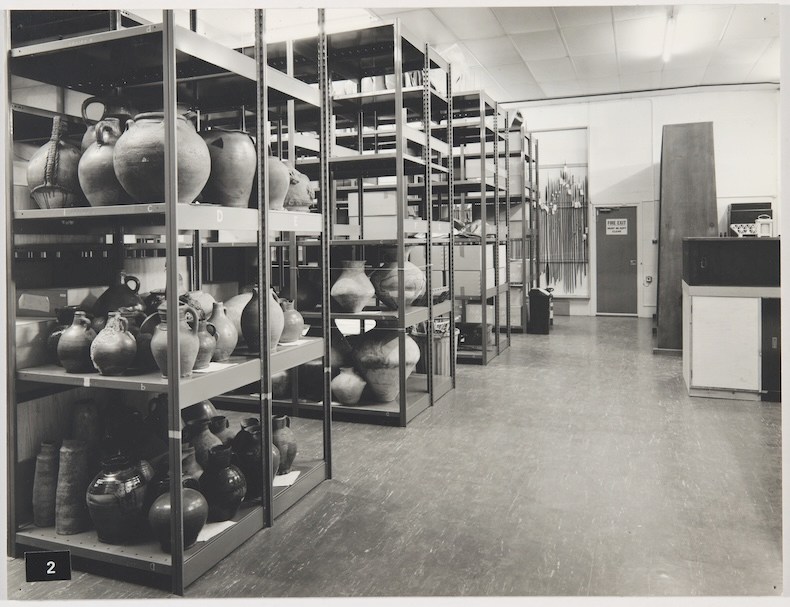
‘Some of the mummies […] they’d gone off,’ recalls Susan Pearce of her time as curator of Exeter City Museums and Art Gallery in the 1960s. ‘There were messy bits of decaying and festering mummy all over that corner of the floor.’ It would be hard to invent a more graphic example of ‘object anxiety’, the term coined by Claire Wintle in this impeccably researched book to describe the challenges that confronted museum professionals in post-war Britain. Limited staff, rationed resources and bomb-struck buildings, some of them left unrestored for two decades after the end of the Second World War, were bad. Worse were the contents of what staff at the Museum of Archaeology and Anthropology in Cambridge used to refer to as the ‘grisly cupboards’: an empire’s worth of stuff, with which curators now had to reckon.
It’s with these difficulties in mind that historians of museums have usually regarded this era in Britain as moribund, training their focus instead on the 19th and early 20th centuries or else the period after 1980, which brought more sustained critical reflection on the purpose of museums. Wintle’s contention here is that, far from standing still, mid-century museums were trying hard to keep pace with a world in which Britain’s standing was rapidly changing. They did so by modernising standards in conservation, storage, documentation and exhibition design in ways that underpin museum practice today. In the process, they arrived at multi-
faceted and often contradictory forms of dealing with what Wintle calls the ‘wake of empire’, a term that gives the lie to characterisations of the immediate postcolonial period as one of forgetting and disavowal.
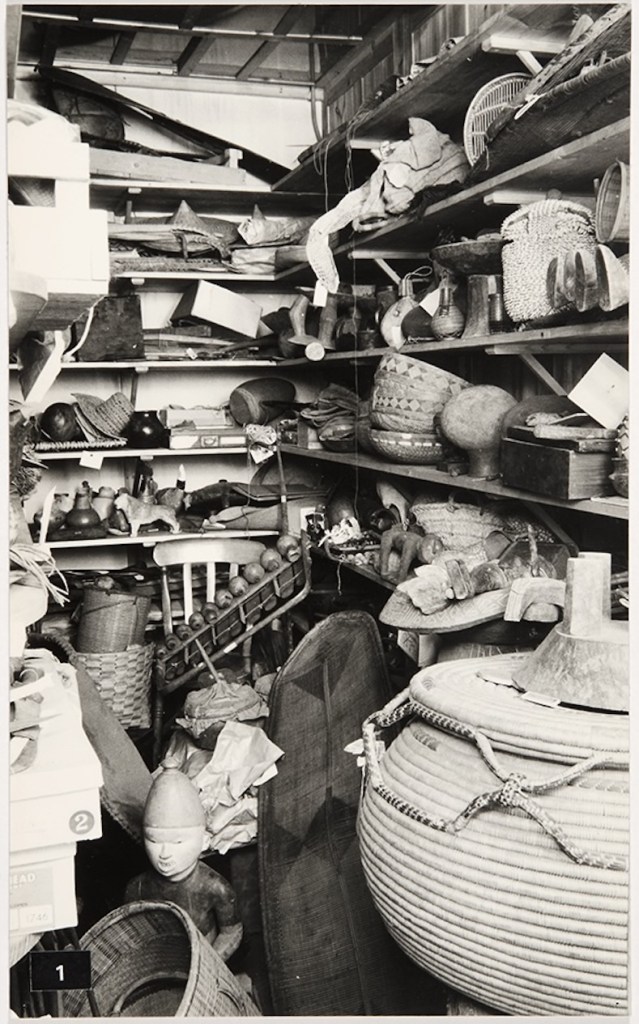
An obvious strategy for coping with unruly collections was simply to thin them out. One of Pearce’s rotting mummies met its end in a trip to the Exeter Crematorium, where Pearce was told to fill in the usual paperwork – ‘So, you know, it was sort of: “Shep en-Mut”, “died 661 BC […] Calling or profession: Carrier of the milk jar in the Temple of Thebes”.’ Fears about contamination were not always so literal. Sometimes, deaccessioning was argued for in terms that anticipate recent restitution debates: in 1964, the V&A’s Keeper of the Indian Section, John Irwin, reasoned that ‘the historical and sentimental value [of regalia looted by the British] to the Burmese is out of all proportion to its artistic value to us.’ More often than not, though, the numerous but rarely discussed acts of restitution to countries of origin that occurred during this period were motivated by racist assertions that ethnographic collections comprised what another V&A curator called ‘mountains of rubbish’, or else a corresponding wish to emphasise the ‘local’ relevance of museums, in an era fraught with anxieties about the end of empire that were often targeted at immigrants from the Commonwealth.
Yet just as museums were trying to downsize their collections, colonial officers were returning home with the ones they had amassed – and Wintle is sensitive to the manner in which the drive towards rationalisation was piecemeal and contradictory. While William Fagg at the British Museum pointed out that imperial collecting had led to ‘sporadic’ coverage with a bias towards the cultures of former British colonies, most museums opted through their acquisitions policy to play to their strengths. Sometimes museums were able to kick back against a prevailing (and still prevalent) bias towards ‘pre-contact’ material, prized for its perceived ‘authenticity’, by actively seeking out objects that represented ‘culture contact’ and so gave ‘a dynamic and moving picture […] rather than a static or frozen impression’, as one curator at the Pitt Rivers put it as early as 1949.
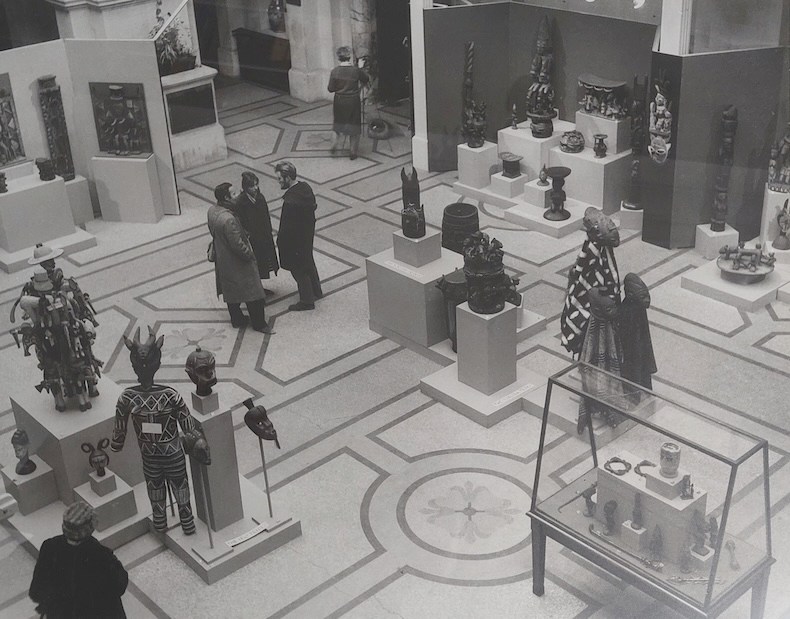
Yet the overall picture is one of entrenchment of a status quo – an effort to re-establish the feeling that knowledge was under control, which happened in tandem with ‘soft power’ strategies for reasserting financial and political influence over the former colonies. These impulses could be virtually indistinguishable, as in the British Museum’s longstanding partnership with the colonial Nigerian museum service, which, through exhibition loans and collections transfers, was instrumental in framing perceptions of Nigerian culture into the postcolonial era. In the catalogue for the ‘Nigerian Tribal Art’ exhibition he curated for the Arts Council to mark Nigerian independence in 1960, Fagg explicitly defended the plunder of Benin in 1897.
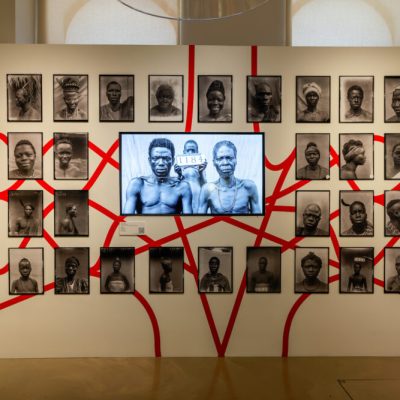
By professionalising systems for storage, conservation, documentation and exhibition design – not to mention being seen to professionalise these systems through public-relations campaigns and photographic displays – museums were constructing what Wintle convincingly argues amounted to a new system for ‘control and appropriation of Indigenous knowledge’. I sometimes found myself wishing that these broader terms might be subjected to more scrutiny; although there exists a wide and varied literature on what the critic Thomas Richards identified in 1993 as the ‘peculiarly Victorian confidence that knowledge could be controlled and controlling’, there is so little writing that reflects at any length on what happened to that specific kind of confidence once it had been knocked and was forced to mutate in order to survive.
For Wintle, however, the devil is very much in the detail. Where Richards argued in broad strokes that ideas about ‘knowledge’ in the imperial era morphed into the concepts of ‘information’ or ‘data’ in our own, Wintle instead demonstrates that the development of electronic cataloguing systems in the 1970s helped to enshrine ‘anthropological categories that had been instituted by museum ethnographers’ much earlier in the century. By attending so closely to ‘the contradictions and perhaps irresolvable positions’ inherent in how UK museums dealt with the decline of empire – and the influence they continue to exert on debates around ‘decolonisation’ today – Wintle has set an important new course. Others should follow in her wake.
Museums in the Wake of Empire: Global Collections in Post-War Britain by Claire Wintle is published by the Paul Mellon Centre for Studies in British Art.
From the September 2026 issue of Apollo.