From the July/August 2026 issue of Apollo.
‘It is thus no longer a minor thing to scorn or adopt the short-lived dictates of FASHION, for mens agitat molem: a man’s mind can be known by the manner in which he holds his walking stick.’ So Balzac proclaimed in his treatise on elegant living published in 1830 in the periodical La Mode. The following year the philosophy of clothes underpinned Thomas Carlyle’s Sartor Resartus, which included a whole chapter on the meaning of the dandy and the ‘Dandiacal Body’. From William Hazlitt’s essays ‘On Fashion’ (1818) and ‘Brummelliana’ (1828) to Giacomo Leopardi’s mordant ‘Dialogue between Fashion and Death’ (1824), it is clear that in these years the topic of dress gained unprecedented literary and philosophical purchase.
The intensity of contemporary attention contrasts sharply with the condescension of much art history towards 19th-century fashion. This disdain echoes early commentators, such as Théophile Gautier, who insisted that there was nothing ‘uglier, more impoverished, meaner and more absurd’ than the clothing of his own times, and that he pitied those portraitists who felt obliged to capture it. What emerges clearly from Susan Siegfried’s new book is not just that the early decades of the 19th century were an important moment in the production, retail and marketing of textiles, but also that these innovations registered differently depending on media. While print culture embraced the fashion cycle, painting was warier and sculpture recoiled from what David d’Angers branded ‘mannequins in a secondhand clothing store’.
Unlike those historians, such as Aileen Ribeiro, who have analysed paintings as documents of dress history, Siegfried considers the uneasy convergence between the fashion industry and the commercialised world of high art. She argues persuasively that the interest of artists in particular forms of dress in the 1820s and ’30s reflected a turn towards the ‘modern’, understood here as the ‘postclassical’, and a thirst for innovation. In contrast to the costume books of previous centuries, the fashion plates of artists such Paul Gavarni and Henri Grévedon were full of narrative interest and metropolitan specificity. Fashion was no longer understood as a supplement to the (nude) body, but as inseparable from its social existence.
The term ‘the new taste’ derives from Achille Devéria’s Le Goût nouveau (1831), 24 lithographs which feature fashionably attired women cocooned in plush interiors. Baudelaire described Devéria’s art as a ‘strangely pleasing kind of reverie’ and series such as Les Heures du jour distil the fantasy that fuelled luxury consumption. Devéria presents the modern woman as wearing 18 different outfits, to complement 18 social occasions and changing moods, over the course of a single day: an appeal to excess and perpetual novelty at a time when most bourgeois women owned perhaps five dresses.
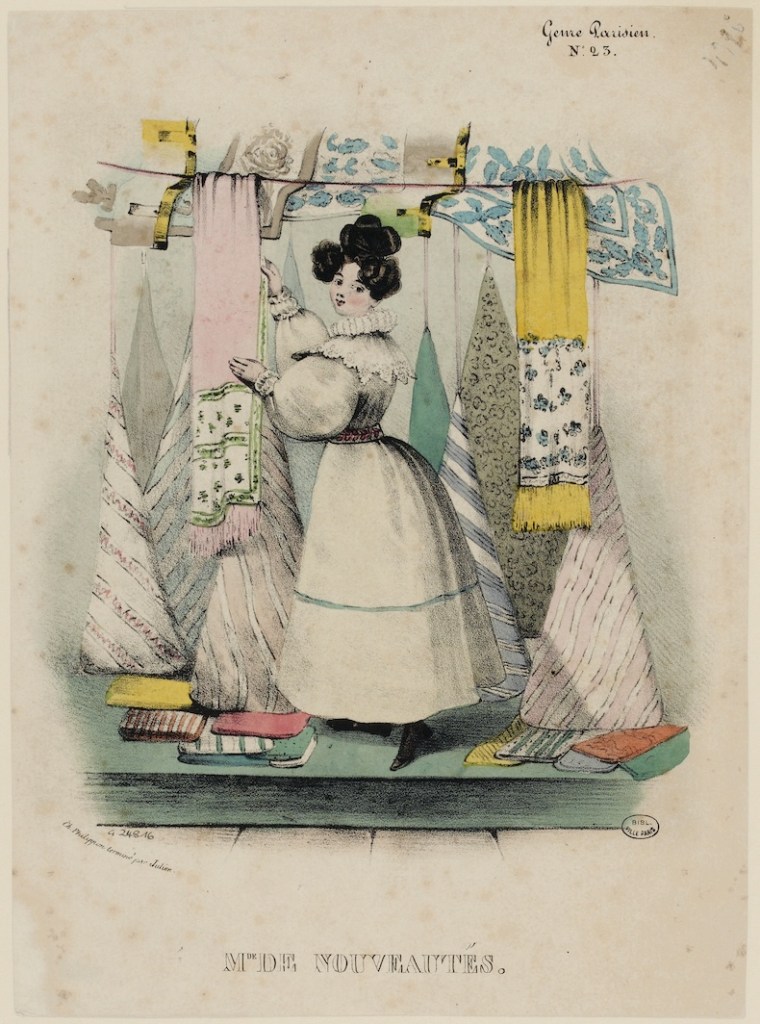
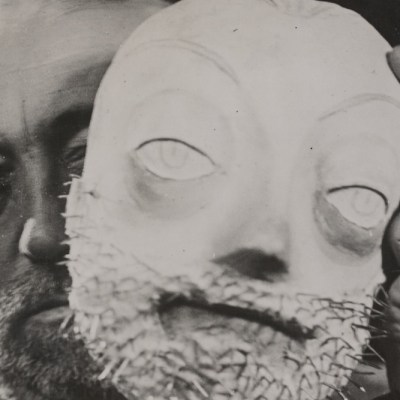
By looking into some of the wackier corners of early 19th-century print culture, this beautifully executed book reveals how fashion disassembled and remade the body. In Ferdinand Croisat’s hairdressing manual of 1832 the detachable wigs, hairless models and rows of knotted braids are a surreal indication of how coiffure aspired to the status of sculpture. Commercial print culture was also energised by the possibilities for imaginary self-projection. Charles Philipon is best remembered as a political satirist but, for La Silhouette in 1830, he produced a faceless fashion plate in which the reader could insert a piece of mirrored glass above the neck and literally envision themselves as a marquise of the old regime.
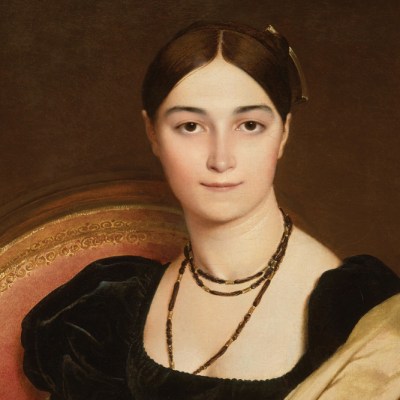
If an earlier generation of artists had clung to classical dress because it seemed timeless and followed the contours of the body, others turned to the centuries since the fall of Rome to find a new repertoire of ‘picturesque’ forms and ‘local colour’. Ingres is a prime example, immersing himself in antiquarian collections, museums and 18th-century illustrations by Bernard de Montfaucon to tap into new sources of beauty, which he believed would be ‘of great interest to our contemporaries, to whom all beauty is buyable’. Horace Vernet, too, beguilingly fused historical references with contemporary colours and fabrics. His portrait of Anna Eynard-Lullin of 1831 is one such ‘temporal hybrid’, her black beret borrowed from Raphael’s Balthasar Castiglione, her hair band a nod to Leonardo’s La Belle Ferronnière.
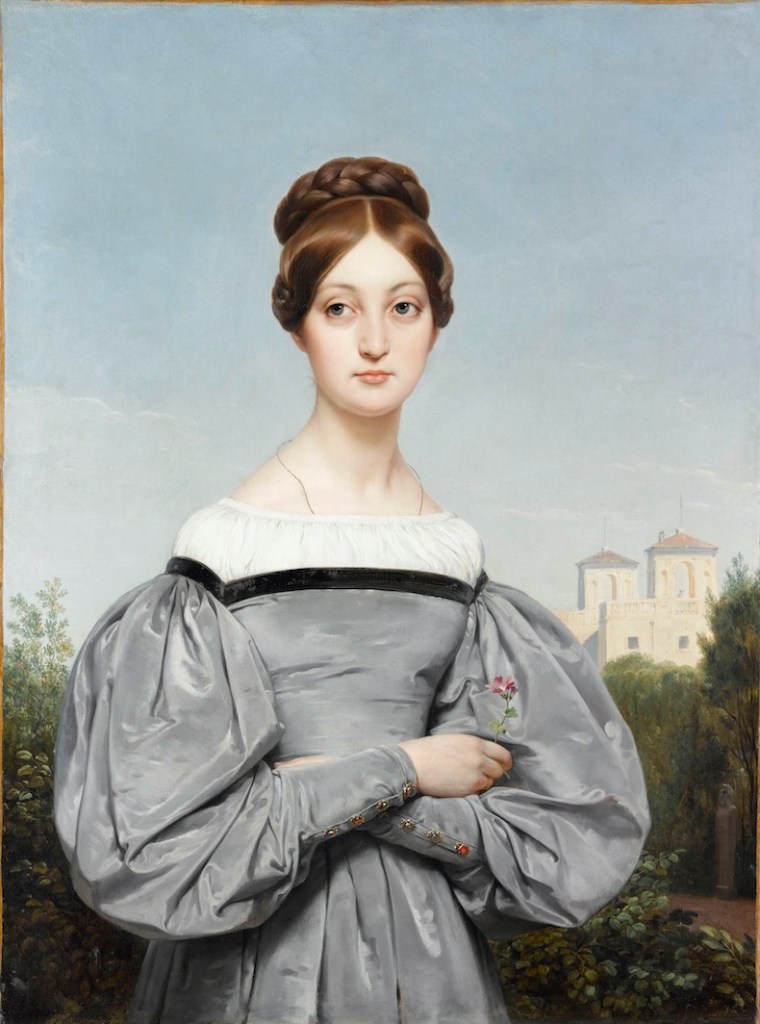
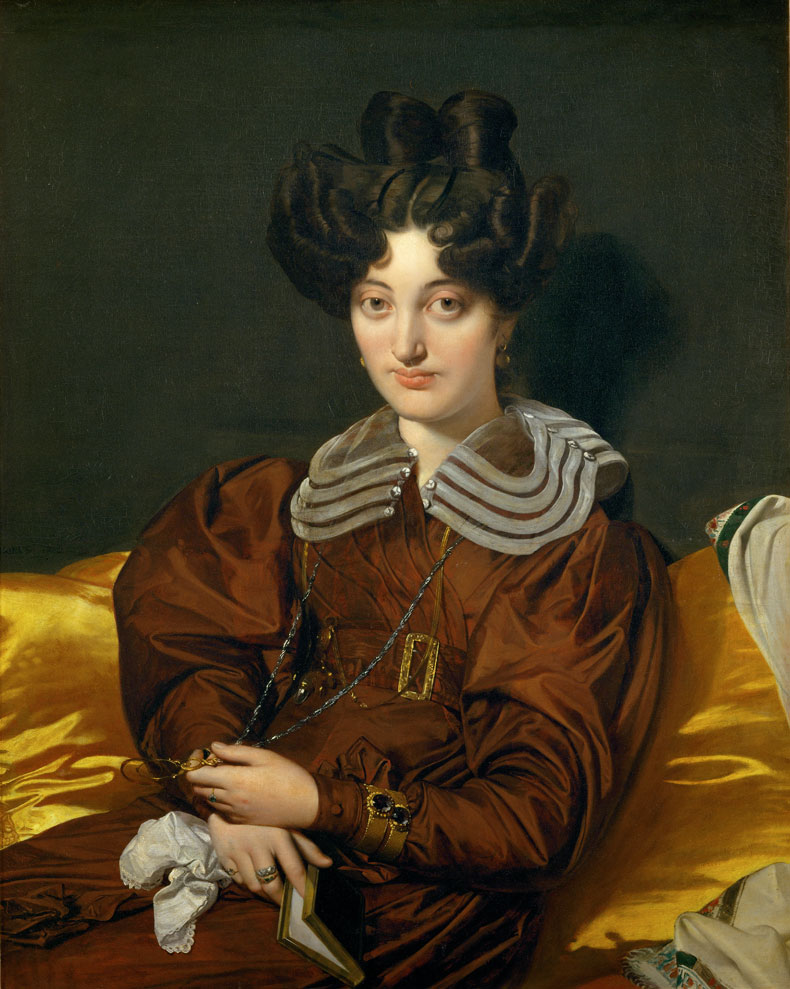
Minor sartorial details could speak volumes, such as Marie-Amélie’s large-brimmed hat, trimmed with ostrich feathers, in Antonin-Marie Moine’s marble bust, or Madame Marcotte’s deflated gigot sleeve and irregular silhouette in Ingres’s great portrait in the Louvre. Siegfried shows how fundamental fashion had become to the task of representation and why it generated controversy. In his report on the Salon of 1831, Heinrich Heine alleged that the world-historical significance of Oliver Cromwell’s encounter with the dead Charles I was articulated through Delaroche’s treatment of their clothing: ‘gloves of dirty yellow leather’ as opposed to ‘the elegance of a dazzling shirt garnished with Brabant lace’. Two years later, Ingres’s portrait of Monsieur Bertin wowed critics not just because of its naturalism but also because of the ‘rumpled and stretched’ clothes that sat ‘uneasily on Bertin’s bulldog frame’.
Through her inventive readings and rich cultural analysis, Siegfried joins those scholars calling for a reappraisal of the 1820s and ’30s, a neglected era compared to the Revolution and Empire on one side and Impressionism on the other (at which point fashion was thoroughly assimilated into the fine arts). It is precisely because of the ‘indeterminacy and transitoriness of this in-between period’ that its visual culture is so surprising. Fashion and the fine arts were indissolubly but uncomfortably bound together, throwing media, genres and genders into flux. It was with a discussion of old copies of the Journal des dames et des modes, after all, that Baudelaire opened his aesthetic manifesto ‘The Painter of Modern Life’ (1863), a survey of French costume that evolved into a meditation on the ‘rational and historical theory of beauty’.
The New Taste: Fashion and Art in the 1820s and 1830s by Susan Siegfried is published by Yale University Press.
From the July/August 2026 issue of Apollo.