From the July/August 2026 issue of Apollo.
The American Revolution was well within living memory when the first museum in New York City was established on 20 November 1804. Its 11 founders, all prominent New Yorkers, had experienced the tumultuous years of the fight for independence and wanted to be sure that the complexity of this history as it connected to the state and the country as a whole would be remembered. It was the second state historical society formed in the country, after the Massachusetts Historical Society established in 1791. In a public address issued in 1805, the founders of the New-York Historical Society observed that already there was a ‘paucity of materials’ that ‘relate to the first settlement and colonial transactions of this state’. There was an urgency, then, to collect and care for what would be of value for future historians of this current era, as ‘without the aid of original records and authentic documents, history will be nothing more than a well-combined series of ingenious conjectures and amusing fables.’
‘It was really quite extraordinary for these men to say that what should be collected and preserved and disseminated for the future should be the history of their own particular moment,’ says Louise Mirrer, the current president and CEO of the cultural institution. ‘Today, we continue to collect and preserve around our own historical moment, recognising that history is not simply what happened in the past but what is happening all the time.’
Now known as the New York Historical after the dropping in 2024 of its hyphen and ‘society’ in recognition that it is no longer a member institution as it was in the 19th century, it is marking the 250th anniversary of the signing of the Declaration of Independence with a major expansion and a series of exhibitions. These draw on its now expansive holdings, as the New York Historical describes itself as ‘a museum of museums and a collection of collections’.
‘When we were established, there was no New York Public Library, there was no Metropolitan Museum of Art,’ says Valerie Paley, senior vice president and director of the museum’s Patricia D. Klingenstein Library. ‘There were no other repositories for collections to be housed and used by researchers and seen by the public.’
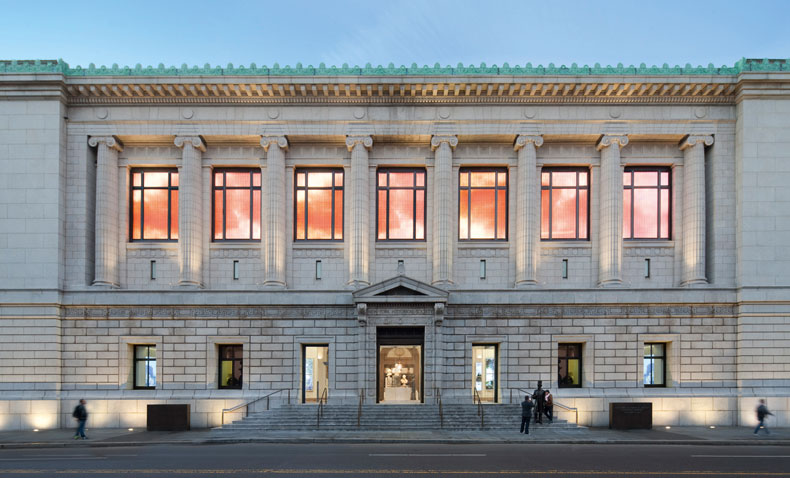
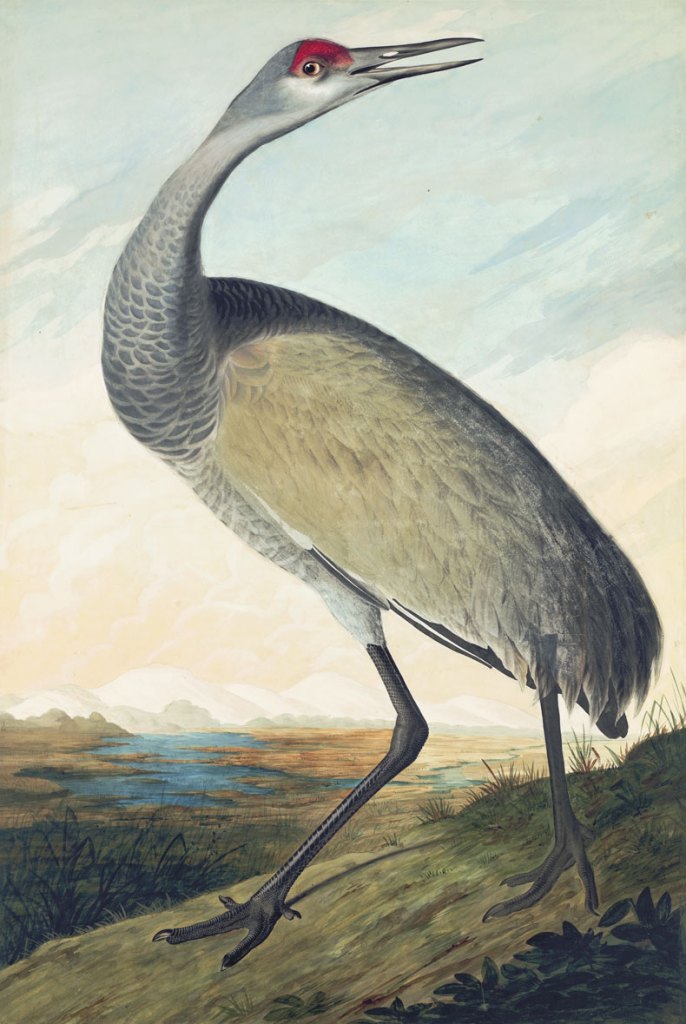
By 1813, the museum’s first catalogue listed around 4,000 objects, including books, manuscripts, pamphlets, maps, prints, newspapers and portraits in oil. As its focus broadened from that initial concentration on the Revolutionary era, the New York Historical has acquired everything from the original watercolours John James Audubon made for his landmark publication The Birds of America to the mural ceiling of Keith Haring’s Pop Shop. An entire luminous gallery now presents 100 lamps from the New York-based Tiffany Studios, while Pablo Picasso’s Le Tricorne (1919), a painted theatre curtain that once presided over the Four Seasons restaurant in the Seagram Building on Park Avenue, is the showpiece in one of the halls dedicated to the permanent collection. Across the galleries, fine art is presented alongside ordinary objects that are extraordinary for the history they tell. A cot used by George Washington to camp at Valley Forge and the controller used for the maiden subway ride in 1904 mingle with a Central Park trash can from the 1980s and Hudson River School paintings by Thomas Cole and Frederic Edwin Church.
‘We tell the story of the nation as reflected through our collections, which from their very foundational moment were aspiring to something larger than just whatever was local at the time,’ Paley says. ‘Our charter is the history of the nation through the particular lens of New York.’
The museum’s dedication to collecting what is happening now endures. Mirrer recalls that on 12 September 2001, the day after the attacks on the World Trade Center, her predecessor Kenneth T. Jackson and his staff began the process of documentation ‘because he recognised that in the midst of tragedy, people were going to want to know what happened on that day, and the only way they’d be able to know is if the effects of that historical moment were collected and preserved’. Objects relating to the Occupy Wall Street movement, the Covid-19 pandemic and the Black Lives Matter protests have subsequently been added to the collections.
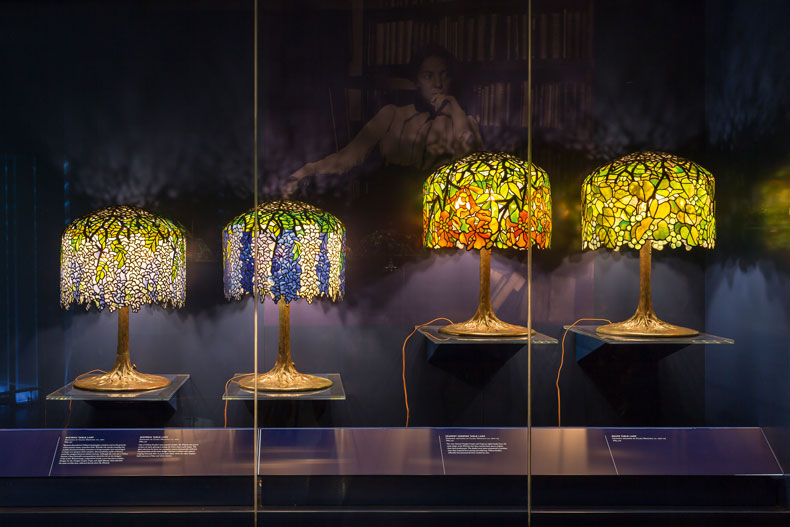
Before relocating in 1908 to the New York Historical’s present site on the Upper West Side, the museum was itinerant, moving through several Manhattan homes. Predating other major collecting institutions in the city, it also acquired and later shed some collection oddities that didn’t quite fit its founding mission, such as Assyrian relief carvings and ancient Egyptian artefacts that were transferred to the Brooklyn Museum in the 1930s. The initial building designed for the location at Central Park West and West 77th Street was by architectural firm York & Sawyer; it was expanded in the 1930s by architects Walker & Gillette, who seamlessly extended its grand Beaux-Arts facade. Life-size bronzes of Abraham Lincoln and Frederick Douglass now welcome visitors on the entrance steps, setting the tone from the beginning that this is a museum about American history from a New York point of view.
On 18 June 2026, the Tang Wing for American Democracy opened, fully expanding the museum complex on its block to West 76th Street with 6,600 square metres. Yet passers-by might not even notice this new addition, as the five-storey wing, which involves both new and renovated space, quietly weaves into the existing architecture of its residential block, even maintaining the same wall height as the neighbouring townhouses. The building’s granite was sourced from the same Deer Isle quarry in Maine that is used for the historic architecture, so the only discernible difference is its bright cleanliness compared to the more weathered neighbouring stonework exposed to decades of urban grime. Classically inspired copper ornaments that match those of the historic sections of the museum top its walls and will eventually have the same jade-green patina. Designed by Robert A.M. Stern Architects (RAMSA), the $175 million project started construction in 2023. Its funding included a major gift from longtime supporters Oscar L. Tang and Agnes Hsu-Tang, chair of the board of trustees. Galleries, classrooms, a conservation lab, library facilities and a rooftop garden with native flora are all part of its design. An interior 300-square-metre sculpture garden will feature life-size statues by artist Kim Crowley of Alexander Hamilton and Aaron Burr fighting their fateful 1804 duel.
The wing is one of the last works by Stern, who died in 2025. Besides being a thoughtful architect of understated design that foregrounded its urban context, he was an eminent historian of New York City architecture, co-writing massive compendiums on different periods of its evolving built environment, the final being the 1,500-page New York 2020 (2025). He was a regular researcher in the collections of the New York Historical, which include the records of influential New York architecture firms such as McKim, Mead & White and Cass Gilbert.
‘He knew this institution through and through,’ Mirrer says of Stern. ‘He used the collections, and he always believed that this institution needed more space to fully exploit the power of its collections. He also believed in the integrity of a building and respect for previous architects who’d worked on the building. And he believed in the need to be respectful as well of neighbourhoods.’
Although from outside the wing does not make any showy statements, inside, it offers a modern, airy interior illuminated by large windows designed to filter direct sunlight to protect the art and objects on view. The emphasis on loftiness and high ceilings continues into the new classroom spaces for the Academy for American Democracy, which serves sixth graders in a programme that addresses gaps in learning about American history, and the Dorothy Tapper Goldman Center for Teaching Democracy, which connects educators, museum professionals and other scholars in exploring lively ways to teach about democracy.
‘It really mirrors our commitment to telling the story of democracy, because that is what democracy is: it’s a soaring ambition not fully realised yet in this nation,’ Mirrer says. ‘But we struggle towards a more perfect union and we strive to embrace all Americans in the rights that they are supposed to have as Americans in a democratic government.’
One of the first works visitors encounter on entering the new wing is Contact 2,021 (2021) by Shinnecock artist Courtney M. Leonard. The ceramic piece was made with the artist’s own thumbprint pressed into numerous curves of clay that make up a map of New York and the Hudson River, affirming the presence of Indigenous people there. It’s part of a major gift of 150 works of Native American contemporary art announced earlier this year from the Tangs, and furthers the museum’s commitment to curating Indigenous art and objects within American art and historical narratives that are not separated in their own galleries. For instance, in 2023 an exhibition presented paintings by Cherokee artist Kay WalkingStick alongside 19th-century Hudson River School paintings that depict the rustic scenery of New York as something uninhabited and untouched, despite centuries of Indigenous life on the land.
‘The story of women’s history, the story of LGBTQ+ history, the story of civil rights, the story of Indigenous peoples, for us they’re all part of a national narrative, and that’s how we want visitors to the new Tang Wing to understand history,’ Mirrer says. ‘We’re not Pollyanna-ish, we fully understand that we live in a time when some people seek to divide us, but we all are part of an American experiment that happened 250 years ago, and that has entailed the histories of all these peoples, all Americans.’
This consideration of the diversity of American history extends to materials in the museum’s library, one of the country’s leading research repositories. It holds some 10 million items dating from the 16th century to the present day, including manuscripts, prints, maps, photographs, and architectural drawings. Its recent additions include the archives of Robert Caro, author of definitive biographies of Lyndon B. Johnson and Robert Moses, which were acquired in 2019, and of the New York Times fashion photographer Bill Cunningham, acquired in 2025. The Tang Wing has new storage facilities that improve on the previous stacks, which dated to the 1930s. The museum can also now house more materials on site, increasing access for researchers who visit the wing’s new reading room, which complements its historic neoclassical reading room.
‘There’s always been kind of a loose divide between museum and library, and yet we all reside under this one colossal unit which is New York Historical,’ Paley says. ‘Our capacity to use collections in all their glory is much more amplified by the new wing and certainly signals to the rest of the world that we’ve made a commitment to using these collections to tell the American story.’
The enhanced facilities include a new 230-square-metre conservation studio on the lower level of the new wing, where art, artefacts, and paper-based items such as manuscripts can all receive care. As Paley explains, previously there were multiple smaller conservation areas and an offsite location used for paintings and other larger objects, but never one contiguous space with its own state-of-the-art equipment. Its position in the new wing also provides new visibility for this often unseen side of museum work.
‘A lot of the public doesn’t realise that anything we put on view has to meticulously go through our conservators,’ Paley says. ‘So conservation is such an important part of our operations, and this blends the library and museum conservation under one spectacular space, which has windows that look on to our sculpture garden so that the public can see what’s going on there.’
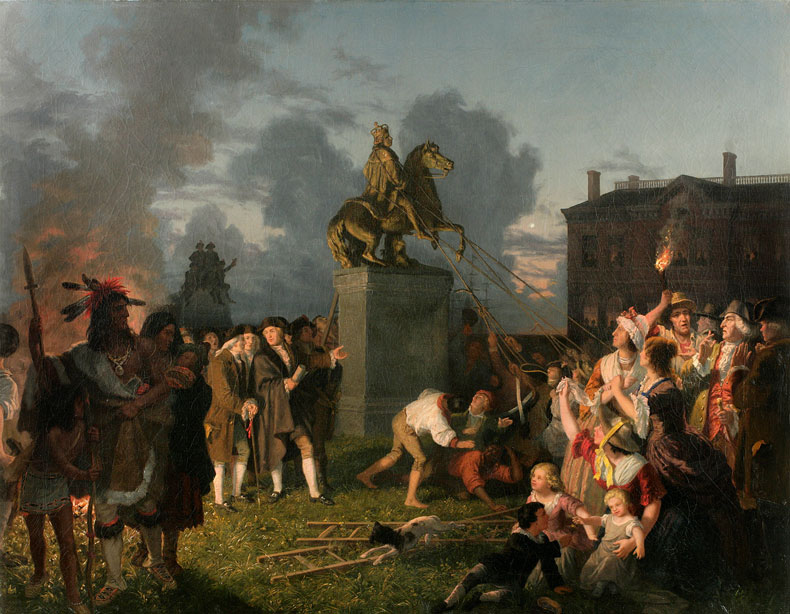
More works than ever before will be on view from the permanent collection, including in ongoing displays such as the Stuart and Jane Weitzman Shoe Museum, with 150 pairs of footwear representing women’s histories, and an installation on sculptor and folk art collector Elie Nadelman with 19th-century weathervanes and historic carved milliner’s heads alongside Nadelman’s own art. Leading the exhibition series timed with the 250th is ‘Democracy Matters’, the first major show in the Tang Wing. Featuring selections from the permanent collection, it examines what American democracy means and who has been included and excluded from it across the decades, from remnants of a statue of King George III that was destroyed by revolutionaries in 1776 to Compositional Study for Sacred Fire (2025), a painting by Cree artist Kent Monkman, which recognises Indigenous resilience amid the assimilation programmes for children forced to attend Indian Boarding Schools.
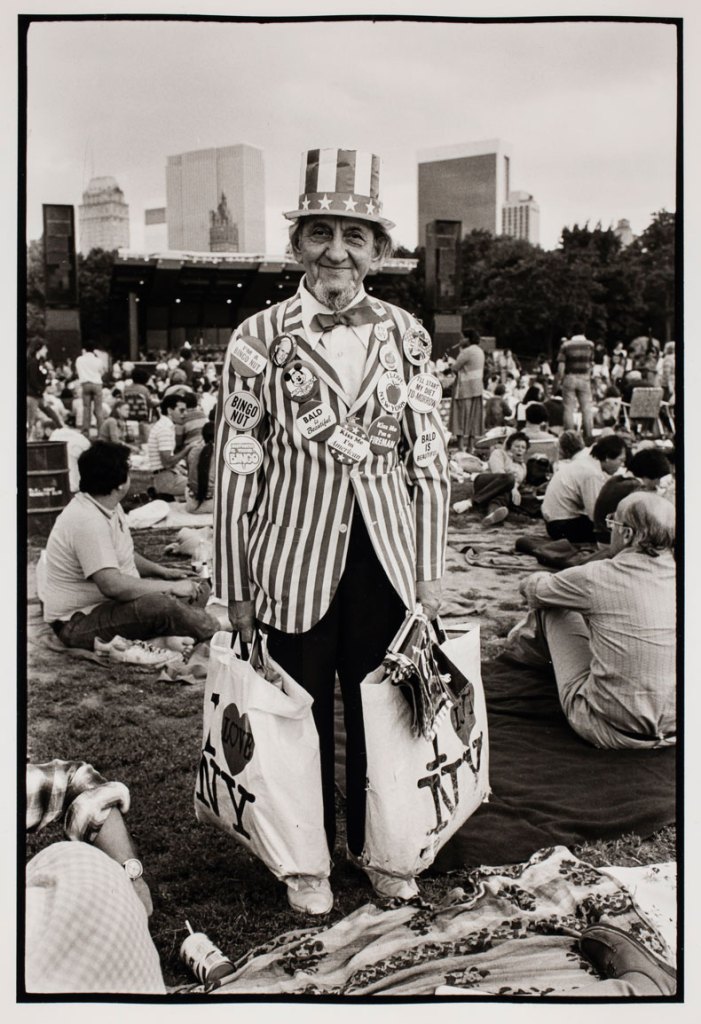
Elsewhere in the museum is ‘House Made of Dawn: Art by Native Americans, 1880–Now’, displaying work by Indigenous artists from the Tangs’ promised gift. ‘Old Masters, New Amsterdam’ reflects on the city’s Dutch colonial roots through works by artists such as Rembrandt and Frans Hals, and ‘You Should be Dancing: New York, 1976’ revisits the city during the days of America’s 200th celebration. ‘Revolutionary Women’ in the Jean Margo Reid Center for Women’s History, one of those museums-within-the-museum opened in 2017, highlights new discoveries from the New York Historical’s collections on women’s contributions and experiences during the Revolutionary War.
‘I think in a lot of ways this exhibition is a love letter to archives and to our archival collections in particular,’ says Anna Danziger Halperin, director of the Center for Women’s History and a curator of ‘Revolutionary Women’. ‘One of the arguments of the exhibition is that you can find women’s history when you’re looking for it.’
This investigative work included examining those Revolutionary-era documents, such as ledgers from the Tontine Coffee House, an early cornerstone of New York’s Financial District, revealing the active involvement of Jewish merchant Rebecca Gomez. Some of the ‘Revolutionary Women’ displays reframe how these documents might have been viewed in the past, such as highlighting the names of women who served as hospital matrons on an account of pensions paid for military service. Newspaper missives on escaped enslaved people offered insight into the undertold stories of Black women who were self-emancipating as they travelled to New York.
‘The founders in 1804, they had their own perceptions of what’s important,’ Danziger Halperin says. ‘Our perceptions of how we catalogue things and what stories we pull from them, that changes over time. But the documents are always there, and you can read them to find those voices, even when the original authors might not have seen it themselves.’
Late next year, the American LGBTQ+ Museum is to open on the top floor of the Tang Wing, another step in enriching the history represented at the museum with perspectives that its founders may not have deliberately included but can be celebrated through its collections. Especially in a time when the federal government under the Trump administration has attacked the representation of the country’s history, issuing executive orders that have led to the erasure of stories of injustice and diversity in federally funded places of public history, creating these kinds of museum spaces affirms the importance of including all American people in its history. And just as it has from the beginning, the New York Historical is preserving that vibrant, nuanced and often difficult history through caring for its artefacts. As Mirrer says, ‘For anyone who wants to invent an American past that didn’t really happen or a national story that defies authenticity, these documents really push back against that and really underscore that our nation has a will towards democracy and that is the truth.’
From the July/August 2026 issue of Apollo.