Ten years ago, after a lacklustre London evening sale at Sotheby’s, a senior specialist walked up to a group of (somewhat surprised) journalists and asked: ‘Do you think it’s possible for Impressionism to permanently fall out of fashion?’
A decade on and, looking at this week’s auctions in New York, it seems that the answer is no. At least for now. We may keep expecting blue-chip Impressionism and post-Impressionism to fall from fashion, especially given the sheer volume pouring out of estates at the moment, but with a still-depressed contemporary market the comfort of Impressionism offers something of a safe haven.
‘There’s been a clear shift, in the evening sales especially, towards historical Impressionist and modern art – and some great Pop – but certainly away from the very contemporary stuff,’ observes the art advisor Todd Levin. Of course, that is in part due to the mind-boggling number of estates that continue to flood the US market, reflecting the wealthy Silent Generation and Baby Boomers’ taste for, and access to, great European Impressionism, as well as modern and post-war American art.
And there is just so much of it. So far this week around 1,860 lots have been sold across Sotheby’s, Christie’s and Phillips in New York, for a total of over $2.1 billion, all against the backdrop of the recent ‘blue wave’ mid-term election results in the United States and stock market volatility (the huge Anthropic IPO took place on Thursday). ‘The stock market volatility could have a number of people feeling rather shy and sitting on their hands, or maybe just not stretching as far, and that would not surprise me at all,’ says the advisor Megan Fox Kelly.
The collections sold this week included 24 post-war and contemporary works from the collection of the cable TV pioneer Theodore Baum and his wife Ruth, which sold for $110m at Sotheby’s on Monday evening, alongside the Hedreen collection, which totalled $115.2m. That night, single-owner collections accounted for 60 per cent by value of the $378.7m the auction house made in their evening sales on Monday.
On Thursday, in its 21st-century art sale, Christie’s sold 20 lots from the collection of Antonio Homem, the late director of Sonnabend Gallery, for $41.9m (the hammer was $33.4m, below the $35m–$53m estimate) and 10 works from the estate of the New York philanthropist Agnes Gund, which totalled $25.7m.
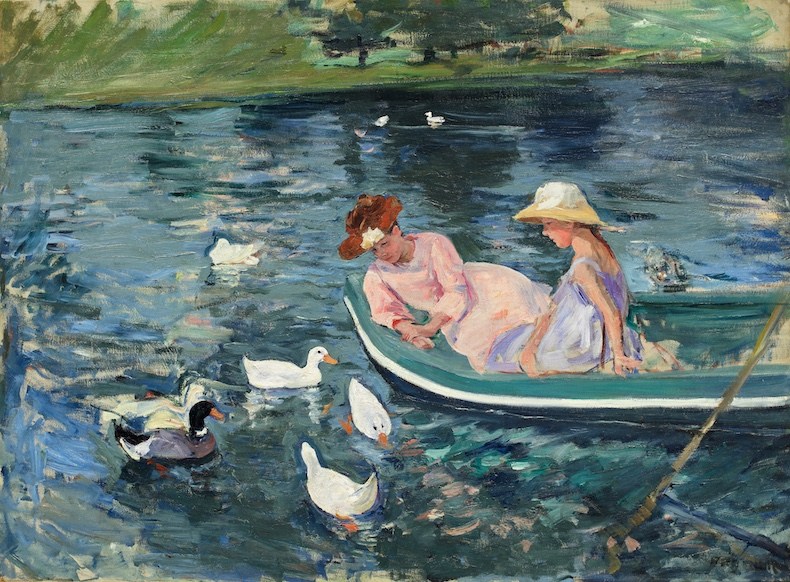
This week Sotheby’s also sold 12 works from the collection of the oil tycoon Armand Hammer, including the beautiful Summertime (1894–95) by Mary Cassatt, depicting a mother and daughter feeding ducks from a rowing boat, which set a new artist record when it sold for $13.3m (est. $7–$10m) on Wednesday evening, almost double the artist’s previous record of $7.5m. It was one of some 17 lots that sold to Asian buyers.
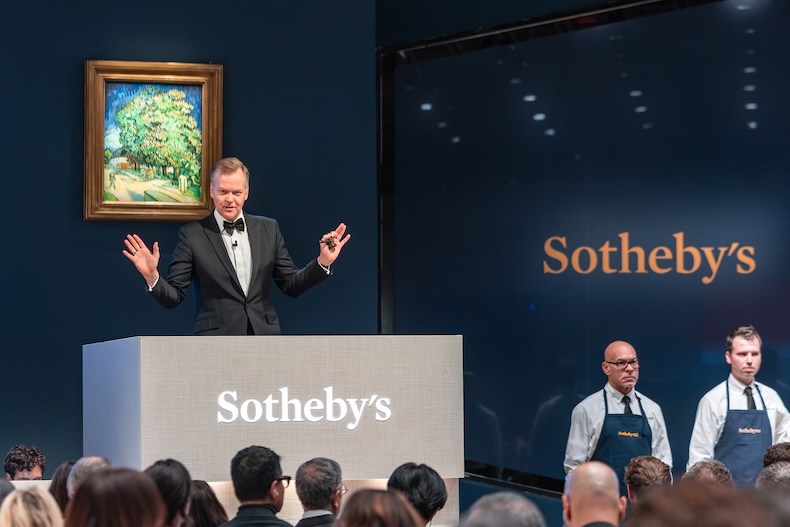
And then there was the Blaquier-Arrieta collection, 12 extraordinary works reminiscent of a mini Courtauld collection, which sold at Sotheby’s on Wednesday night for a total of $412m – the highest total for a single-owner evening sale of Impressionist and modern art at Sotheby’s. A huge amount, but the hammer total of $358m was almost $100m below the ambitious pre-sale estimate of $450m – and the whole lot was guaranteed.
Immense wealth is rarely squeaky clean, but some is grubbier than others. It is hard to banish that thought looking at the Blaquier-Arrieta collection, formed by Carlos Pedro Blaquier and Nelly Arrieta de Blaquier and sold by their children. The money originally came from sugar – Nelly was the daughter of the president of the huge Argentine sugar company Ledesma, which Carlos led from 1970 to 2013. But during their so-called golden period of collecting in the 1970s, when the couple were going on buying trips to London, scooping up masterpieces from the Lefevre Gallery, sinister happenings were going on at home. In 2012, Carlos was charged with the unlawful detention of dozens of opposition activists one night in 1976, during Argentina’s military occupation. Witnesses recalled the activists being rounded up using Ledesma vans during the so-called Night of the Blackout and survivors say that they were incarcerated and tortured at the company’s premises. Up to 55 of them were never seen again, presumed dead. Held up by numerous appeals, the case never got to trial before Carlos died in 2023, aged 95. All bar three of the works in the Sotheby’s sale were bought between 1975 and 1979, a fact that sticks in the throat.
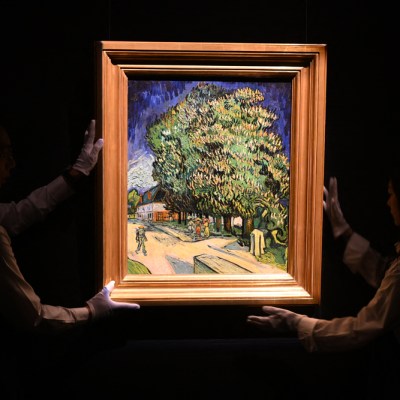
This murky background aside, the run-up to the auction was tumultuous. The much-publicised top lot, Châtaigniers en fleurs (‘Chestnut trees in blossom’) (1890) by Van Gogh – estimated at around $180m –was suddenly subject to a claim by the descendants of its former owners, Hedwig and Samuel Fischer, who asked Sotheby’s to prove that the Jewish couple had not been forced to sell the work in 1936 when they fled Nazi Berlin for Vienna. The Fischer heirs demanded that the work be withdrawn, but a settlement was reached on Tuesday (the terms of which are undisclosed) and the auction went ahead. The painting sold to the New York dealer Bill Acquavella for a record $190.4m after five minutes of bidding – despite that, it still went below the estimate in hammer terms, at $165m.
The Blaquier-Arrieta works were estimated (and guaranteed) to the eyeballs, no doubt thanks to a tug-of-war between the Christie’s and Sotheby’s duopoly. As Levin says, these big collections are now secured by offering a global price guarantee, the value of which is then apportioned to the individual works within it: in essence, putting the cart before the horse. This creates bloated estimates, held up by guarantors and resulting in thin bidding in the room, as happened with the Blaquier-Arrieta sale, which took place in a damp atmosphere at odds with the big numbers on paper. How much more impressive would that Van Gogh result – the highest auction price ever achieved for one of his works – have been if it had flown over a lower estimate rather than scraping over a puissance wall?
Only one of the 12 Blaquier lots went over its low estimate and that was the one carrying the lowest: Camille Pissarro’s snow scene Maison de Piette à Montfoucault, effet de neige avec un homme portant un fagot (1956), which sold for $2m including fees, against a $700,000–$900,000 estimate. ‘I would imagine that, by the time the dust clears and the accountants sit down to go over it, Sotheby’s will have lost tens of millions of dollars on that sale,’ Levin says.
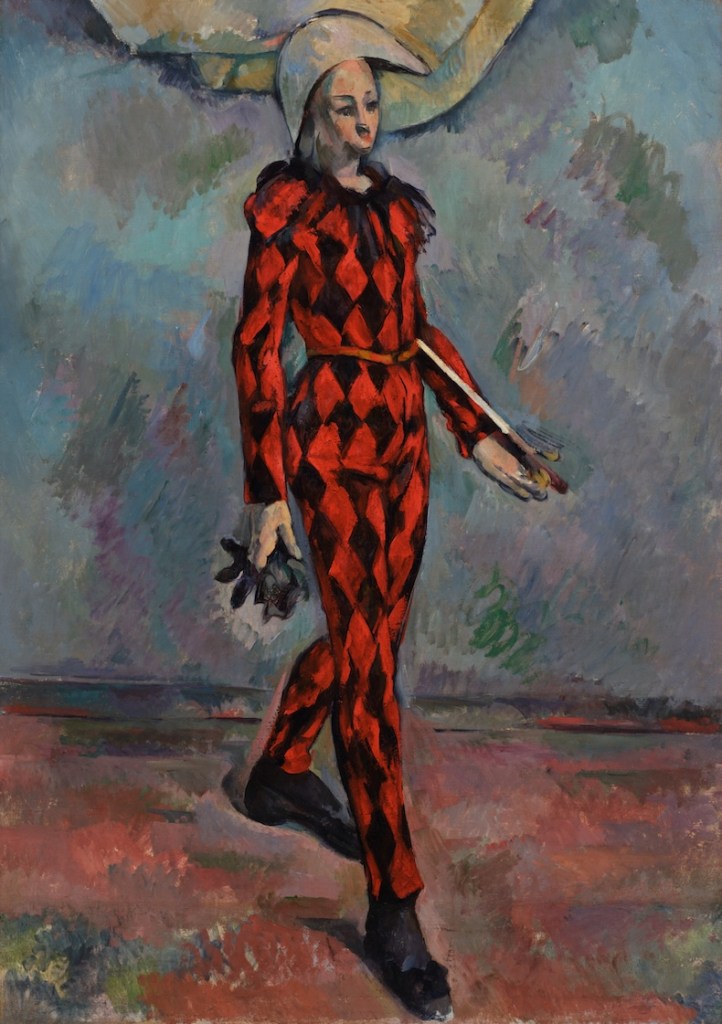
Personally (and I’m far from alone) I would have chosen the Cézanne painting of an enigmatic harlequin (1888–90) above the Van Gogh. One of only four paintings of a harlequin ever painted by Cézanne, it went for $111m, which, even including the fees, was well below the $120m estimate. That is still the second highest price ever paid for a Cézanne at a public auction (although in 2012, The Card Players reportedly sold in a private deal to the Qatari royal family for more than $250m).
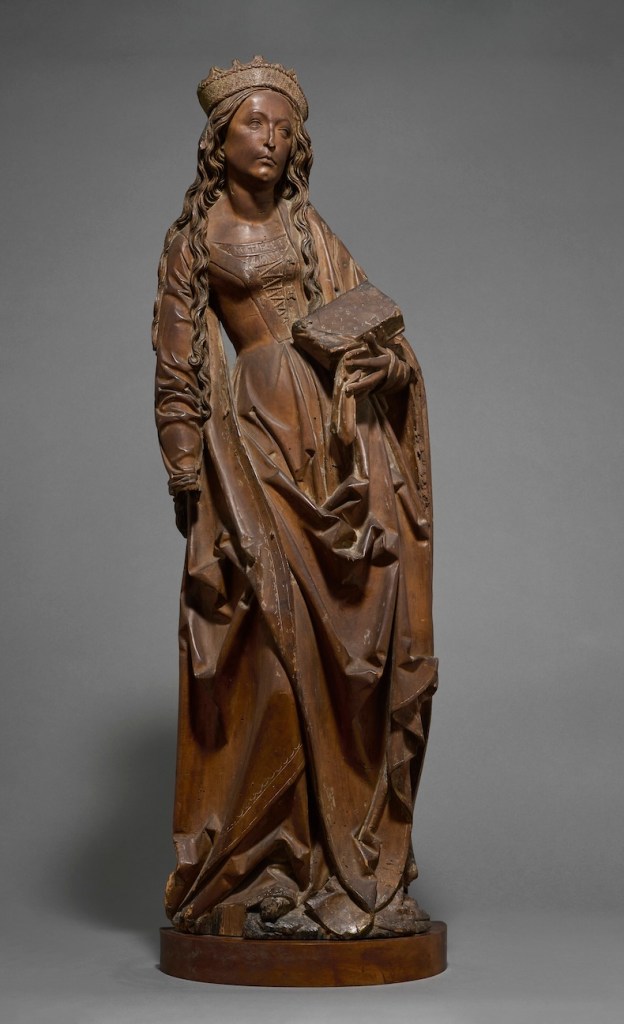
For Levin, the criminally good buy of the week was a spectacularly carved wooden sculpture of Saint Catherine (c. 1505) by the late gothic master Tilman Riemenschneider, part of a group of works from the collection of the artist Jeff Koons sold at Christie’s on Tuesday. It hammered on its low estimate of $4m ($5.6m with fees). Koons paid $6.3m for it in 2008. ‘That’s a masterpiece at $4m,’ Levin says, incredulous that ‘you can’t even buy a [Yoshimoto] Nara for $4m.’ In fact, last night a Nara sold via former-Christie’s employee Loïc Gouzer’s auction venture Fair Warning for $15.9m. While Levin meant no disrespect to the Japanese artist, it is surely madness that you can buy a 500-year-old Riemenschneider, which was on loan to the Metropolitan Museum of Art for eight years, for a third of the price of one bug-eyed Nara made 15 years ago.
Equally bonkers in comparison, on Monday night at Sotheby’s another wooden sculpture – this time not from Koons’ collection but by his hand – sold for an extraordinary $9.7m (with fees). Bob-Tail (1991), an endearing Old English Sheepdog, had been estimated at $2.5m–$3.5m, but dog-mad bidders went panting after it. Francis Outred, formerly at Christie’s and now an art advisor, commented on his Instagram that it had been bought by his ‘old college friend’ for a five-figure sum from the London dealer Anthony d’Offay in 1995, and had since stood by the front door of her house, greeting visitors, tongue lolling. Reactions ranged from ‘what an extraordinary story’ to ‘the shit people buy’, and both are true.
Christie’s top lot of the week was Wassily Kandinsky’s beautiful Bauhaus period Betonte Ecken (1922–23), which was once in the Guggenheim collection. Reportedly being sold by the all-powerful Nahmad family of dealers, it sold for $85.8m in the 20th-century evening sale on Monday night, almost double the previous record for a Kandinsky of $44.8m. Offered with the same estimate of $60m–$80m was a landscape by Gustav Klimt, Litzlbergkeller (1915–16), which went for $82.3m. It was previously owned by the dealer Serge Sabarsky, who co-founded the Neue Galerie in New York with Ronald Lauder. In the same sale was a rediscovered landscape from 1930 by Georgia O’Keeffe, Near Abiquiu, New Mexico I, which was found earlier this year hidden under coats in a Manhattan apartment by the niece of its owner. ‘Oh, by the way, there’s a Georgia O’Keeffe in the closet,’ the aunt had casually said. Estimated in the region of $3m, it sold for $4.9m. So, for every nine-figure collection bought with questionable means, you get a work like this – bought for an ‘ultra-intelligent’ woman who worked for the Foreign Service by her mother as a graduation present in 1963, for $3,800.