Drawings are so often overshadowed by paintings. But not last week in New York, where two bijoux drawings were the main talking points of the annual winter Old Master sales.
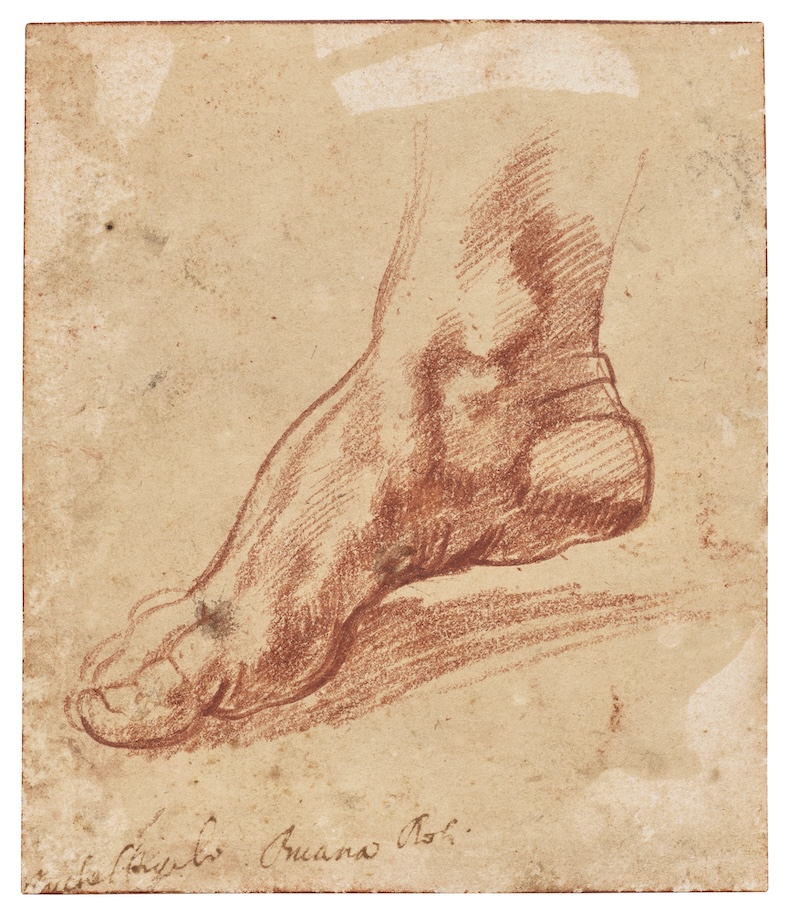
At Christie’s on 5 February, a tiny red chalk study only recently attributed to Michelangelo became the most expensive foot ever sold. An unnamed collector in Northern California submitted a photograph of the drawing last February through Christie’s online valuation tool. It was spotted by Giada Damen, head of the Old Master drawings sale at Christie’s, who recognised it as a study by Michelangelo for the right foot of the Libyan Sibyl that appears in the Sistine Chapel ceiling. The drawing, which measures just 13.5cm x 11.5cm, is unsigned, though it does bear the pen-and-ink inscription ‘Michelangelo Bona Roti’, one that appears on numerous other Michelangelo drawings and was made by an unknown 16th-century collector. Damen spent months making the Michelangelo attribution last year, comparing it side-by-side with the Metropolitan Museum’s Libyan Sibyl sheet.
‘Old Master Drawings often pose some of the most interesting and complex connoisseurship questions as they are rarely signed,’ Damen tells me. ‘What is so remarkable about this drawing is that all of the evidence for it being by the master aligns, including the provenance, the technique, the sketch on the verso and its relationship with the important sheet of studies for the Libyan Sibyl at the Metropolitan Museum in New York.’
The field of Old Master drawings can be a forger’s paradise – contemporary sketches on old paper in the uncanny style of a certain artist, often presented unsigned and with feigned ignorance, but with a trail of crumbs to lead a specialist to an attribution.
But Damen was not the only one to be convinced by the attribution in the case of the Michelangelo. The foot was presented with a tempting estimate of $1.5m–$2m, but after 45 minutes of bidding, it sold on the phone for 20 times the low estimate, at $27.2m (with fees). The first unrecorded study for the Sistine ceiling ever to come to auction, according to Christie’s, and one of only around 10 Michelangelo drawings known to be in private hands, it broke the previous record for a Michelangelo drawing of $24.3m, set at Christie’s in 2022.
Andrew Fletcher, Christie’s global head of Old Masters, bought the foot drawing on behalf of his phone bidder. According to knowledgeable sources, the underbidder was the American private equity billionaire and mega-collector Leon Black.
Stephen Ongpin, the London-based Old Master specialist, was also in the room and tells me: ‘The Michelangelo drawing, which was a major discovery, had quite a low estimate and I was not at all surprised to see it take off […] there were around six or seven bidders up to the $8m mark, four bidders up to $15m, and three bidders all the way up to the final hammer price of $23.1m.’
The day before, a tiny portrait of a benign- but preoccupied-looking young lion stole the limelight at Sotheby’s. Consigned by Thomas and Daphne Recanati Kaplan, founders of the Leiden Collection, the largest private collection of Rembrandts, Young Lion Resting (c. 1638–42) was the first work by the artist that the couple acquired around 20 years ago, and it was sold to benefit the Kaplans’ wild cat charity Panthera. The lion’s estimate was far punchier, 10 times that of the foot at $15m–$20m, but with nothing of the competition. It sold on the low estimate, rounding up to $17.8m including buyer’s premium, a record for a drawing by Rembrandt (only six are known to be left in private hands).
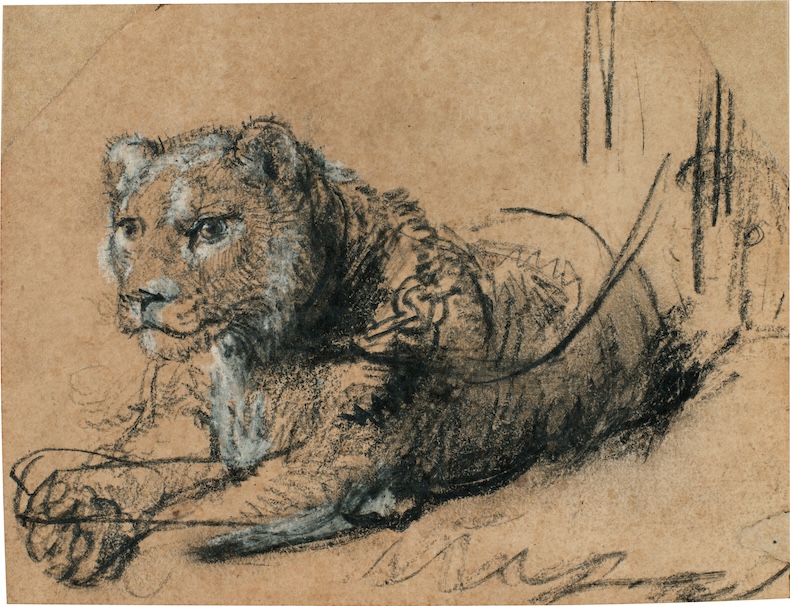
The lion, according to several sources, sold in the room to the Dutch dealer Salomon Lilian, who along with Otto Naumann and Johnny Van Haeften is one of a triumvirate of dealers who advised the Kaplans on building their collection. Lilian had not responded to my email at the time of writing.
Ongpin adds that the sale at Sotheby’s of the Old Master drawings collection of Diane Nixon, which totalled $10.8m, was a huge success. ‘Her collection of drawings – predominantly Italian with some very good French, British and Netherlandish works – was characterised by uniformly great condition and were all beautifully framed […] it did so well because it ticked lots of boxes,’ Ongpin says: ‘the personality of the collector, the quality and condition of the drawings, the way they were mounted and framed, the attractiveness of the estimates, the way Sotheby’s presented and catalogued the collections, and so forth.’
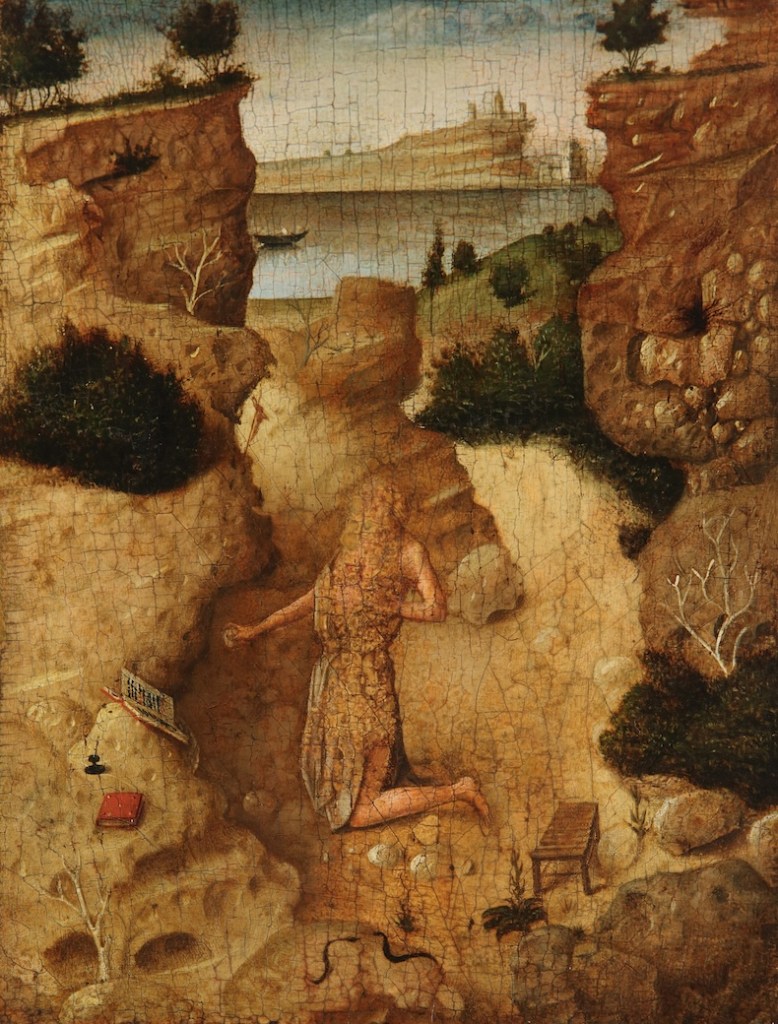
One highlight that was due to appear in the main Old Master paintings sale at Sotheby’s on 4 February was the 15th-century painter Antonello da Messina’s double-sided panel with an Ecce Homo on one side and a vision of Saint Jerome in the desert on the other (c. 1460s). Just before the sale, however, the small, devotional work was bought privately by the Italian Ministry of Culture for $14.9m (the estimate was $10m–$15m). ‘Antonello is an almost mythic artist, and pictures by him are exceptionally rare, so the appearance of a painting like this is major event for the market,’ said Christopher Apostle, Sotheby’s international head of Old Masters division.
Altogether, Sotheby’s Old Master sales last week totalled $95m (with fees), while Christie’s brought in $101.8m across five live sales.
Christie’s top lot of the week was Canaletto‘s Venice, the Bucintoro at the Molo on Ascension Day (c. 1754) which sold for $26m hammer, or $30.5m with fees, just scraping its somewhat ambitious $30m estimate. This was the same view as the record-breaking painting that sold at Christie’s in London last July for a record £31.9m.
The painting sold in London benefitted from the gloss of once being owned by Britain’s first prime minister Horace Walpole, but it was also painted in Italy in the early 1730s, considered Canaletto’s finest period. The large painting sold last week in New York, by contrast, was painted from memory 20 years later in England, and along with six other Canaletto paintings once formed part of a larger decorative scheme at Ockham Park in Surrey.
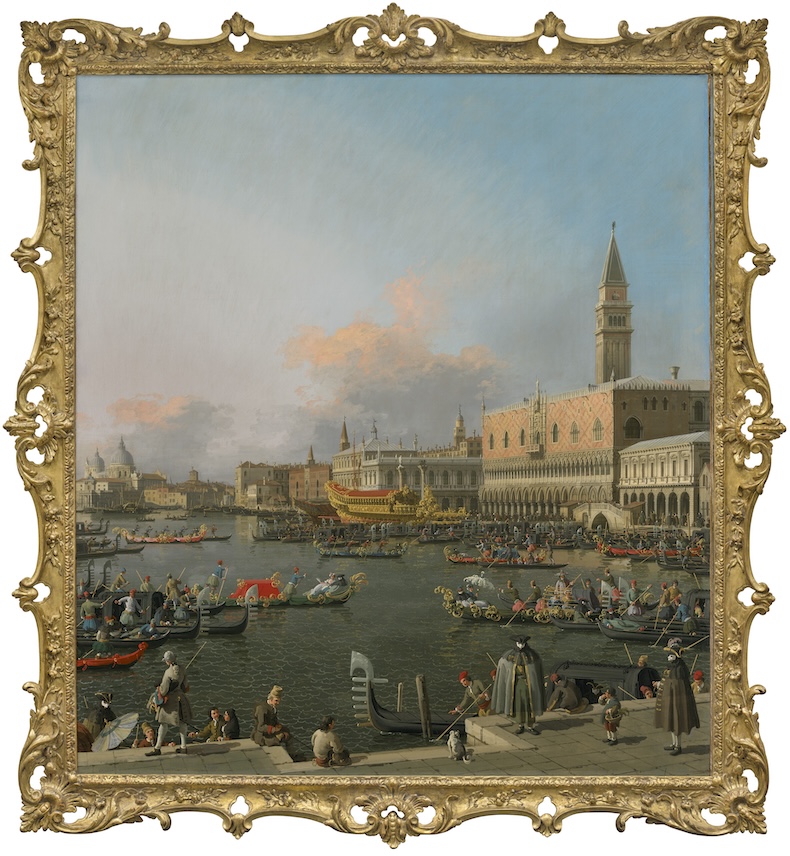
Charles Beddington, a London dealer who specialises in Venetian view paintings and contributed to the Christie’s catalogue essay, tells me: ‘Christie’s were hoping it would exceed the previous price in July – it didn’t, but it was still a pretty impressive result.’ The painting sold last year in London was, Beddington says, ‘pure Canaletto, painted when he was at the height of his powers’. The later one sold last week arguably had more wall power – ‘it was flashier’, as Beddington puts it – but in the end it didn’t hold the same allure. It was more in Canaletto’s English style, painted on a light grey ground rather than the russet he favoured when painting in Italy, and with ‘larger figures and more mannerisms’, Beddington says, pointing out that Canaletto would have been painting from memory at this point, far from the Venetian canals. The painting was guaranteed by a third party, and presumably sold to them.
Of last week’s sales overall, Beddington says they were ‘very strong’, noting the surprisingly eager competition for twelve 17th-century Dutch works from the collection of the property mogul Lester L. Weindling, who bought many works through the London-based dealer Richard Green. Though received wisdom would have us believe that Golden Age works by Salomon van Ruysdael, Pieter Claesz et al is old-fashioned taste, the paintings all sold for $16.8m (with fees) and 42 per cent of them above their estimates, including David Teniers the Younger’s The Potters’ Fair at Ghent, which sold for $1.6m (estimate $600,000–$800,000) and Pieter Claesz’s Still Life with Assorted Fruit, Including Wild Strawberries and Cherries in Two Porcelain Bowls, which sold for $1.6m (estimate $800,000–$1.2m), the second-highest price for the artist at auction.