From the May 2026 issue of Apollo.
The international art world diary bursts into life in spring. In May, the preview of the Biennale draws thousands of directors, curators, collectors, gallerists, dealers, auctioneers, art advisers and writers to Venice, and then to New York for the set of art fairs clustered around Frieze. May is the first really significant month in art market terms, because of a week-long run of ‘marquee’ auctions (14–21 May) of 19th, 20th and 21st century art at Sotheby’s, Christie’s and Phillips. Last year these day and evening sales made $1.3bn; they are considered a bellwether of the state of the market.
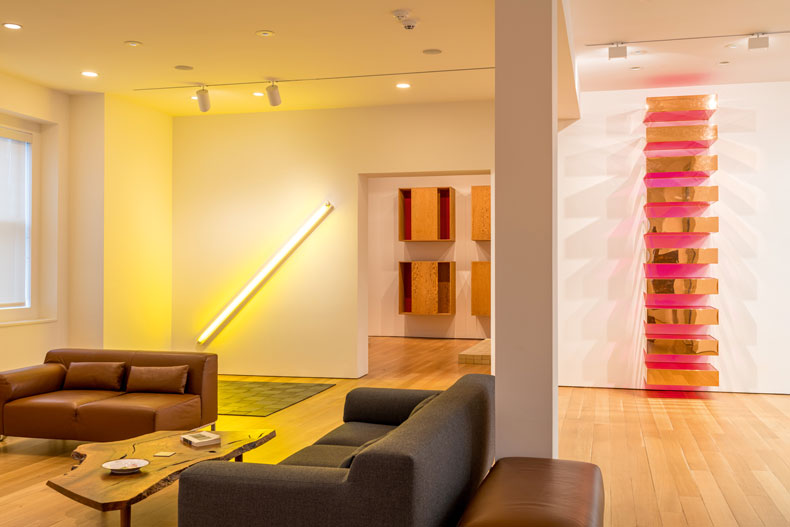
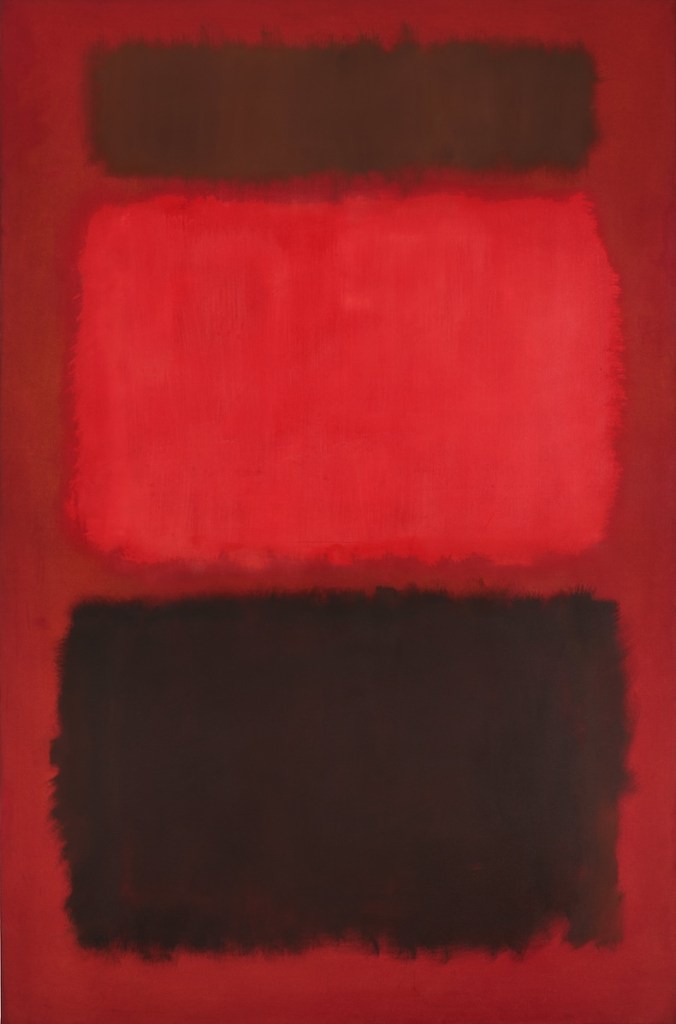
This year, art owned by the legendary dealer Robert Mnuchin and Tylenol heir and minimalism collector Henry McNeil is on the block, with other single-owner collections likely to be announced. Expect razzmatazz: when Sotheby’s sold the Surrealist art collection of Pauline Karpidas in London last autumn, it decorated its facade with a pair of giant gold eyes, recreated her ‘salon’ in the showroom, produced a lavish book and, of course, threw swanky parties.
It wasn’t a million miles from the first evening sale that Sotheby’s held in London in 1958: a televised, invitation-only event for the collection of the banker Jakob Goldschmidt, were everyone wore evening dress, crowds gathered outside and the philanthropist Paul Mellon was among the buyers.
It wasn’t supposed to be like this by now. A few years ago, tech entrepreneurs and venture capitalists were predicting that the internet would revolutionise the art market as it had other creative industries. In 2021, when the world was in the grip of Covid and auction houses, galleries and fairs were forced to reinvent themselves online, these prophecies seemed to be coming true. But five years on, online sales totals are dropping, even as the market as a whole stabilises.
Around $9.2bn of art and antiques was sold online in 2025 according to the latest Art Basel and UBS Art Market report by Art Economics (it counts as ‘online’ a sale made through a dealer’s website, or a third-party one, such as Artsy, through social media channels, over email or online-only auctions, without the buyer seeing the work in person). Online sales were down by $1.3bn on 2024, $2.6bn on 2023 and far below the $13.3bn of 2021, accounting for just 15 per cent of the total art market. That was a smaller proportion than the retail world as a whole (21 per cent), and far behind industries such as music, where 80 per cent of sales are digital.
‘It’s quite remarkable really that music, television and film in 2026 are unrecognisable to the industries of the early 1990s, at the advent of the internet era, while the art market has barely changed,’ says Professor Olav Velthuis, head of the department of sociology at the University of Amsterdam.
This has not been for lack of trying. In 2002 Sotheby’s partnered with eBay to livestream auctions, but the initiative failed. There was a heap of sales platforms of one kind or another: the VIP Art Fair, Auctionata, Paddle8, ArtViatic and many others. The art world is littered with online start-ups that became defunct or moribund or morphed into something different. But Velthuis is careful to point out that the picture ‘is not black and white’, acknowledging ‘some mild forms of disruption’.
Last month Beowolff Capital, an investment fund founded by ex-Goldman Sachs partner Andrew Wolff, announced the merger of Artnet and Artsy– two of the art market’s original digital-only businesses. Beowolff bought a majority stake in Artnet last year for $73.7m, while the amount it paid for Artsy is undisclosed.
Artnet was founded in 1989 as an information company, building a groundbreaking database of art sales at auction. It subsequently expanded to include its own auction sales, a sales platform for galleries and a daily news service. In its last published accounts, before Beowolff delisted it from the stock market in 2025, it reported an operating loss of $1.14m on fairly modest revenue of $24.1m.
Artsy launched in 2012 to provide an aggregation site where galleries could list their works for sale. It allows users to search easily by artist’s name and, via its Art Genome project, to find recommendations for similar works. It too has expanded to include information and data but keeps its financial results secret. It began with initial investment of $50m and is believed to have had to raise tens of millions more.
Together the two companies report seven million monthly visitors to their websites and more than nine million followers across their social media channels. The merged company announced that ‘the move marks the formation of the online art world’s most comprehensive art ecosystem and audience to date, creating vast opportunities for art market participants. Together, the brands hold an unmatched trove of both primary- and secondary-market data, opening the door to entirely new art market insights and analysis.’ Wolff told the New York Observer last October that he planned to create a ‘more fluid model of networked authority […] Old-school power structures build walls to protect themselves. But our younger generations are sceptical of centralised gatekeepers; they want access, participation, transparency, consistency, objectivity,’ he said.
Maybe Wolff, with his deep pockets, will succeed where others have failed. But so far the most successful online art businesses have been built by the traditional auction houses: Sotheby’s, Christie’s and Phillips. They have grown online sales of art from just over $116m in 2018 to $674m last year. But this represented only seven per cent of their collective art sales of $9.6bn (including fees) in 2025, according to analysts ArtTactic.
Some of this success has been the result of accident as much as design, according to Anthony Calnek, former co-worldwide head of marketing of Sotheby’s. Tad Smith, with a background in sports and entertainment, joined Sotheby’s as chief executive in 2015 with a mission – it later transpired – to make the publicly listed company attractive to a private buyer. Smith identified digital sales as a major opportunity.
‘Before Tad, Sotheby’s was slow to embrace technology,’ Calnek recalls. ‘The mindset was that online auctions were for low-end art, say under $50,000, and that was not the essence of our brand.’ Smith invested heavily in technology, marketing and editorial. ‘On my side, the mission was to build a huge audience, through content, that would be ready to transact when the new online auction system was launched,’ Calnek says.
The next step was introducing multimedia online catalogues for high-end art to replace the auction house’s beautiful but expensive print publications – part of the cost-cutting regime Patrick Drahi introduced after he bought the auction house in 2019. ‘The print catalogues were wonderful and beloved by specialists and collectors alike,’ Calnek says. ‘But the goal was new customers, you don’t send a book that costs $100 to people you don’t know.’ Even so, it took the pandemic to really push change through. ‘Through sheer luck the new system went online days after Covid. Within a matter of weeks we had our first $1m online sale, which struck most people in the company as amazing,’ Calnek says. By June 2020 Sotheby’s had secured the collection of Ginny Williams, which for inheritance tax reasons could not wait until after the pandemic to be sold. The 18 lots, sold as part of a revolutionary live-streamed evening auction, made $65.5m with fees (presale estimate $35.9m–$51.7m without fees).
‘The series of events was a perfect storm,’ Calnek says. ‘It forced us to do things we were ready for without knowing it, but which we would never have risked under normal circumstances.’
Big auction houses such as Christie’s and Sotheby’s now sell about 60 per cent of their lots exclusively online. But in some ways they are reverting to pre-pandemic type. Online-only is generally for the less expensive art: all but a handful of works of art priced $1m and above are sold, as per tradition, in live evening and day sales, though bidders can watch the sales online.
Meanwhile, most primary market galleries seem less interested in experiments in online selling than during lockdown. Gagosian has paused its Artist Spotlight series, each of which offered a desirable work by a well-known artist in a limited period. David Zwirner, which launched its click-to-buy marketplace Platform in 2021, sold it in 2025. Many galleries have abandoned the 3D walk-throughs they tried in lockdown or simplified their online viewing rooms (private sections of gallery websites, sometimes displaying works in virtual situ). The Arts Economics report says that online sales, as a share of average gallery turnover, have fallen steadily from 23 per cent in 2023 to just 16 per cent last year.
‘Dealers have widely adopted online models for marketing and selling work since the pandemic. But in-person exhibitions, events and art fairs have returned as critical activities,’ says the report’s author, Clare McAndrew. ‘Online has been disruptive in some ways – it helps make more sales and offer access to more people in different places, as its supporters said it would – but it just didn’t shake the art world as much as forecast, especially at the higher end.’
A major challenge for digital platforms is the difficulty of conveying the physical properties of works of art. Music, novels and TV programmes lose little by being streamed only. Film, where scale is an issue, is trickier, so cinemas endure. For all but the most conceptual artworks, size, surface, materials, texture – even sound and smell – are intrinsic to appreciation.
That is why gallerists scour expensive cities for the right exhibition spaces, and why auction houses invest in grand showrooms. Sotheby’s May auctions will take place in the former Whitney Museum building on Madison Avenue. It bought Marcel Breuer’s 1966 brutalist masterpiece for around $100m and had it carefully renovated by Swiss architects Herzog and de Meuron.
‘There’s a mentality in the art world that makes it resistant to change generally, not just technology,’ says Anders Petterson, founder of ArtTactic. But, he argues, there are often valid reasons why things are organised as they are. Understanding what is or isn’t good value in a market where everything is unique, even when the price is openly available, is notoriously hard. ‘It is a complex market for people from the outside to feel confident in and it changes from one artist to the other. So the factors that drive value in the Warhol market are not the same as those in the Klimt market,’ Petterson says.
That means expertise and relationships are more important than in other markets, such as luxury property or classic cars, where online buying is reportedly growing. ‘There has been an underestimation, certainly in the early days, of the importance of trust,’ Petterson says. ‘It’s really hard to build a company like Sotheby’s or Christie’s: to get to the point where someone would have confidence to buy or sell high-value works of art with you.’
Dr Stephanie Dieckvoss, co-convenor of the art and business master’s programme at the Courtauld Institute, agrees. ‘The art market is about people: it’s part of the experience economy, not a retail business,’ she says. ‘It’s more like the live music industry, except you take home a work of art, not a piece of merch, sometimes as the memorabilia.’ She points to the number of new fairs, museums and biennials that continue to launch even in the current uncertain business climate.
‘Ten years ago we were all saying Instagram would revolutionise the art market. It would supersede the curators, the critics, the galleries, the tastemakers. And what happened? The traditional “gatekeepers”, like [Serpentine director] Hans Ulrich Obrist and [art dealer] Brett Gorvy, ended up with the biggest followings.’ Where there is vastly too much supply – as in the contemporary art market – or where simply knowing a good Picasso or Basquiat from a bad one is the difference between millions of dollars, gatekeepers suddenly become valuable.
That doesn’t mean the traditional way of doing things suits everyone. ‘Not the artists who don’t have galleries, not the mid-career artists whose sales are falling, not people who don’t feel on the “inside”,’ Dieckvoss says – and possibly not younger people who don’t yet buy art and who like the convenience of the online world. But for now, for those still wondering why online art selling never really took off, look at the well-heeled collectors, curators, dealers and art advisers crowding into New York’s galleries, fairs, museums, auction houses and parties later this month. A different – maybe more digital – art world may emerge one day, but right now it is not in their interests.
From the May 2026 issue of Apollo.