From the March 2026 issue of Apollo.
Ovid’s Metamorphoses has been a transformational text for 2,000 years. The epic, a compendium of some 250 myths, was hugely popular in antiquity, while no fewer than 400 manuscript versions survive from the Middle Ages. Artists and writers in particular have always found it an inexhaustibly rich fund of material; no other text from antiquity has spawned as many visual representations. In 1604, the painter and art historian Karel van Mander noted that there was only one source that could compare: the Metamorphoses, he wrote, was ‘a Bible for artists’.
The reason is clear from the very first lines, when the poet declares:
My purpose is to tell of bodies which have been transformed into shapes of a different kind. You heavenly powers, since you were responsible for those changes, as for all else, look favourably on my attempts, and spin an unbroken thread of verse, from the earliest beginnings of the world, down to my own times.
Those transformations, the result of divine interaction with mortals, include both the most familiar of mythical stories – Daedalus and Icarus, the Minotaur, Orpheus and Eurydice – and any number of less well-known tales, from the story of the water-nymph Ocyrhoe who was turned into a horse to that of Dryope, a well-born girl who was changed into a lotus tree. Invariably, these are one-sided encounters: when a god touches a mortal the outcome, for the mortal, is not a happy one.
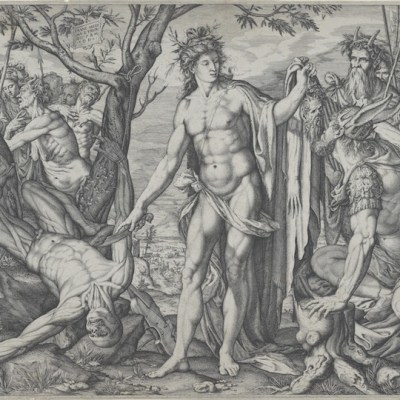
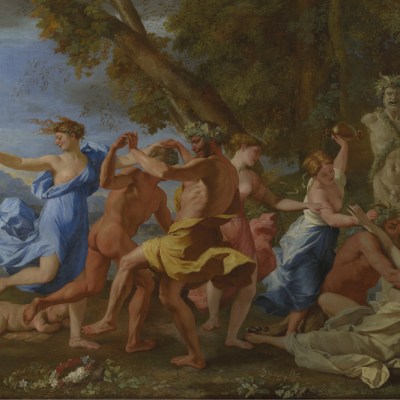
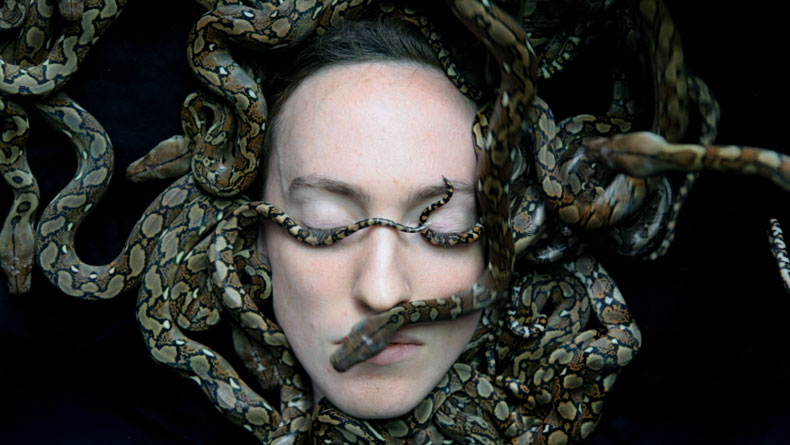
The roster of artists who have mined Ovid’s poem includes many of painting and sculpture’s greatest names – Leonardo and Michelangelo, Caravaggio and Poussin, Correggio and Rubens and, perhaps most famously of all, Titian and Bernini. Works by or after all of them are among the 80 pieces inspired by Ovid in ‘Metamorphoses’ at the Rijksmuseum, an exhibition that will transfer to the Galleria Borghese in Rome in June. It is a display of the full span of Ovidian inspiration, starting with Roman statues and carrying on through Magritte and Louise Bourgeois to a video work by the contemporary Dutch artist Juul Kraijer.
The exhibition mixes paintings, sculpture, tapestries, photography, books and even Wunderkammer objects such as a goblet in the shape of Actaeon made by the Nuremberg goldsmith Jeremias Ritter in the early 17th century, in which the horns the hunter sprouts having enraged the goddess Diana are fashioned from a piece of red coral. Indeed, the whole show is itself something of a cabinet of curiosities, in which some truly wondrous works are exhibited alongside others that are, by comparison, mere oddities.
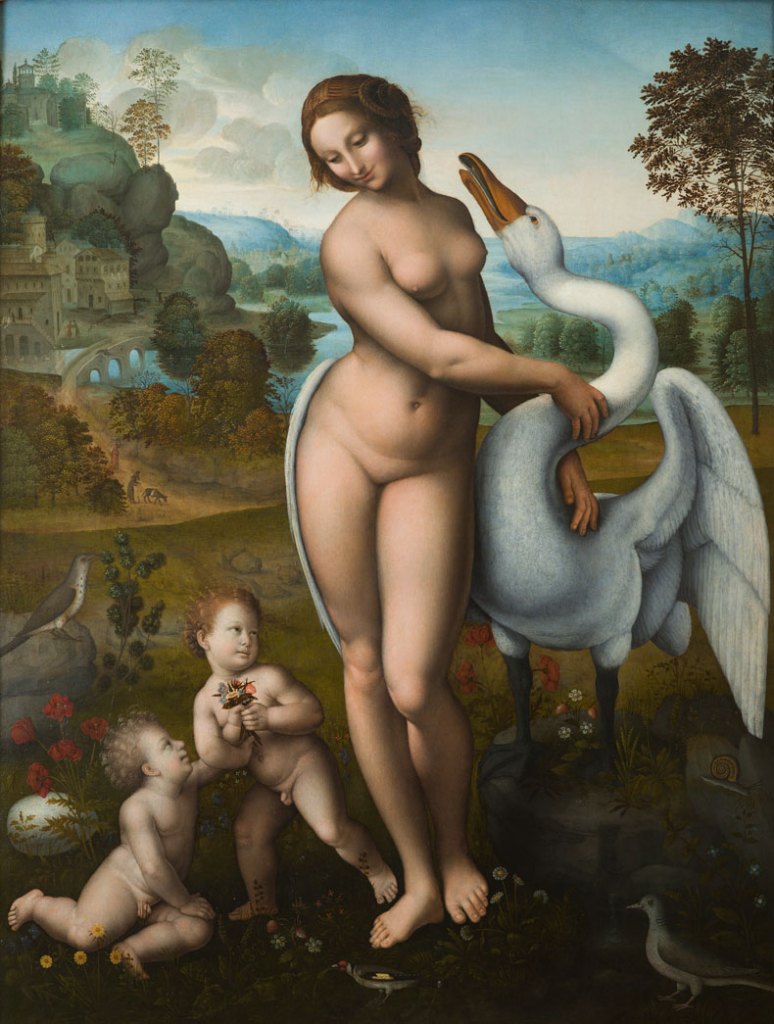
But then, among the paintings portraying the loves of Jupiter are an early copy of Michelangelo’s lost Leda and the Swan (c. 1530), a pictorial entwining so erotic that the original is thought to have been destroyed by Queen Anne of Austria; a contemporary copy by Giovanni Antonio Bazzi (Il Sodoma) of Leonardo’s rather more chaste version of the same theme, also lost; and Titian’s Danae (c. 1551), in which the god impregnates the mortal while disguised as a shower of gold. (Now owned by the Duke of Wellington, the work was one of the Poesie series the artist painted for Philip II of Spain.) However, for sheer sexual charge, one of the traits so many artists found in Ovid, none can compete with Correggio’s Jupiter and Io (c. 1531–32) from the Kunsthistorisches Museum in Vienna.
The picture is one of four that Correggio painted for Federico II Gonzaga, Duke of Mantua, between 1527 and 1531, showing Jupiter’s duplicitous conquests. It is the most extraordinary feat of imagination and skill. Where Ovid describes the encounter as a rape, Correggio makes it a fully consensual coupling as the beautiful princess welcomes – and reciprocates – the embrace of the god hidden in a cloud. Jupiter takes on a near corporeal form only at the points where the lovers touch – facial features forming at their kiss and his hand becoming visible as he encircles her waist. For all the rapture here, Io’s fate was to be turned into a heifer.
Correggio’s painting is also an example of another theme of the exhibition: the notion that art itself is an act of transformation, transmuting base materials into images of intense potency. It is an aspect perhaps best illustrated by Bernini’s Sleeping Hermaphroditus (1620), in which he took a Roman sculpture of naked Hermaphroditus from the second century AD and added a marble mattress and pillow that ripple and dip under the figure’s weight. Here the transformation is not just in the figure – female from the rear, male from the front – but in the nature of the sculpture itself and in the extraordinary mimicry of hard stone as pliant mattress.
This material fluidity is further illustrated with the works depicting the Pygmalion and Medusa stories. Jean-Léon Gérôme’s Pygmalion and Galatea (c. 1890) shows the moment the sculptor Pygmalion falls in love with his own statue of a woman, brought to life by Venus. As her white marble legs blend into the pink blush of her body, the pair kiss. In Sebastiano Ricci’s Perseus Confronting Phineus with the Head of Medusa (c. 1705–10), the hero uses Medusa’s severed head as a weapon to petrify the rejected suitor who storms Perseus’s wedding to Andromeda. The paintings illustrate two opposing elements in the Metamorphoses: in one sculpture comes to life, in the other life turns to stone. It is perhaps unsurprising that alongside such works, a polaroid by Ulay from the 1970s, with half his face bearded, the other in full make-up, or Cornelis Johannes Postma’s Surrealist Narcissus (1928–29), or Isamu Noguchi’s bronze and brass Leda (1928), look somewhat pallid.
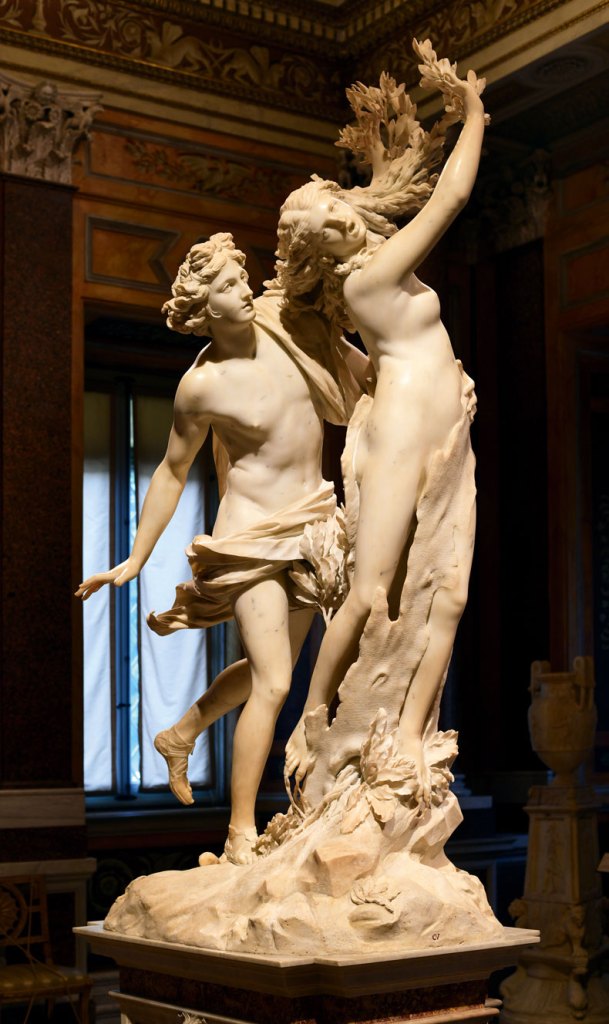
When the exhibition moves to the Galleria Borghese it will include, among other new pieces, two of the greatest Ovidian works of all, Bernini’s peerless Apollo and Daphne (1622–25) and the Rape of Proserpina (1621–22), promising a metamorphosis that might turn the exhibition from a gathering of intermittently wonderful things bound by a strong conceit into something unforgettable.
From the March 2026 issue of Apollo.
Metamorphoses is at the Rijksmuseum, Amsterdam, until 25 May.