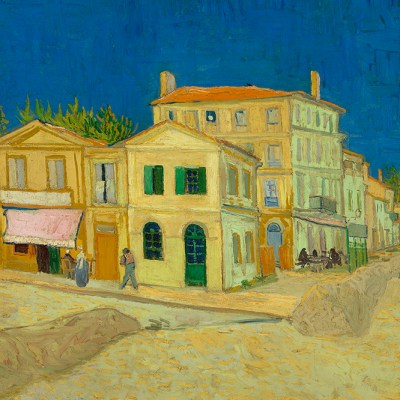
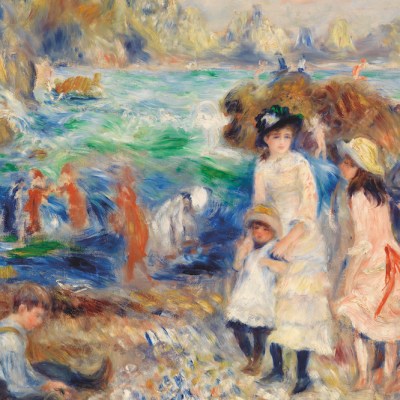
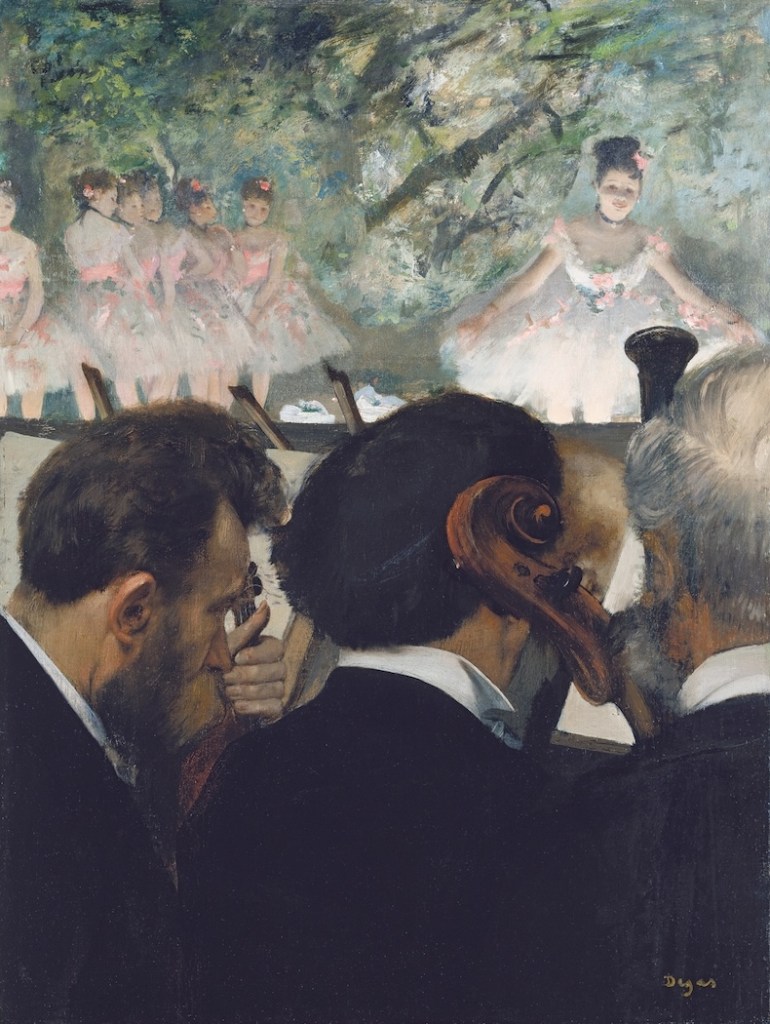
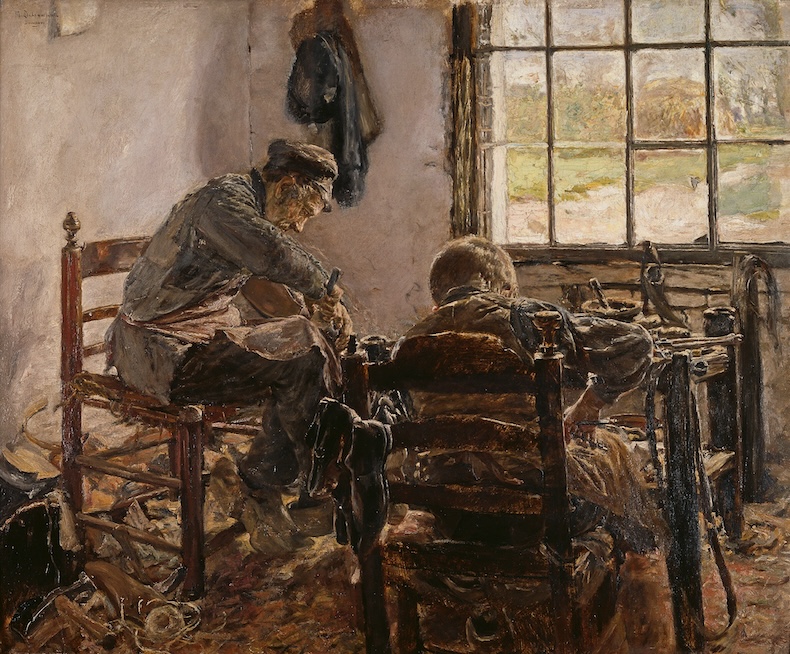
Entering the first exhibition at the Kunstsalon Cassirer in Berlin in 1898, the poet Rainer Maria Rilke discovered the work of ‘three strangers’ given the space to ‘unfurl his art, each in his own way’. The painters in question were the long-established Edgar Degas, Max Liebermann – co-founder of the Berlin Secession – and the Belgian realist Constantin Meunier. In a young empire in which the establishment emphasised the intrinsic connection between German art and ethnicity, it was a bold display. Rilke, however, was set at ease by the parlour connecting the three gallery rooms, where he found himself ‘wholly content, without further desire’.
‘Cassirer and the Breakthrough of Impressionism’ is an ambitious and somewhat exhausting show that revisits Berlin’s art scene at the turn of the 20th century. At its heart is the dealer Paul Cassirer, who brought many Impressionist works into private and public collections in Germany. Born into a family of Jewish industrialists in the Saxon town of Görlitz, Cassirer was an early product of academic art history, which he studied in Munich. After opening his gallery with his cousin Bruno in 1898, he was a crucial player in Germany’s art world – and its raucous social scene – until his suicide in 1926.
The show begins with a solemn bust of Cassirer by Georg Kolbe – one of the few artists here who would later find favour with the Nazis. Placed among ornate marble columns and under the startling blue domed ceiling of the Alte Nationalgalerie, the rugged head of the singular private dealer is both distinguished and diminished. The placement captures the symbiosis and tension between private and public collections that is key to the exhibition’s message and that is ultimately a difficulty for its curatorial execution.
From there, it’s hard to know where to proceed. Straight ahead is a ‘panorama’ of Cassirer’s early salons in the Tiergarten district of Berlin. As well as Monet and Degas, we see works by Munch, Matisse and Van Gogh. Two Max Beckmann paintings from 1908 are distinctly Impressionist in style; only Boating with Kandinsky (1909) by Gabriele Münter gives a taste of the Expressionist movements beginning to challenge the pioneers of the previous generation.

Renoir’s In Summer (1868) is displayed alongside Liebermann’s Nursery School in Amsterdam (1880). Cassirer deliberately juxtaposed works of different styles and eras to provoke debate and the curators’ reproduction of this tendency works well. The influence of French Impressionism on German artists is clear. But, more importantly, we see how display can make the spectator look differently and leave them either disarmed or enraged.
To the left of the domed room – an equally legitimate starting point, judging by the arrows elsewhere pointing in both directions at once – we find an introduction to Cassirer the man. A long gallery gives us a strong sense of his social milieu during the Weimar Republic. It is bookended by two portraits by Oskar Kokoschka: one of the pianist and cultural official Leo Kestenberg (1926/27), looking rotund and jovial; the other a pointed and determined likeness of the communist publisher and gallerist Herwarth Walden (1910). A grave charcoal drawing by Käthe Kollwitz, whose 50th birthday Cassirer marked with an exhibition in 1917, feels out of place among this congress of wealthy socialites. But, mercifully, there is also a place to sit down here.
Much as Cassirer was excited by avant-garde movements, his turn to German works was also a practical one. As hyperinflation accelerated in the 1920s, he could no longer pay out to dealers in Paris. In the next room, we find an alpine landscape by Ernst Ludwig Kirchner and two serene but powerful walnut carvings by Ernst Barlach. The labels tell us that Cassirer sold one of these to the collector Hugo Simon. What’s not mentioned is that Simon was a radical left-winger who briefly served as the finance minister of Prussia after the 1918 revolution. Art could be closely entangled with party politics in the early Weimar years, but we get little sense of that here.
Many of the 150-odd works on display are from the Nationalgalerie’s own collection – thanks to Cassirer’s close working relationship with its second director, Hugo von Tschudi. Cassirer not only smoothed von Tschudi’s path to dealers in Paris, but also connected him to his private clients, some of whom became prominent donors to the Nationalgalerie.
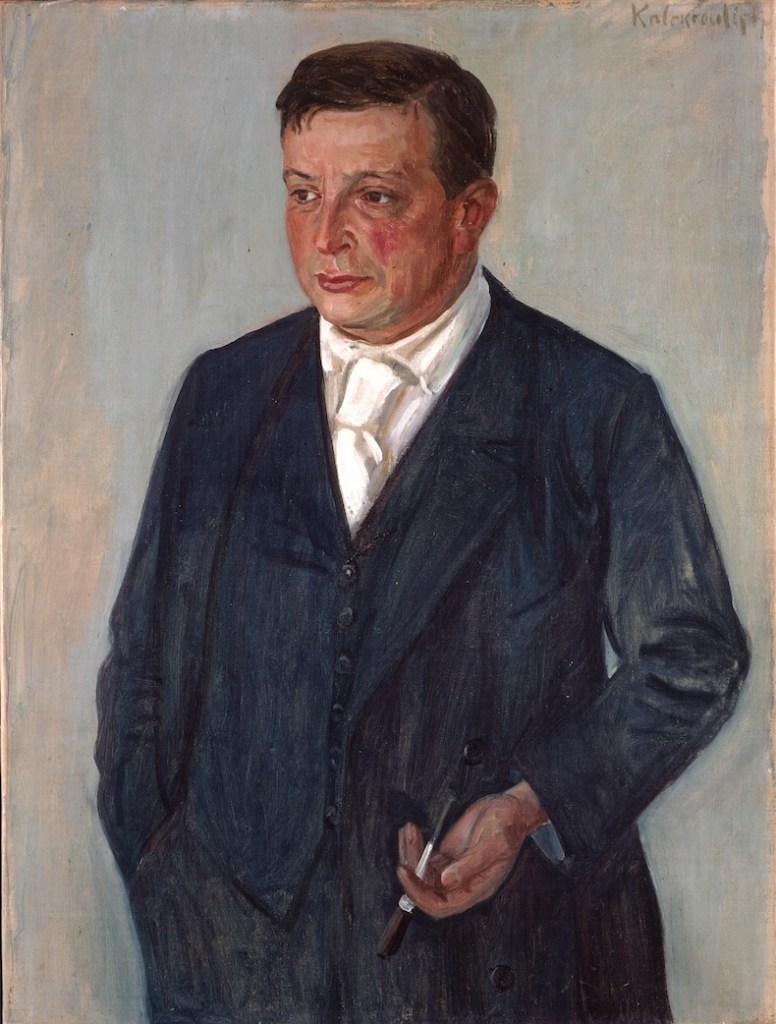
Von Tschudi needed the help: the museum’s mission was to foster national identity through promoting German – i.e. Prussian – art. Acquisitions were controlled by the stuffy Prussian State Art Commission. But in his first three years, von Tschudi aided the passage of so many French works into the collection as to merit an intervention from Kaiser Wilhelm II himself: future purchases would require the emperor’s personal consent and Impressionist paintings should be displayed in ‘less prominent’ positions. Von Tschudi exercised more restraint, but was later placed on leave and left for to become director of the Bavarian State Paintings Collections.
At the end – or perhaps this is another beginning – we find a history of Cassirer’s gallery. Paintings were hung in single and double rows – now the norm, but a far cry from the overcrowded ‘Petersburg’ style that predominated at the time. After a thrilling but relentless two-hour jaunt round the show in multiple directions, I couldn’t help long for a bit of the nourishment and serenity that Rilke found at the Kunstsalon Cassirer.
‘Cassirer and the Breakthrough of Impressionism’ is at the Alte Nationalgalerie, Berlin, until 27 September.