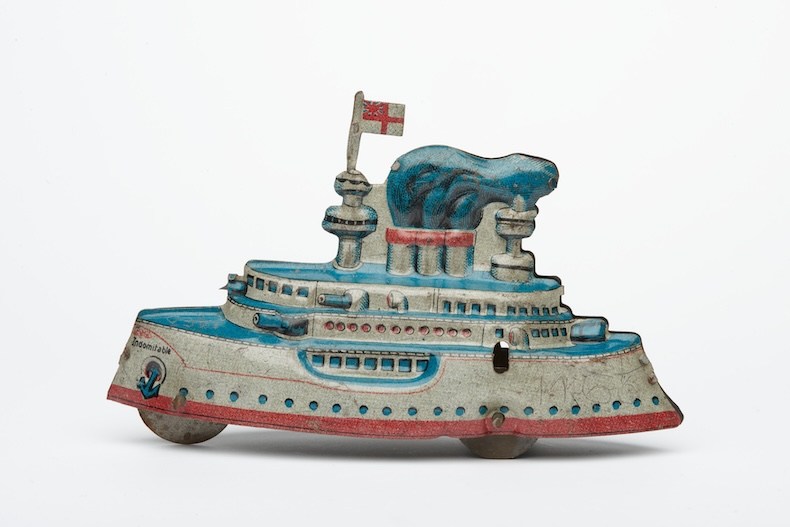
On 21 December 1909, Ernest King struggled through the Christmas throngs lining Ludgate Hill to buy a tiny battleship. His prize was constructed from two pressed and printed pieces of tin: a model of HMS Indomitable, the world’s first battlecruiser. Complete with lithographed blue steam billowing from red and white funnels, it could be pushed along on three black disk wheels. Under normal circumstances it would have been destined for a battle-mad boy’s Christmas stocking. Instead, it went into King’s pocket. It had cost him exactly a penny.
Between 1893 and 1918, apparently in and around his commute to Gutter Lane in the City of London – where he was company director of straw-hat makers Melch and Sons – Ernest King purchased some 1,500 objects from urban street sellers, including 60 so-called ‘penny toys’. In 1918, he bequeathed the lot to the newly formed London Museum. This month, the museum reopens in its new Smithfield site, with its original name restored and King’s toys back on show.
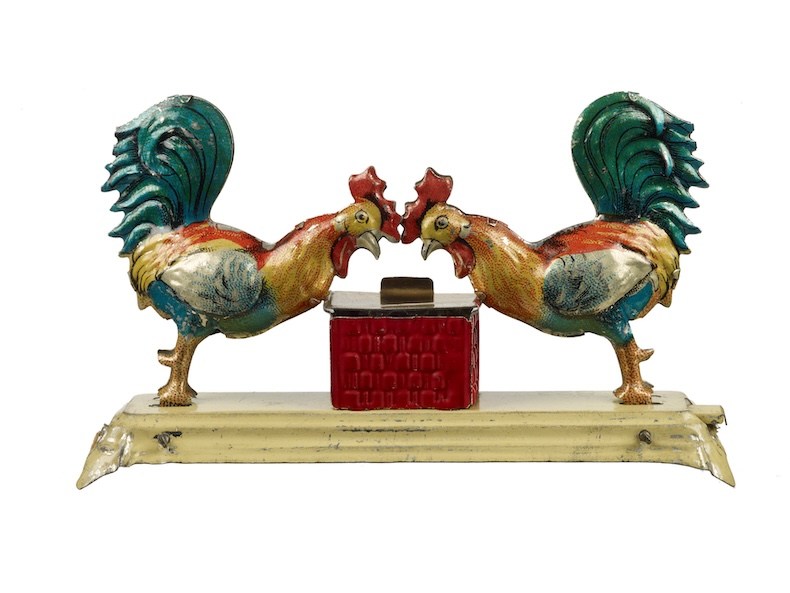
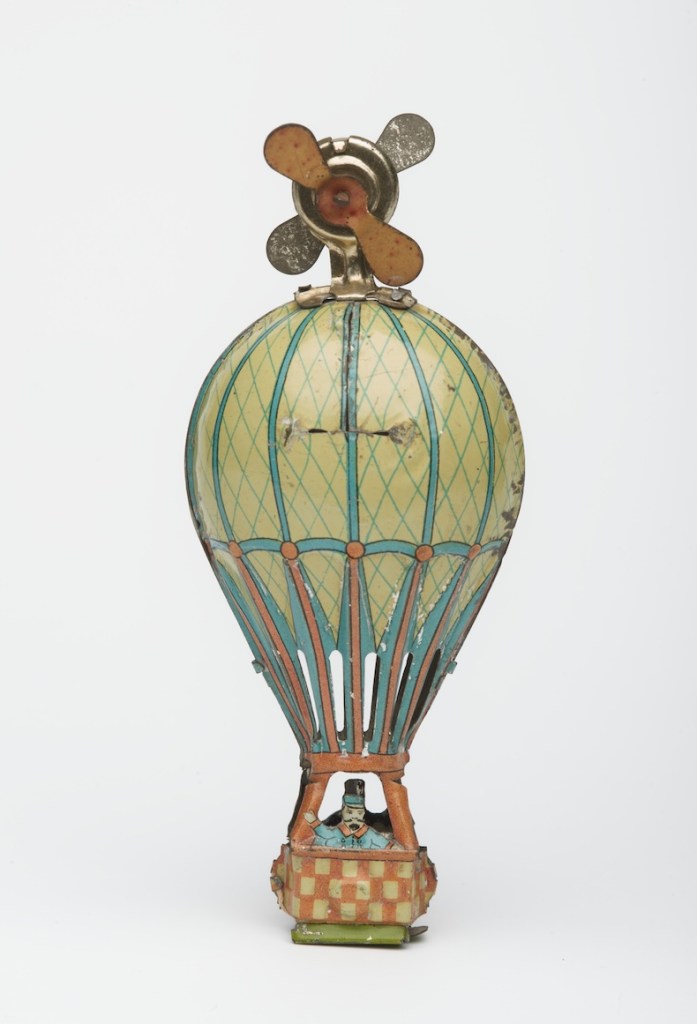
Largely manufactured in Nuremberg, Germany’s traditional toymaking centre in Bavaria, penny toys show all of life – in tin. A dappled horse pulls a fire pump that matches its proud red bridle. A delivery man chugs along on a motor dray, and a mouse considers entering a trap. At the pull of a lever or the push of a finger, many could be made to move. Duelling cockerels knock heads; a dog jumps for a treat; the propeller spins on a hot air balloon occupied by a moustachioed man waving to imaginary crowds below. Perhaps more importantly – at least for their original intended owners – many incorporate baskets, cages or compartments that could dispense, or discreetly protect, a horde of sweets.
King’s collection at the London Museum is internationally recognised. One of the earliest systematic collectors of contemporary social history, his bequest raised to immortality objects never intended to survive beyond the initial burst of delight they prompted. Their enormous variety and low, unchanging price testify to their transience, but this same combination also gave them a huge potential audience. Newly accessible to working-class children, these toys could also be bought ten-to-a-box at Gamages department store by the middle classes. Contemporary journalist George Sims also suspected more than one ‘young stockbroker’ of choosing an ‘ingenious toy [to take] back to the office’, much as King did. Gamages excepted, most punters would have bought these toys from the poorest of the poor: the bedraggled assortment of men, women and children who stood in the gutters of the City in the hope of eking a fragile living. Their work, like their stock, was temporary and seasonal. Many of King’s purchases were made as the street sellers’ ranks swelled in the run-up to Christmas.
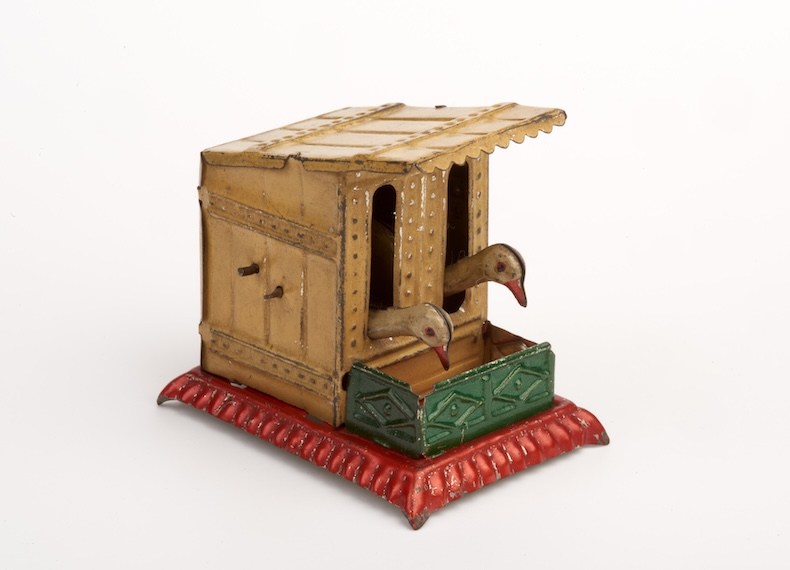
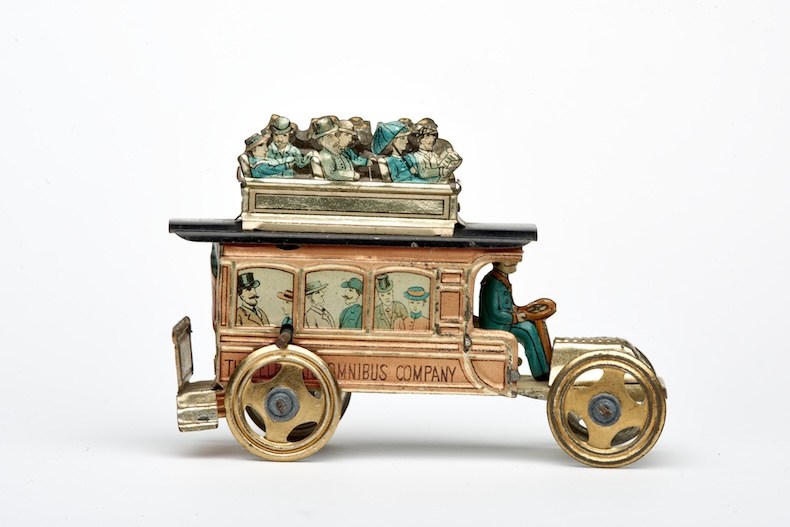
To 21st-century eyes, more accustomed to mass-produced plastic, King’s penny toys have a homespun, even nostalgic appearance. This belies their technological innovation. A key component in the German penny-toy boom was the development of offset lithography techniques in the 1890s, which made it possible to print designs on to flat sheets of tin and assemble them in bulk. In and amongst bucolic scenes of geese, toadstools and butterfly nets were many celebrations of this modern world: motor cars, railway carriages, an electric omnibus, a sewing machine. Some, like the miniature HMS Indomitable, were specifically designed to appeal to a young generation primed for future militaristic and imperial supremacy. Ironically, the toys’ demise came with the definitive eruption of international hostilities in 1914. Commercial interaction between Britain and Germany was severed, and Bavaria’s toy factories were redirected to arms. King’s later acquisitions track street sellers’ opportunistic turn towards other commercial endeavours: royal memorabilia; flag day emblems; a ‘mechanical postcard’ of the Kaiser. For all that, his penny toys are the most delightful survivors.
London Museum, Smithfield, opens on 28 November.