The premise of Pluribus, which has just completed its first season on Apple TV, is pure science fiction. Humanity is overwhelmed by a virus of extra-terrestrial origin, which turns our species into a single-minded organism. Billions of people are united as one consciousness and every one of them – or, rather, us – has access to the memories and skills of all the others. Everyone also becomes blissfully happy. Only 13 people worldwide are unaffected by this ‘joining’.
So far, so sci-fi. But while the set-up sounds pulpy, the execution is very different. Pluribus was created by Vince Gilligan, who was previously responsible for Breaking Bad and its prequel Better Call Saul – prestige television drama at its most lush and intelligent. Like those previous shows, Pluribus is mostly set in Albuquerque, New Mexico, which in Gilligan’s hands is steadily becoming more and more stylised, stark and distinctive. (It’s hard to think of a stronger relationship between a current TV director and a particular place.) And, like those previous shows, it takes a granular interest in its imagined world. One of the great strengths of Breaking Bad was in the attention it gave to all the steps involved in the business of the chemistry teacher-turned-narcotics masterchef Walter White (Bryan Cranston), from street-corner distribution to money laundering. It made the (outwardly simple-looking) business of selling excellent drugs to desperate addicts very complicated; the drama benefited greatly.
In similar fashion, Pluribus takes its time in examining the world it has created. In deliberate contrast to the omniscient panopticon of the hive mind, the viewer sees almost everything through the very limited perspective of depressed romantasy author Carol Sturka, the only individual left on the North American continent – played with continental talent and dedication by Rhea Seehorn, who also portrayed Kim Wexler in Better Call Saul. The show lingers on little things and revels in the absurdities and frustrations of the new reality for those left out of it; the hive mind, possessed of a single will and all of humanity’s resources and expertise, is largely operating out of sight. Its intentions are superficially benign and it seems to tolerate the existence of the 13 survivors. ‘Your life is your own,’ it assures Carol.
Except, of course, it isn’t. Some of Carol’s fellow survivors carry on an approximation of their life before the ‘joining’; others indulge in wild bacchanals. But these are just simulacra of different kinds. Carol, who was miserable before the joining and whose unhappiness is compounded by grief and terror afterwards, can’t tolerate either path. Pluribus is post-apocalyptic through and through: the world, our world, has ended and, even if the virus was somehow cured, it won’t come back. But the show is wonderfully ambivalent about the new world, a dystopia with utopian characteristics, or vice versa; or just a dreadfully flawed state of affairs that combines beauty and horror – much like what came before, but terribly alien.
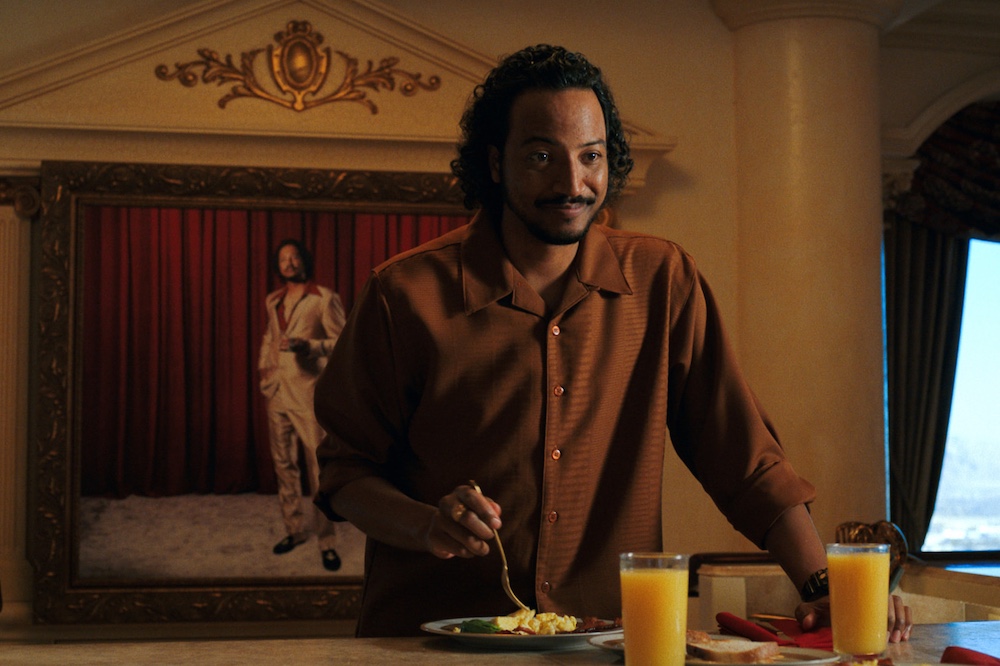
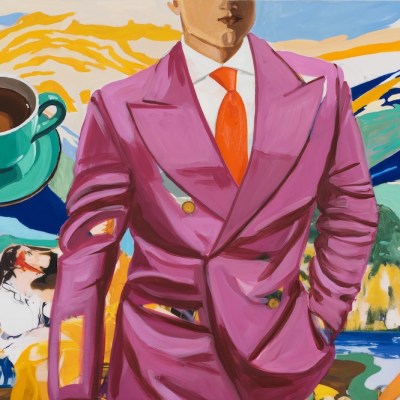
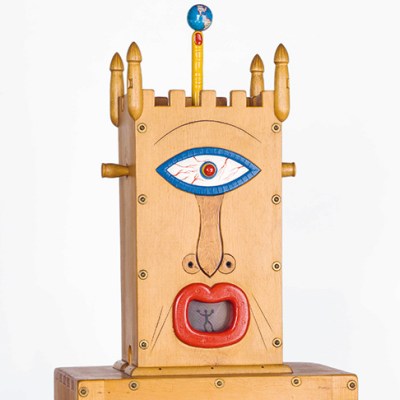
This alien-ness is partly expressed through art. Left to her own devices in a deserted New Mexico, Carol goes to the Georgia O’Keeffe Museum in Santa Fe, a place she previously visited with her partner, Helen, who died during the chaotic transition. Later, at home, she takes down a framed poster from the museum that’s hanging on her wall and replaces it with the original painting. Later Carol invents a cover story to excuse this borrowing, about wanting to protect the paintings from wild animals, but it’s clear that the hive mind isn’t very concerned anyway. Does art matter to the inheritors of the world? They’re not vandals, but they don’t appear to be creators either. What purpose does creation serve when they are incapable of expressing anything, because they already know everything?
The question matters to Carol because she is an artist, albeit a compromised and unsatisfied one. Her romantasy novels were hugely successful, but she isn’t proud of them; she yearns to be a ‘serious’ author. The hive mind is an appreciative audience for her work, seeing it through the compound eye of the millions of people who loved the books. It wants her to keep writing, partly because it believes this will make her happy, which it regards as very important, but also – we can intuit – because it has nothing new to read, and never will, unless the only surviving author writes it.
This is almost a wish-fulfilment fantasy – a captive audience of billions – but of the most ironic and hollow kind. In a scene straight out of an anxiety dream, or a self-torturing thought experiment, Carol asks the compulsively truth-telling gestalt of all human experience what Helen really thought of her books, including her unpublished literary novel. Just asking the question is a mistake.
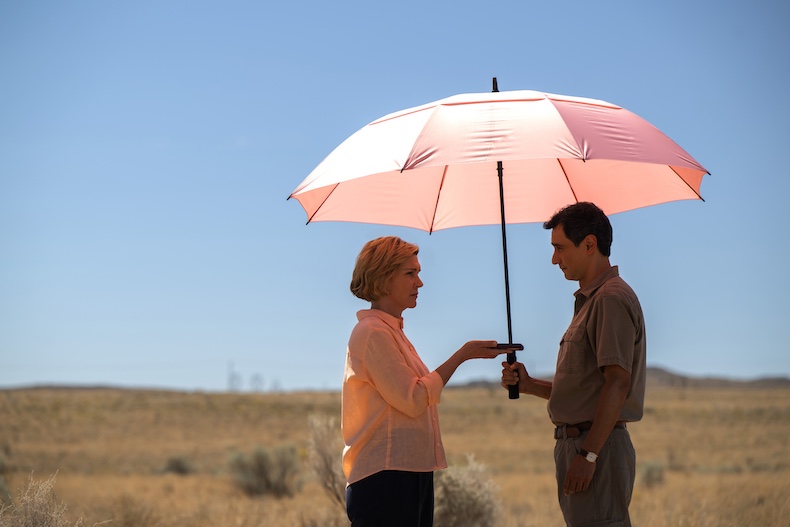
Many commentators have been wondering if Pluribus is ‘about’ something. The pandemic, perhaps? It does have a very familiar 2020 vibe, in its eeriness and sense of isolation. Or maybe it is an allegory for artificial intelligence. Gilligan is a confident enough dramatist to allow numerous subtexts to glint under the surface. Carol is a less assured artist. She did not particularly care for the audience she had; her unwise question suggests that only one person really mattered, and that person is gone. Writers and other artists sometimes say that if their work reaches just one person it will have succeeded, but this is generally said by artists whose work reaches a lot more than one person. And what if that person – who is everybody – unconditionally likes anything that you do? Or doesn’t? While it might be restrained from outright falsehoods and harm, it’s never clear how sincere the hive is being. And although it might struggle to relate to the survivors, it has a frame of reference in its billions of memories. ‘We’ve been you, but you’ve never been us,’ it tells Carol.
In Pluribus, the emptiness of art in the joined world is part of the largely unspoken indictment of the hive mind, alongside the vast and thorny questions of consent and free will that vex and motivate Carol. In raising these questions of what it means to make art, and relating it so intimately to the question of what it means to make our own fates as humans, then maybe the show is ‘about AI’, but only incidentally, alongside a great deal else. We often hear trite arguments for the value of art, its power of healing and joy. It’s very refreshing – a joy, in fact – to have the final say fall to a depressed misanthrope.