This review of The Portrait Miniature: A New History appears in the December 2026 issue of Apollo.
The novelist Angela Carter was not a fan of portrait miniatures. Reviewing the V&A’s blockbuster miniatures show ‘Artists of the Tudor Court’ in the New Statesman in 1983, she summed up the art form in scathing tones:
The self-absorbed and obsessive products of an offshore island removed from the mainstream of European culture […] An art in which the rich and powerful observed themselves in their best clothes […] An art of narcissism and privacy, produced by an age of massive, brutal vulgarities.
Perhaps she would have felt differently after reading this book.
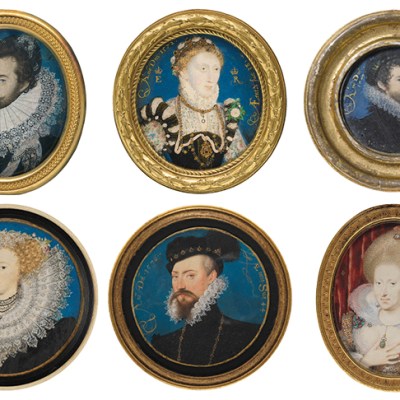
This new survey casts a wider net than is usual in studies of the portrait miniature, encompassing the often-overlooked contributions of women artists and the genre’s embeddedness in global networks of exchange. Developed out of illuminated manuscripts, the miniature was characterised initially by its materials; the word itself derives from minium, Latin for red lead, and only later gained its association with size as a result of the fact that most portrait miniatures also happened to be small. Miniatures proper, then, were painted in watercolour on vellum and later on ivory, but this book also encompasses oil painting, enamels, silhouette, plumbago drawing and photography, demonstrating the broader appeal of small-scale portraits.
The book tells the story of the portrait miniature from its invention in the 1520s to its demise in the 1950s, after the proliferation of personal photography. Wide-ranging essays review the major innovations of each century and are followed by individual catalogue-style explorations of specific examples in the V&A collection. The museum is one of the best in the world for miniatures and its holdings are broadly representative of the genre’s history, but nonetheless there are some strange omissions: the book opens with the miniature’s invention during the reigns of Henry VIII (r. 1509–47) in England and Francis I (r. 1515–47) in France, spotlighting the contributions of Hans Holbein the Younger. He is well-represented at the V&A, for example by his famous miniature of Henry VIII’s fourth wife Anne of Cleves (1539). But the genre’s probable inventors, Lucas and Susanna Horenbout, are mentioned only in passing without illustrations of their work – despite the existence of two miniatures attributed to Lucas in the V&A collection.
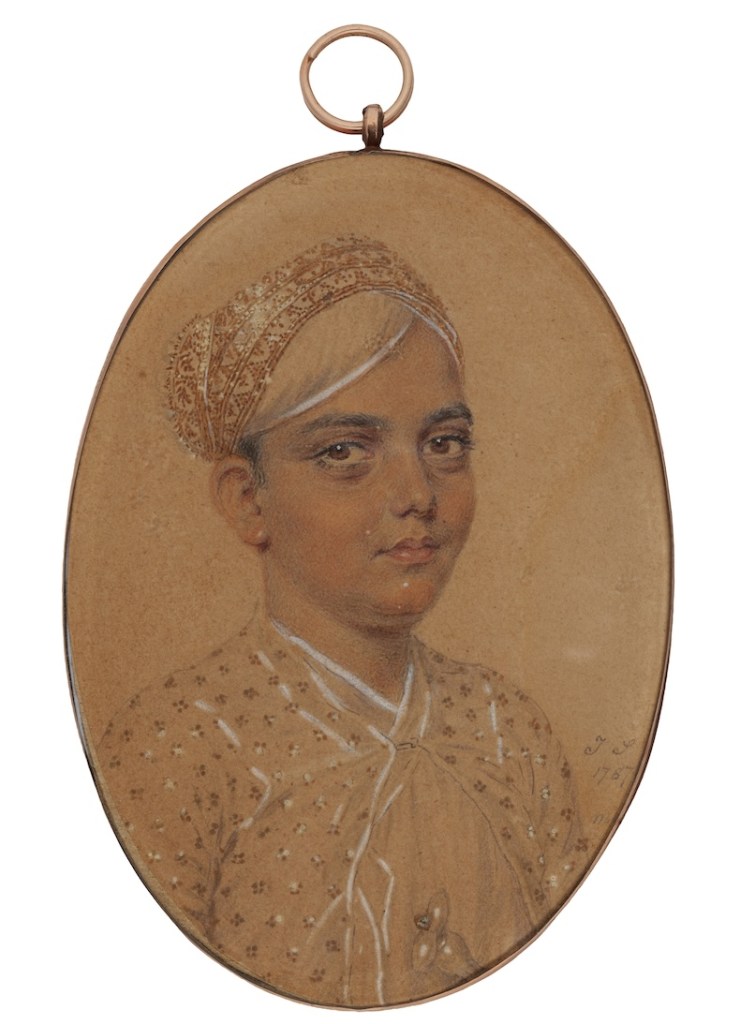
Later developments include the introduction of ivory and other materials at the end of the 17th century, the increased involvement of women artists and the genre’s relationship with empire and colonial expansion in the 18th and the impact of photography – first galvanising, then deadening – in the 19th and 20th centuries. Miniatures are often seen as a uniquely British contribution to the visual arts, but the book emphasises their international appeal, especially popular with the travelling agents of empire but also with indigenous high society. Among Mughal Nawabs and Iranian Shahs, an unknown girl in an empire dress and African-Creole headwrap in the collection of the Rijksmuseum stands out as particularly enigmatic: although her identity has not been recovered, her fashion choices suggest that she may have been a member of Dutch Suriname’s ‘burgeoning mixed-race elite’.
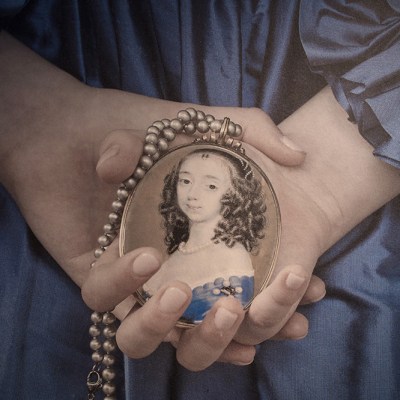
The book places special emphasis on the contributions of women miniaturists. Present probably from the outset, women are credited with some of the most significant developments in the genre. Rosalba Carriera, for instance, pioneered the use of ivory (a valuable colonial commodity) around 1700. They gained increased prominence in the 18th century, when the painting of miniatures offered a path to professional recognition, even ‘a route into the Royal Academy and Salon before exhibiting larger works’. Portable and discreet, miniatures could be painted without a large studio, while its intimate, emotional aspects were sometimes cited as the domain of women.
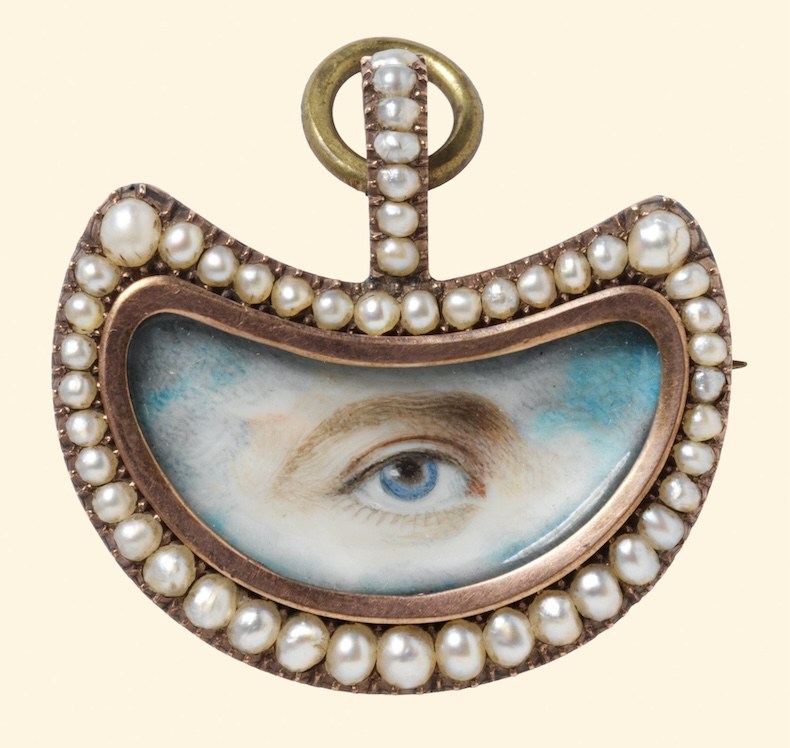
Amid shifts in medium, clientele and authorship, certain aspects of the miniature’s appeal remain constant through the centuries. The immediacy of pictures painted in the presence of the sitter rather than at a remove in the artist’s studio was celebrated by Nicholas Hilliard at the start of the period – and echoed 300 years later by American-born miniaturist Amalia Küssner in her evocation of the miniature as ‘a transcript of the form and spirit’. The intimacy of objects originally designed to be held or worn was exploited in arresting directions: the short-lived phenomenon of the Regency ‘eye’ picture allowed for clandestine exchanges, preserving the sitter’s anonymity, as did the startling self-portrait Beauty Revealed by Sarah Goodridge (1828), cropped so that her bare breasts entirely fill the frame.
Portability gave the miniature a special place in diplomatic history, from the portrait presented by England’s first formal ambassador to the Mughal Emperor Jahangir in 1615, to the pictures sent to Tipu Sultan, Abdul Khaliq and Muiz-ud-din by their sons’ British captors in 1792, supposedly as evidence (hardly unfalsifiable) that the hostages were receiving good treatment. Meanwhile, the well-travelled pigments, ivory and gemstones of the dazzling jewelled settings lent miniatures an impression of opulence, but also spoke of imperial power and colonial reach, both for Elizabeth I when she commissioned the Drake Jewel (1586) as a gift to Sir Francis Drake, and for Muhammad Ali Khan, Nawab of Arcot and the Carnatic (c. 1780–89), for whom the cross-pollination of European and Indian artistic traditions seems to have held particular appeal.
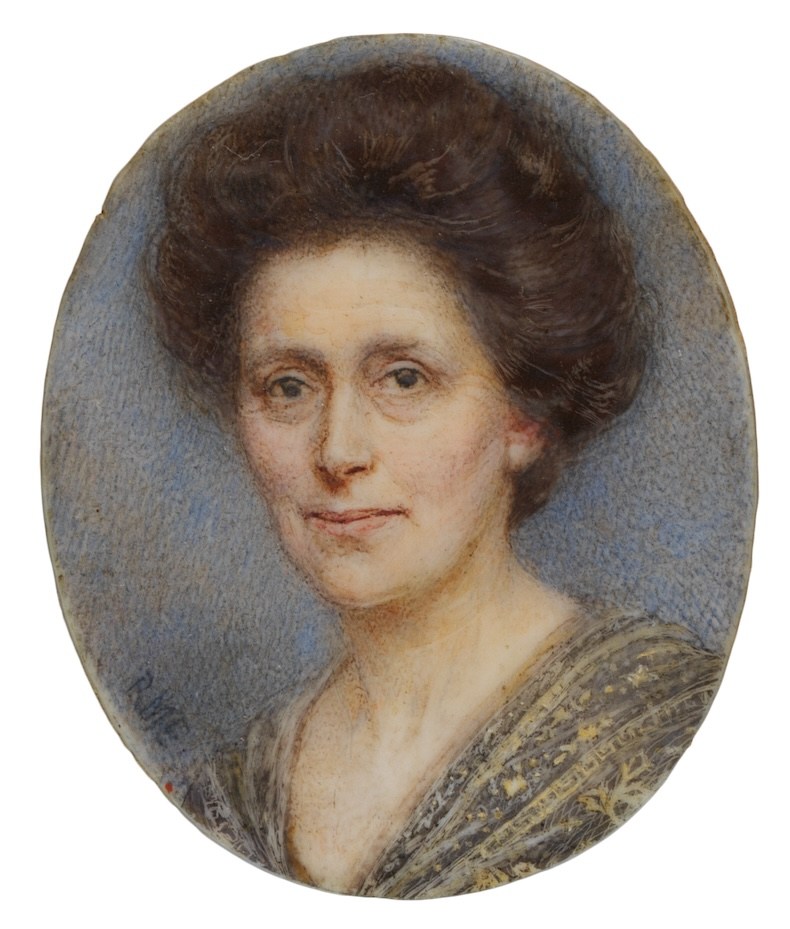
The Portrait Miniature highlights the broad interest of a genre often confined to more traditional areas of art history. Far from the ‘self-absorbed and obsessive’ products of an isolated culture, miniatures were objects with global appeal. They continue to offer insights into the lives of figures often absent from the Western art historical record, from women artists to servants and indigenous rulers.
The Portrait Miniature: A New History by Damiët Schneeweisz, Rosalind McKever and Adriana Concin is published by Thames & Hudson/V&A.
From the December 2026 issue of Apollo.