From the March 2026 issue of Apollo.
In the cultural and artistic history of Vienna, Prince Karl Eusebius of Liechtenstein is not a name that often springs to mind. But in around 1675 he published a book, Treatise on Architecture, which would go on to inspire the construction of two of Vienna’s most opulent baroque palaces and the accumulation of one of the most prestigious private art collections in the world. ‘Money’s sole use is for the bequeathing of beautiful monuments,’ he wrote, and those monuments should ‘represent and preserve all of our living history and make our name glorious and eternal’. In writing this tract, Karl Eusebius, a voracious collector of everything from Italian bronzes to paintings by the Brueghels, Cranach and Savery, was not idly musing but giving pointed instructions to his descendants.
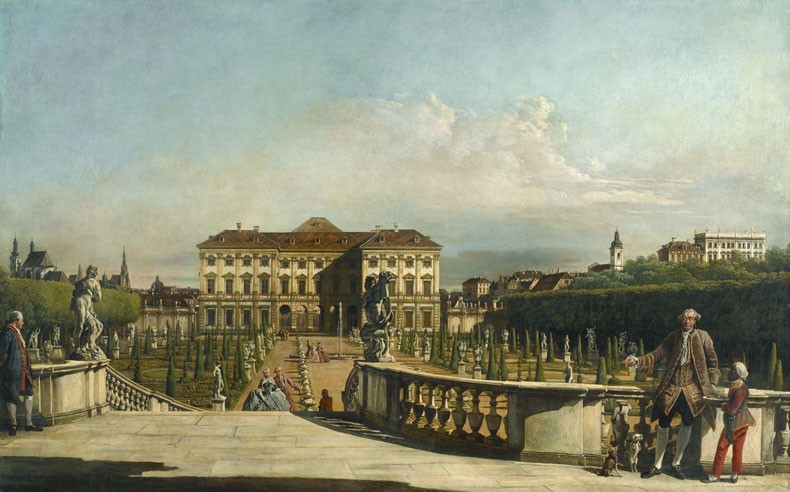
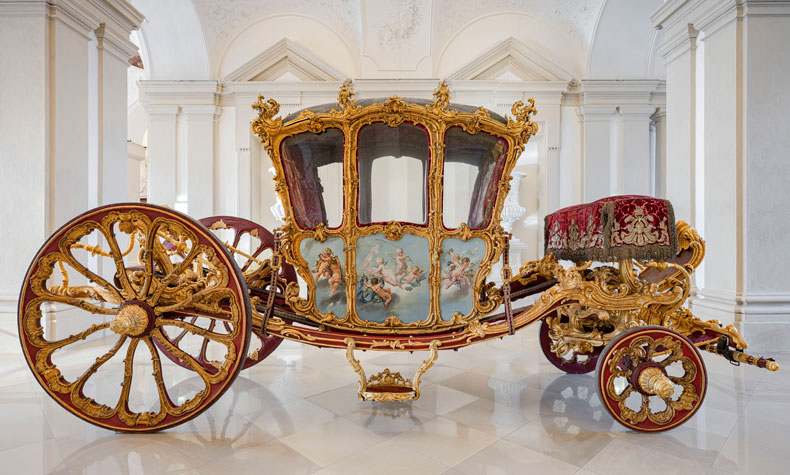
The lesson was taken to heart by the prince’s son, Johann Adam I. Working from the plans for a summer palace just outside Vienna’s city walls sketched out by his father before his death in 1684, Johann Adam commissioned the architect Domenico Egidio Rossi to design a sparkling Italianate palazzo, complete with soaring frescoes by artists including Andrea Pozzo. Although it has undergone some alterations over the centuries, the Liechtenstein Garden Palace still stands proud today in the district of Vienna known as Lichtental, with the almost queasily ornate carriage of Prince Joseph Wenzel I, designed by Nicolas Pineau, painted and adorned in gold, crystal and velvet in 1738, stationed in the main hall. Even before that building was complete, Johann Adam – by this point known to his contemporaries as Hans Adam the Rich – commissioned a second Roman-style palace nearer the centre of the city to house his family’s exquisite art collection, to which he added works by Van Dyck, Jordaens and, most notably, Rubens.
Today’s descendants of those 17th-century princes, Hans-Adam II and his son, Hereditary Prince Alois, share their ancestors’ goals. ‘I see my role primarily as a responsibility rooted in my family history,’ Alois tells me. ‘While an appreciation for art is important, my main focus is on careful stewardship.’ Though collecting art is, of course, a ‘form of investment’ too. The director of the Liechtenstein Princely Collections, Stephan Koja, echoes this sentiment when we meet in his office at the Garden Palace on a cold day in late January. I am here two days before the exhibition ‘Dealing in Splendour: A History of the European Art Market’ opens at the palace, now the main home of the Princely Collections of Liechtenstein.
Compared with other major private art collections around the world, the princes’ hoard is almost unrivalled. Numbering some 30,000 objects, it is particularly strong in bronzes (‘on a par with major public collections’, Koja says proudly), Flemish and Dutch paintings, and art from the Biedermeier period – though you could name just about any period of art from the Renaissance to the end of the 19th century and find an example of it here.
That the collection should have thrived for so many centuries may seem surprising, but then again, the survival of the House of Liechtenstein itself is also unusual. The House – named Liechtenstein (‘stone of light’) after a castle just south of Vienna erected in the 12th century by the family’s progenitor, Hugo – steadily accumulated land in central Europe while navigating the turbulent politics surrounding it. The Liechtensteins thrived down the centuries, usually through a strategy of self-preservation at all costs. This chiefly involved siding with larger powers, notably the Habsburg rulers of the Holy Roman Empire, who in 1608 granted Karl I of Liechtenstein princely status as a result of his fealty, and Napoleon two centuries later, who spared Liechtenstein from ruin and granted its sovereignty only as a result of some shrewd political manoeuvring by Prince Johann I.
Even the territory that we now know as Liechtenstein is something of a historical quirk, coming about through the purchase, in 1699 and 1712, of two small plots of barren Alpine land near the south-western border of the Empire by Prince Johann Adam Andreas. It was this acquisition that paved the way for what has been, since 1866, an independent nation. But the land itself is nowhere near either Vienna or Eisgrub and Feldsberg (respectively, Lednice and Valtice in modern Czech Republic), the main centres of princely business until the last century or so. It was not until the Second World War that Liechtenstein became the official residence of the princes that share its name.
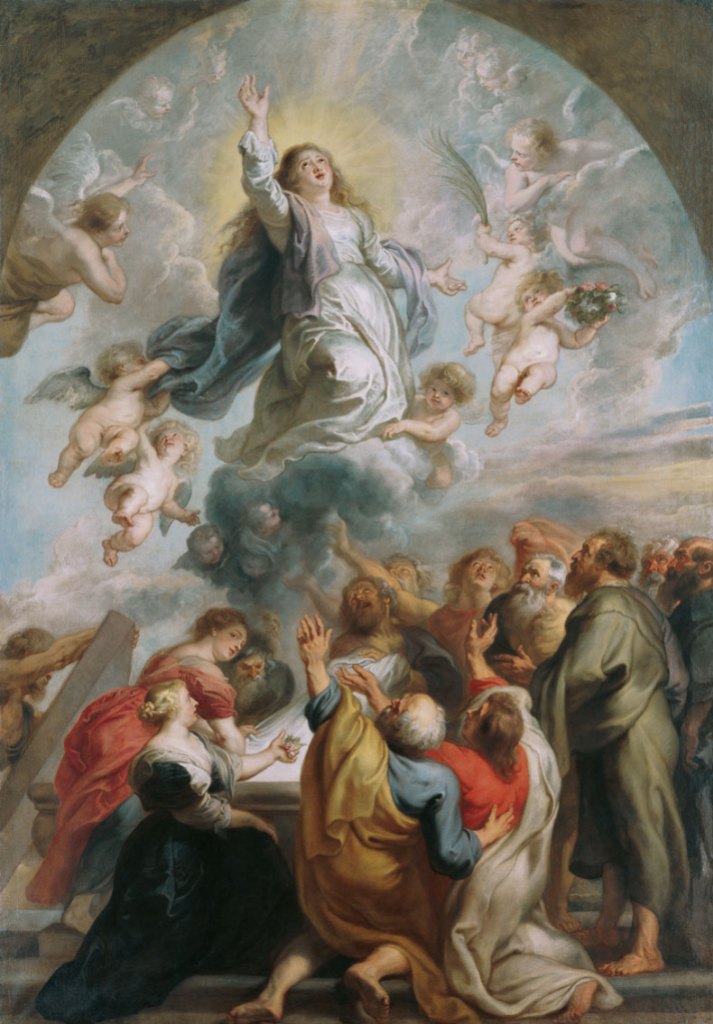
Against the odds, the Princes of Liechtenstein represent one of the last living branches of the Holy Roman Empire, and this unprecedented continuity has allowed for the art collection to be passed down the generations. ‘Over time, each prince shaped the collection according to his personal taste,’ Alois says. It was Karl I who sparked the family’s passion for bronzes, commissioning works from the Mannerist sculptor Adriaen de Vries, including the huge, haunting Christ in Distress (1607). His son, Karl Eusebius, bought the family’s first Rubens, a soaring Assumption of the Virgin (c. 1635/37), while his son in turn, Hans Adam the Rich – the subject of an exhibition in 2024 at the Garden Palace that branded him ‘Hercules of the Arts’ – purchased the collection’s pièce de résistance: Rubens’s eight-part cycle of paintings based on the life and death of the Roman consul Decius Mus. The fact that the whole series is still together, and its good condition, makes it ‘unique’, Koja says. These works have recently been restored and thorough research is being undertaken by the curators at the Princely Collections, which will be presented in an exhibition next year.
Koja joined the Princely Collections in 2023, leaving a job that would be the envy of many an art historian: director of the Gemäldegalerie Alte Meister and the sculpture collection of the Staatliche Kunstsammlungen in Dresden. ‘This is a spectacular collection […] and what I like is being in close contact with the artworks,’ he says when I ask him why he decided to make the switch. Because it’s a private collection and he is in constant contact with his employers, decisions at the Princely Collections can be taken quickly. When planning out a show, ‘You just think, “we need a clock here”, and I ask my registrar, “Do we have a clock from the first quarter of the 18th century?” They say: “Yeah, we have seven, which one do you want?”’
It would not be too much trouble for the princes to mount an exhibition called, say, ‘Masterpieces of the Princely Collections of Liechtenstein’ and be done with it. But the current exhibition, co-curated by Koja, Christian Huemer and Iris Yvonne Wagner, is a different proposition altogether: an ambitious endeavour that moves from antiquity to the cusp of the 20th century, tracing how the market has shaped artistic production. Some displays focus on individual dealers – from the antiquarian Jacopo Strada, memorialised here in a bracing portrait by Titian from the Kunsthistorisches Museum, in which Strada grasps a statuette of Venus as if handling stolen bounty, to Ambroise Vollard, who championed the careers of painters such as Cézanne and Van Gogh. Koja says that these aim to show how many conventions we now think of as the preserve of art historians, such as ‘the catalogue raisonné, the monographic exhibition, the interest in provenance, the illustrated catalogue […] all of this was invented by dealers in order to eliminate insecurities, establish classifications, to make trade more controllable’. The Princely Collections are the ideal lens through which to study this, Koja says, since all the documentation regarding sales is still readily available.
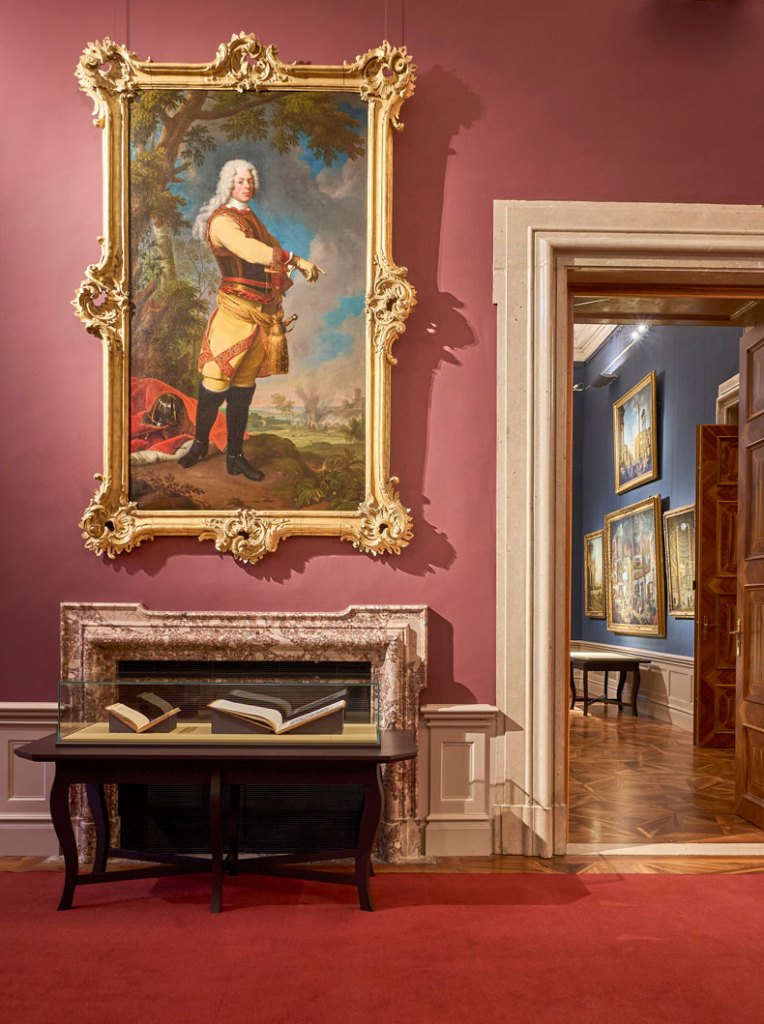
The curators have done well to work in the kind of ephemera that may appeal to the more academically minded – such as a copy of Galerie des peintres (1792), the first publication of its kind to combine biography, gallery book and sales catalogue – while giving the art primacy. The exhibition resembles a large-scale museum project rather than one from a private collection, which raises the question of the motivation behind it. Part of it is scholarly and comes down to Koja’s longstanding interest in the history of the art market, as well as Huemer’s specialism, one aspect of which is the late-19th-century dealer Charles Sedelmeyer. But there has clearly been some effort to burnish the reputation of the Princely House as patrons and custodians, too. A gorgeous triptych panel painting by the 15th-century Flemish painter Hugo van der Goes is exhibited alongside a photo showing the back of the painting, on which is written that the work was acquired by Prince Karl Eusebius from the dealer Regnier Megan in 1684; there is even a dealer’s letter to Prince Johann Adam, giving him the offer to purchase the Decius Mus cycle.
Nevertheless, a significant part of the exhibition is made up of loans. The princes, who have historically been willing lenders to other institutions, have clearly been repaid the favour: to have been lent four Monets from four different museums around the world in the centenary year of the artist’s death is a coup. (‘I can’t tell you how difficult this was,’ Koja says.) There are of course places where the curators have had to settle. A room dedicated to the record-breaking auction of Raphael’s portrait of Baldassare Castiglione, which was attended and recorded by Rembrandt in a sketch he made on the spot, has neither the Raphael nor the Rembrandt sketch, the former being replaced by one of Rubens’s copies and the latter swapped in for a facsimile, owing to the delicacy of the surviving paper, which is held in the Albertina just down the road. The show is no poorer for it; on the contrary, it is somewhat cheering to see how ‘Dealing in Splendour’ has been shaped by the logistical difficulties that have always affected the distribution of art – those very forces that the exhibition is trying to unpick.
The exhibition, like the Princely Collections themselves, stops firmly at the turn of the 20th century. The final room of the show – ‘our white cube’, Wagner jokes as we walk in – has just a single painting in it: Klimt’s ghoulish Nuda Veritas (1899), a work that heralds the advent of modernity and the era when Vienna became a centre of avant-garde activity. It also marks the start of one of the most turbulent centuries in the long history of the House of Liechtenstein. The principality declared its neutrality in the First World War and suffered the loss of more than half of its landed estates at the end of it. That familial drive to self-preservation reared its head again in 1938, when Prince Franz I, spooked by the Anschluss, moved his permanent residence to Vaduz as a way of cementing Liechtenstein’s neutrality.
That policy succeeded in sparing the country from Nazi occupation, though Liechtenstein’s conduct during the war has since been called into question. In 2005 an independent panel of historians published a report, commissioned by the Liechtenstein government, on the principality’s activities during the Second World War. It found that the Princely House bought shares in Jewish properties in annexed Austria and German-occupied Czechoslovakia in 1938 and that Hungarian Jewish inmates at the Strasshof concentration camp near Vienna were used as forced labour on three Austrian estates owned by the Princely House between July 1944 and the end of the war. In 2020, a planned exhibition of works from the Princely Collection that was due to open at the National Gallery of Canada before touring in the United States was cancelled, with the museum releasing a statement citing the findings of the report as the reason for its withdrawal. The director of the Princely Collections at the time, Johann Kräftner, said in a statement to the Art Newspaper that ‘this report does not provide any findings that could reasonably be understood to support the cancellation of the exhibition’, adding, ‘all the pertinent historical information was publicly and readily available for well over a decade even before any deliberations regarding this exhibition had commenced.’
The National Gallery of Canada was one of the institutions that, some 70 years earlier, was buying up works from the Princely Collections. After the Second World War, the loss of territory to Czechoslovakia plunged Liechtenstein into a state of near bankruptcy. The collection had been saved from ruin at the end of the war by being spirited away to Vaduz Castle, but from the late ’40s onwards it was parcelled out by Franz Joseph II, father of the current prince, in order to recoup some of the principality’s lost wealth. The most high-profile sale was Leonardo’s Portrait of Ginevra de’ Benci (c. 1474/78), which in 1967 was sold to the National Gallery of Art in Washington, D.C., for $5m, then the highest price ever paid for a painting. Biedermeier paintings by the likes of Hans Makart, Friedrich von Amerling and Leopold Stöber that idealised family life and domestic harmony were largely kept in the collection, as they were, Koja tells me, ‘not as fashionable as they are today’. Perhaps he senses my slight surprise at this statement. ‘There’s going to be an exhibition of [Biedermeier painter] Ferdinand Georg Waldmüller at the National Gallery soon,’ he says, ‘which might open the eyes of the British public.’
It was partly these sales, combined with Franz Joseph II’s expansion and diversification of his family’s bank, the Liechtenstein Global Trust (LGT), that led to an uptick in the country’s fortunes in the latter part of the 20th century. The renewed wealth allowed Hans-Adam II, who became prince when his father died in 1989, to set about buying back many of the works that had been sold. The lost Leonardo is surely out of reach, but a great many works have been reacquired, from a host of Venetian vedute that had been collected by Prince Joseph Wenzel I in the mid 18th century to Bernardino Zaganelli’s luminous Portrait of a Lady in a Red Dress (c. 1500), first bought in the 1880s by Johann II.
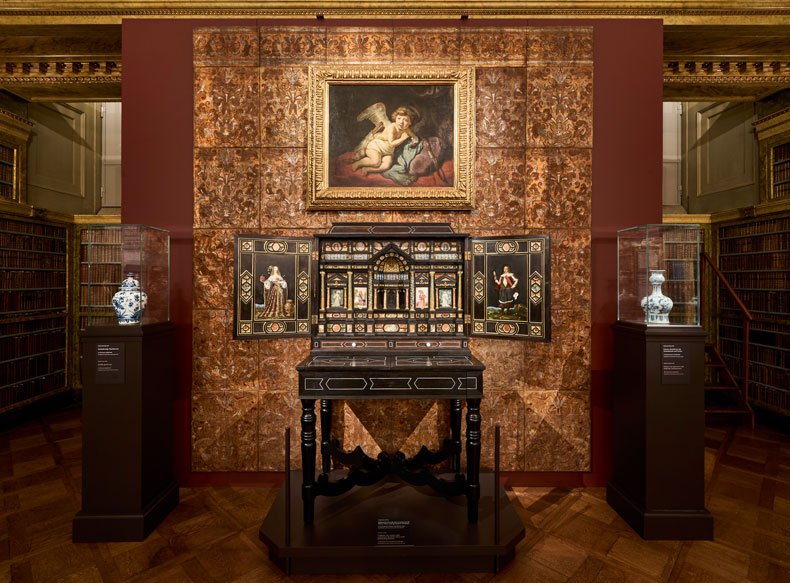
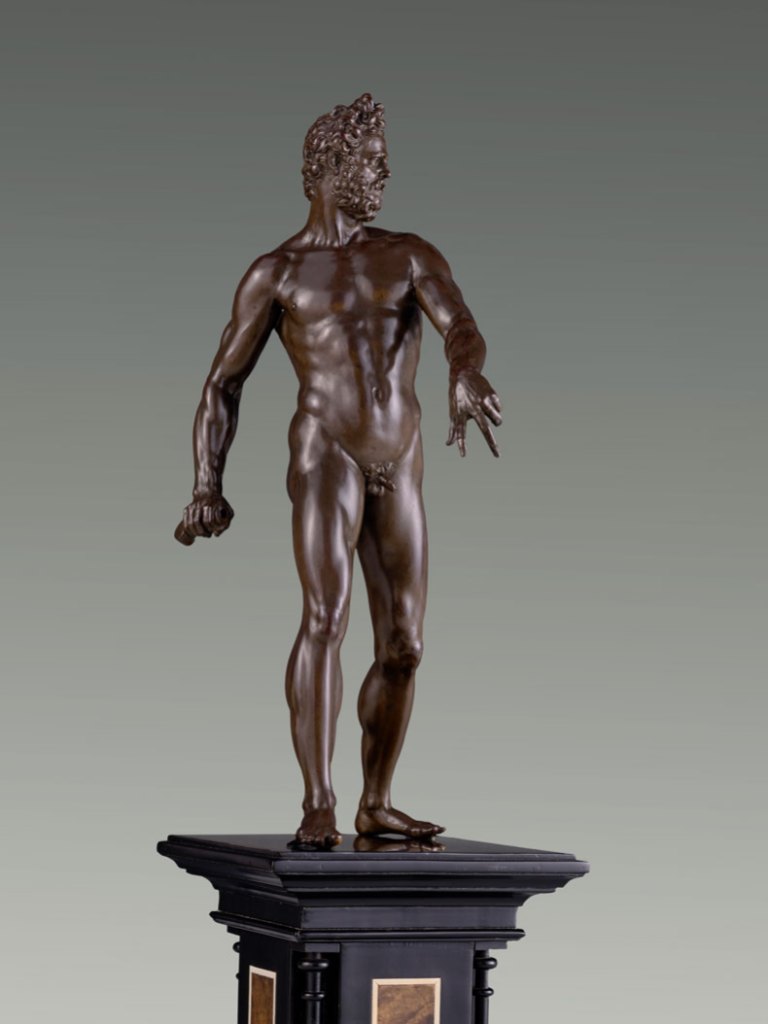
Koja is clear that the Princely duties nowadays are multifarious: ‘to reacquire what was sold, to improve the collection and in some instances to widen the scope’. Hans-Adam made headlines in 2004 when he pulled off a coup at auction, landing the Badminton Cabinet – a hulking masterpiece of baroque furniture in ebony, gilt-bronze and pietra dura, commissioned by the 19-year-old Duke of Beaufort in the 1720s – for £19m, which still holds the record for the highest price ever paid at auction for a piece of decorative art. Since then the prince has bought the first El Greco in the family collection, a serene view over the River Elbe by Bellotto, as well as an early cast of Giambologna’s Mars (c. 1570), acquired in 2024. In the latter, up close, you can make out every sinew of the god’s tensing arms.
The recent history of the Princely Collections is as good a case study as any of the the point of the exhibition – that ‘no object of art exists without its economic context’, as Koja puts it. This strange collection is a product of centuries of collecting and stewardship but also of the quirks of the art market: the trends and tendencies that determined which works happened to be valuable in the post-war period, for example, and which ones have been able to be reacquired by the current princes. Visit the website of the LGT bank today and you will see images of artworks from the Princely Collections, alongisde lines trumpeting the ‘expertise and passion’ of the family, and its long history of ‘acquiring and managing assets’. Questions of money, provenance, dealers, commissions, contracts – everything but the immediate aesthetic appeal of the artwork in front of us – have never been separate from the art world. These questions should be asked not just of private collections but of museums, too. Here at the Garden Palace, it is refreshing to be able to peer behind the curtain, even if it’s only for a fleeting view.
‘Dealing in Splendour: A History of the European Art Market’ is at the Liechtenstein Garden Palace, Vienna, until 6 April.
From the March 2026 issue of Apollo.